WORLD
WORLD
Fódla
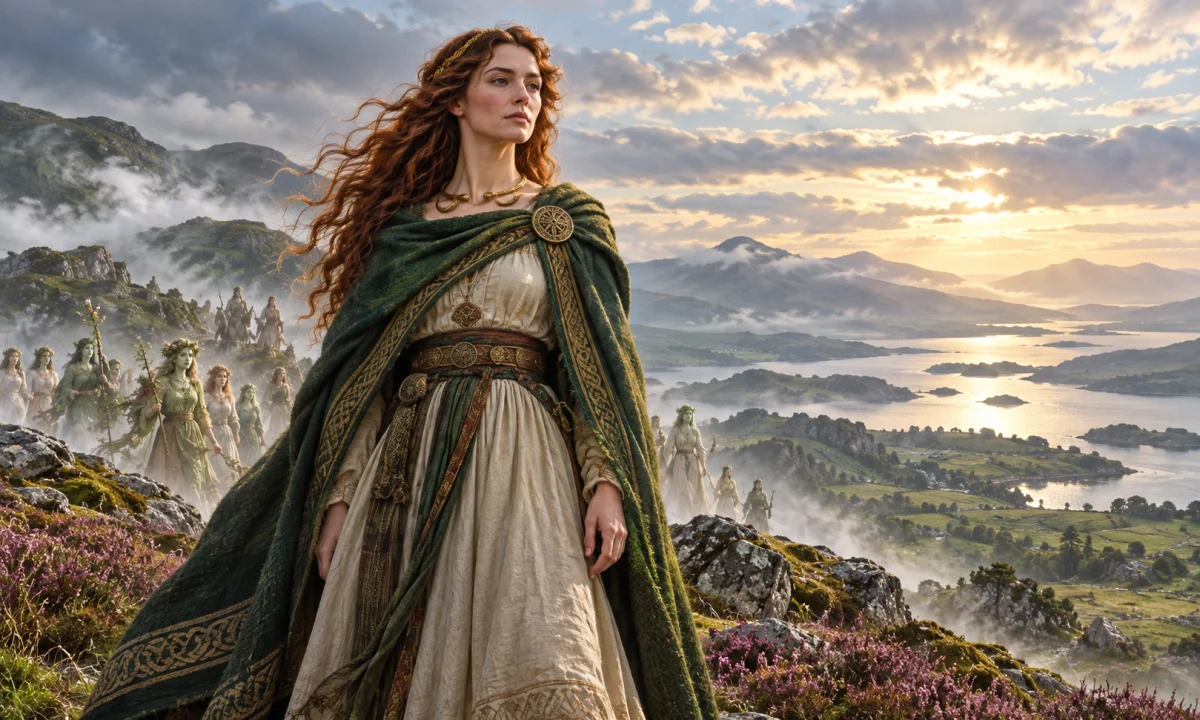
Fódla is a figure of Irish mythology associated with the land of Ireland and with the sovereignty of the country. In medieval Irish tradition, she is one of the three sisters who represent or personify Ireland, alongside Ériu and Banba. The three are usually described as members of the Tuatha Dé Danann, the supernatural people who dominate much of Ireland’s mythological history. Although Ériu eventually becomes the most common mythological name for Ireland, Fódla remains an important poetic and symbolic name for the country.
Fódla in Irish mythology
Fódla belongs to the mythological material preserved in medieval Irish manuscripts. These manuscripts contain stories, genealogies, place-lore and historical legends that were written down by Christian scholars, often drawing on older oral traditions. The surviving texts do not present a single, systematic religion of the pre-Christian Irish gods. Instead, they combine several kinds of material: legendary history, genealogical speculation, local traditions, Christian ideas about the past and poetic descriptions of the Irish landscape.
Within this tradition, Fódla is generally presented as one of the daughters of Ernmas, a female figure of the Tuatha Dé Danann. Her sisters are Ériu and Banba. Ernmas is also associated in different accounts with other important female members of the Tuatha Dé Danann, including the war goddesses or battle figures Macha, Badb and Nemain. The exact relationships and genealogical details vary between texts, and medieval Irish mythology does not always maintain a consistent family tree.
Fódla’s importance comes less from a cycle of independent adventures than from her relationship with the land. She is one of the female figures through whom Ireland receives a personal, ancestral and sacred identity. Her name can function both as the name of a mythological woman and as a poetic name for Ireland itself.
The three names of Ireland
The best-known tradition concerning Fódla appears in the Lebor Gabála Érenn, commonly called the Book of the Taking of Ireland. This medieval compilation describes a succession of peoples who supposedly settled or invaded Ireland, culminating in the arrival of the Milesians, the legendary ancestors of the Gaelic Irish.
When the Milesians approach Ireland, they encounter the three sisters Ériu, Banba and Fódla. Each woman is connected with the island and asks that it be named after her. The encounter is part of the mythic explanation for Ireland’s names. In the version that became most influential, the country is called Éire, after Ériu, because she is the first or most successful of the three in the relevant narrative. The names Banba and Fódla nevertheless remain as poetic names for Ireland.
The episode reflects a common feature of Irish legendary history: place-names are explained through encounters between heroic newcomers and ancient inhabitants of the land. Such stories do not simply describe geography. They dramatise the transfer of authority from one people to another. The Tuatha Dé Danann represent an older supernatural order, while the Milesians become the human ancestors of the later Irish population. Fódla and her sisters stand at the meeting point between these two orders.
Some versions and related traditions arrange the sisters’ encounters differently or associate them with different locations. The details should therefore not be treated as though they came from one fixed, universally consistent account. What remains stable is the central idea: three female figures connected with the land give Ireland several of its traditional names, and Fódla is one of those names.
Name and possible meaning
The name appears in forms such as Fódla and, in later or modern spelling, Fódhla. The accent is important in representing the traditional form, although spelling practices differ among editions and modern writers. The exact etymology is not certain.
Some interpretations connect the name with an Irish word associated with soil, earth or cultivated ground. This has encouraged the view that Fódla may preserve an image of the land as a fertile female power. Such an interpretation is plausible within the wider symbolism of Irish sovereignty and landscape, but it should not be presented as a proven definition. Medieval etymologies were often imaginative, and modern attempts to reconstruct the original meaning of divine or mythological names can remain uncertain.
Fódla is also used as a poetic name for Ireland. In this use, it does not necessarily refer to a character performing an action in a story. Poets could treat the country as a woman, queen or ancestral presence, allowing a place-name to carry emotional and political meaning. The same name can therefore be read in two ways: as the name of a mythological person and as a personified name for the island.
Identity and classification
Fódla is often called a goddess, especially in modern discussions of Celtic mythology. The description is understandable, since she belongs to the Tuatha Dé Danann, a supernatural population that includes figures who function as gods and goddesses in Irish myth. However, the medieval Irish texts do not always classify their characters in the same way that modern religious language does.
The Tuatha Dé Danann are portrayed as powerful supernatural beings, skilled in magic and connected with the ancient history of Ireland. They include such major figures as The Dagda, Brigid, Lugh, Nuada, Dian Cécht and Manannán mac Lir. Yet the texts also present them as a people with kings, queens, family disputes, marriages and political rivalries. Calling Fódla a goddess communicates her mythological status, but it can conceal the variety of roles found in the medieval narratives.
There is no surviving early Irish story in which Fódla receives a detailed independent cult narrative comparable to the stories of Lugh, the Dagda or the Morrígan. Nor is there clear evidence from the medieval material that she was worshipped separately under the same form. Her role is primarily symbolic and genealogical: she is a daughter of Ernmas, a woman of the Tuatha Dé Danann and one of the female embodiments of Ireland.
Family and relationships
Fódla’s closest relationship is with her sisters, Ériu and Banba. Together they form a triad of female land figures. Their grouping is more important than any sharply defined difference in character. The surviving stories do not consistently assign Fódla a unique set of powers while giving Ériu and Banba entirely different functions. Instead, the three overlap as names and personifications of Ireland.
In the genealogical traditions of the Lebor Gabála Érenn, Fódla is associated with Mac Cecht, one of the three sons of Cermait Milbél. Banba is associated with Mac Cuill, and Ériu with Mac Gréine. These three men are presented as kings of the Tuatha Dé Danann at the time of the Milesian arrival. The marriages place the sisters within the ruling structure of the supernatural inhabitants of Ireland.
As with many medieval Irish genealogies, these relationships can differ in emphasis or detail from one text to another. They are part of a literary system that connects the major peoples and figures of Irish legend. The marriages also reinforce the political significance of the sisters: they are not merely natural spirits but queens or royal women linked to the sovereignty of the land.
Role in the arrival of the Milesians
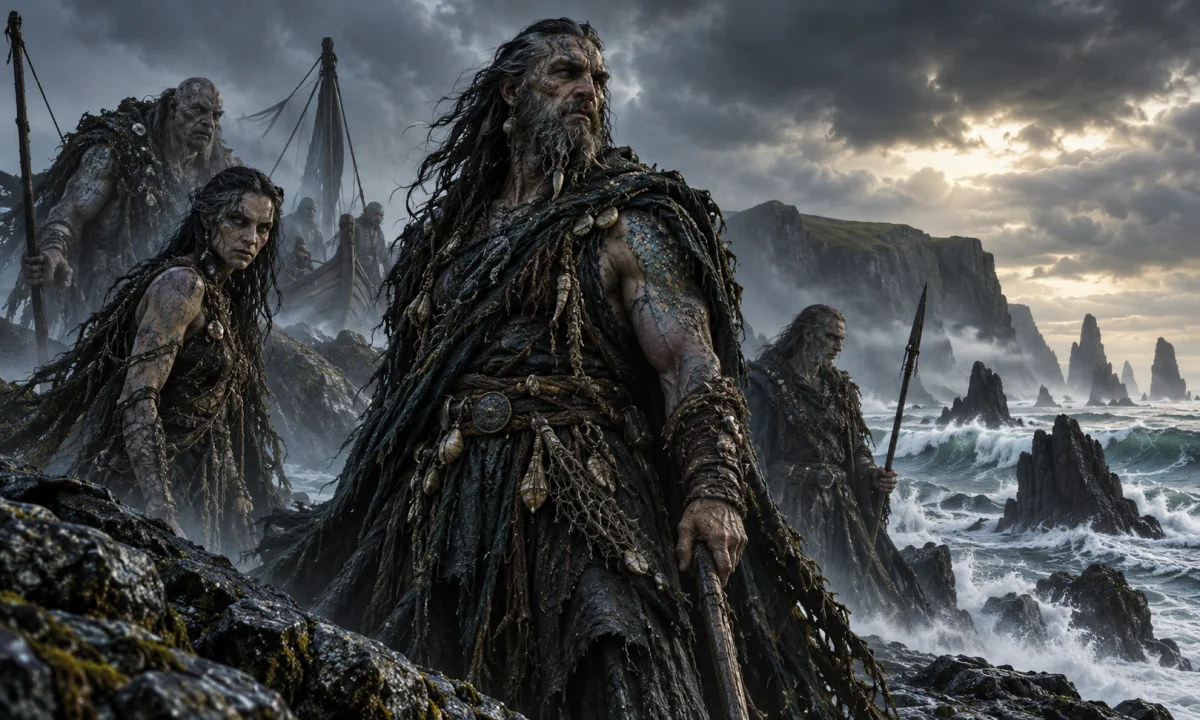
The Milesian invasion is the event most closely connected with Fódla. According to the legendary history, the Milesians come from overseas and seek possession of Ireland. Their arrival threatens the Tuatha Dé Danann, who already control the island after defeating earlier inhabitants.
Fódla and her sisters represent the older claim of the land. Their encounters with the Milesians are sometimes read as formal acts of recognition. The newcomers may conquer or settle Ireland, but they must still engage with the women who embody the country itself. This gives the episode a ritual or symbolic dimension: political possession is not complete until the land’s female representatives have been addressed.
The story does not make Fódla the principal opponent of the Milesians. She is not usually depicted leading an army or fighting a famous single combat. Her power is expressed through identity, place and legitimacy rather than through a catalogue of magical weapons or heroic deeds. The question is not simply who can defeat whom, but whose name and authority will define Ireland after the change of rulers.
In the most familiar outcome, Ériu’s name becomes the principal name of the country. This does not erase Fódla. Her name survives as an alternative designation, particularly in poetry and learned writing. The narrative thus preserves all three sisters while establishing a hierarchy among their names.
Attributes and symbolism
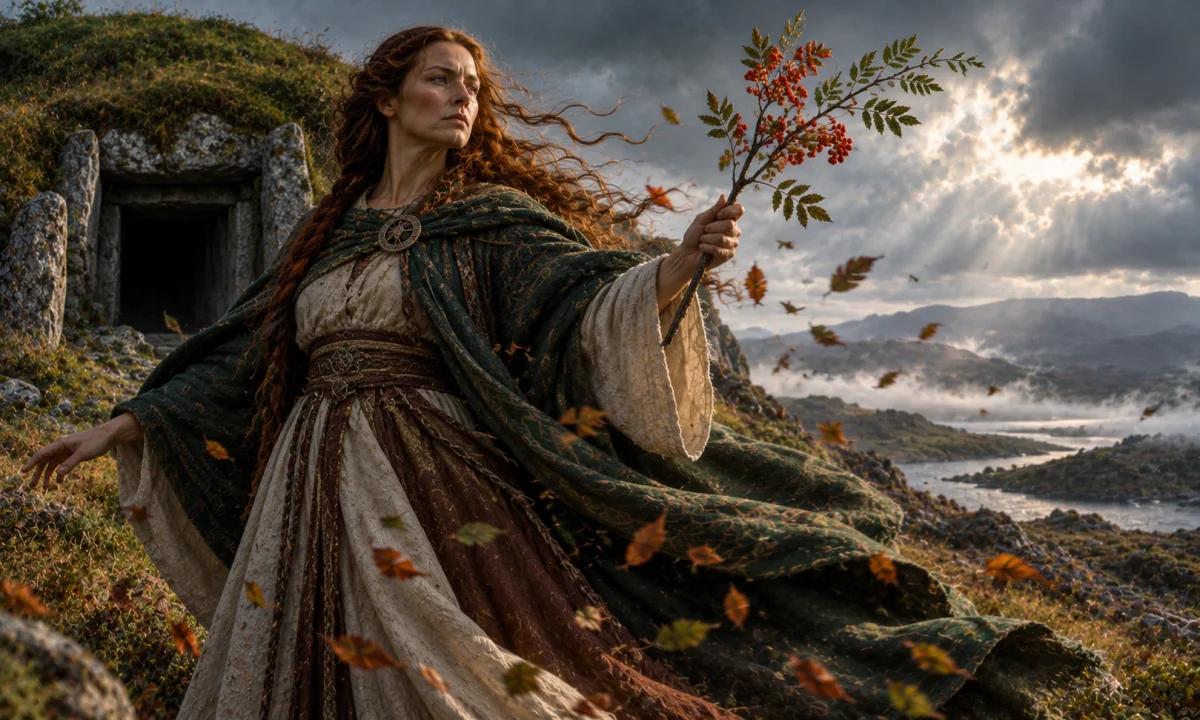
Fódla has no securely established physical appearance in the surviving medieval tradition. Descriptions that portray her as a crowned woman, a warrior queen, a green-clad spirit or a motherly earth figure belong largely to later artistic imagination or modern reconstruction. They may communicate appropriate themes, but they should not be mistaken for details supplied by the old texts.
Her principal attribute is her connection with the land of Ireland. This association can be understood through several related ideas:
- Territorial identity: Fódla gives the island a personal name and presents it as a being with memory and authority.
- Sovereignty: Her relationship with a king of the Tuatha Dé Danann links the land with legitimate rule and royal power.
- Continuity: As one of the ancient women encountered by the Milesians, she represents the deep past that survives a change of dynasty or people.
- Poetic personification: Her name allows poets to speak of Ireland as a woman, queen or ancestral presence rather than as a merely geographical territory.
Fódla’s land symbolism has sometimes been connected with the wider Irish motif of the sovereignty goddess. In this pattern, a woman represents a kingdom and grants or withholds legitimate rule from a king. The motif appears in several Irish narratives, especially stories in which a ruler’s encounter with an apparently unattractive or dangerous woman changes when he recognises her true nature. Fódla shares the general association between female figures and territorial sovereignty, but the surviving material does not make her identical to every sovereignty figure in Irish literature.
It is therefore better to describe her as one expression of the land-and-sovereignty tradition than to claim that she is simply another name for a single universal Irish goddess. The evidence supports a connection, but the precise relationship between Fódla and other sovereignty figures remains a matter of interpretation.
Fódla and the names Éire and Ireland
Fódla should not be confused with the modern official name Éire, even though both belong to the mythological naming traditions surrounding Ireland. Éire derives from Ériu and became the standard Irish-language name for the country. Fódla is an older poetic or alternative name preserved in literature and learned tradition.
The English name Ireland has a different historical development. It is related to the name Ériu through forms transmitted into English and other languages, combined with a word meaning land. Fódla is not the direct source of the English name Ireland.
Banba, Ériu and Fódla are sometimes treated as interchangeable names, but they are not identical figures in the medieval narratives. They are sisters or associated female figures, each with her own name and place in the mythological genealogy. Their functions overlap because all three are connected with the island, yet the tradition deliberately preserves the distinction between them.
Fódla in Irish literary tradition
Fódla appears within the learned tradition that preserved stories about the legendary settlement of Ireland. The Lebor Gabála Érenn is especially important for the account of the three names, but place-lore and poetic material also contributed to the survival of her name. Medieval Irish literature frequently preserves old names by embedding them in genealogies, explanations of landscapes and lists of alternative names for the country.
This mode of preservation means that Fódla may appear more often as a name or poetic reference than as an active character. A reader should not expect a long sequence of myths devoted exclusively to her. Her significance lies in the network of associations created around the name: ancient Ireland, the Tuatha Dé Danann, royal legitimacy, female personification and the transition from supernatural rule to the age of the Milesians.
The Christian recording of these traditions also affects how Fódla is known today. The manuscripts were produced in a Christian intellectual environment, and their authors arranged pagan or pre-Christian material within biblical and pseudo-historical frameworks. As a result, the surviving accounts cannot be read as direct transcripts of an unchanged ancient religion. They are medieval literary witnesses to older traditions, not transparent records of exactly what pre-Christian worshippers believed.
Modern interpretations
Modern writers often present Fódla as an earth goddess, a national mother, or one member of a triad of Celtic land goddesses. These descriptions draw on genuine features of the tradition, especially her connection with Ireland and sovereignty. Nevertheless, they can become more definite than the evidence allows. The medieval material does not provide a complete theology of Fódla, a fixed list of sacred animals, a clearly documented festival or a detailed description of her ritual worship.
Fódla may also appear in modern poetry, historical fiction, fantasy literature, games and visual art concerned with Celtic mythology or Irish identity. Such adaptations commonly give her a stronger personality, a distinctive appearance or magical abilities. These creative developments belong to modern reception rather than to the securely preserved medieval tradition.
In traditional Irish mythology, Fódla’s power is quieter and more fundamental. She is one of the women through whom Ireland becomes a named and personified country. Her story is not primarily about individual adventure, but about the relationship between land, people, kingship and memory. Alongside Ériu and Banba, she preserves the idea that Ireland is not an empty territory to be claimed: it is an ancient presence whose name and authority must be acknowledged.