WORLD
WORLD
Camael
Camael is a name used in several later systems of angelology, especially Christian occultism, Renaissance esotericism and modern interpretations of Kabbalistic symbolism. He is commonly presented as a powerful angel associated with strength, courage, divine judgment and the planet Mars. However, Camael is not a clearly defined figure in the Hebrew Bible, the New Testament or the principal canonical traditions of mainstream Christianity. His identity, name and rank vary considerably between sources.
The spelling Camael is also found in forms such as Kamael, Camuel, Khamael and Chamuel. These forms are not automatically interchangeable. Some writers treat them as variants of one angelic name, while others distinguish separate beings. As a result, descriptions of Camael should be understood as belonging primarily to later angelological and esoteric traditions rather than to one universally accepted religious doctrine.
Origins and cultural setting
The Bible does not provide a named angel called Camael. Biblical angelology includes figures such as Michael and Gabriel, but it does not establish a complete catalogue of angels with fixed duties, appearances and planetary associations. Many names familiar from later Christian, Jewish and occult writing emerged through centuries of interpretation, liturgical development, mystical speculation and the circulation of visionary or magical texts.
Jewish and Christian traditions developed increasingly elaborate ideas about the heavenly world during late antiquity and the Middle Ages. Apocalyptic writings, mystical works, angel lists and theological classifications described ranks of angels, celestial rulers and spiritual powers. Some of these writings were influential without becoming part of the biblical canon. Others circulated in manuscripts or later occult compilations, where names could be copied with different spellings or reassigned to different offices.
Camael belongs to this complicated layer of tradition. He is best understood as a figure of developing angelology, rather than as an angel with a single continuous biography. The surviving traditions do not preserve one foundational story explaining his creation, appearance and deeds. Instead, later authors associated the name with ideas already important in religious symbolism: divine power, disciplined force, judgment and the struggle against disorder.
The name Camael
The meaning of Camael is uncertain. Proposed interpretations often connect the name with God, divine strength, divine severity or the vision of God, but no single etymology is accepted across all traditions. Transliteration from Hebrew and other Semitic languages can produce several English spellings, and later occult authors sometimes inherited names without preserving their original linguistic context.
The form Kamael is especially common in modern writing about angelic hierarchies. Camael may reflect a Latinized or English spelling, while Camuel appears in some angelic lists. The similarity to Chamuel has caused considerable confusion. Chamuel is often identified in modern devotional sources with love, compassion or the perception of God, whereas Camael is more often associated with strength and severity. Yet historical sources do not always maintain this distinction, and some writers treat the names as variants.
It is therefore risky to claim that the name has one definitive translation or that every appearance of a similar name refers to the same angel. The spelling used by a particular author may reflect a specific manuscript tradition, a translation choice or a modern attempt to standardize an uncertain name.
Classification in angelic hierarchies
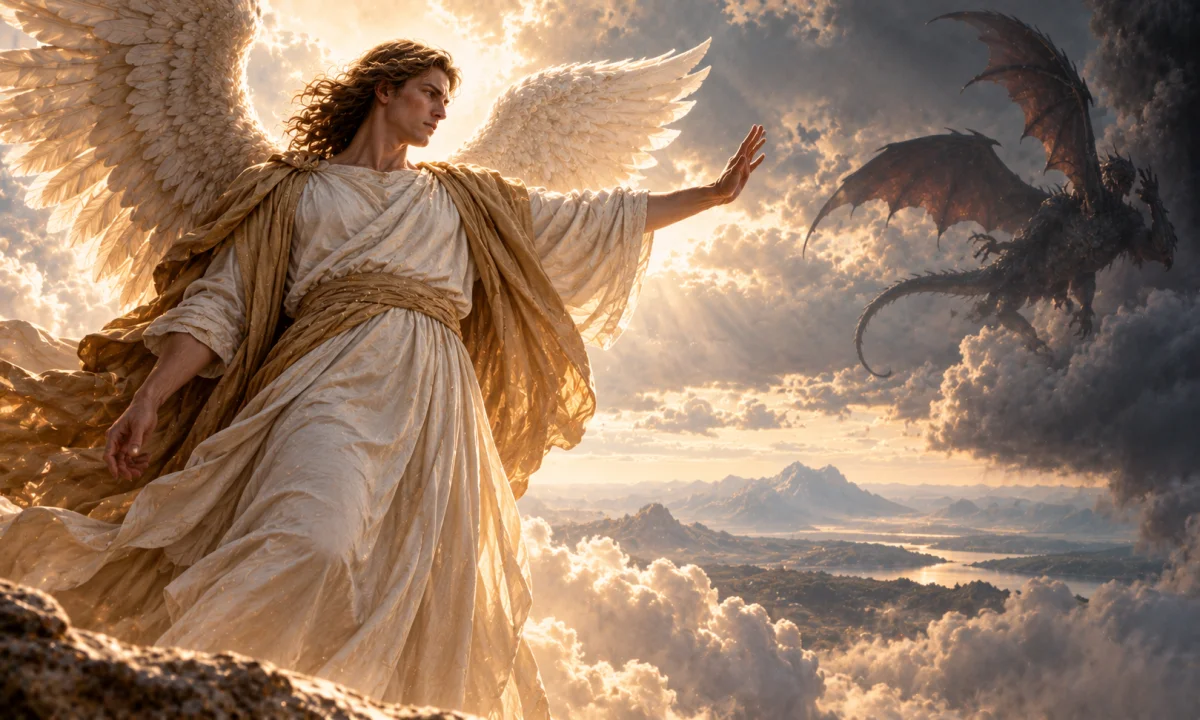
Camael is frequently described as an archangel, but this title is not consistent across sources. In some systems he is placed among the chief angels or heavenly princes. In others, he is associated with one of the angelic choirs described by Christian theologians. Certain occult writers connect him with the Powers, also called the Authorities or Potestates, a choir traditionally linked with the restraint of evil and the ordering of cosmic forces.
The association with the Powers is not a universal Christian teaching about Camael. It belongs to particular systems of correspondence that combine Christian angelic hierarchies with ideas drawn from Jewish mysticism, astrology and ceremonial magic. Other writers place him among the archangels without assigning him to a choir, or describe him as a ruler of spiritual forces rather than as a member of a formal hierarchy.
Some modern lists also name Camael as one of seven principal archangels. The number seven has strong roots in Jewish, Christian and ancient Near Eastern traditions, especially in associations between heavenly beings and the seven visible planets. Nevertheless, the names in these sevenfold lists vary. Michael, Gabriel, Raphael and Uriel are frequently included, but the remaining names differ from one tradition to another. Camael is prominent in some lists and absent from others.
Association with Mars and strength
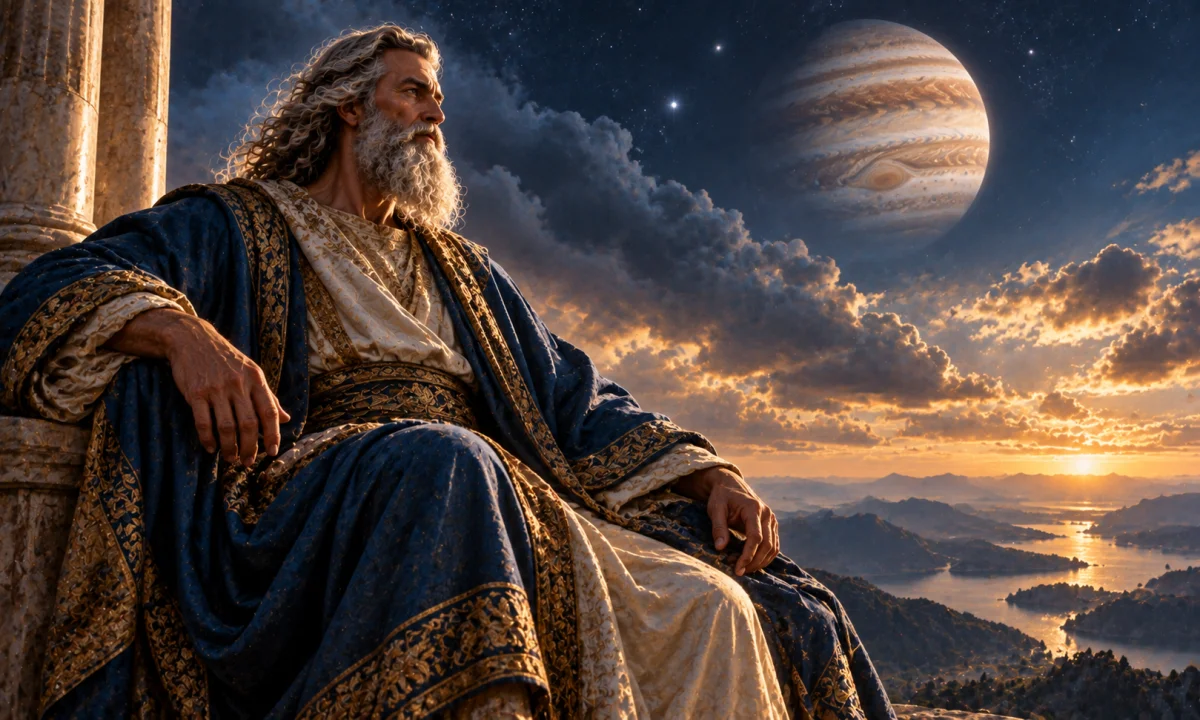
The most recognizable symbolic profile of Camael comes from his connection with Mars. In Renaissance and later occult systems, angels, planets, metals, colours, days and virtues were arranged into networks of correspondence. Camael was commonly assigned to Mars, whose traditional symbolism included war, courage, force, conflict, decisive action and physical energy.
Through this planetary association, Camael became an angel of strength and disciplined aggression. He was not necessarily understood as a patron of violence for its own sake. In symbolic interpretation, martial power could represent the courage to resist oppression, the energy required to overcome obstacles or the will needed to defend justice. The same symbolism could also express anger, destruction, impulsiveness and the dangers of uncontrolled force.
Some later occult systems associate Camael with Tuesday, the day traditionally governed by Mars, and with the colour red or other martial imagery. These correspondences should not be presented as ancient biblical facts. They belong to an astrological and ceremonial framework that became especially influential in European esotericism from the Renaissance onward and was further reorganized by nineteenth- and twentieth-century occult movements.
The Mars connection also helps explain why modern descriptions portray Camael as a stern or warrior-like angel. Such images are usually symbolic rather than literal. They express qualities attributed to Mars and to the sefirah of Gevurah, rather than describing an appearance recorded in an ancient revelation.
Camael and Kabbalistic symbolism
Modern accounts often connect Camael with Gevurah, one of the ten sefirot in Kabbalistic interpretations of the divine order. Gevurah is associated with strength, restraint, judgment and disciplined severity. It is frequently understood in relation to Chesed, which represents generosity, loving-kindness or expansive mercy. Together, these concepts express the need to balance compassion with limits and power with wisdom.
The association between Camael and Gevurah is influential, but it should be described carefully. The identification does not come from a single universally authoritative Kabbalistic text. Names assigned to the sefirot, divine attributes and angelic rulers differ among Jewish mystical sources, Christian adaptations of Kabbalah and later occult systems. Some modern presentations simplify these complex traditions into fixed tables in which each sefirah has one angel, planet, colour and name. Historical Kabbalah was more diverse than such charts suggest.
Within this symbolic framework, Camael can represent the protective and corrective side of divine power. His severity is not necessarily cruelty. It may signify the boundary that prevents disorder, the judgment that exposes injustice or the courage required to act when gentler methods fail. At the same time, the symbolism warns that strength without compassion can become tyranny, and judgment without wisdom can become destruction.
Attributes and imagery
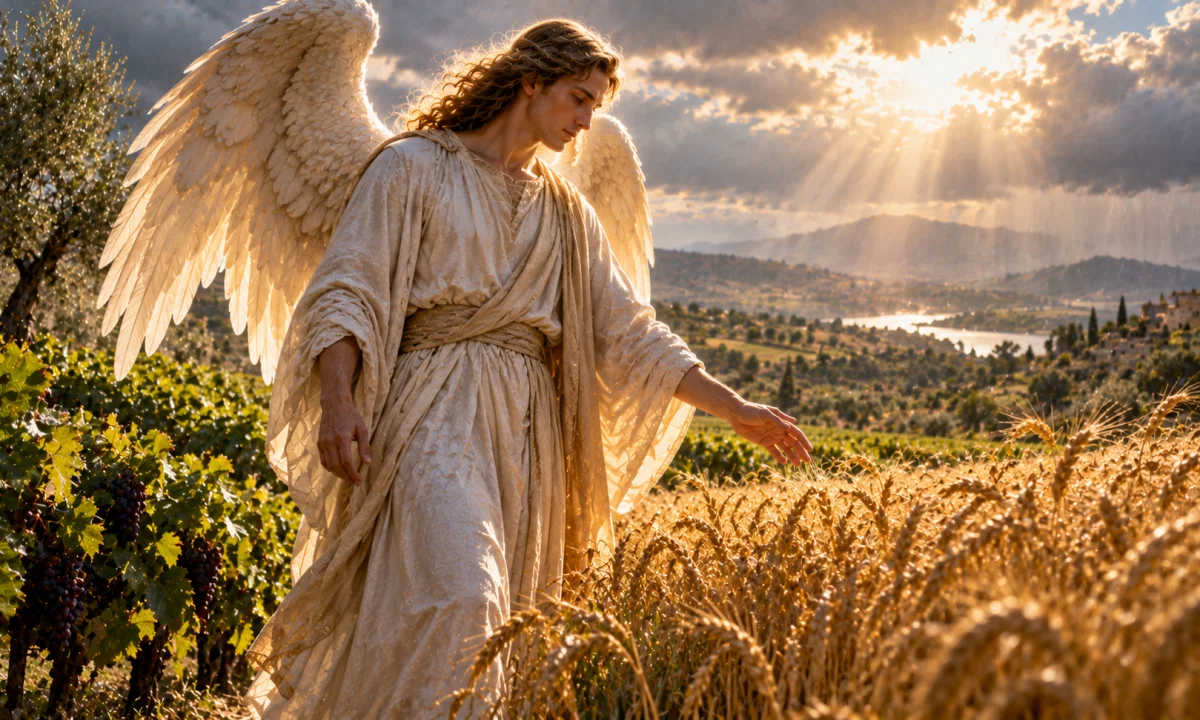
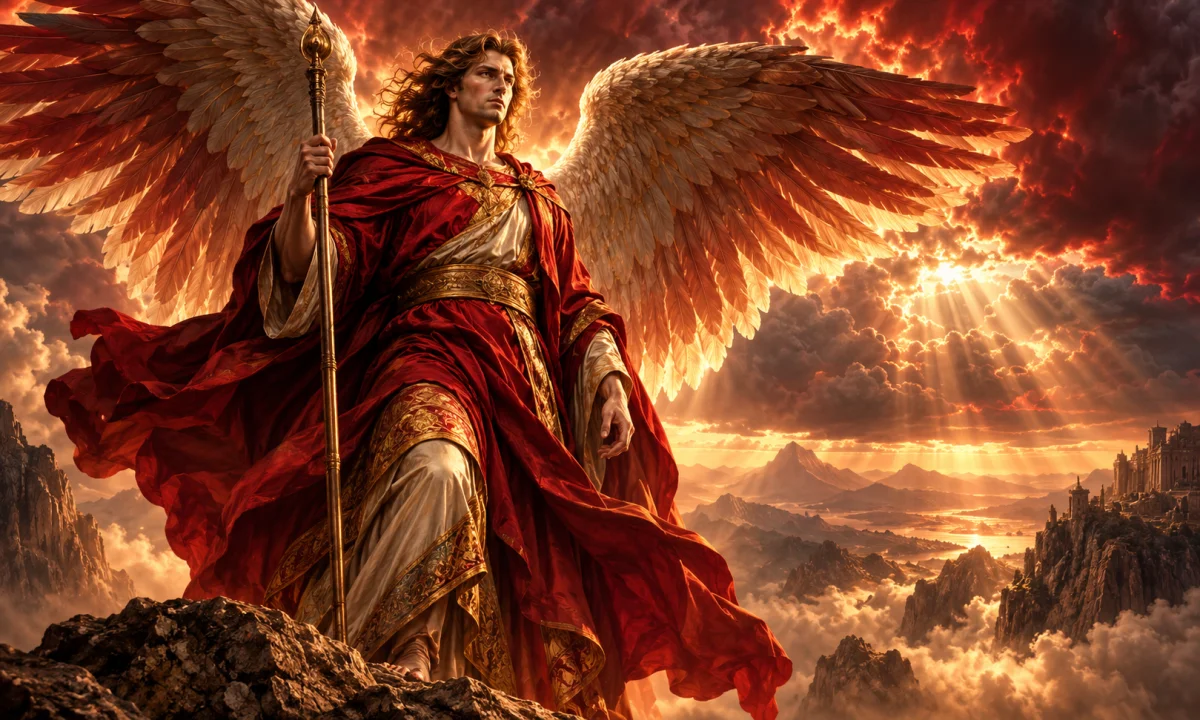
Traditional descriptions of Camael do not preserve a stable physical portrait. He has no universally accepted appearance comparable to the winged figures found in Christian art of Michael or Gabriel. When artists and modern occult writers depict him, they often draw on the visual language of a warrior angel: armour, a sword, a shield, red or fiery colours and a commanding posture.
These attributes are interpretive. A sword may symbolize discernment, authority or the separation of truth from falsehood. Armour may represent spiritual protection and endurance. Fire can suggest purification, divine energy or destructive force. Red may refer to Mars, blood, passion and courage. None of these features is securely established by a canonical account of Camael.
His imagined powers likewise depend on the tradition being used. He may be described as granting courage, strengthening resolve, protecting those engaged in righteous struggle or helping a person confront fear. In more severe interpretations, he administers divine punishment or opposes rebellious spiritual beings. These descriptions are theological and symbolic claims, not historical evidence for a single ancient cult of Camael.
Stories and relationships
Camael has no major narrative cycle in the Bible or in the best-known Jewish and Christian apocalyptic texts. There is no widely recognized account of his birth, a dramatic battle fought by him or a defined relationship with a human prophet. His significance comes mainly from titles, lists and correspondences rather than from stories.
Some later sources portray him as a companion or counterpart of Michael because both can be associated with protection, warfare and the defence of divine order. This is a thematic comparison, not a stable relationship preserved across all traditions. Camael may also be grouped with other archangels in planetary or hierarchical diagrams, but the membership of these groups changes from one source to another.
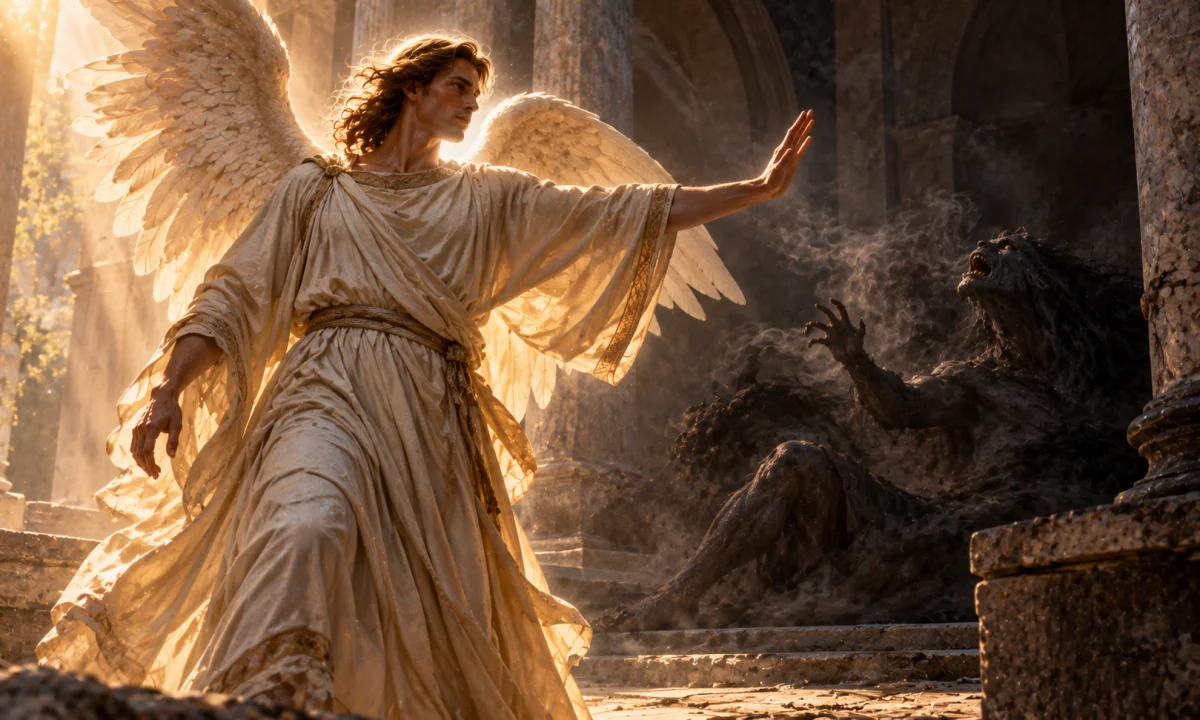
Confusion sometimes arises when Camael is said to be an angel of divine wrath. The phrase reflects the symbolism of judgment and martial power, but it does not establish that Camael is a demon or an evil being. In most angelological systems where he appears, he is a servant of divine authority. His stern character is meant to distinguish him from angels associated with healing, mercy or consolation.
Camael and similar names
Chamuel
Chamuel is the figure most often confused with Camael. In modern devotional and New Age writing, Chamuel is commonly associated with love, peaceful relationships, compassion and the search for God. The name is sometimes explained as meaning “one who sees God” or something similar, although its spelling and interpretation also vary.
Some historical and occult sources use forms of Chamuel and Camael inconsistently, so an absolute separation cannot always be maintained. Even so, their modern profiles are usually different: Camael is linked with strength, Mars and judgment, while Chamuel is linked with love, harmony and perception of the divine. A careful account should identify which spelling and source tradition it is following rather than silently combining the two.
Michael
Camael is also sometimes confused with Michael, the biblical archangel associated with the defence of God's people and the defeat of evil in Jewish and Christian tradition. Both may be represented as warrior angels, but Michael has a much stronger and earlier textual foundation. Michael appears by name in the Hebrew Bible and the New Testament, whereas Camael belongs mainly to later angelological systems.
Other martial angels
Names such as Samael, Uriel and Anael may also be drawn into comparisons with Camael. These figures have their own distinct histories and associations, although later occult charts sometimes rearrange their roles. Samael, in particular, is treated differently across Jewish mystical, Christian demonological and esoteric sources; he should not be equated with Camael simply because both can be associated with severity or judgment.
Religious and symbolic significance
Camael's enduring appeal lies in the way his symbolism addresses a difficult religious question: how can force serve a moral purpose? Traditions that invoke him tend to present strength as something requiring discipline. Courage is not merely fearlessness, and judgment is not merely punishment. Both should be directed toward the protection of order, the defence of the vulnerable or the correction of wrongdoing.
This symbolism reflects a broader pattern in religious thought. Divine power can be imagined as gentle and nourishing, but it can also be protective, judicial and confrontational. Angels connected with these qualities often stand at the boundary between blessing and danger. They remind worshippers or practitioners that spiritual power must be governed by ethical purpose.
In modern spiritual practice, Camael may therefore be invoked as a symbol of resilience, personal boundaries, moral courage and the ability to confront destructive circumstances. Such uses are contemporary interpretations rather than evidence of an unbroken public cult. They may draw from Christian angelology, Kabbalistic vocabulary, ceremonial magic, astrology or personal spirituality.
Later reception and modern adaptations
Camael is more visible in modern occult literature, esoteric correspondence tables and online angelology than in mainstream Christian devotion. Twentieth- and twenty-first-century writers often give him a detailed personality, fixed colour, sacred direction, angelic seal or specialized ritual function. These additions may be meaningful within a particular magical system, but they should not be confused with universally recognized religious tradition.
He has appeared less prominently in popular fiction than Michael, Gabriel, Lucifer or Azrael. When used in fantasy, games or modern occult-inspired media, Camael is usually portrayed as a warrior angel, an embodiment of divine wrath or a guardian connected with Mars. Such representations borrow from established symbolic associations while often inventing individual stories, weapons and relationships for dramatic purposes.
The safest general description is therefore a qualified one: Camael is a later and variably defined angelic figure, commonly associated with strength, martial courage, divine judgment, Mars and sometimes Gevurah. His name is absent from the Bible, his classification differs among sources, and his apparent similarity to Chamuel has produced substantial confusion. Understanding those uncertainties is essential to distinguishing the historical layers of angelology from modern devotional and fictional portrayals.