WORLD
WORLD
Chamuel
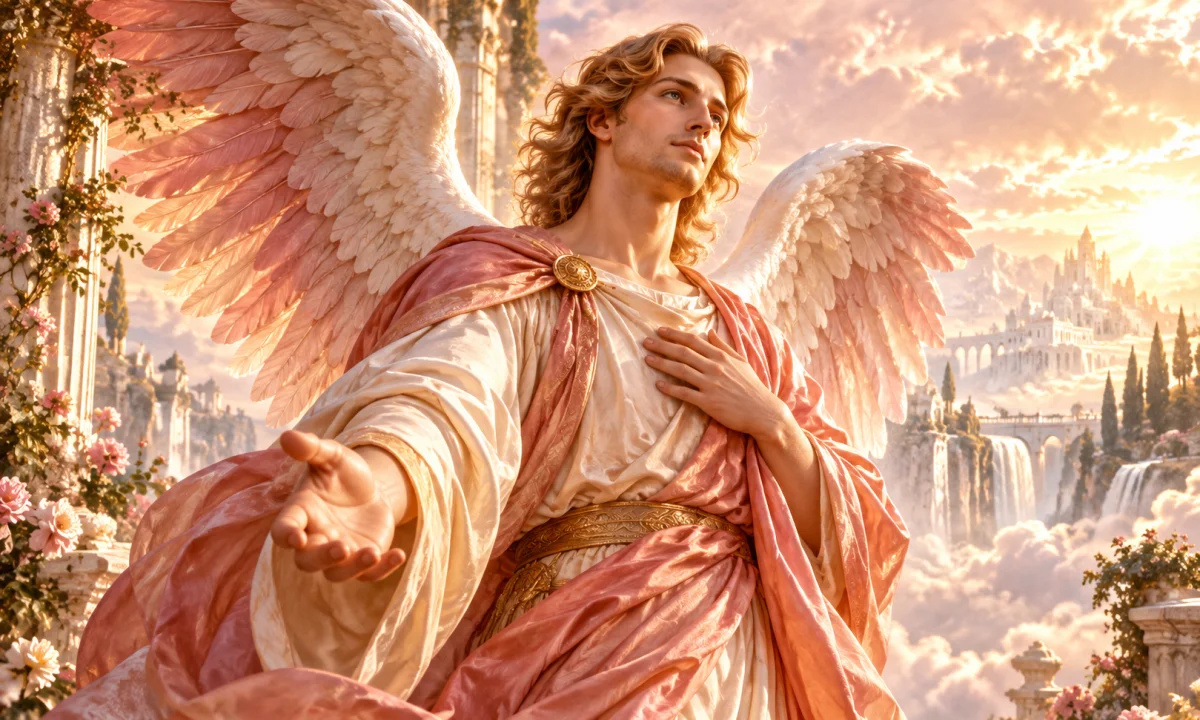
Chamuel is a name used for an angel in later Jewish, Christian, and esoteric traditions, although his identity and status vary considerably between sources. In modern spiritual writing, Chamuel is commonly described as an archangel associated with divine love, compassion, reconciliation, peaceful relationships, and the search for God. These associations are widespread in contemporary angelology, but they do not come from a single ancient scripture or universally accepted religious tradition.
Origins and religious setting
Chamuel does not appear as a named angel in the Hebrew Bible or the New Testament. The canonical biblical texts name only a small number of angels, and even the title “archangel” is used sparingly. As a result, Chamuel belongs primarily to later traditions of angelic classification, devotional literature, occult systems, and modern spiritual practice rather than to the central scriptural traditions of Judaism or Christianity.
The development of names for angels took place over many centuries. Jewish apocalyptic writings, rabbinic discussions, mystical texts, Christian theological works, magical manuals, and later esoteric systems all contributed to expanding lists of angelic beings. These traditions did not always agree about an angel’s name, rank, duties, or relationship to other angels. A name that appears in one list may be absent from another, while similar names may refer to separate figures or may have been confused by later writers.
Chamuel is especially difficult to place because the name is often treated as a form of, or related to, other angelic names such as Camael, Kamael, and Kemuel. Some modern sources present these names as interchangeable. Historically, however, they do not necessarily identify the same being. Their spellings, meanings, and attributes differ between textual and esoteric systems, and there is no single ancient authority that establishes a universal identity for all of them.
The name Chamuel
The meaning of Chamuel is uncertain. It is often explained in English as “he who sees God,” “one who seeks God,” or a similar phrase expressing a relationship with the divine. These interpretations reflect attempts to connect the name with Hebrew elements associated with God and seeing, seeking, or perceiving. The exact linguistic derivation is not secure, partly because the name has been transmitted through several languages and spelling systems.
Different transliterations have produced forms such as Chamuel, Chamuël, Camuel, and occasionally other variations. A spelling beginning with “Ch” may represent an attempt to reproduce a sound from Hebrew or another language, while forms beginning with “K” or “C” may arise from different transliteration conventions. Variation in spelling does not by itself prove that the names refer to different angels, but neither should the forms automatically be treated as identical.
The name should also be distinguished from Samuel, the prophet and judge in the Hebrew Bible. Samuel is a human biblical figure, not an angel named Chamuel. The similarity between the names has sometimes encouraged confusion, especially in modern lists of angels, but they have different traditional identities.
Chamuel and the archangels
In contemporary angelology, Chamuel is frequently called one of the seven archangels. This group is often connected with the idea of seven chief angels found in Jewish and Christian apocalyptic traditions. However, the membership of such a group varies widely. Some sources name Michael, Gabriel, Raphael, Uriel, Raguel, Remiel, and Saraqael; other sources substitute different names or arrange them according to different functions.
Chamuel is not one of the universally recognized biblical archangels. In the Roman Catholic tradition, Michael, Gabriel, and Raphael are the principal named archangels recognized in the Bible. Eastern Christian traditions may preserve additional names in particular liturgical or devotional contexts, but recognition is not uniform. Many Jewish traditions likewise contain extensive angelic lore without accepting every name found in later occult or popular lists.
Calling Chamuel an archangel therefore describes a particular classification, not an agreed fact shared by all religious communities. In some modern systems, he is presented as a high-ranking angel of love. In others, the name is absent altogether, or a related name such as Camael occupies a different position in the celestial hierarchy.
Attributes and symbolism
The most common modern descriptions associate Chamuel with love, compassion, harmony, forgiveness, and peaceful resolution. He is said to help people repair damaged relationships, find emotional balance, overcome resentment, and recognize spiritual value in other people. Some accounts extend his role to self-acceptance, empathy, and the healing of grief.
These qualities are largely symbolic and devotional rather than based on a single narrative about Chamuel. Unlike Michael, who is portrayed in biblical and later Christian tradition as a defender against evil, or Raphael, whose role is linked with healing in the Book of Tobit, Chamuel has no universally accepted scriptural story establishing his duties. His attributes developed through interpretive association, angelic correspondences, and modern spiritual practice.
Contemporary descriptions sometimes assign Chamuel a pink or rose-colored light, reflecting affection, tenderness, and emotional healing. Other systems connect him with particular days, planets, stones, flowers, or forms of meditation. Such correspondences belong chiefly to modern occult and New Age frameworks. They should not be presented as universal features of Jewish or Christian angelology.
Some devotional accounts also describe Chamuel as a guide for people seeking lost objects, peace in times of conflict, or direction in personal relationships. The “finder of lost things” association is particularly common in modern angel material, although it is not supported by a well-established ancient story comparable to the traditions surrounding Raphael or Michael.
Chamuel and Camael or Kamael
The closest and most important comparison is with Camael, also written Kamael or Khamael. In certain Jewish mystical and Christian occult systems, Kamael is a powerful angel connected with divine severity, strength, judgment, or the forces of Mars. In other systems, Camael is counted among the archangels or associated with the divine name and the struggle against evil.
Modern writers sometimes soften or transform these martial and judgment-related characteristics, presenting Camael as Chamuel, an angel of love and peaceful relationships. This may result from spelling variation, translation, overlapping angel lists, or deliberate reinterpretation. Nevertheless, the two names should not be merged without qualification. A source that identifies Chamuel with love may be drawing on a modern devotional tradition, while a source that describes Kamael as a forceful or martial angel may be following a different mystical or occult classification.
Kemuel is another similar name. Kemuel appears in some ancient and medieval angelic traditions, including lists associated with Jewish apocalyptic or mystical literature. The details of his role differ between sources, and he is not automatically the same figure as Chamuel or Kamael. Similarity in sound is insufficient evidence of a shared identity.
Sources and development of the tradition
There is no single foundational text devoted to Chamuel. His profile is instead assembled from later angelic lists, esoteric writings, devotional traditions, and modern interpretations. Some writers connect the name with broad Jewish ideas about angels as servants and messengers of God. Others place him within Christian hierarchies influenced by late antique angelology, while still others draw on ceremonial magic and occult correspondences.
Late antique and medieval Christian theologians commonly discussed the ranks of angels, especially through works influenced by the celestial hierarchy attributed to Dionysius the Areopagite. That hierarchy describes orders such as seraphim, cherubim, thrones, dominions, virtues, powers, principalities, archangels, and angels. It does not establish Chamuel as a member of any of these orders. Later occult writers often combined hierarchical schemes with lists of individual angelic names, producing systems that should not be confused with official Christian doctrine.
Jewish mystical traditions likewise contain rich discussions of angelic names and heavenly officials. Yet Jewish angelology is not a single fixed catalogue. Different texts use different names and assign different roles. A name preserved in a mystical, magical, or apocalyptic document may have significance within that document without becoming a universally accepted figure in Judaism.
Modern references frequently repeat statements about Chamuel’s rank, color, planetary association, or special powers without identifying the tradition from which those statements came. Because the material is layered and inconsistent, such claims are best understood as belonging to particular systems rather than as settled historical facts.
Roles in modern spiritual practice
In contemporary spiritual and New Age practice, Chamuel is often invoked during prayer, meditation, or visualization focused on relationships and emotional peace. Practitioners may address him when seeking reconciliation after an argument, comfort after the end of a relationship, greater compassion, or help in forming supportive friendships. Some accounts describe him as assisting people in recognizing love as a spiritual quality rather than merely a romantic emotion.
Modern practitioners may also associate Chamuel with finding what has been lost, whether a physical possession, a sense of purpose, inner peace, or a damaged connection with another person. This broad interpretation reflects the symbolic expansion common in modern angel work: an angel’s traditional or assumed function becomes a metaphor for psychological and spiritual transformation.
These practices are not shared equally by Judaism, Christianity, or other established religious traditions. A person may use the name devotionally without belonging to a formal church, synagogue, or mystical school. The modern image of Chamuel therefore often functions as a spiritual symbol of reconciliation and care rather than as a figure with a universally defined theology.
Appearance and representation
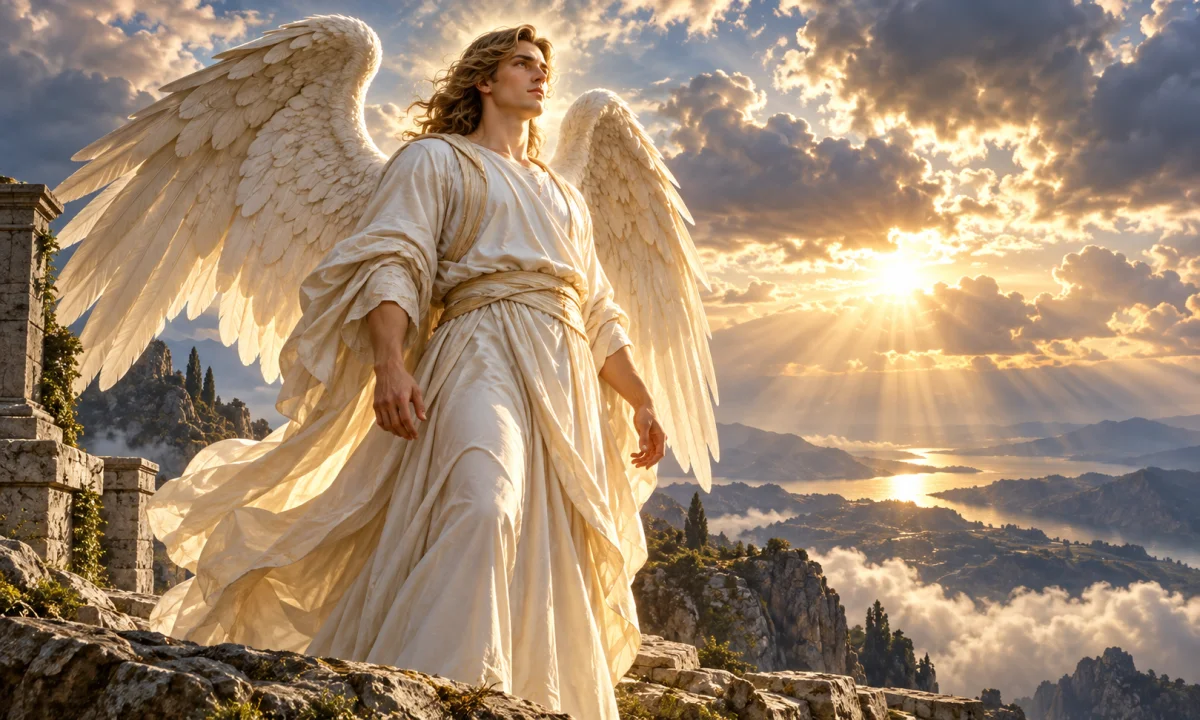
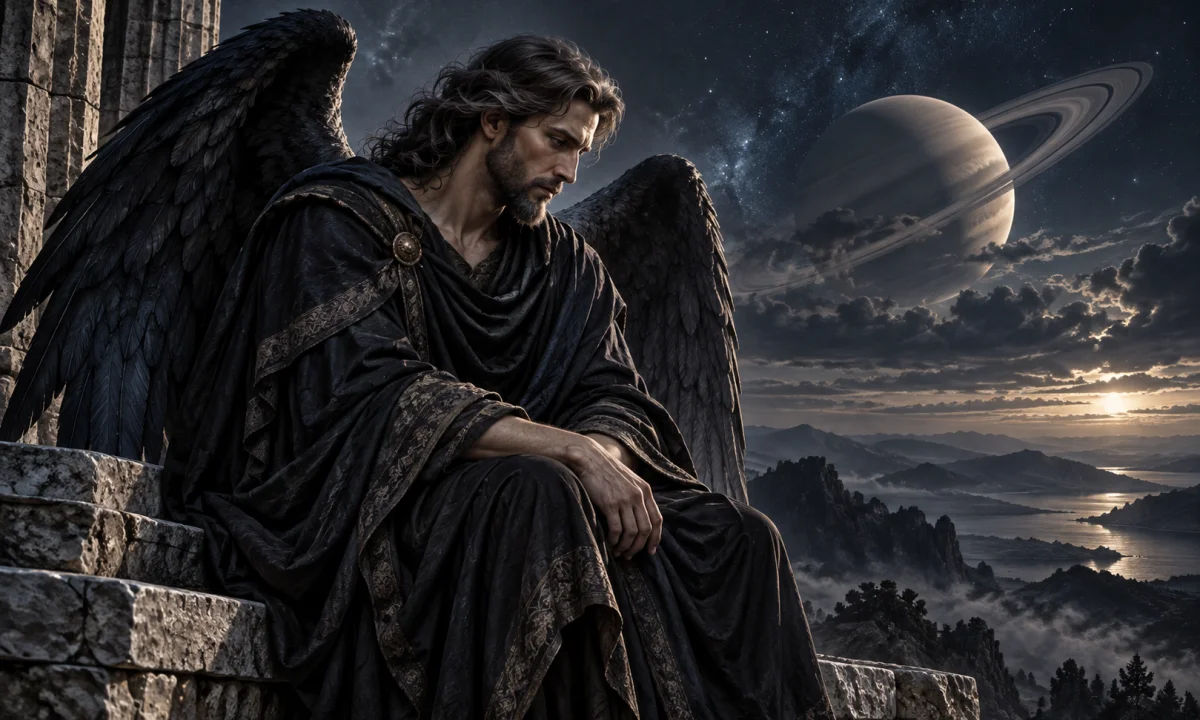
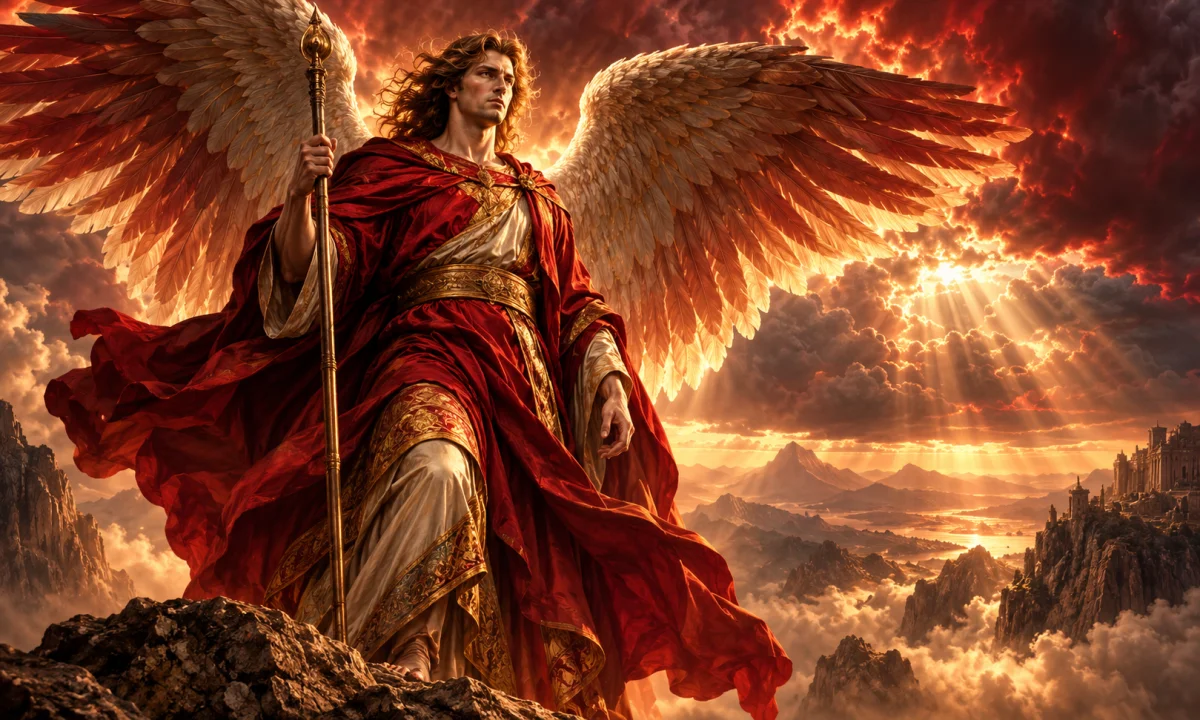
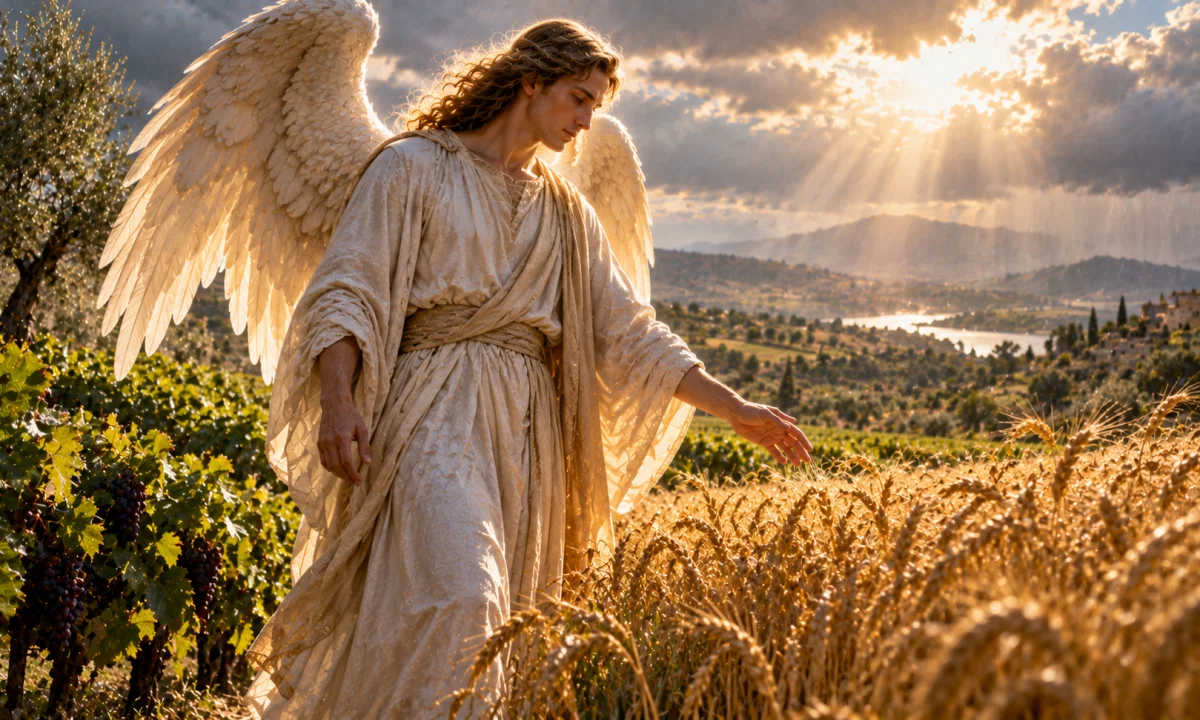
Chamuel has no standard appearance established by scripture or an authoritative iconographic tradition. Modern illustrations commonly portray him as a winged, radiant human figure, often dressed in white, pink, rose, or soft red. These colors visually reinforce themes of affection, gentleness, and emotional healing.
Such imagery belongs to later artistic and esoteric representation. It should not be mistaken for a historical description. Angels in Jewish and Christian traditions may appear in human form, radiant form, or symbolic visions, but there is no canonical physical portrait of Chamuel. Wings themselves are also a matter of artistic convention in many representations rather than a consistent physical feature assigned to every angel in religious texts.
Cultural significance
Chamuel’s importance lies less in a well-documented mythological narrative than in the needs his modern image addresses. The figure offers a personification of reconciliation, tenderness, and the search for divine presence. In a religious culture filled with stories of conflict, judgment, protection, and spiritual warfare, an angel identified with peace and compassionate love provides a contrasting symbolic role.
At the same time, the uncertain history of the name illustrates how angelic traditions develop. Names move between languages, lists are copied and rearranged, and medieval or modern interpreters connect figures who may originally have been distinct. The result is not one stable Chamuel but several overlapping conceptions: a possible name in later angelic catalogues, a figure sometimes identified with Camael or Kamael, and a modern archangel of love and peaceful relationships.
Distinguishing Chamuel from similar figures
- Samuel: The prophet and judge in the Hebrew Bible. He is a human religious figure, not the angel Chamuel.
- Camael or Kamael: A related but not universally identical angelic name, often connected in esoteric systems with strength, severity, judgment, or Mars.
- Kemuel: A separate name found in some Jewish and apocalyptic angelic traditions. Similar spelling does not establish that Kemuel and Chamuel are the same being.
- Michael: A widely recognized archangel in Jewish, Christian, and Islamic traditions, commonly associated with protection and the defeat of evil. His scriptural and traditional basis is much stronger than Chamuel’s.
- Raphael: An angel prominently associated with healing in the Book of Tobit and later religious traditions. The modern healing attributes sometimes given to Chamuel should not be confused with Raphael’s better-established role.
Chamuel is therefore best understood as a later and variable angelic figure whose modern identity centers on divine love, compassion, reconciliation, and peace. The name carries genuine significance within contemporary spiritual practice, but its rank, origin, meaning, and relationship to other similarly named angels remain matters of tradition and interpretation rather than settled religious history.