WORLD

Eiael
Eiael is a name found in later occult and devotional lists of the seventy-two angels associated with the Shem ha-Mephorash, a mystical “explicit name” of God in Jewish esoteric tradition. In these catalogues, Eiael is usually placed sixty-seventh in the sequence and is linked with wisdom, contemplation, learning and the search for spiritual truth. The name does not belong to a clearly defined angelic figure in the Hebrew Bible, and details commonly associated with Eiael come chiefly from later systems of Christian and Western ceremonial angelology.
Origins and religious setting
The background to Eiael lies in the interpretation of three verses in Exodus. Exodus 14:19–21 contains three consecutive Hebrew verses, each traditionally written with seventy-two letters. In Jewish mystical practice, the letters of these verses can be arranged in seventy-two three-letter combinations. These combinations are commonly called the Shem ha-Mephorash, although the terminology and interpretation vary between Jewish sources.
In their original religious setting, the seventy-two combinations are not simply a list of seventy-two angels with biographies and individual personalities. They are connected with the sacred names and powers of God, and their use belongs to specialized traditions of Jewish mysticism, divine-name contemplation and protective practice. Later writers, especially in Christian and Western esoteric contexts, treated the combinations as the foundations of a catalogue of seventy-two angelic names.
Eiael belongs to this later angelological development. The name is therefore best understood as part of a mystical and occult classification, rather than as the name of an angel whose story is recorded in a biblical narrative. Its place in the catalogue is relatively stable in many modern lists, but the associated meanings, prayers, symbols, planetary correspondences and times of influence are not uniform.
The name Eiael
The spelling Eiael is one of several forms used in Latin-alphabet sources. Other forms include Eyael and variants produced by different methods of transliterating Hebrew. The name may also appear with changes in vowel arrangement or with a different initial letter. Such variation is common in the transmission of angelic names from Hebrew characters into Greek, Latin, French, English and other languages.
Modern occult books often give Eiael a meaning such as “God is my delight,” “God is my pleasure” or “the delight of God.” These explanations generally reflect an interpretive translation of the name’s Hebrew elements rather than a universally accepted ancient definition. The exact linguistic derivation is not securely established across all sources, so these meanings should be treated as traditional or symbolic glosses, not as settled etymological facts.
The name is sometimes confused with other names in the seventy-two-angel lists, particularly Haiaiel, which is usually placed immediately after Eiael, and with names such as Ieiazel or Iah-hel in variant catalogues. Similar spellings do not demonstrate that these names refer to the same being. In the systems that distinguish them, Eiael and Haiaiel are separate entries.
Position among the seventy-two angels
In the most commonly encountered modern arrangement, Eiael is the sixty-seventh name. It follows Manakel and precedes Habuhiah. The sequence is based on the ordering of the seventy-two combinations derived from Exodus 14:19–21, though the way names are read, vocalized and assigned to angels differs between traditions.
Many lists also place Eiael within one of the four angelic worlds or choirs used by Christian Kabbalistic systems. Some classify the first eighteen names under the choir of Seraphim, the next eighteen under Cherubim, and later groups under Thrones, Dominions, Powers or other orders. Eiael is frequently associated with the Archangels in such arrangements, but this classification is not a fixed teaching of the Bible or of all Jewish mystical sources.
Other attributes found in modern lists include a ruling period during a particular part of the year, a connection with a specific degree of the zodiac, a planetary influence and a corresponding psalm verse. These details are products of particular systems of Western angel magic and devotional astrology. They should not be presented as universally recognized features of Eiael.
Attributes and symbolic associations
Eiael is commonly connected with intellectual and spiritual illumination. Lists that assign virtues to the name often describe an influence that encourages:
- the pursuit of wisdom and truth;
- philosophical or metaphysical study;
- contemplation and inner stillness;
- the ability to learn from hardship;
- freedom from confusion and discouragement; and
- a deeper appreciation of the order of creation.
Some modern interpretations associate Eiael with astronomy, the natural sciences or the study of hidden laws. These associations should be understood symbolically. They do not mean that ancient texts describe Eiael as the patron of a modern academic discipline, nor do they provide evidence for a historical cult dedicated to this angel.
The name’s recurring theme is the transformation of difficulty into understanding. In devotional interpretations, Eiael may represent the disciplined search for meaning rather than the promise of effortless knowledge. A person invoking the name might therefore be seeking patience, clarity and intellectual honesty instead of supernatural information.
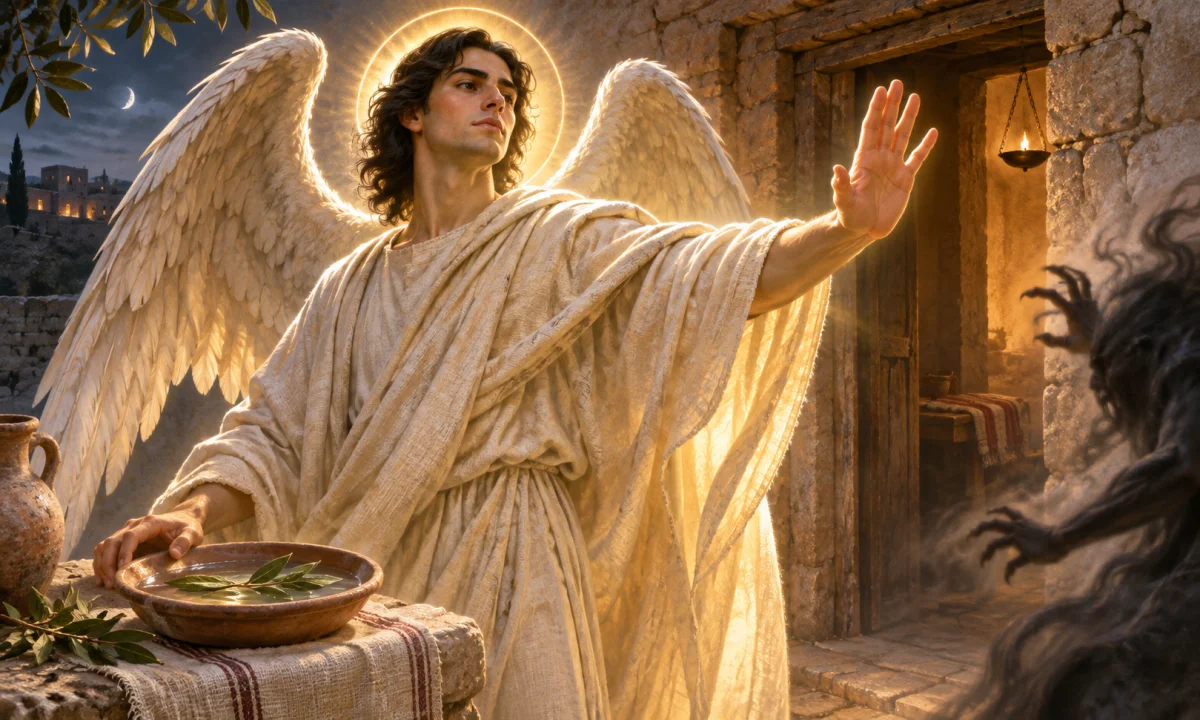
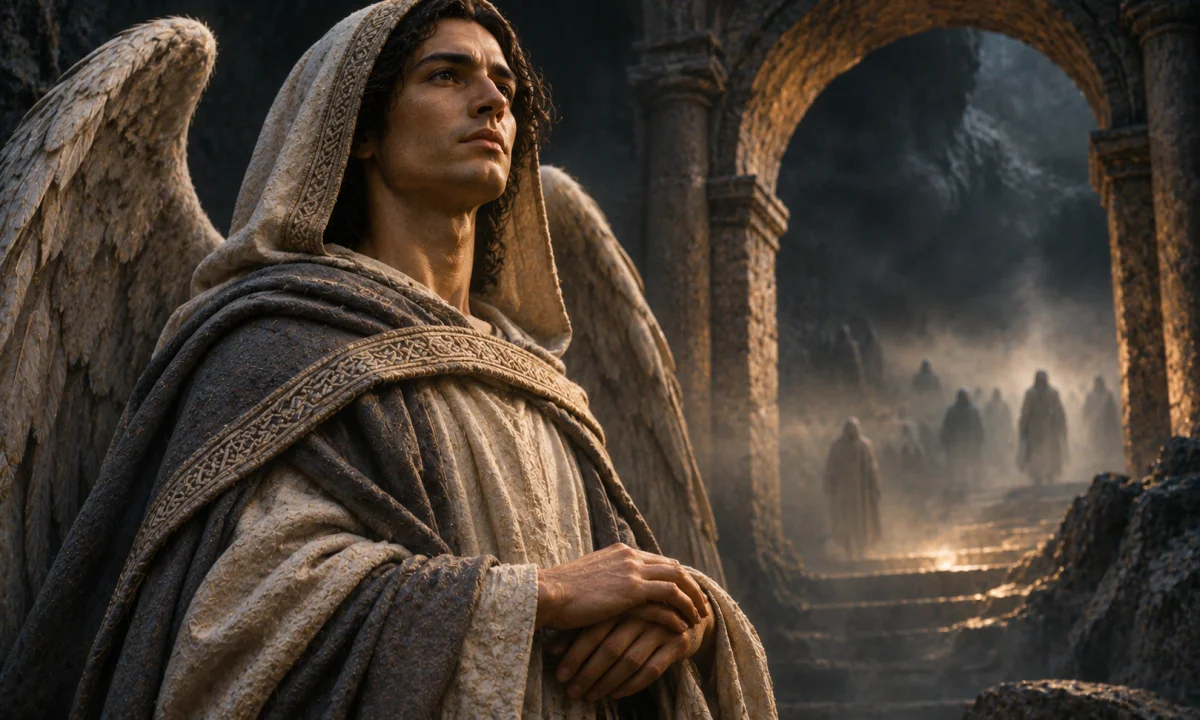
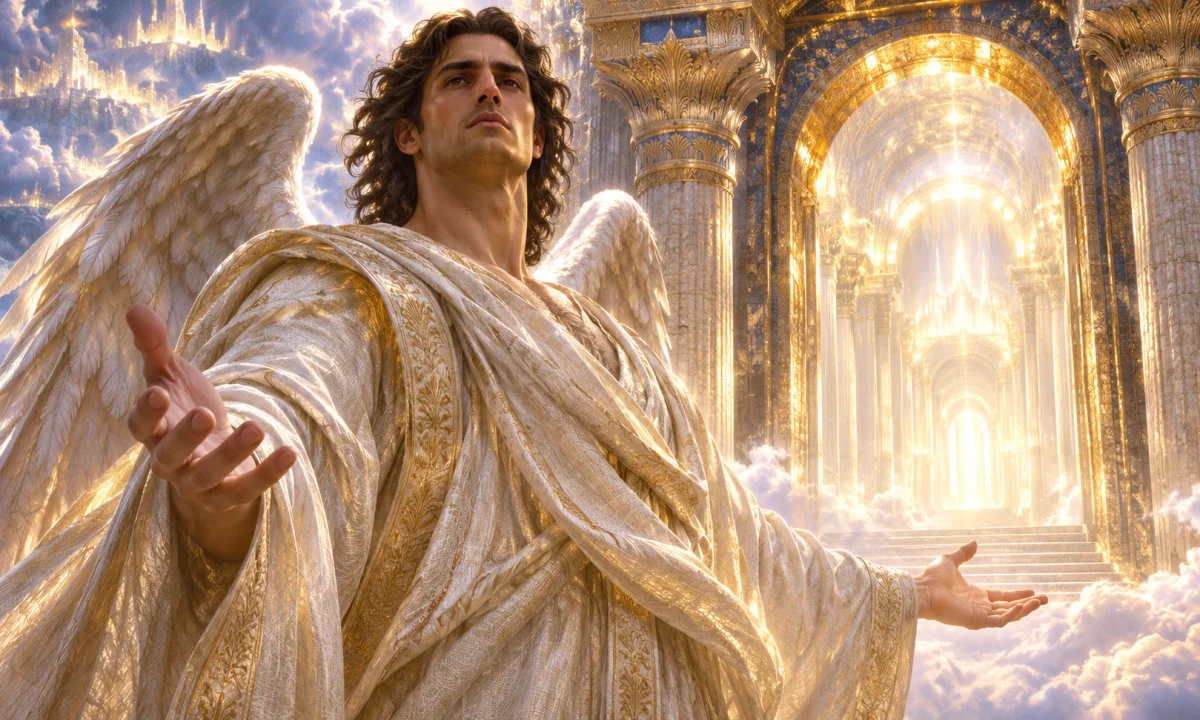
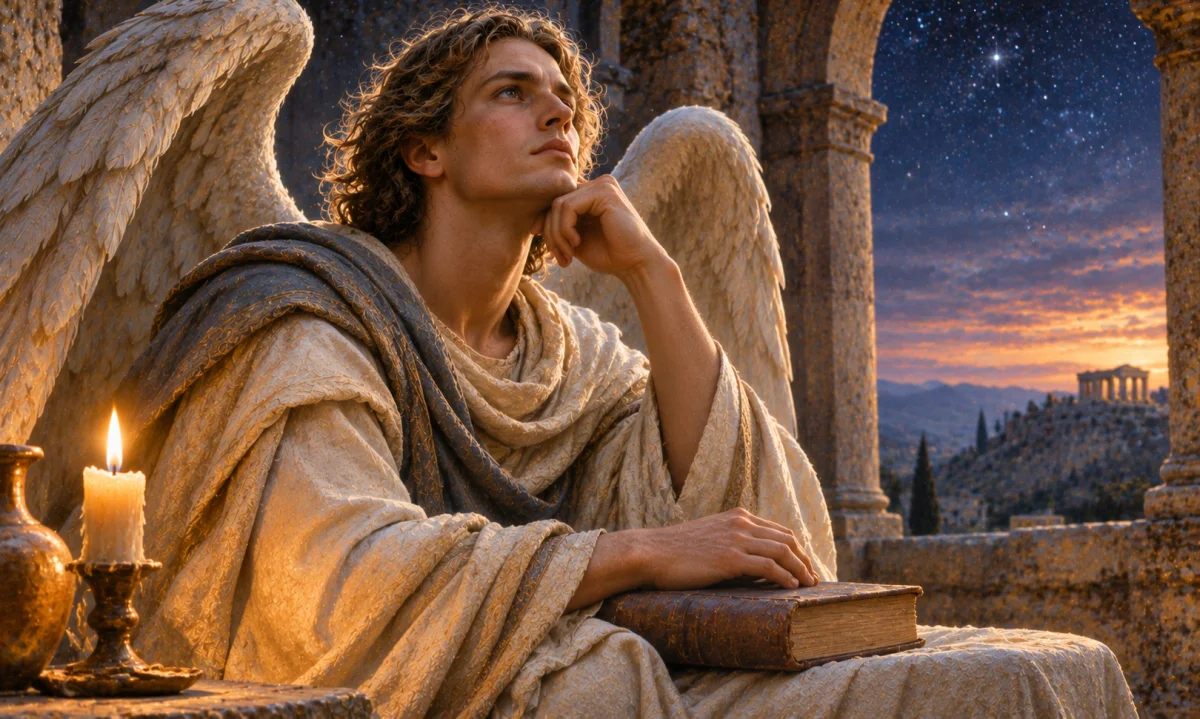
There is no standard physical description of Eiael. Unlike certain angels in biblical or apocalyptic literature, Eiael is not consistently described with wings, a human form, a throne, a weapon or a distinctive colour. Modern illustrations may portray the figure as a radiant winged being holding a book, a lamp or celestial instruments, but these images are artistic conventions. They are not ancient iconographic attributes securely tied to Eiael.
Stories and relationships
Eiael has no independent narrative cycle comparable to the stories of Michael, Gabriel, Raphael or other better-known angels. There is no widely accepted biblical episode in which Eiael appears, speaks to a prophet or intervenes in human history. Nor is there a commonly recognized body of Jewish or Christian legend describing Eiael’s origin, companions or deeds.
The name’s principal “relationship” is structural: it forms part of the seventy-two-name sequence connected with the Exodus verses. In later occult practice, each name can be treated as an angelic intelligence, guardian or channel of a divine quality. This approach gives Eiael a place within a larger symbolic system, but it does not create a single universally authoritative mythology.
Some modern sources assign Eiael a verse from the Psalms, often one referring to delight in God or the fulfilment of spiritual desire. The exact verse varies, and these assignments are interpretive correspondences rather than evidence that the Psalm originally named Eiael. The Hebrew Bible does not identify the angel by that name.
Eiael in Jewish mystical and Christian esoteric traditions
The history of the seventy-two names involves interaction between Jewish Kabbalah and later Christian esotericism. Jewish mystical writers explored divine names, angelic beings and the structure of the heavenly realm in different ways. Christian Kabbalists later adapted elements of these traditions to Christian theology, Renaissance occult philosophy and systems of angelic magic.
In this process, the seventy-two letter-combinations became increasingly associated with individual angels. Later catalogues added names, meanings, seals, prayers, dates and other correspondences. The resulting systems are influential in modern occultism, but they should not be projected backward as though they were a complete, unchanged teaching from biblical times.
The distinction matters because the word “angel” can describe different kinds of beings or concepts in different traditions. In biblical Hebrew, angels are generally messengers or heavenly servants of God, while later mystical and occult systems may treat named angels as guardians of specific qualities, periods of time or forms of knowledge. Eiael belongs most clearly to the latter classificatory development.
Religious and symbolic significance
For people who use the seventy-two names devotionally, Eiael can symbolize the mind’s movement from confusion toward insight. The emphasis on delight, wisdom and contemplation gives the name a positive spiritual orientation: knowledge is not merely the accumulation of facts but a way of perceiving the divine order of existence.
Its associations can also be read in an ethical sense. The search for hidden knowledge, in many religious traditions, is valuable only when joined with humility and responsibility. Eiael’s modern symbolic profile therefore lends itself to reflection on disciplined study, patience in adversity and the use of understanding for spiritual growth rather than personal domination.
These interpretations are not the same as historical evidence for a distinct ancient cult. There is no reliable evidence of temples, public festivals or a widespread independent devotion to Eiael in antiquity. The name’s importance is primarily textual, mystical and esoteric: it survives through systems that organize divine names and angelic qualities.
Distinguishing Eiael from similar names
Eiael is easily confused with other entries because angelic names in these catalogues often share the ending -el, a form associated with the Hebrew word for God. The following distinctions are useful:
- Haiaiel is generally listed as the sixty-eighth name, immediately after Eiael. Although the spellings can look similar, the two are treated as separate names in the standard seventy-two-name sequence.
- Iah-hel is usually listed earlier, often as the sixty-second name. It is not another spelling of Eiael.
- Ieiazel or related forms may occur in lists with differing transliterations and should not automatically be identified with Eiael.
- Jophiel, sometimes associated with beauty and wisdom in later angelology, is a different angelic name and does not belong to Eiael’s entry.
Different catalogues may use different transliterations, and a name that appears distinct in English may reflect the same Hebrew letters as a variant elsewhere. Identification should therefore depend on the name’s position and the source’s system, not on spelling alone.
Later reception
Eiael is most visible today in books and websites devoted to the seventy-two angels, ceremonial magic, Kabbalistic correspondences and personal spiritual practice. Contemporary treatments may present Eiael as a guardian angel for people born during a particular period or as an aid in meditation, study and protection. Such claims belong to modern or early modern esoteric frameworks rather than to a single ancient religious consensus.
Eiael has not achieved the broad presence in literature, film, games or popular religious culture associated with Michael, Gabriel, Lucifer or Azrael. When the name appears in modern occult fiction or spiritual media, its portrayal often draws on the symbolic associations of wisdom and enlightenment rather than on an established narrative tradition. These adaptations should be distinguished from the older idea of the seventy-two divine-name combinations and from the historical development of Kabbalistic angelology.
For WorldMythos, Eiael is best classified as a later angelological figure associated with the Shem ha-Mephorash tradition: a name surrounded by rich mystical interpretation but lacking a single canonical biography, universally agreed pronunciation or consistent set of attributes.