WORLD

Anotchi
Anotchi is a name sometimes presented in modern lists of African mythological beings, but its traditional identity is not securely established. There is no widely recognised pan-African deity, spirit or legendary creature with a consistently documented name, mythology and set of attributes matching Anotchi. The name may reflect a rare local tradition, an alternative spelling, a transcription problem or a modern compilation that has repeated an earlier error. Any account of Anotchi therefore needs to distinguish firmly attested African traditions from uncertain identification.
The problem of identifying Anotchi
Africa contains thousands of cultural and religious traditions, including the mythologies of Akan, Yoruba, Igbo, Fon, Ewe, Mande, Dogon, Kongo, Luba, Zulu, Xhosa, Somali, Oromo, Maasai and many other peoples. These traditions have different languages, religious institutions and ideas about gods, ancestors, spirits and legendary beings. “African mythology” is consequently a broad modern category rather than the name of one unified belief system.
Within that large body of material, Anotchi is not a securely standardised name. Well-known African religious figures generally have identifiable linguistic, regional or ritual contexts. For example, Anansi belongs to Akan-speaking traditions; Ọ̀rúnmìlà is associated with Yoruba divination; Mawu and Lisa belong to Fon and related traditions; and Nyame is an important Akan sky deity. Anotchi does not have an equally clear position in the commonly documented religious systems of Africa.
The absence of a secure identification does not prove that no person, community or oral tradition has ever used the name. Oral traditions may be known only locally, recorded under different spellings or preserved in languages that have not been widely translated. It does mean that claims about Anotchi’s status, powers or stories should not be treated as established African mythology without additional evidence.
Name, spelling and language
The spelling Anotchi does not by itself reveal a language or cultural origin. African languages often contain sounds that were represented inconsistently by European writers, missionaries, colonial officials and early folklorists. A single name might therefore appear in several forms when written in different alphabets or according to different systems of transliteration.
At the same time, an unusual spelling should not automatically be “corrected” into a more familiar name. Similar-looking names may belong to entirely different languages and traditions. Anotchi should not be silently identified with Anansi, Ananسی, or another trickster figure merely because the written forms resemble one another. Nor should it be equated with a deity from a different region without evidence concerning language, ritual and oral tradition.
Some modern lists provide no local spelling, pronunciation, community, story or religious context for Anotchi. Without those details, the name cannot be classified confidently as a god, ancestor, nature spirit, monster, hero or trickster. The safest classification is therefore an uncertain or insufficiently documented mythological name, rather than a specific supernatural category.
Cultural setting and the limits of the evidence
Traditional African religions commonly distinguish among several kinds of sacred beings, although the distinctions vary considerably. A high creator or sky power may be approached differently from local divinities connected with rivers, forests, earth, fertility, illness, warfare or craft. Ancestors may have continuing religious importance, while spirits associated with places or natural forces may be honoured through priests, shrines, offerings, possession ceremonies or seasonal observances.
These categories are analytical conveniences and should not be imposed too rigidly. A being described in English as a “god” might be understood in its own community as a spirit, a divinity, a powerful ancestor or an intermediary. Likewise, an oral story may not function as a fixed sacred scripture. Versions can differ between villages, families, ritual specialists and generations.
For Anotchi, no stable body of traditional narratives is securely available in the general record. There is no dependable cycle of myths that establishes a birth, genealogy, residence, spouse, enemies, sacred animals, ritual calendar or relationship with a named supreme being. Assertions that Anotchi rules a particular element, protects a particular occupation or possesses a distinctive animal form therefore require caution unless they are tied to a specific community and an identifiable tradition.
Attributes and powers
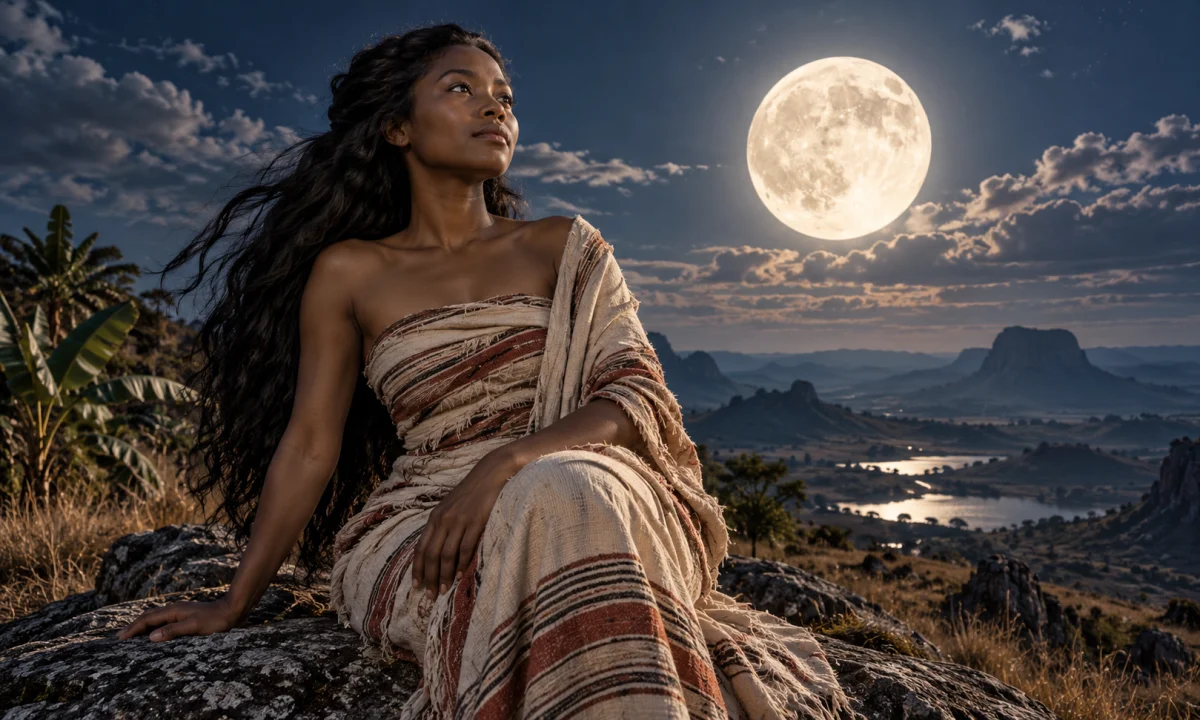
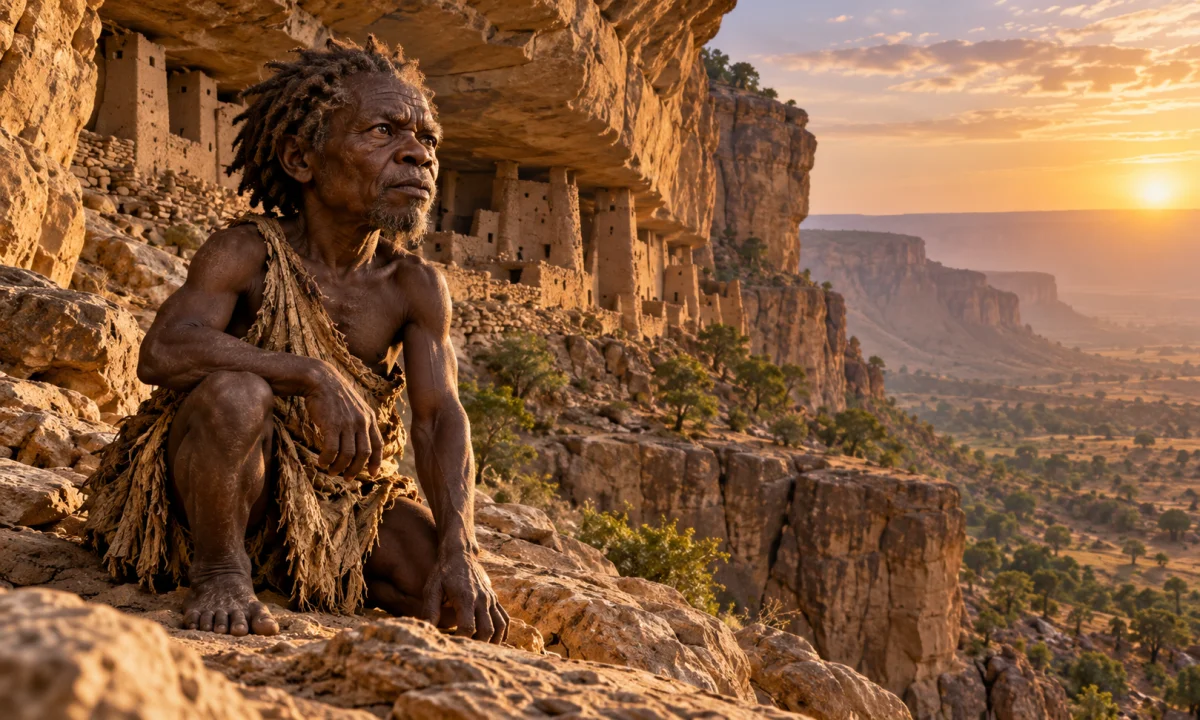
Reliable descriptions of Anotchi’s appearance are lacking. The name cannot safely be associated with horns, wings, an animal body, unusual weapons, a particular colour or a human-like form. Such features are often added to mythological entries when an unknown name is turned into a character for a reference list, game, illustration or fictional story. They should not be presented as traditional attributes without supporting cultural context.
The same caution applies to alleged powers. There is no firmly established evidence that Anotchi is a deity of war, thunder, the sea, hunting, death, fertility, healing or creation. These are common roles in world mythology, and attaching one to an obscure name can create a plausible-sounding but unsupported entry. A responsible description should leave the role open rather than fill the gap with a generic function.
There is also no securely documented sacred symbol or ritual object associated specifically with Anotchi. If a modern depiction gives the figure a staff, mask, drum, animal companion or particular garment, that image belongs to the artist or adaptation unless a local tradition is identified.
Stories and relationships
No widely recognised mythological narrative can confidently be assigned to Anotchi. In particular, there is no established story that places Anotchi in a conflict with a creator deity, a relationship with Anansi, a marriage to a named goddess or a role in the origin of humanity. Genealogies found in brief internet entries should be treated with suspicion when they are not supported by a clear regional tradition.
This is important because African mythological figures are sometimes detached from their cultural settings and rearranged into a single fictional pantheon. A creator from West Africa may be listed beside a river spirit from Central Africa and a heroic ancestor from Southern Africa as though all belonged to one religion. The resulting catalogue can be entertaining, but it is not an accurate representation of African religious history. Anotchi should not be inserted into such a combined system merely because its name appears under the heading “African mythology.”
Possible confusion with Anansi
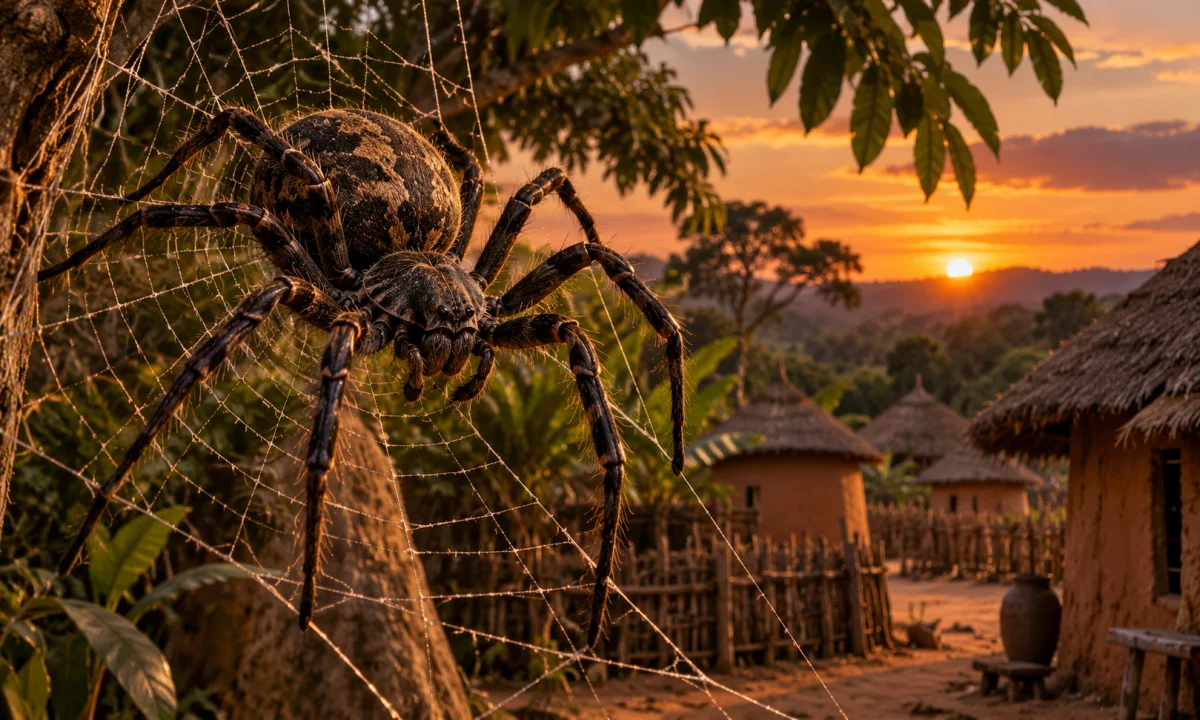
The most likely source of confusion is Anansi, the spider trickster of Akan-speaking peoples in West Africa. Anansi is a well-documented figure with numerous stories concerning cleverness, deception, storytelling, greed, social hierarchy and the reversal of power. The name has many forms in different languages and has travelled widely through the African diaspora, especially in the Caribbean and the Americas.
Anotchi and Anansi are not the same name on the evidence currently available. A spelling resemblance is not enough to establish that Anotchi is a regional form of Anansi. Anansi is also sometimes described as a spider, a human being, or a figure who shifts between forms depending on the story. None of those familiar features should be transferred to Anotchi without specific evidence.
Other African names may also look similar in English transcription. Similarity can result from ordinary spelling conventions rather than a shared origin. Correct identification requires more than matching letters: it requires information about the original language, pronunciation, location, storytellers, ritual setting and narrative tradition.
Oral tradition and historical documentation
Many African religious traditions were transmitted primarily through performance rather than through a single canonical book. Songs, praise poetry, initiation instruction, divination verses, masquerade performances and family narratives can preserve religious knowledge in forms that are difficult to represent in a short dictionary entry. Some traditions were also suppressed, transformed or misrecorded during colonial rule and missionary activity.
Those historical realities explain why a poorly documented name should be approached carefully, but they do not justify inventing an identity for it. Respect for oral tradition includes respect for its particular community and language. A claim that Anotchi comes from “African mythology” without naming a people or region removes precisely the context needed to evaluate the claim.
A stronger identification would need at least some combination of the following: a recorded local spelling, a stated language, a specific community, a description of ceremonies or beliefs, a traditional narrative, or testimony from recognised cultural bearers. Without such information, Anotchi remains a name of uncertain provenance rather than a clearly defined figure in a known African pantheon.
Modern circulation of the name
Anotchi may circulate through modern mythology databases, unsourced lists, fantasy reference material or repeated online summaries. Once an uncertain name appears in one catalogue, later writers may copy the entry and add details until the result appears authoritative. Repetition, however, does not establish antiquity or authenticity.
Modern fiction is free to develop Anotchi as a character, but such a creation should be labelled as an adaptation or original interpretation. A novelist, game designer or illustrator might give the name a history, form and set of powers, yet those additions belong to modern popular culture rather than to a verified traditional religion. The distinction is especially important when modern artwork presents an invented figure in a style associated generally with African masks, textiles or sculpture.
Until a precise cultural source is identified, Anotchi is best treated as an uncertain entry in the modern circulation of African mythological names. It should not be described confidently as a god, spirit, monster or hero, and it should not be merged with Anansi or any other better-documented African figure simply to provide a more complete story.