WORLD

Zipacna
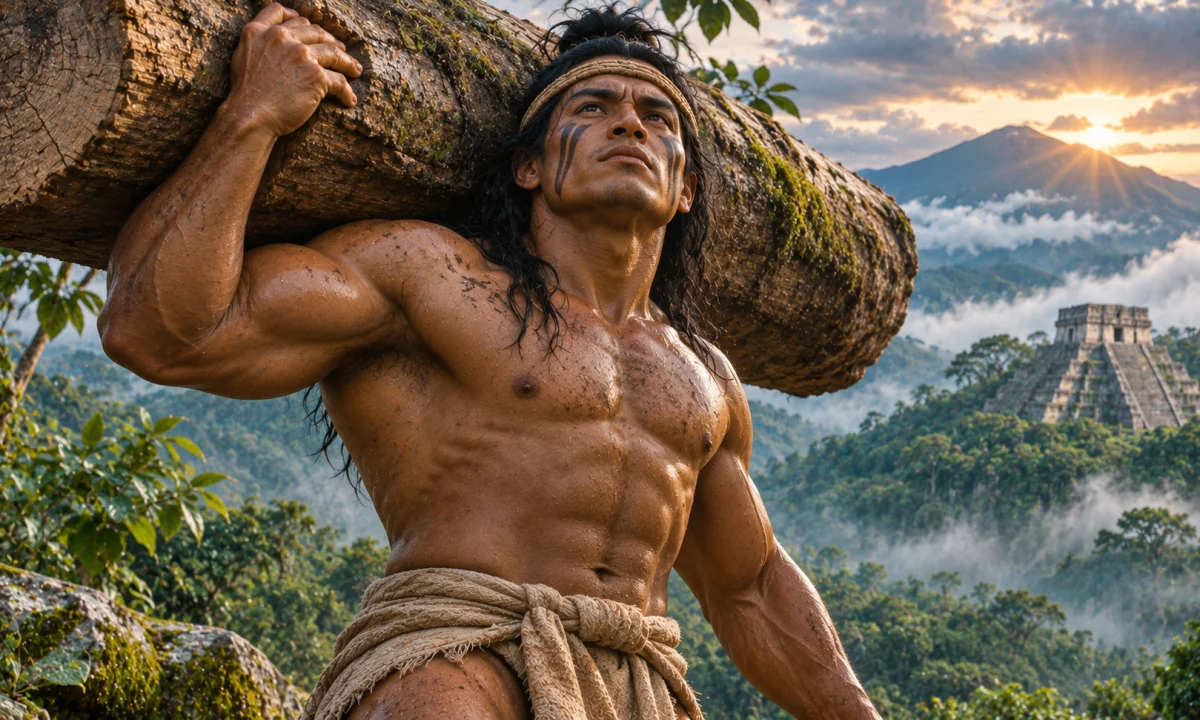
Zipacna is a powerful and destructive being in K’iche’ Maya mythology, known chiefly from the Popol Vuh. He is described as the eldest son of Vucub-Caquix and Chimalmat and the brother of Cabrakan. Zipacna claims to have created the mountains, and his immense strength, arrogance and violence place him among the dangerous opponents defeated by the Hero Twins, Hunahpu and Xbalanque.
Origins and cultural setting
Most surviving information about Zipacna comes from the Popol Vuh, the great K’iche’ narrative of creation, ancestry and heroic myth. The work preserves Indigenous K’iche’ traditions in a manuscript recorded in the colonial period, probably during the sixteenth century. Its surviving form reflects both older oral traditions and the circumstances in which K’iche’ knowledge was written down in an era of Spanish colonial rule.
The Popol Vuh is not a general catalogue of all Maya gods. It is specifically associated with the K’iche’, a Maya people of the Guatemalan highlands, although many of its themes belong to a wider Mesoamerican religious and mythological environment. Zipacna should therefore not automatically be treated as a universally recognized “Maya god” worshipped under that name throughout the Maya world. The evidence supports identifying him primarily as a K’iche’ mythological being whose story forms part of a larger sacred history.
The narrative presents Zipacna within a family of beings associated with false claims to cosmic importance. His father, Vucub-Caquix, boasts that he is the sun and the moon. Vucub-Caquix’s sons inherit this pride in different forms. Zipacna boasts of making the mountains, while his younger brother Cabrakan claims power over the earth and its elevations. Their family belongs to the older generation of powerful beings that must be overcome before the world can be properly ordered.
Name and identity
The name appears in several spellings, including Zipacna, Zipacná and forms influenced by different systems for writing K’iche’ sounds. Colonial and modern translators have not always represented Indigenous names in the same way. The exact etymology of the name is not securely established, so proposed meanings should be treated cautiously.
Zipacna is sometimes called a god of earthquakes, mountains or natural destruction in modern reference works. These descriptions capture important aspects of his story, but the Popol Vuh does not present him in the same systematic way as a deity with a clearly defined cult, temple network or calendar function. It is more accurate to describe him as a gigantic, superhuman mythic being associated with mountains and violent earth movement.
His classification is also affected by translation. English versions may refer to him as a god, giant, demon or supernatural being. None of these labels corresponds perfectly to the categories used in K’iche’ thought. “Giant” emphasizes his scale and physical power; “god” emphasizes his supernatural status; and “demon” can impose a later European religious distinction that does not fit the original story. A neutral description such as mythic being or powerful mountain-associated figure avoids overstating the evidence.
Appearance and powers
The Popol Vuh emphasizes Zipacna’s extraordinary strength rather than providing a detailed physical portrait. He is capable of carrying or moving enormous objects and is portrayed as vastly more powerful than ordinary human beings. His size and strength are central to the story of the four hundred boys, who discover that they cannot defeat him by ordinary means.
Zipacna declares that he made the great mountains and the smaller mountains. The claim may be understood literally within the mythic world, where powerful beings participate in forming and reshaping the landscape. It also functions as a boast. Like his father and brother, Zipacna presents himself as more important than he truly is, and his claim becomes evidence of dangerous pride.
Later interpretations connect Zipacna with earthquakes because the story places him beneath a mountain after his defeat. The association is plausible as a symbolic reading: a buried giant or mountain-moving being naturally invites comparison with tremors and upheaval. However, the surviving narrative does not provide a full doctrine explaining that every earthquake is caused by Zipacna. The identification of Zipacna as an earthquake deity is therefore best described as an interpretation based on his mythic role, not as an uncontested statement of K’iche’ religious practice.
The four hundred boys
One of Zipacna’s most important episodes concerns a group known as the four hundred boys. The story begins when they are trying to obtain a large tree for the construction of a house. They encounter Zipacna, who is able to carry the tree by himself. His display of strength reveals how far he exceeds ordinary human beings, but it also contributes to the boys’ fear and resentment.
The four hundred boys devise a plan to kill him. They construct a deep pit and cause a large structure or load to fall upon him, believing that he has been crushed. Zipacna survives the attempt. He then emerges and kills all four hundred boys.
This episode establishes several features of his character. He is not merely a neutral force of nature or a strong laborer. He is dangerous, vindictive and willing to use overwhelming power against those who plot against him. At the same time, the episode helps explain why the Hero Twins later intervene. The boys’ deaths are not treated as an isolated incident; they become part of the larger contest between violent, boastful powers and the clever protagonists who seek to defeat them.
The four hundred boys are not usually presented as members of a clearly defined historical people or as a separate pantheon. Their precise identity and significance are not fully explained in the narrative. They function mainly as figures in Zipacna’s story and as victims whose deaths motivate the Hero Twins’ plan.
The Hero Twins’ plan
Hunahpu and Xbalanque learn what has happened to the four hundred boys and decide that Zipacna must be destroyed. They do not challenge him through a direct contest of strength. Instead, they use deception, a characteristic method throughout the Hero Twins’ adventures.
The twins tell Zipacna that a large crab lives in a ravine. They describe it as an attractive and desirable creature, encouraging him to pursue it as food. The crab is part of a carefully prepared trap rather than an ordinary animal encountered by chance. In some translations, the details of its construction and presentation differ, but the essential pattern remains the same: the twins create a false opportunity that exploits Zipacna’s appetite and confidence.
Zipacna enters the ravine and struggles to reach the crab. The effort weakens or distracts him, allowing the twins to bring down a mountain or massive burden upon him. He is buried beneath the mountain called Meauan in translations of the Popol Vuh. The story presents his defeat as a consequence of his pride and as a victory of intelligence over brute strength.
The episode does not portray Hunahpu and Xbalanque as physically stronger than Zipacna. Their success depends on observation, patience and the ability to make their enemy act according to his own desires. Zipacna’s confidence becomes his vulnerability. He believes that no ordinary challenge can threaten him, and this makes him susceptible to a simple but well-designed deception.
Family relationships
Vucub-Caquix
Vucub-Caquix, whose name is often translated as “Seven Macaw,” is Zipacna’s father. He is a proud and self-aggrandizing being who claims to be the sun and moon of an earlier age. His claims are false or exaggerated, and the Hero Twins eventually bring about his downfall.
Zipacna resembles his father in his arrogance. Both mistake personal brilliance or power for legitimate cosmic authority. Their stories are connected by a broader theme: beings who announce themselves as rulers of the world are exposed as impostors or dangerous remnants of an earlier order.
Chimalmat
Chimalmat is named as Zipacna’s mother and is also associated with Vucub-Caquix as his consort. The Popol Vuh gives her far less narrative attention than her husband and sons. Few securely established details about her character, appearance or independent religious role survive in the text.
Cabrakan
Cabrakan is Zipacna’s younger brother. He is associated with mountains and the destruction or movement of the earth, but he is not the same being as Zipacna. In the Popol Vuh, the brothers have related abilities and similarly excessive pride, yet their stories are distinct. Zipacna is defeated through the crab and mountain trap, while Cabrakan is brought down through a different deception involving food and the weakening of his strength.
Because both brothers are connected with mountains, modern summaries sometimes combine their roles. That is inaccurate. Zipacna is the son who claims to have made the mountains and is buried beneath one; Cabrakan is the separate figure whose power is associated with overturning or lowering mountains.
Symbolism and interpretation
Zipacna’s story can be read as a myth about the limits of uncontrolled power. His strength is real, but strength alone does not establish rightful authority. He can survive a carefully planned attack by the four hundred boys, yet he cannot recognize when the Hero Twins are manipulating him. The narrative repeatedly contrasts physical force with cleverness, strategy and self-control.
Mountains have several possible levels of meaning in this context. They are features of the visible landscape, signs of the world’s formation and symbols of permanence. Zipacna’s claim to have made them presents him as a primordial shaper of the earth. His burial beneath a mountain reverses that claim: the being who boasts of controlling the landscape becomes part of the landscape and loses his freedom.
The story may also express an opposition between order and unstable or excessive power. The beings associated with Vucub-Caquix represent a flawed earlier condition in which powerful figures make false claims to rule. Their defeat clears the way for the ordered world and the later achievements of the Hero Twins. This interpretation should not be treated as a single proven meaning, since the Popol Vuh contains layered narrative, religious and political dimensions. It does, however, reflect a major pattern in the text.
Zipacna’s possible connection with earthquakes is especially open to interpretation. A giant beneath a mountain provides a vivid mythic image for subterranean movement, but the text’s main concern is his defeat and arrogance rather than a detailed explanation of seismic events. Some modern writers elevate him into a formal earthquake god, while others retain the more limited description of a mountain-making giant. The latter is closer to what the narrative explicitly establishes.
Distinguishing Zipacna from similar figures
- Zipacna and Cabrakan: They are brothers, not alternate names for one being. Both have mountain-related powers, but their episodes and narrative functions differ.
- Zipacna and Vucub-Caquix: Vucub-Caquix is Zipacna’s father and a separate figure whose false claim to be the sun and moon drives another part of the Hero Twins’ story.
- Zipacna and the Hero Twins: Zipacna is an adversary defeated by Hunahpu and Xbalanque. He is not one of the twins and should not be confused with their changing names or manifestations.
- Zipacna and a universal Maya earthquake deity: The association with earthquakes is based largely on interpretation and later summaries. It should not be presented as evidence for a single pan-Maya god named Zipacna.
Later reception
Zipacna has become more familiar outside K’iche’ tradition through translations and retellings of the Popol Vuh. In modern fantasy, games and popular writing, his name may be used for a giant, monster, earth spirit or earthquake-associated antagonist. Such portrayals often emphasize his size, subterranean location and destructive power.
These adaptations can preserve recognizable elements of the traditional story, but they frequently simplify his identity or merge him with Cabrakan and other earth-related beings. The traditional Zipacna is best understood through his place in the K’iche’ narrative: a proud son of Vucub-Caquix, a mountain-associated being of exceptional strength, and an adversary overcome not by greater force but by the strategic intelligence of the Hero Twins.