 WORLD

Maya mythology
Articles about Maya mythology within Mesoamerica.
Last articles
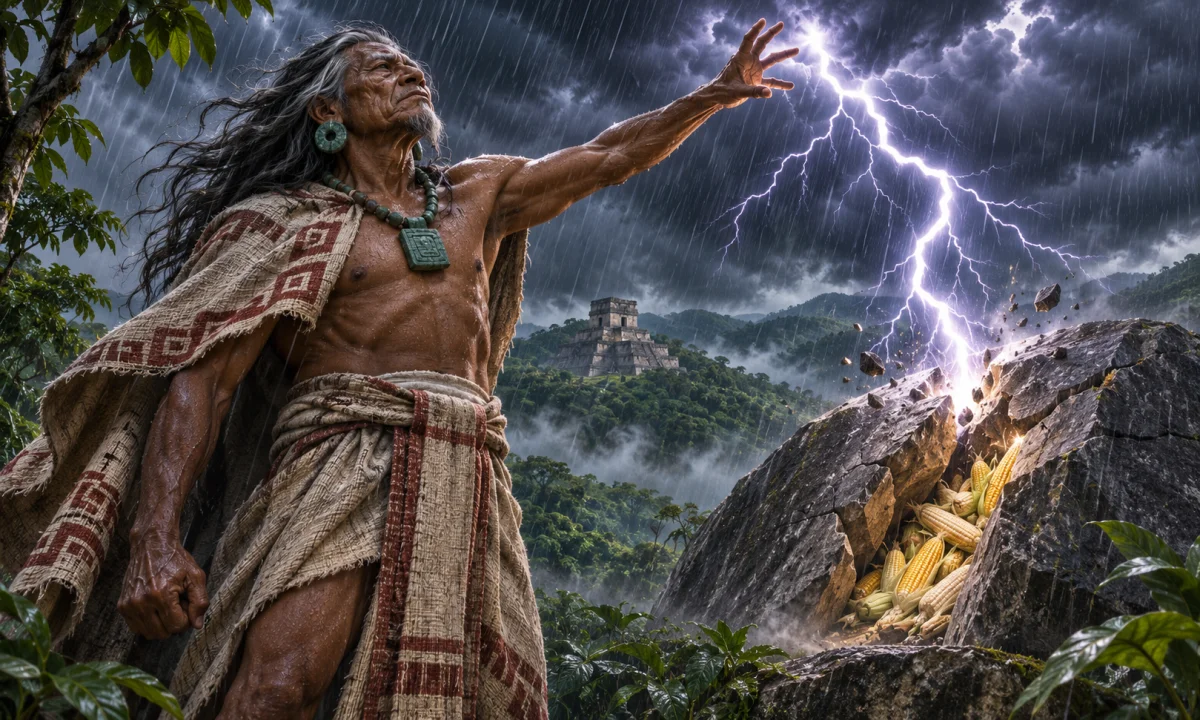
Yaluk
Yaluk is a name associated in some modern accounts with a Maya being connected to lightning, thunder, or rain. The identification is uncertain, however, and Yaluk is not a universally recognized deity across Maya culture…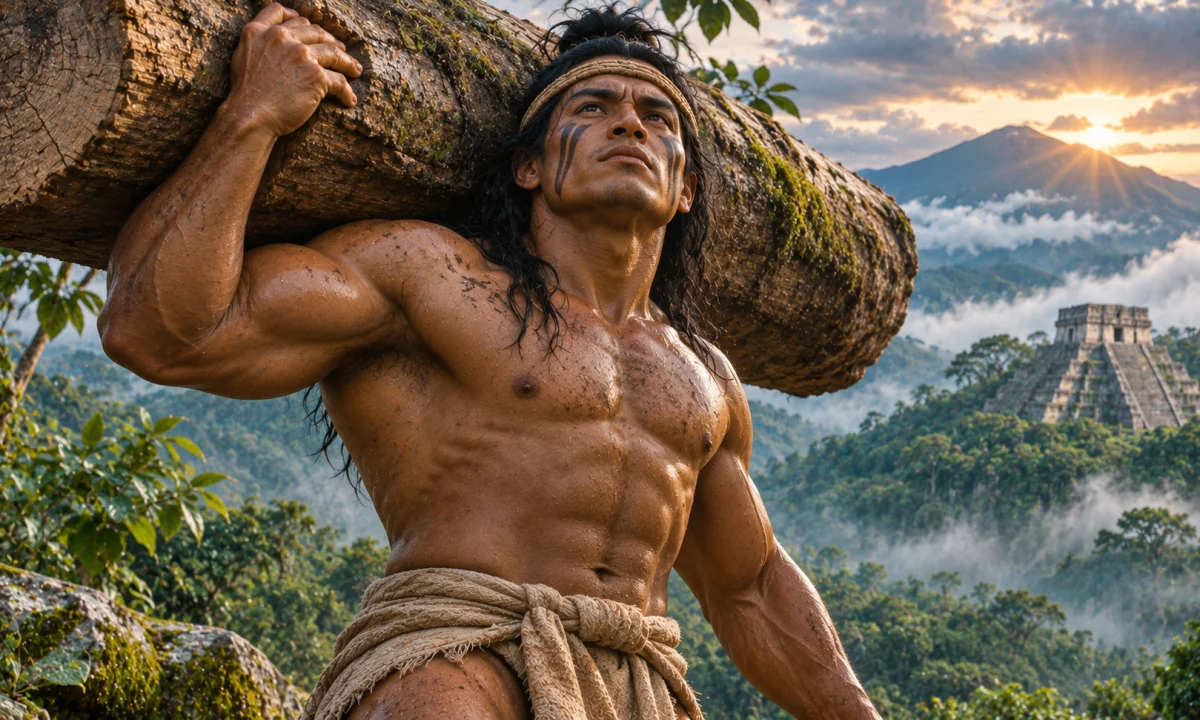
Zipacna
Zipacna is a powerful and destructive being in K’iche’ Maya mythology, known chiefly from the Popol Vuh. He is described as the eldest son of Vucub-Caquix and Chimalmat and the brother of Cabrakan. Zipacna claims to have…Maya mythology: myths, traditions and legends
Maya mythology encompasses the sacred narratives, divine beings, ancestral traditions, cosmological ideas and ritual concepts developed by the many Maya peoples of Mesoamerica. These traditions emerged across a vast region including present-day southern Mexico, Guatemala, Belize and parts of Honduras and El Salvador, but they never formed one completely uniform religious system. Different Maya-speaking communities preserved their own gods, place traditions, ritual practices and versions of creation, while political centres developed distinctive dynastic cults. Much of what is known comes from hieroglyphic inscriptions, painted ceramics, monumental art, the few surviving pre-Columbian books, colonial-period Indigenous manuscripts and living oral traditions. Because Maya peoples and Maya religious traditions continue to exist, the term mythology should be used in its academic sense of culturally significant sacred narrative rather than as a synonym for fiction.
The surviving evidence is also historically uneven. Classic-period inscriptions reveal the religious world of royal courts between roughly the third and ninth centuries CE, while major colonial texts such as the K’iche’ Popol Vuh were written down after the Spanish conquest. Later documents may preserve ancient traditions while also reflecting centuries of regional development and Christian colonial pressure. Maya mythology is therefore best approached as a layered body of related traditions rather than one fixed pantheon or canonical story.
The Maya world and its diversity
The term Maya refers to numerous peoples speaking related languages and sharing broad cultural traditions. Yucatec Maya, K’iche’, Kaqchikel, Tzotzil, Tzeltal, Ch’ol and many other communities developed distinct histories.
Ancient Maya cities such as Tikal, Palenque, Copán, Calakmul and numerous others were independent or competing political centres rather than provinces of one unified Maya empire. Their rulers claimed relationships with gods and ancestors through local dynastic traditions.
Religious similarities across the region are substantial, but a god prominent in one place or period might appear differently elsewhere. Modern attempts to assemble every named Maya deity into one permanent pantheon can therefore create a system that never existed historically.
Sources and transmission
Maya mythology survives through several types of evidence. Hieroglyphic inscriptions record royal accessions, wars, rituals, genealogies and references to gods and mythological events. Painted ceramics preserve scenes involving supernatural beings, courtly rituals and episodes that may relate to wider narrative traditions.
Only a handful of pre-Columbian Maya screenfold books survived colonial destruction. The Dresden, Madrid and Paris codices contain calendrical, astronomical and ritual information, including representations of gods and ceremonies.
Colonial-period Indigenous texts preserve longer narratives. The Popol Vuh, written in K’iche’ Maya using the Latin alphabet, is especially important for creation traditions and the story of the Hero Twins. Books known collectively as the Books of Chilam Balam preserve Yucatec Maya historical, calendrical and religious material.
These sources belong to different languages and centuries. They illuminate one another, but they should not simply be combined as if they were chapters of the same ancient scripture.
Creation and repeated attempts at humanity
The Popol Vuh preserves one of the best-known Maya creation traditions. Its divine creators attempt to form beings capable of speaking, remembering and properly recognising their makers.
Early creations fail. Animals cannot speak as humans do, while beings made from mud cannot remain stable. A later race made from wood possesses human form but lacks the qualities required of successful humanity and is destroyed.
Eventually humans are made from maize. This creation expresses the profound relationship between human existence and the crop that sustained much of Maya civilisation.
The story should not be treated as the universal Maya creation account. It belongs specifically to the K’iche’ textual tradition, although maize, creation and divine-human relationships appear widely throughout Maya religion.
Maize and human identity
Maize was economically essential and also deeply embedded in Maya religious symbolism. Agricultural cycles of planting, growth and harvest provided powerful images for life, death and renewal.
Classic Maya art depicts a youthful Maize God associated with abundance, regeneration and royal symbolism. Scholars use modern descriptive labels for several ancient gods because their original names are not always securely readable or directly equivalent to colonial-period divine names.
Scenes involving the Maize God sometimes include emergence, death and renewal, but reconstructing one complete lost myth from ceramic images remains difficult.
The connection between maize and humanity should therefore be understood as a broad sacred relationship rather than proof that every Maya community told precisely the Popol Vuh version of human creation.
The Hero Twins
The Hero Twins, Hunahpu and Xbalanque, are central figures in the Popol Vuh. They combine extraordinary skill, intelligence, deception and supernatural transformation.
Their story is linked to an earlier generation involving their father Hun Hunahpu and his brother Vucub Hunahpu, who are summoned to the underworld after disturbing its rulers with their ballplaying. Their defeat establishes the conditions for the later adventures of the twins.
Hunahpu and Xbalanque eventually descend to the underworld themselves and confront a series of tests imposed by its rulers. Unlike their predecessors, they repeatedly overcome deception through knowledge and clever strategy.
The narrative culminates in death, transformation and victory over the underworld powers, making the twins important examples of the Maya themes of sacrifice, regeneration and the reversal of apparent defeat.
Xibalba
Xibalba is the underworld realm described in the Popol Vuh. It is ruled by powerful beings associated with death, disease and various forms of suffering.
The Hero Twins must navigate dangerous houses and deceptive trials before overcoming its rulers. Xibalba is therefore both a place of death and a setting where intelligence and transformation can overturn established supernatural power.
It should not simply be translated as the Maya equivalent of Christian hell. The narrative does not present it as a realm of eternal punishment assigned to morally condemned souls.
Other Maya traditions possessed different concepts concerning death and the otherworld, so the Popol Vuh should not be treated as a complete map of the afterlife for every Maya people.
The sacred ballgame
The Mesoamerican ballgame had social, political and religious significance among the Maya and other cultures. Archaeological ballcourts occur at numerous Maya sites, while art and inscriptions connect the game with rulers, ritual and mythological symbolism.
The Popol Vuh makes ballplaying central to the conflict between the Hero Twins and the rulers of Xibalba.
Human sacrifice was connected with the ballgame in some ritual and artistic contexts, but the popular idea that every match ended with the sacrifice of the winners or losers is unsupported. The game served many purposes across different places and periods.
Itzamna and creator traditions
Itzamna is an important deity known particularly from Yucatec Maya colonial sources. He is associated with creation, knowledge and celestial authority in later descriptions.
Scholars have often compared Itzamna with the ancient deity conventionally called God D in Classic Maya studies, a prominent aged supernatural figure. Important connections are widely recognised, although ancient divine identities developed over long periods and should not be reduced to later names without qualification.
Modern summaries sometimes designate Itzamna as the single supreme creator god of all Maya religion. His importance is genuine, but Maya theology varied regionally and historically and did not operate through one permanently standard hierarchy.
Chaak and the rain
Chaak, with spelling variants reflecting different transliteration systems, is a major rain and storm deity especially well documented in Yucatec and ancient Maya traditions.
Rain was essential to maize agriculture, making relationships with rain powers fundamental to survival. Chaak is associated with lightning, storms and the bringing of life-giving water.
Ancient representations frequently show a rain deity with distinctive facial characteristics. Images of rain beings occur widely in Maya art and architecture, particularly in regions where reliable water supplies were a major concern.
Chaak should not simply be called the Maya version of the Aztec Tlaloc. Both belong to related Mesoamerican traditions concerning rainfall, but their identities and historical development remain distinct.
K’awiil and dynastic power
K’awiil was a major Classic Maya deity associated with royal authority, lightning, fertility and abundance. His imagery appears repeatedly in contexts involving rulers and dynastic legitimacy.
K’awiil is recognisable in ancient art through distinctive attributes, including a supernatural head from which a flaming or smoking element emerges.
Maya rulers could hold images or sceptres incorporating K’awiil during ceremonies, connecting political authority with sacred power.
Earlier scholarship used descriptive designations such as God K before the reading of the name K’awiil became established. Such older labels remain relevant in the history of Maya studies but should not be mistaken for ancient names.
Kukulkan and the Feathered Serpent
Kukulkan is the Yucatec Maya name of a Feathered Serpent figure particularly prominent in Postclassic traditions. The name is closely related in meaning and historical religious context to the Nahua Quetzalcoatl.
Feathered Serpent imagery has deep roots in Mesoamerica and reflects long histories of cultural interaction. At Chichén Itzá, Feathered Serpent symbolism became especially prominent in architecture and political-religious imagery.
Kukulkan and Quetzalcoatl can legitimately be compared within a documented Mesoamerican tradition, but they should not be treated as automatically identical in every narrative and ritual context.
Ix Chel and problems of identification
Ix Chel is one of the most famous names associated with Maya goddesses, particularly in later Yucatec tradition. Colonial accounts connect her with medicine, childbirth and women's religious practices, and Cozumel was an important centre associated with her worship.
Modern books frequently describe Ix Chel as a universal Maya moon goddess and identify many ancient female figures as representations of her. These identifications are more uncertain than popular summaries often suggest.
Classic Maya art contains several important female deities, including aged and youthful figures whose relationships to later Ix Chel traditions remain debated.
It is therefore safer to distinguish the historically documented Ix Chel from modern attempts to make her the single identity behind every ancient Maya goddess associated with the moon, weaving or fertility.
The sun, moon and celestial cycles
Astronomical observation was deeply integrated into Maya ritual and calendrical life. The movements of the sun, moon, Venus and other celestial bodies were tracked with remarkable care.
Celestial events could influence the timing and interpretation of ceremonies, royal actions and divination. The surviving codices contain sophisticated astronomical tables, particularly concerning Venus and eclipses.
This knowledge should not be separated sharply into modern categories of astronomy and astrology. Observation, calculation and sacred interpretation formed parts of a connected intellectual system.
Popular claims that the Maya possessed supernatural astronomical knowledge or predicted modern global catastrophes are not supported by the evidence.
Time and the calendars
Maya religious life employed several interlocking calendrical systems. The Tzolk’in consisted of 260 days, while the Haab’ formed a solar-cycle calendar of 365 days. Their interaction produced a larger repeating Calendar Round.
The Long Count recorded dates across much longer periods and became especially important in Classic-period inscriptions.
Dates were not neutral numbers. Particular days and cycles could possess ritual qualities and connections with supernatural beings.
Maya calculations of time were therefore inseparable from concepts of cosmic order, political legitimacy and ceremonial responsibility.
The 2012 misconception
One of the most widespread modern distortions of Maya religion was the claim that the Maya calendar predicted the end of the world on 21 December 2012.
The date marked the completion of a major Long Count cycle in a commonly used correlation with the modern calendar. Maya inscriptions do not present this event as the destruction of the world.
Ancient texts can refer to dates far beyond that point, contradicting the idea that Maya chronology necessarily ended in 2012.
The modern apocalypse narrative arose largely from twentieth- and twenty-first-century popular speculation rather than traditional Maya eschatology.
Kingship and divine ancestry
Classic Maya rulers governed within a sacred political system. Royal inscriptions emphasise genealogy, accession, warfare, ritual performance and relationships with supernatural beings.
Kings were not simply secular administrators. Their authority depended partly upon their ability to communicate with ancestors and divine powers through ritual.
Royal bloodlines could connect living rulers with prestigious ancestors whose continued presence legitimised dynastic power.
This does not mean that every Maya king was understood simply as a god. Royal identity involved complicated relationships among human rulership, ancestral status and sacred authority.
Bloodletting and visionary ritual
Ritual bloodletting was an important practice among Classic Maya elites. Rulers and other high-ranking individuals pierced parts of the body to offer blood in ceremonial contexts.
Monuments depict these rituals as significant acts connected with dynastic events and communication with supernatural powers.
Some images show vision-serpent imagery through which ancestors or supernatural beings appear. The precise experience represented cannot always be reconstructed, but bloodletting clearly functioned as an important means of establishing ritual relationships.
Reducing such ceremonies to self-torture ignores their political, religious and ancestral significance.
Sacrifice and offerings
Maya religion included offerings of food, incense, precious materials, blood and, in certain contexts, human lives. Human sacrifice is securely documented through archaeology, inscriptions and imagery.
Its forms and frequency varied widely across periods and political settings. Captives taken in warfare could become important participants in elite sacrificial ceremonies.
It is misleading, however, to make human sacrifice the defining characteristic of Maya religion. Daily and seasonal religious life involved far broader systems of offerings, prayer, agriculture, ancestor remembrance and community ritual.
Caves, cenotes and sacred landscapes
Caves held profound importance within many Maya traditions and were associated with water, ancestors, emergence and access to supernatural realms.
Archaeological evidence shows that caves were used for offerings and ceremonies across extensive periods. Their darkness and position within the earth made them powerful ritual spaces.
In the northern Yucatán Peninsula, natural sinkholes known as cenotes provided essential freshwater and could also possess sacred significance. The Sacred Cenote at Chichén Itzá contained numerous offerings and human remains.
Not every cave or cenote had the same function, and their meanings depended upon local geography and community tradition.
Mountains and the living landscape
Maya sacred geography connected mountains, caves, water and settlements within a landscape inhabited by supernatural powers.
Temple pyramids could evoke sacred mountains and provide controlled ceremonial spaces where rulers and priests interacted with divine and ancestral realms.
Ancient Maya art also uses mountain imagery to represent supernatural locations. Such symbols cannot always be translated literally into one map of heaven, earth and underworld.
Landscape itself formed part of religious relationships rather than merely providing a background for mythological events.
Way beings and supernatural companions
Classic Maya inscriptions and imagery refer to supernatural entities known by the term way, which can involve animal or other extraordinary manifestations linked with particular individuals or places.
Older scholarship sometimes translated these beings through concepts such as spirit companions or co-essences. Their precise nature remains complex and should not be reduced simply to shapeshifting familiars.
Way imagery often appears in elite and supernatural contexts, demonstrating that Maya concepts of personal identity could extend beyond an individual's ordinary physical body.
Death and the otherworld
Maya traditions concerning death were diverse and changed across time. Tombs of rulers frequently contained offerings, objects and imagery connecting the deceased with ancestors and supernatural transformations.
Classic-period royal burials demonstrate that death could reinforce dynastic continuity rather than ending a ruler's social importance.
The underworld of the Popol Vuh provides one influential model, but it should not be imposed upon every archaeological burial or ancient inscription.
Ideas concerning caves, watery depths, ancestors and nocturnal celestial journeys all contributed to Maya understandings of death without forming one simple doctrine of hell or paradise.
The Spanish conquest and destruction of manuscripts
The Spanish conquest of Maya territories began in the sixteenth century but proceeded unevenly, with some independent Maya polities surviving much longer than others.
Missionaries sought to suppress Indigenous religious practices, and many ritual objects and manuscripts were destroyed. The famous burning of Maya books at Maní under Bishop Diego de Landa in 1562 represents one particularly destructive episode.
Landa later recorded information concerning Yucatec Maya society and religion. His writings are historically important but reflect the perspective of a cleric actively involved in colonial religious suppression.
The tiny number of surviving pre-Columbian codices illustrates how much written religious and historical knowledge was lost.
The Popol Vuh after conquest
The Popol Vuh survived because K’iche’ authors preserved their traditions using alphabetic writing after Spanish conquest. The known text was later copied and translated through colonial transmission.
It combines accounts of creation, the Hero Twins and the genealogical origins of K’iche’ ruling lineages. It is therefore both sacred narrative and political-historical tradition.
Calling it the Maya Bible can be misleading. It belongs specifically to K’iche’ tradition and never served as the universal scripture of all Maya peoples.
Living Maya traditions
Maya peoples remain numerous and culturally diverse across Mesoamerica. Traditional concepts concerning sacred landscapes, ancestors, agricultural cycles, calendrical knowledge and community ritual continue in various forms.
Most Maya communities have experienced centuries of Catholic Christianity, while Protestant Christianity has also become important in many regions. Indigenous and Christian traditions can coexist, interact or conflict depending on the community.
Contemporary practices should neither be treated automatically as unchanged survivals from the Classic period nor dismissed as unrelated to ancient Maya heritage. Cultural traditions can remain continuous while undergoing substantial historical transformation.
Modern misconceptions and reconstruction
Modern popular culture frequently presents Maya mythology as a fixed pantheon with one god assigned to rain, another to the sun and another to death. Ancient evidence instead reveals changing identities, overlapping functions and major regional differences.
The Popol Vuh is not a universal Maya scripture, Xibalba is not simply hell, Kukulkan should not automatically be equated in every respect with Quetzalcoatl, and Ix Chel cannot securely be identified with every ancient female deity.
Another persistent distortion portrays Maya religion as obsessed exclusively with sacrifice or apocalypse. Agricultural fertility, royal ancestry, sacred time, astronomical cycles, community obligations and relationships with land and water were equally fundamental.
Maya sacred traditions are most clearly understood through these interconnected relationships: maize links human life with agriculture, rulers connect communities with ancestors, caves and mountains open onto supernatural dimensions, and calendrical cycles situate human action within a larger cosmic order. The surviving inscriptions, codices, art, colonial Indigenous texts and living traditions preserve different parts of that religious world, while the differences between them remain essential to understanding the depth and diversity of Maya mythology.