WORLD

Copijcha
Copijcha is a name associated with the Zapotec tradition of Mesoamerica, especially in modern English-language accounts of a deity connected with rain, lightning, storms and agricultural fertility. The name is not as securely documented or as consistently spelled as Cocijo or Cociyo, the better-attested names for the major Zapotec rain and storm deity. In many references, Copijcha is treated as a variant, transcription or simplified form of that figure rather than as a clearly separate god.
Zapotec religious setting
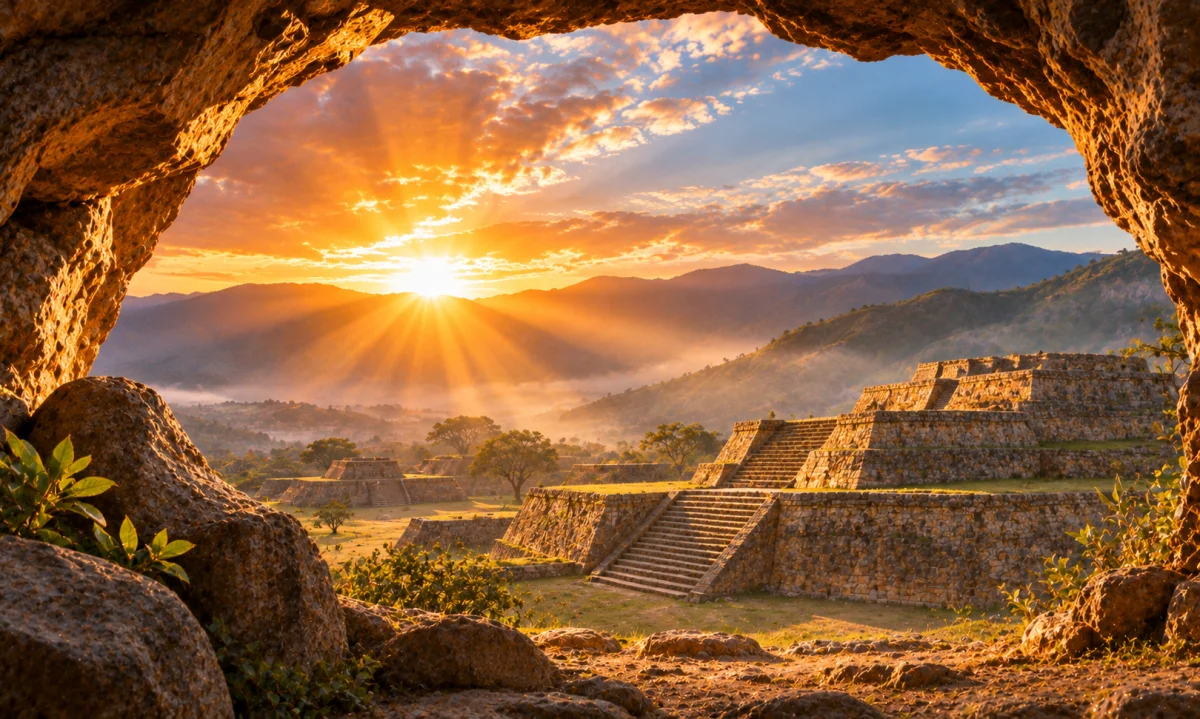
The Zapotecs are an Indigenous people whose historic homeland lies mainly in the valleys, mountains and coastal regions of Oaxaca in southern Mexico. Zapotec civilization developed over a long period, with important centres including San José Mogote, Monte Albán and later regional communities. Its religious traditions were not frozen into a single system. Beliefs and ritual practices changed across centuries and varied between communities.
Rain, lightning, clouds and seasonal water were central religious concerns in this environment. Agriculture depended heavily on the arrival and distribution of rain, particularly for the cultivation of maize. A storm deity therefore had significance far beyond weather. Such a figure could be associated with the fertility of the earth, the growth of crops, springs, rivers, royal authority and the renewal of life.
Zapotec religion also included reverence for ancestors, sacred places, mountains, caves, springs and powerful forces of the landscape. Deities were not necessarily understood as distant individuals with sharply separated responsibilities in the modern sense. A divine power might be approached through several names, titles, local manifestations or ritual contexts.
The name Copijcha
The spelling Copijcha is found chiefly in modern summaries of Zapotec mythology and in popular reference material. Its exact historical status is uncertain. Colonial-era documentation of Zapotec languages used varying orthographies, and names could be recorded according to the conventions of Spanish-speaking writers rather than according to a single standardized Zapotec spelling.
The more widely recognized name Cocijo, also written Cociyo and in other variant forms, is associated with the Zapotec rain, lightning and storm deity. Some modern writers use Copijcha as an alternative name for this god; others present it as a distinct rain or lightning being. There is not enough consistent evidence to treat every appearance of the name as referring to an entirely separate deity.
It is therefore safest to describe Copijcha as a name or naming tradition linked to the Zapotec storm deity, while noting that the identification is not uniform. Claims that Copijcha has one universally accepted spelling, genealogy or biography overstate the evidence.
Connection with Cocijo
Cocijo is considerably better attested in discussions of ancient Zapotec religion and archaeology. The title Pitao Cocijo is often translated approximately as “Lord Cocijo” or “God Cocijo,” although translations of Zapotec religious vocabulary are not always exact. The word Pitao appears in colonial descriptions as a term for a god or divine being, but its use should not be assumed to function exactly like the word “god” in every context.
In modern writing, Copijcha may appear as a separate entry because different authors have relied on different spellings, interpretations or secondary compilations. Sometimes the name is connected specifically with lightning, while Cocijo is described more broadly as a rain deity. This distinction may reflect an attempt to organize related aspects of one complex divine power rather than evidence for two independent beings.
The safest interpretation depends on the source and context. A reference that calls Copijcha a lightning god should not automatically be treated as contradicting accounts that call Cocijo a rain god. Rain, thunder and lightning were closely related phenomena within the religious imagination of Mesoamerican farming societies, and a deity connected with one could naturally be connected with all three.
Appearance and iconography
Ancient Zapotec art includes ceramic figures and funerary urns representing powerful supernatural beings. One recurring image, identified by many scholars with Cocijo, has unusual eyes, a broad or protruding mouth, prominent teeth or fangs, and a tongue that may appear divided or otherwise stylized. Serpentine forms and other features associated with water, clouds or lightning can also occur.
These images are commonly called representations of the Zapotec rain deity, but the identification is an archaeological interpretation rather than a label written beside every object. Ancient artists may also have represented related divine forces, ancestors transformed into sacred beings or local versions of a supernatural power. It is not always possible to determine whether an object shows Copijcha, Cocijo, another deity or an unnamed ritual figure.
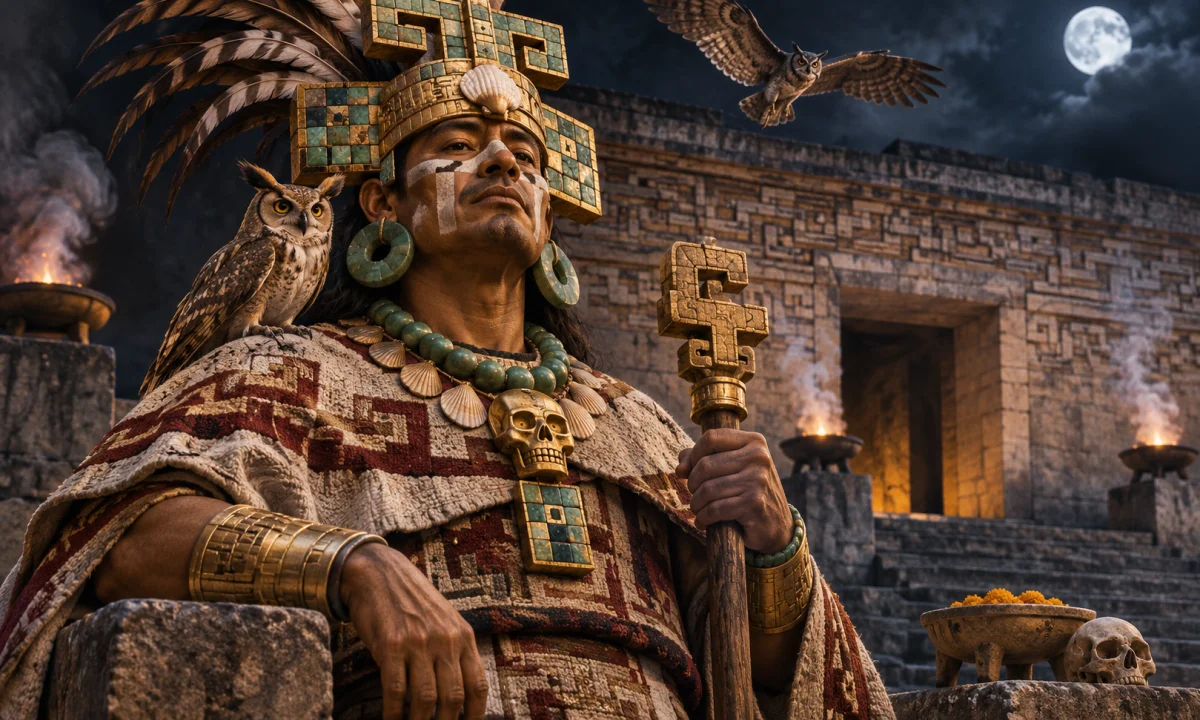
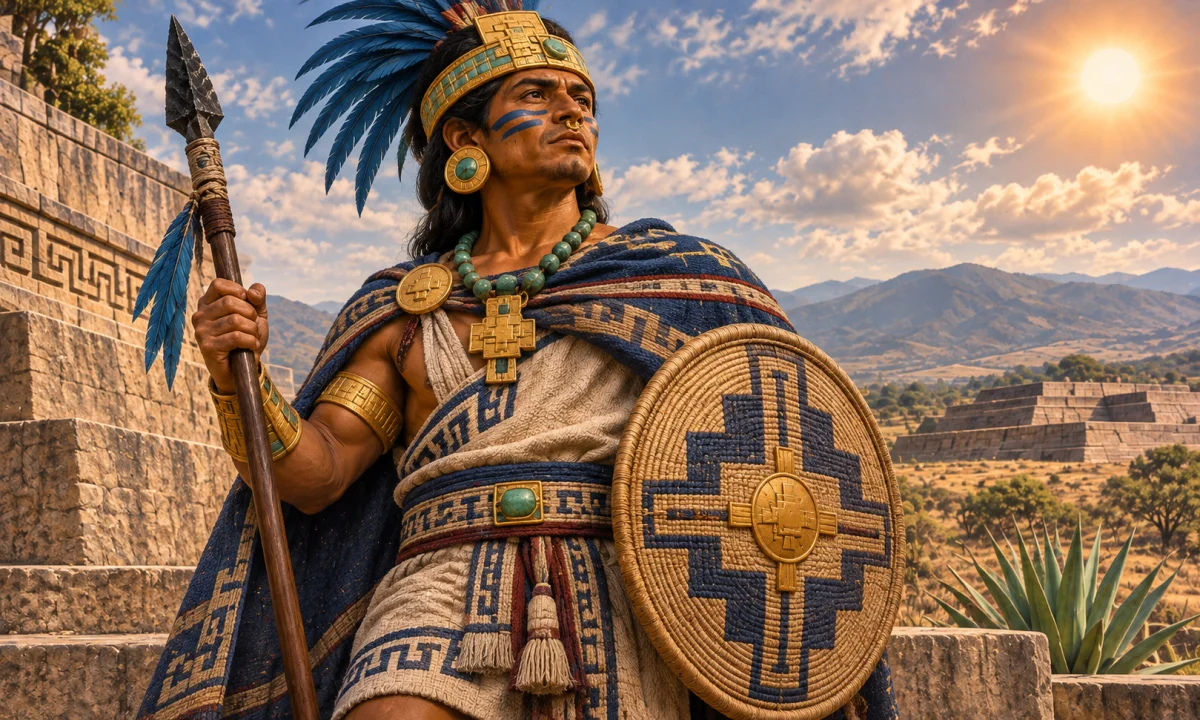
Some modern illustrations portray Copijcha as a human-shaped god carrying a lightning bolt, wearing a feathered headdress or surrounded by dark storm clouds. Others give the figure a jaguar body, a serpent tongue or exaggerated fangs. Certain animal associations may be inspired by genuine Mesoamerican symbolism, but a single standardized ancient portrait of Copijcha has not been established.
For this reason, visual descriptions should be treated carefully. The familiar image of a “lightning god” in modern artwork often combines archaeological motifs, interpretations of colonial vocabulary and artistic invention. It should not be presented as a definitive portrait preserved unchanged from ancient Zapotec religion.
Rain, lightning and agricultural fertility
The principal significance attributed to Copijcha is control or influence over rain and storms. Rain could bring life to maize fields, replenish water sources and support the prosperity of a community. At the same time, violent storms, hail, flooding and lightning could damage crops, destroy buildings and threaten people. A storm deity was therefore both generous and dangerous.
Religious relationships with such a being would have involved respect, offerings and ritual attention rather than simple affection. The purpose of ritual was not necessarily to “persuade” a god in a straightforward human sense. It could also renew the relationship between the community, its ancestors, the land and the forces that governed seasonal change.
Lightning may have been understood as a visible manifestation of divine power. In many Mesoamerican traditions, mountains and high places were associated with clouds and rain, while caves and springs were treated as entrances to or sources of sacred water. Comparable ideas existed in different Zapotec communities, although they should not be reduced to one universal doctrine.
Maize was especially important in this religious setting. A rain deity could be linked to the entire cycle of planting, germination, growth and harvest. This does not necessarily mean that Copijcha was identical with a maize deity. Zapotec religious systems included other powers associated with crops and agricultural abundance, and divine functions could overlap without becoming interchangeable.
Sources and historical evidence
Knowledge of ancient Zapotec religion comes from several kinds of evidence: archaeological remains, ceramic imagery, architecture, inscriptions, colonial vocabularies and descriptions recorded after the Spanish conquest. Each source has limitations.
Archaeological evidence can show that certain supernatural images were repeatedly produced and placed in tombs or ritual settings. It cannot always reveal the name by which worshippers knew those figures or the stories connected with them. Colonial writers sometimes preserved valuable Indigenous terms, but they interpreted Zapotec religion through Christian assumptions and Spanish linguistic conventions. Their records may also reflect the beliefs of particular regions rather than all Zapotec communities.
No complete ancient Zapotec mythology survives in the form of a single narrative book comparable to some better-known Mesoamerican texts. There are important inscriptions and traditions, but they do not provide a full, continuous biography of Copijcha. As a result, descriptions of the deity’s personality, family relationships and adventures are often reconstructed from fragmentary evidence or repeated through modern retellings.
This lack of a complete narrative record matters. Statements that Copijcha was the child, spouse or enemy of another named god should be viewed with caution unless they are clearly tied to a particular regional tradition or historical source. Many popular accounts supply genealogies that are not securely documented in ancient Zapotec evidence.
Stories and relationships
There is no single widely preserved cycle of stories about Copijcha comparable to the extensive mythic narratives known from some other Mesoamerican cultures. The deity’s importance is more securely indicated by iconography, religious vocabulary and the central role of rain and lightning in Zapotec life than by a surviving set of literary adventures.
Some modern retellings describe Copijcha as a powerful ruler of storms who sends rain to the earth and lightning to the mountains. These descriptions express the deity’s perceived sphere of influence, but they should not automatically be treated as translations of an ancient Zapotec myth. In particular, stories that place Copijcha into a universal Mesoamerican family of gods may be modern attempts to make different traditions fit a single pattern.
Cocijo is sometimes compared with rain deities from neighbouring cultures, including the Mexica deity Tlaloc and Maya rain powers such as Chaac. Such comparisons can be useful when discussing shared concerns—rain, lightning, fertility and mountains—but the figures are not the same deity. Their names, languages, histories, artistic conventions and ritual traditions belong to different cultural contexts.
Religious meaning and scholarly interpretation
Copijcha is best understood not merely as a personification of bad weather but as part of a larger system of relationships between water, agriculture, territory and community survival. The arrival of rain marked the renewal of the natural world, while drought or destructive storms could be experienced as signs of imbalance or crisis.
The deity’s frightening features in ancient art may have communicated power rather than evil. Fangs, unusual eyes and nonhuman facial forms often distinguish supernatural beings from ordinary people. They can indicate that the figure belongs to a sacred realm capable of crossing boundaries between sky, earth, water, life and death.
The placement of rain-deity images in tombs is also significant. Such objects may have related agricultural renewal to death and rebirth, or may have expressed the continuing power of ancestors and divine forces. Their exact meaning varies by site and period, and it would be misleading to assign one explanation to every Zapotec funerary urn.
Distinguishing Copijcha from similar figures
- Cocijo or Cociyo: the better-attested Zapotec name associated with rain, lightning and storms. Copijcha is sometimes treated as a variant or related form, but the relationship is not consistently defined.
- Pitao Cocijo: a title-and-name form commonly used for the Zapotec rain deity. “Pitao” is not necessarily a personal name; it is generally understood as a divine title or designation.
- Tlaloc: a Mexica or Aztec rain deity. Tlaloc shares themes with Cocijo and Copijcha but belongs to a different religious tradition and should not be substituted for them.
- Chaac: a Maya rain deity whose name and iconography are distinct from those of the Zapotec storm power.
- Maize and fertility deities: figures associated with crops may share symbols or ritual concerns with a rain deity without being the same being.
Later reception
In contemporary popular culture, Copijcha is most often encountered in online mythology lists, fantasy illustrations, educational material and general discussions of Mesoamerican gods. These presentations frequently standardize the name, assign a fixed appearance and give the deity a simple title such as “god of lightning.” Such formats can make the figure accessible, but they may conceal the uncertainty surrounding the name and the diversity of Zapotec traditions.
Modern depictions can also combine Zapotec motifs with imagery borrowed from Mexica, Maya or entirely fictional fantasy traditions. A horned, armoured or heavily weapon-bearing storm god may be an imaginative adaptation rather than a reconstruction of ancient Zapotec belief. The historically grounded core remains the association of the name Copijcha, where it is used, with the Zapotec rain-and-storm complex more securely represented by Cocijo.
Any careful discussion should therefore preserve the distinction between documented Zapotec religious evidence, scholarly interpretation of archaeological images and later creative portrayals. Copijcha is a meaningful name in modern accounts of Zapotec mythology, but its exact identity and relation to Cocijo remain matters requiring qualification rather than certainty.