WORLD

Beydo
Beydo is a name associated with Zapotec mythology and is commonly described in modern reference lists as a deity connected with the wind. The identification is uncertain, however. Unlike better-documented Zapotec figures such as Cocijo, the rain and lightning deity, or Pitao Cozobi, the maize deity, Beydo does not have a widely preserved cycle of myths, securely established iconography, or a consistently recorded role across Zapotec communities. Information about Beydo should therefore be treated cautiously, especially when the name is presented as though it belonged to a single, fully documented pantheon.
Zapotec cultural setting
The Zapotec peoples have lived for many centuries in what is now southern Mexico, particularly in the state of Oaxaca and in neighbouring regions. Zapotec-speaking communities have never formed one culturally uniform group. They have maintained distinct languages, local histories, religious practices and traditions, including important differences between the Valley of Oaxaca, the Sierra regions, and the Isthmus of Tehuantepec.
Ancient Zapotec civilisation developed major centres such as San José Mogote and Monte Albán. Monte Albán became a powerful political and religious centre during the pre-Hispanic period, and its inscriptions, tombs, carved monuments and offerings provide evidence for Zapotec beliefs. These archaeological remains, however, do not offer a complete mythological narrative. They reveal names, titles, ritual patterns and symbols more readily than they preserve the stories told about individual divine beings.
Much of the written information about Zapotec religion was recorded after the Spanish invasion. Colonial missionaries and officials wrote down words, prayers, calendars and descriptions of ceremonies, usually for Christian, administrative or linguistic purposes. Their records are valuable but incomplete. They also reflect European categories, sometimes treating complex local religious systems as if they were equivalent to a classical pantheon of separate gods.
For this reason, a name found in a modern list of “Zapotec gods” does not automatically represent a universally recognised deity. It may preserve a local tradition, a colonial transcription, a word whose meaning has changed, or a reconstruction based on limited evidence.
Name and identity
The spelling Beydo is not standardised in the way that the names of some better-known Mesoamerican figures are. Zapotec languages contain several different varieties, and historical writers used inconsistent systems for representing Zapotec sounds. A name written in one form may therefore appear differently in another record or in a later English-language publication.
The meaning of “Beydo” is also not securely established. There is no broadly accepted etymology that allows the name to be translated confidently as “wind,” “storm,” “breath,” or any other specific concept. The association with wind comes primarily from modern descriptions of the figure rather than from a large, clearly documented body of traditional narratives.
In many general mythology compilations, Beydo is identified as a Zapotec wind deity. That classification may preserve a genuine traditional association, but the surviving evidence is too limited to define it with confidence. It is not clear whether Beydo was understood as a distinct anthropomorphic god, a local divine name, an epithet of another power, or a figure reconstructed from a particular regional tradition.
The safest description is therefore that Beydo is a poorly documented or uncertainly identified Zapotec figure, often linked in modern sources with wind and atmospheric movement. Claims about a fixed appearance, family relationships or a detailed mythology go beyond what can be securely supported.
Possible connection with wind and air
If the traditional association with wind is accurate, Beydo would belong to a religious environment in which air and movement were closely related to other natural forces. Wind was not merely a background feature of the landscape. It could announce the arrival of rain, carry dust and seeds, cool cultivated fields, intensify storms, or signal seasonal change. In agricultural communities, atmospheric movement could have practical and religious importance at the same time.
Zapotec religion, like many Mesoamerican religious systems, did not necessarily divide nature into modern categories such as “weather,” “agriculture” and “spiritual power.” Rain, lightning, clouds, wind, mountains, caves and fertility could form parts of one interconnected sacred order. A wind-associated being might consequently have been understood through relationships with rain, planting, breath, motion or the voices of powerful places.
These possibilities should not be turned into specific attributes of Beydo without evidence. There is no securely preserved account establishing that Beydo controlled storms, carried messages, created the world, protected travellers or governed a particular season. Such features are sometimes added to short modern descriptions because they seem appropriate for a wind deity, but they are interpretations rather than documented elements of a Beydo myth.
Relationship to better-documented Zapotec powers
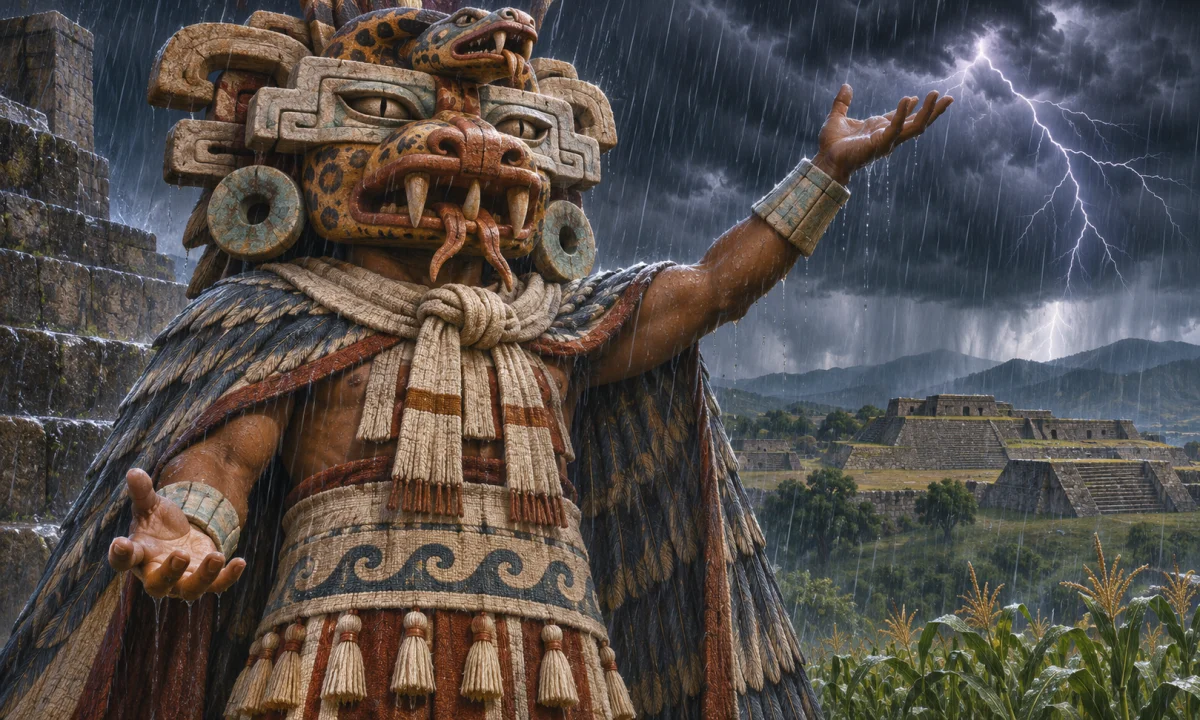
Beydo is sometimes discussed alongside major Zapotec deities, but his status should not be treated as equivalent to theirs. Cocijo, whose name and imagery are associated with rain, lightning and storm power, is represented in archaeological art and is supported by a comparatively substantial body of scholarly discussion. Cocijo was deeply connected with agricultural fertility and the life-giving as well as destructive force of storms.
Pitao Cozobi is commonly associated with maize and agricultural abundance. The term “Pitao” appears in accounts of powerful Zapotec sacred beings, although its use and interpretation require attention to historical and linguistic context. Coqui Bezelao is often identified in colonial and later descriptions with death and the realm of the dead, while Xonaxi Queculla is associated in some accounts with death, the underworld or the dead. These figures also have complicated histories of interpretation, but they are more visible in the documentary record than Beydo.
There is no reliable basis for assigning Beydo a fixed place in a divine family headed by these beings. Nor should Beydo automatically be described as Cocijo’s companion, servant, child or rival. Wind and rain may be conceptually related, but a symbolic relationship between natural forces is not the same as a recorded mythological relationship between two named figures.
Appearance and symbolism
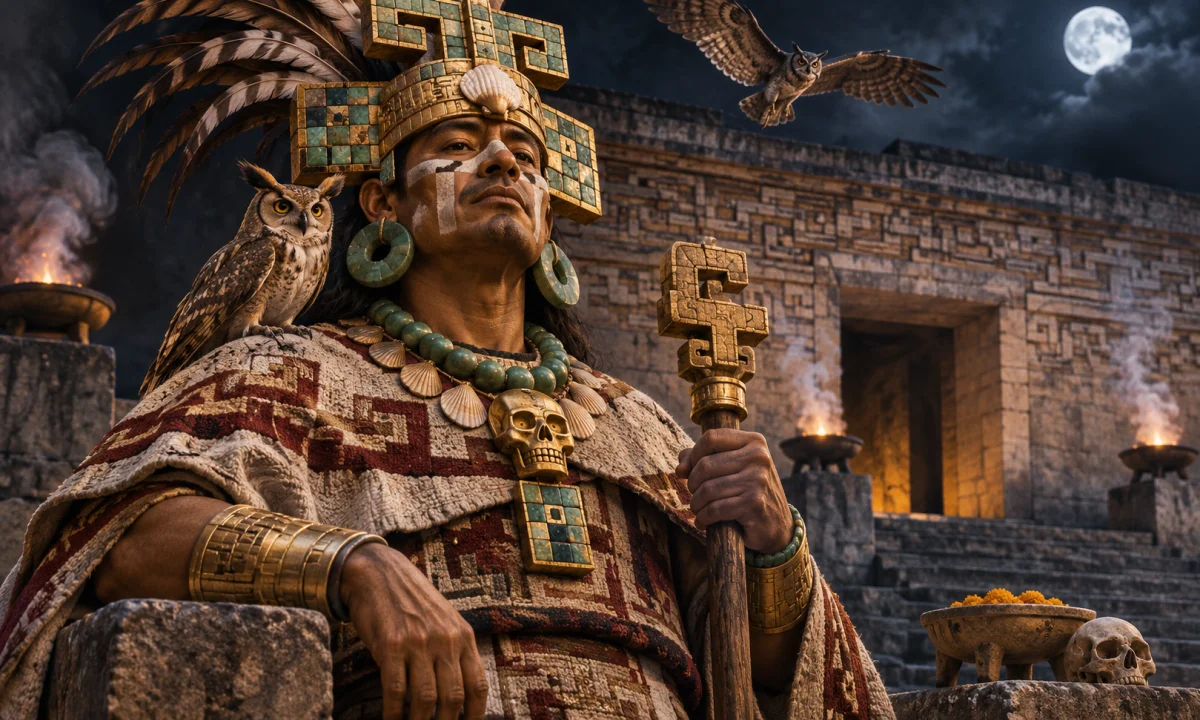
No universally accepted ancient image of Beydo has been identified. Zapotec art includes supernatural beings and powerful natural symbols, but the presence of a mask, headdress, bird, cloud, spiral or storm motif cannot be assigned to Beydo simply because the image seems compatible with wind.
Wind-associated beings in many cultures are represented through movement rather than a stable human form. A fluttering garment, raised hair, breath, swirling dust or the motion of leaves can signify air without depicting a named deity. Similar signs might also represent storms, breath, speech, fertility or the presence of an unseen power. Without an inscription identifying a figure, interpretation remains uncertain.
It is therefore misleading to give Beydo a definitive physical description. Statements that Beydo had wings, a bird’s body, a mask, a human face or a particular colour should not be presented as established Zapotec tradition unless supported by specific evidence. At present, the most cautious symbolic association is with air in motion and the atmospheric forces that affect human life.
Stories and surviving traditions
There is no widely attested mythological cycle centred on Beydo. No generally accepted creation story, combat narrative, journey, marriage, genealogy or festival account can be securely attributed to the figure. This absence is important. It does not prove that no story about Beydo ever existed, because many oral traditions were never recorded and many local traditions have changed over time. It does mean that a detailed biography cannot responsibly be reconstructed from the name alone.
Zapotec mythology has survived through several channels: archaeological evidence, colonial writings, later ethnographic observation, community traditions and contemporary Indigenous cultural work. These sources do not always describe the same religious world. A story recorded in one community may not be shared by another, and a colonial account may preserve a local practice rather than a belief held by all Zapotec peoples.
Oral tradition is also not a defective substitute for written mythology. It can preserve religious knowledge through ritual speech, place names, ceremonies, family instruction and relationships with sacred landscapes. At the same time, oral traditions are living traditions: names, roles and interpretations may vary according to language, locality and historical circumstance. Any future documentation of Beydo would need to identify the community, language variety and context in which the name occurs.
Interpretation and cultural significance
Beydo’s uncertain status illustrates a wider problem in the study of Mesoamerican religions. Modern readers often expect every culture to possess a clearly ordered pantheon, with each god assigned one exclusive responsibility. Zapotec religious life was more locally varied and more historically layered than that model suggests.
A name connected with wind might refer to a divine person, a sacred force, a title, or a regional expression of a wider atmospheric power. It might also have been influenced by translation into Spanish or English. The category “wind god” can be useful as a brief description, but it should not conceal the lack of evidence about the figure’s original identity.
Wind itself could carry several meanings. It might be beneficial when it brought rain-bearing clouds or helped pollinate plants, but dangerous when it spread disease, damaged crops or accompanied violent weather. It could also serve as a metaphor for invisible presence, breath and vitality. These themes are reasonable avenues for interpretation, but they remain broader Mesoamerican and environmental ideas rather than securely recorded doctrines about Beydo.
Distinguishing Beydo from similar figures
Beydo should not be confused with Ehecatl, the wind aspect of Quetzalcoatl in central Mexican and Nahua traditions. Ehecatl has a substantial body of iconography and narrative, including a distinctive beak-like mouth covering in some representations. The similarity between a wind association and the name of a Mesoamerican wind deity does not demonstrate that Beydo and Ehecatl are the same being.
Nor should Beydo be automatically identified with Maya wind or storm powers, Mixtec sacred beings, or regional spirits from other cultures of Oaxaca. Mesoamerican peoples interacted through trade, warfare, migration and political alliances, and religious ideas could influence one another. Even so, cultural contact is not proof that two similarly classified figures are identical.
Descriptions of Beydo as a universal Zapotec god of all wind, a creator of the atmosphere or a member of a fixed twelve- or thirteen-god pantheon should be regarded as unverified unless a specific regional tradition or historical record supports them. The available information supports a narrow identification: a name associated in some modern accounts with wind within the broad field of Zapotec mythology, but a figure whose original identity and traditional role remain unresolved.
Modern reception
Beydo has little established presence in widely known popular culture. The name may appear in online mythology databases, short encyclopedic lists, fantasy discussions and modern retellings of Mesoamerican religion. Such appearances often give the figure a more elaborate personality or visual design than the surviving evidence permits.
Creative reinterpretation can introduce Beydo to new audiences, but it should be labelled as modern invention or adaptation rather than presented as an ancient myth. In particular, a fictional wind warrior, winged spirit or storm king using the name Beydo would not by itself establish a traditional Zapotec attribute. Respectful treatment requires keeping the distinction clear between a sparsely documented Indigenous figure and later imaginative portrayals.
For now, Beydo is best approached as an uncertain name within the study of Zapotec religious traditions. The wind association is plausible as a description of how the figure has been transmitted in modern sources, but the lack of securely preserved narratives, iconography and regional documentation makes restraint essential.