WORLD

Piquete Ziña
Piquete Ziña is a name associated with Zapotec mythology, but its identity is not securely established in the surviving historical record. Modern lists of Mesoamerican deities sometimes describe Piquete Ziña as a Zapotec god connected with hunting. That description is repeated in popular reference material, yet the exact name and its supposed function are difficult to confirm in the best-known colonial descriptions of Zapotec religion. It is therefore important to distinguish between a modern catalogue entry and a figure whose worship, stories, and attributes are clearly documented.
Zapotec religious setting
The Zapotecs are an Indigenous people of southern Mexico, especially associated with the Central Valleys, the Isthmus of Tehuantepec, and the highlands and coastal regions of Oaxaca. Zapotec communities have never formed a single culturally uniform society. Languages, local histories, ritual practices, and religious concepts vary considerably from one region to another. The ancient city of Monte Albán was a major centre of Zapotec civilization, but Zapotec religious life continued in many communities long after the political importance of that city declined.
Pre-Hispanic Zapotec religion was concerned with the interdependence of humans, ancestors, natural forces, agricultural cycles, and sacred places. Rain, lightning, maize, fertility, death, and rulership were especially important themes. Religious beings could be represented in monumental art, funerary objects, pottery, and ritual offerings, but a figure’s presence in art does not always provide a complete name or biography. Many ancient images remain open to interpretation.
Spanish colonial writers recorded information about Zapotec beliefs, but their accounts were produced after the conquest and within a Christian missionary and administrative framework. They often translated Indigenous concepts into European categories such as “gods,” “devils,” “idols,” or “saints.” Zapotec words were also written according to Spanish spelling conventions, which makes it difficult to compare the forms recorded in different documents. Some Indigenous religious traditions survived through community practice, oral transmission, and later forms of religious blending, even when older public ceremonies were suppressed.
The name Piquete Ziña
The spelling Piquete Ziña should be treated cautiously. It is not a universally standardized form, and the name appears primarily in modern summaries rather than in a widely recognized body of ancient Zapotec narratives. Alternative spellings may occur because Zapotec languages use sounds and distinctions that Spanish orthography did not represent consistently. A word written with an accent, a tilde, or a different division between its parts may reflect a later editorial choice rather than a separate mythological being.
The meaning of the name is also uncertain. “Piquete” resembles an ordinary Spanish word, but that resemblance does not establish a Spanish origin or explain the figure’s religious role. Ziña may represent an attempt to transcribe a Zapotec term, although its meaning cannot be safely determined without identifying the particular Zapotec language and the source in which the form was recorded. Zapotec is a language family rather than one single standardized language, and a word can have different meanings or pronunciations in different Zapotec languages.
For these reasons, Piquete Ziña should not be presented as a universally recognized Zapotec deity with a fixed biography. The most responsible description is that the name belongs to a modern or poorly documented layer of writing about Zapotec mythology. In that material, the figure is commonly classified as a hunting deity, but the evidence for a detailed traditional profile is limited.
Association with hunting
When Piquete Ziña is identified in modern mythological lists, the usual attribution is hunting. This may suggest a divine protector of hunters, a being associated with wild animals, or a power connected with the success and danger of pursuing game. It does not, by itself, prove that the figure had a single, clearly defined role throughout Zapotec territory.
Hunting had practical, social, and religious importance in many Mesoamerican communities. A successful hunt depended on knowledge of the landscape, animal behaviour, seasonal conditions, and the boundaries between cultivated and wild spaces. Animals could be treated as beings with their own power rather than as simple resources. Hunters might therefore observe restrictions, make offerings, or follow local rules governing the taking of animals. Such practices do not necessarily belong to one named god, however. They can be directed toward mountains, springs, ancestors, forest beings, animal masters, or local sacred powers.
It is possible that the name Piquete Ziña reflects one regional tradition involving hunting or the wilderness. It is also possible that a later compiler assigned a concise “god of hunting” label to a more complex or locally specific figure. Without a securely identified Zapotec-language text, ritual account, or archaeological context linking the name with hunting, the attribution remains provisional.
Attributes and appearance
No standard ancient image of Piquete Ziña has been securely identified. There is no reliable basis for describing the figure with a particular costume, weapon, animal companion, body colour, mask, or supernatural anatomy. Illustrations found in modern books, websites, or entertainment material should not automatically be treated as traditional representations.
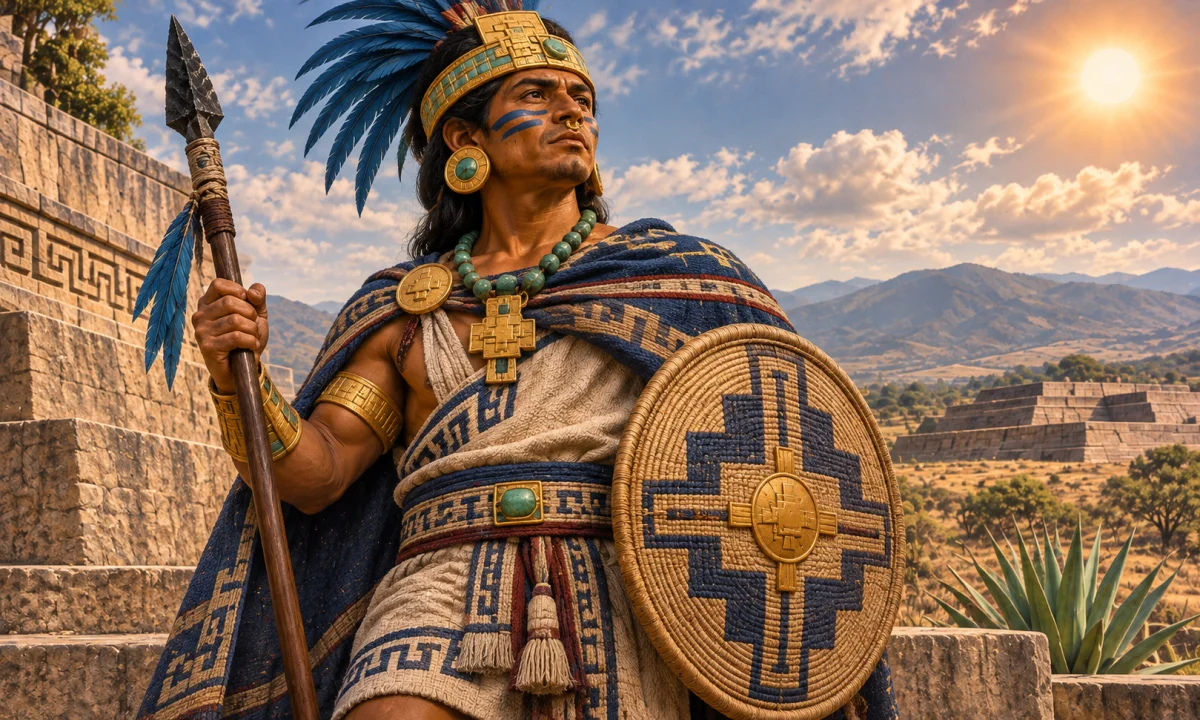
A hunting association can encourage artists to portray the figure with a bow, spear, net, animal skin, or the form of a mountain hunter. Those are understandable visual interpretations, but they are not established attributes of Piquete Ziña specifically. The same caution applies to claims that the figure could transform into an animal, command game, punish disrespectful hunters, or control the forest. Such motifs are widespread in Indigenous folklore, including traditions from Oaxaca, but a widespread motif is not proof of a particular deity’s identity.
Ancient Zapotec art includes powerful beings and symbolic combinations that modern observers sometimes interpret as gods, ancestors, rulers, or supernatural animals. Some figures are associated with rain, fertility, death, or calendrical ceremonies, while others cannot be classified with confidence. A human figure holding a weapon, for example, does not necessarily represent a named hunting god. Context, inscription, location, and comparison with related objects are all necessary before making a specific identification.
Stories and relationships
No well-established cycle of myths about Piquete Ziña is known from the major surviving accounts of Zapotec religion. There is no securely documented creation story, conflict with another deity, genealogy, or account of a particular sacred animal that can be assigned to the figure without qualification. Stories sometimes repeated online may be reconstructions or compilations rather than translations of an identifiable Zapotec tradition.
This lack of narrative should not be mistaken for evidence that Zapotec people had no hunting-related sacred stories. Oral traditions are often local and may not be preserved in colonial manuscripts. Missionary writers recorded only a fraction of Indigenous knowledge, and their priorities were usually conversion, administration, and the description of practices they regarded as contrary to Christianity. Stories transmitted orally could also change as communities faced migration, language loss, religious pressure, and political transformation.
Zapotec religious beings were not necessarily organized into a single family tree. Modern mythology books often arrange deities as if every culture possessed a fixed pantheon with clearly assigned domains and ranked relationships. Zapotec traditions were more varied. A sacred power might be connected with a place, a lineage, a natural event, a ritual office, or a community rather than functioning as a universal god for all Zapotec speakers.
Distinction from better-documented Zapotec powers
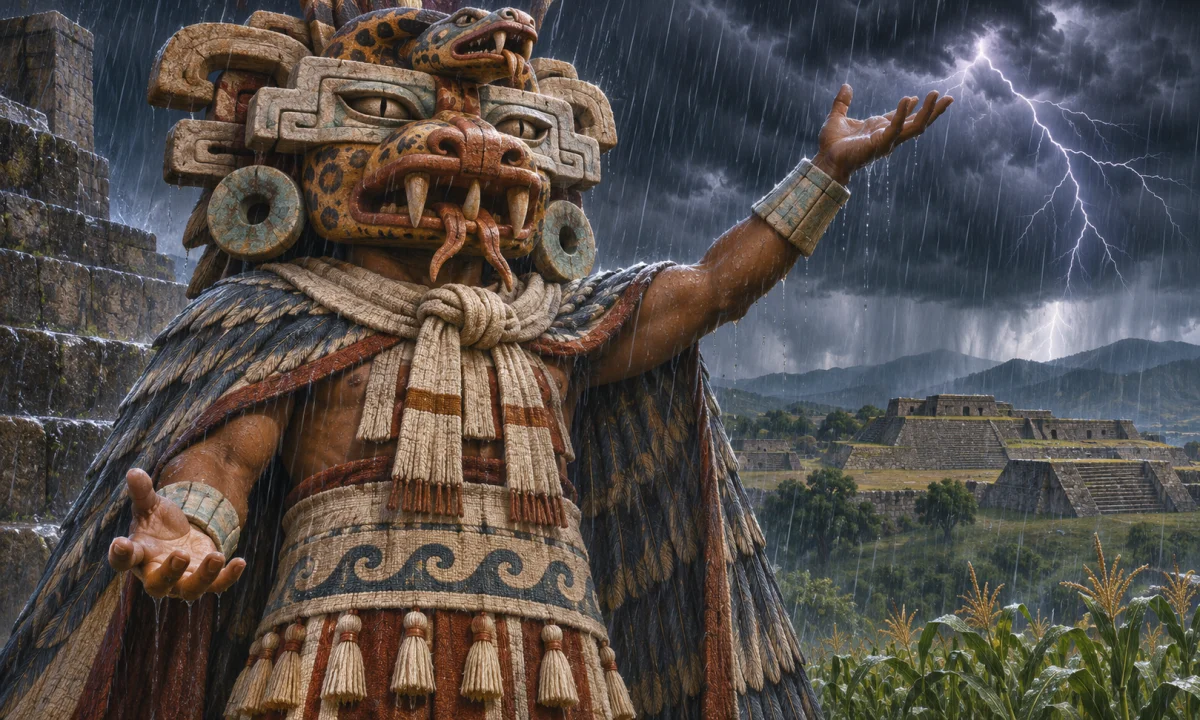
Piquete Ziña should not be confused with Pitao Cocijo, one of the best-known figures in accounts of ancient Zapotec religion. Cocijo is commonly associated with rain, lightning, storms, and agricultural fertility. His imagery is often discussed in relation to a distinctive supernatural face and elements linked with water or atmospheric power. Because hunting, rain, and the health of the landscape are connected in agricultural societies, a modern summary may place several nature-related figures together, but Piquete Ziña and Cocijo are not established as the same being.
Nor should the name be merged with Pitao Cozobi, a figure associated in modern scholarship and museum interpretation with maize and agricultural fertility. Maize was central to Zapotec life, and agricultural deities could overlap conceptually with rain powers and earth forces. That thematic relationship does not make every agricultural or wilderness figure an aspect of Cozobi.
Piquete Ziña is also distinct from figures connected with death and the underworld, including names often rendered as Coqui Bezelao or Pitao Pezeelao. Spellings of these names vary, and their interpretation is itself shaped by colonial sources and modern scholarship. Similar-looking names should not be combined merely because they come from the same broad cultural region.
Finally, Piquete Ziña should not be confused with a generic “Zapotec hunter,” a legendary animal, or a local guardian of the mountains. A hunter in a folktale may be a human hero, an ancestor, or an ordinary community member. A forest or mountain being may belong to a living local tradition without having the name used in modern deity lists. Classification requires evidence from the relevant community and language.
Sources and limits of reconstruction
Knowledge of ancient Zapotec religion comes from several kinds of evidence, none of which provides a complete picture on its own. Archaeological remains reveal temples, tombs, offerings, carved symbols, painted objects, and patterns of ritual activity. Colonial vocabularies and descriptions preserve some Indigenous terms and explanations, although they often record them imperfectly. Later ethnographic work documents community ceremonies, oral traditions, and relationships with sacred landscapes, but these traditions should not automatically be projected unchanged into the ancient past.
The exact form “Piquete Ziña” is not among the most securely documented names in the standard discussion of Zapotec religion. That does not prove that no community ever used the name. It means that the name’s provenance, historical spelling, and original meaning need to be demonstrated rather than assumed. A trustworthy account would identify the Zapotec language involved, the location where the tradition was recorded, the date of the record, and whether the information came from an Indigenous speaker, a colonial document, an archaeological interpretation, or a modern compilation.
This distinction is particularly important for Mesoamerican mythology, because names are frequently copied from one unsourced list into another. Once a short label such as “god of hunting” becomes familiar, later writers may add weapons, animal forms, rituals, and stories that were never present in the original evidence. Repetition can make a claim appear ancient without making it better documented.
Cultural significance
Even when the historical identity of Piquete Ziña remains uncertain, the question surrounding the name illustrates a broader issue in the study of Indigenous religions. Categories such as “god,” “spirit,” “ancestor,” and “guardian” are not interchangeable. They reflect different kinds of relationships between people and the sacred world. A being associated with hunting might be approached through offerings, taboos, storytelling, respect for animals, or obligations to a particular landscape rather than through a centralized temple cult.
The uncertainty also highlights the diversity of Zapotec cultural history. There is no single mythology that represents every Zapotec community. Regional traditions may preserve different names for related powers, or the same name may acquire different meanings in different places. Modern research and community knowledge are therefore essential for preventing a generalized catalogue of “Mesoamerican gods” from replacing the specific histories of Zapotec peoples.
Modern reception
Piquete Ziña has limited presence in widely known popular culture. The name is more likely to appear in online mythology databases, short encyclopedic lists, and modern discussions of obscure deities than in major films, novels, games, or established religious movements. Such appearances generally present the hunting association as certain, even though the underlying documentation is not equally secure.
Modern artistic interpretations can still give the name cultural visibility, but they should be labelled as reinterpretations. A contemporary illustration of a masked hunter, a guardian of animals, or a forest spirit may be inspired by the name without constituting evidence for an ancient Zapotec image. The traditional record supports caution: Piquete Ziña is best treated as a poorly documented or possibly regionally transmitted Zapotec figure, commonly but not conclusively associated with hunting, rather than as a fully reconstructed deity with a fixed appearance and mythology.