WORLD
WORLD
Wulbari
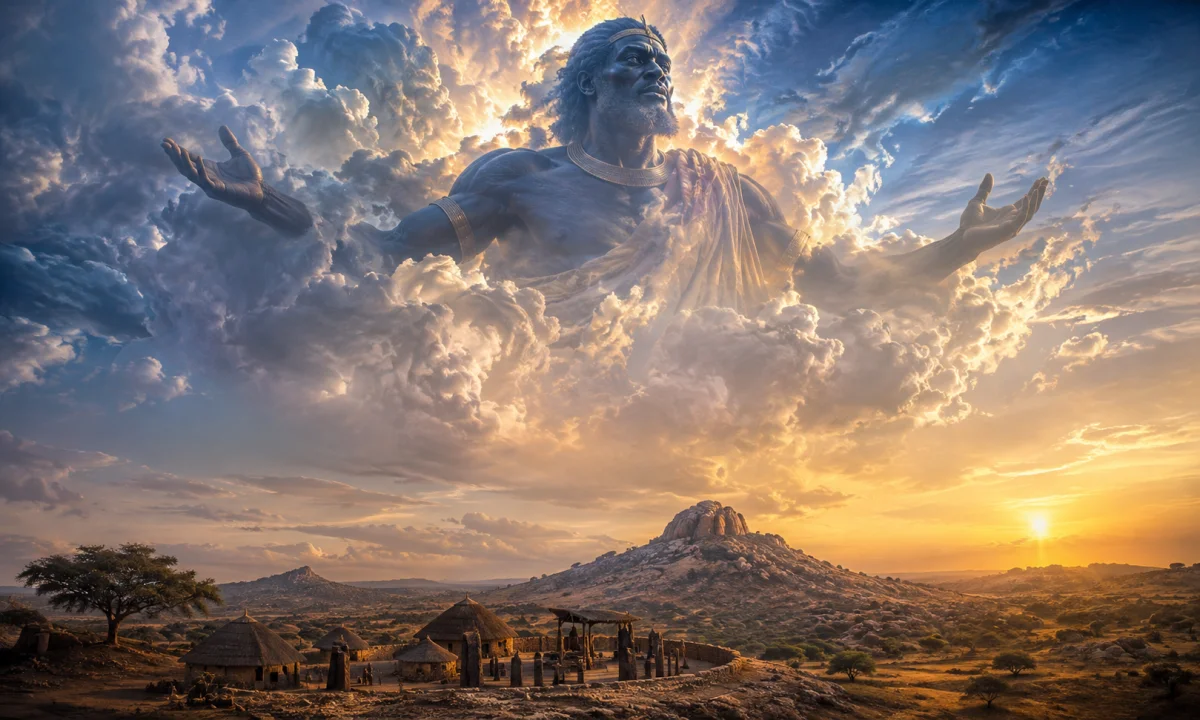
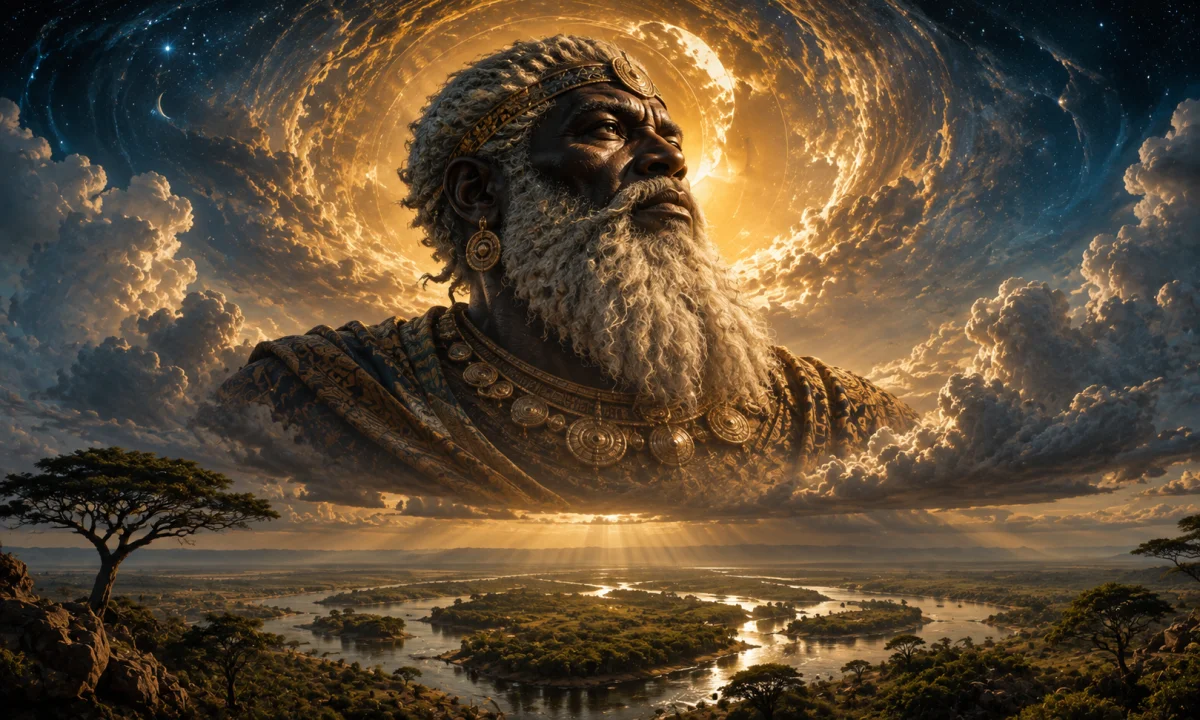
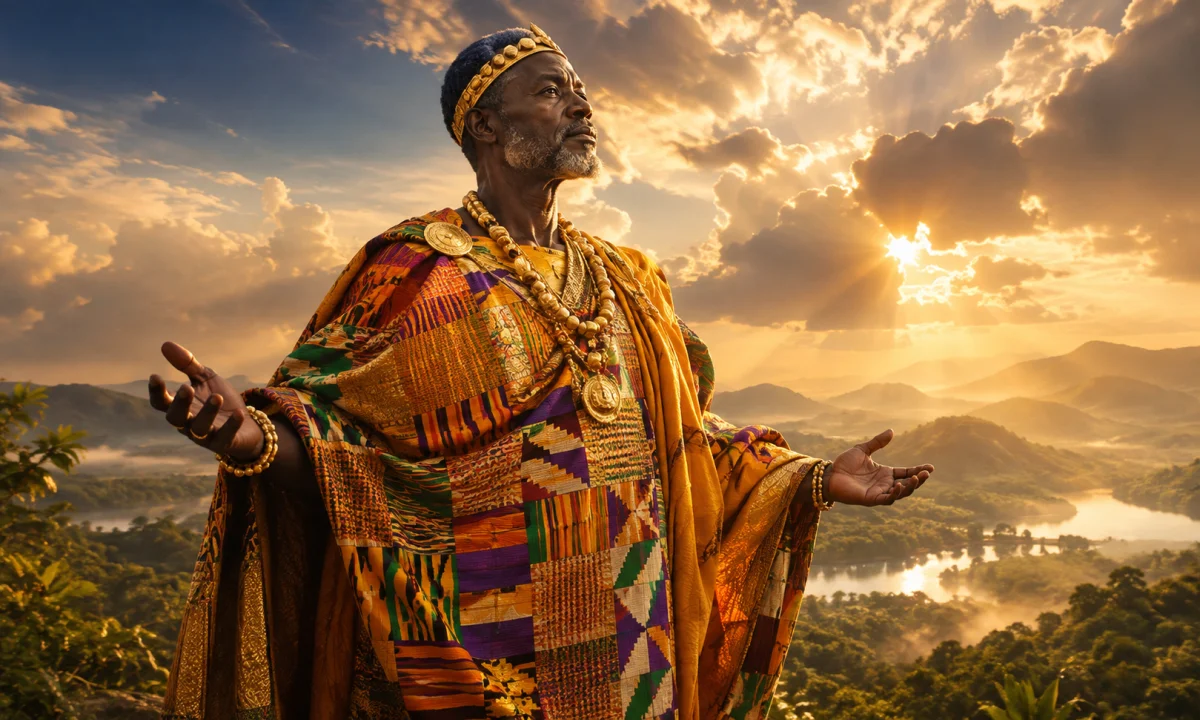
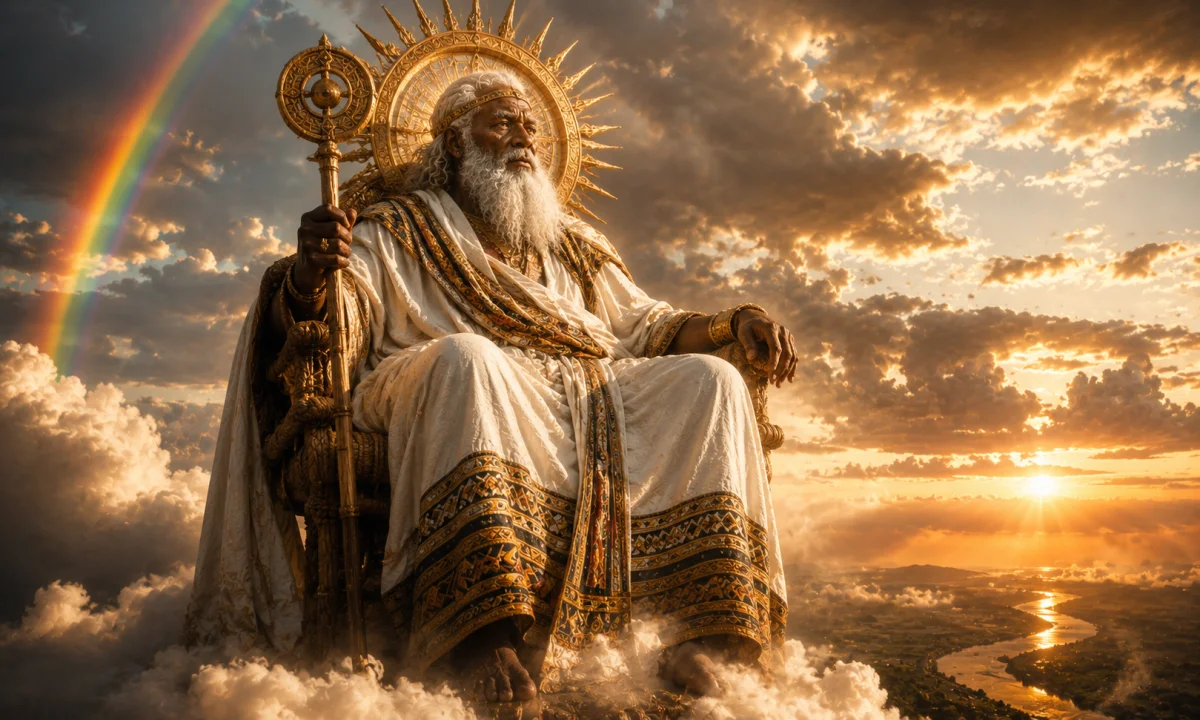
Wulbari is the name of a divine being in the traditional religion of the Talensi and related peoples of northern Ghana. In the cultural setting where the name is used, Wulbari is understood as a high god or supreme sky deity rather than as a local spirit, ancestor, or minor sacred force. As with many African religious traditions that were first recorded in writing by outsiders, knowledge of Wulbari comes mainly through oral tradition, ethnographic description, and later scholarly interpretation, so details can vary by community and source.
Origins and cultural setting
Wulbari belongs to the religious world of the Talensi, an ethnic group in the Upper East Region of Ghana, close to the border with Burkina Faso. Their traditional beliefs have often been described as centered on a distant creator god, ancestral reverence, shrine practice, and a rich ritual life connected to farming, land, and community order. In that setting, Wulbari stands above many other spiritual beings, but is not always the most immediately approached power in daily life. People commonly relate more directly to ancestors, earth shrines, divinities of place, and ritual specialists, while Wulbari remains the ultimate source of life and authority.
Because the Talensi tradition has been transmitted mainly through oral practice rather than through a sacred canon of fixed texts, descriptions of Wulbari are not uniform. The name may be rendered in slightly different spellings in academic works, and some accounts emphasize Wulbari’s transcendence, while others stress the deity’s role in creation, moral order, or the giving of rain and fertility. It is safest to treat Wulbari as the name of the supreme divine power in Talensi religious thought, while recognizing that the precise theological emphasis can differ from one narrator or researcher to another.
Name and identity
The name Wulbari is associated with the highest divine being in Talensi belief. In discussions of African religion, such beings are sometimes called “high gods,” “supreme beings,” or “creator gods,” but those labels should not be taken too rigidly. In local religious practice, a supreme god may be acknowledged as the ultimate source of existence without being the most frequently addressed figure in rituals.
Wulbari is generally described as male in English-language writing, though gendered language can be a matter of translation and may not fully capture the way the deity is understood locally. As with many African supreme beings, Wulbari is often portrayed as remote, powerful, and beyond ordinary human control. This distance does not mean absence; rather, it reflects a religious pattern in which the highest god is recognized as sovereign, while human beings negotiate everyday concerns through more accessible intermediaries and ritual institutions.
Some writers compare Wulbari to other West African sky or creator deities, but such comparisons must be handled carefully. Similar social functions do not necessarily mean a shared origin or identical mythology. Wulbari is best understood in its own Talensi context, even when broader patterns across African religions are discussed.
Religious role and symbolism
Wulbari’s most important role is that of creator and ultimate source of order. In Talensi thought, the deity stands at the top of the spiritual hierarchy and is connected with the creation and maintenance of the world. Like other high gods in many African traditions, Wulbari may be associated with the sky, a sign of height, distance, and authority. The sky symbolism is important, but it should not be reduced to a simple “god of the heavens” formula. In many traditions, the sky expresses transcendence, visibility, and power, while daily ritual life remains rooted in the earth, ancestry, and community.
Wulbari is also linked to moral order. The supreme god is not merely a creator in a mechanical sense; rather, the deity is understood to stand behind justice, truth, and the proper functioning of the human and natural world. In African religious systems, moral and cosmic order are often intertwined. Harm in the social world may be understood as reflecting spiritual imbalance, while right conduct sustains life and harmony.
The symbolism of Wulbari therefore combines distance and authority. The deity is high and powerful, yet not usually approached with the same frequency as ancestors or shrine divinities. This arrangement does not imply that Wulbari is less important. Instead, it reflects a layered religious universe in which the supreme being establishes the whole order of existence, while lesser powers and ancestral presences mediate everyday relationships within it.
Worship and ritual context
Direct worship of Wulbari is generally less central than local and ancestral ritual, but acknowledgment of the deity can still be present in prayer, oath-taking, and appeals for blessing or protection. In many West African religions, a high god is invoked in moments of seriousness: when truth must be established, when a matter is solemn, or when a person seeks the highest possible witness to an oath. Such practices reflect the deity’s role as ultimate guarantor of moral seriousness.
Among the Talensi, ritual life is strongly shaped by the land and by the authority of shrines and ancestors. The earth and the moral claims of descent groups are significant in sustaining communal life. In that context, Wulbari is not an isolated philosophical idea but part of a living religious order that includes agriculture, kinship, and social responsibility. The deity’s presence is therefore often indirect, expressed through the structure of the world rather than through constant public ceremony.
In scholarly descriptions of African traditional religion, high gods sometimes appear to be “remote” because they are not represented by elaborate myth cycles or continuous temple worship in the way seen in some other religions. That impression can be misleading. A deity may be remote in ritual access yet central in cosmology. Wulbari fits this pattern well.
Stories and traditional understanding
Compared with some other African deities, Wulbari is not widely known for a large body of dramatic narrative material in the published record. That does not mean stories do not exist; rather, it means that surviving written accounts tend to focus more on religious function than on epic myth. The available evidence suggests that Wulbari is remembered primarily as the creator and highest authority rather than as a trickster, warrior, or culture hero.
Where mythic explanations are recorded, they usually serve to reinforce Wulbari’s transcendence, creative power, or distance from human affairs. Some accounts of West African supreme beings describe a separation between the high god and humanity, often explaining why the deity is no longer directly involved in everyday life. However, such motifs differ from one people to another, and they should not be automatically transferred to Wulbari without clear evidence. It is better to say that Wulbari is understood as the supreme divine presence in Talensi religion than to attach specific narratives that may belong elsewhere.
Because of this relative scarcity of popular narrative material in the written record, Wulbari is often discussed by scholars through the lens of religious structure rather than mythic storytelling. The deity helps define the overall shape of the universe, the authority behind moral law, and the place of other sacred powers. That role itself is culturally significant, even when not tied to a famous cycle of legends.
Relationship to ancestors and other spiritual powers
In Talensi religion, as in many African traditions, the spiritual world is not divided into a simple opposition between one god and everything else. Ancestors, shrine spirits, earth powers, and ritual specialists all occupy meaningful positions. Wulbari stands above these beings, but human life is often negotiated through them. The supreme god provides ultimate origin and legitimacy, while ancestors and shrines remain closer to the practical needs of family, land, and health.
This layered religious system is important for understanding Wulbari correctly. The deity should not be described as if all worship is directed only upward to a single distant creator. Nor should Wulbari be mistaken for an ancestor or a localized spirit. The deity belongs to the highest level of sacred authority, while other powers handle matters that are more immediate or geographically specific.
Such distinctions matter because English-language terms like “god,” “spirit,” and “saint” can flatten the structure of African religions. Wulbari is not an interchangeable label for any sacred being. The name refers to a particular supreme divine identity within Talensi belief, and the relationship between that deity and other powers is shaped by local cosmology.
Historical record and scholarly interpretation
Knowledge of Wulbari in the modern world is shaped largely by ethnographic writing and comparative study. As with many oral religious traditions, the written record reflects the circumstances of collection, translation, and interpretation. Earlier researchers sometimes described African supreme beings as remote “sky gods” in a way that understated the complexity of indigenous theology. More recent scholarship has tended to emphasize the sophistication of African religious thought and the need to interpret each tradition on its own terms.
In that scholarly context, Wulbari is significant because the deity illustrates a common but often misunderstood feature of African religions: the presence of a supreme creator who is real and important, yet not always the focal point of ritual practice. This pattern challenges older assumptions that religion must center on continuous temple worship or a large body of scripture. In Talensi belief, cosmology, morality, ancestry, and ritual authority are interwoven, and Wulbari is part of that larger structure.
Scholars also use figures such as Wulbari to discuss how indigenous religions balance transcendence and immanence. The supreme god is beyond ordinary life, but sacred power still touches human affairs through ancestors, land, and ritual acts. This balance is one reason why the deity cannot be reduced to a simple analogy with gods from other regions.
Distinction from similar figures
Wulbari is sometimes discussed alongside other West African high gods, especially when comparing religious patterns across the region. Such comparisons can be useful, but confusion is easy if names and traditions are mixed together. Wulbari should not be identified with any deity merely because that deity is also a creator, sky god, or distant supreme being.
The distinction is especially important when considering neighboring traditions in Ghana and Burkina Faso, where different peoples have their own names for supreme beings, earth powers, and ancestral structures. A deity that performs a similar role in one society may have a different mythic profile, ritual importance, or gendered understanding in another. Wulbari belongs specifically to Talensi religious thought, even if some broad features resemble patterns found elsewhere in Africa.
It is also important not to confuse Wulbari with later Christian or Islamic conceptions of God simply because translations sometimes use the word “God” for convenience. Although translation can be helpful, it may conceal differences in ritual life, cosmology, and religious authority. Wulbari is a term from a particular indigenous tradition and should be understood in that context first.
Modern context and contemporary relevance
In present-day Ghana, many people identify with Christianity or Islam, while some continue to maintain or remember elements of traditional religion. As a result, figures such as Wulbari may be less visible in everyday public discourse than they were in older community settings, yet they remain important for cultural memory, identity, and scholarly understanding. Traditional religious ideas do not simply disappear when new religions spread; they may persist in local idioms, ritual custom, family memory, and cultural explanation.
Modern popular culture has not made Wulbari widely known internationally, and there are no prominent global adaptations that can be described with confidence. Where the name appears today, it is more likely in academic discussion, local cultural conversation, or broader explorations of African religion than in film, games, or mainstream literature. Any modern use of the name should be treated carefully, since creative works may alter or invent details without regard to Talensi tradition.
For readers encountering Wulbari for the first time, the most important point is that the deity belongs to a living cultural and historical framework rather than to a single fixed myth. Wulbari is best understood as the supreme divine being in Talensi religion, a source of creation and moral authority whose significance lies in the structure of belief as much as in any one story.
Why Wulbari matters in African religious history
Wulbari helps illuminate how many African societies have thought about ultimate reality. The deity shows that a supreme creator can be central without dominating every ritual act. It also shows how religious life can integrate a high god, ancestors, land-based ritual, and community ethics into one coherent worldview. That combination is not a relic of the past; it is part of the historical depth of African thought.
In that sense, Wulbari stands as an example of the diversity and sophistication of African mythology and religion. The name points not to a distant abstraction, but to a specific tradition in which the supreme being anchors the universe, underwrites moral order, and coexists with a network of more immediate sacred relationships.