WORLD
WORLD
Tolmalok
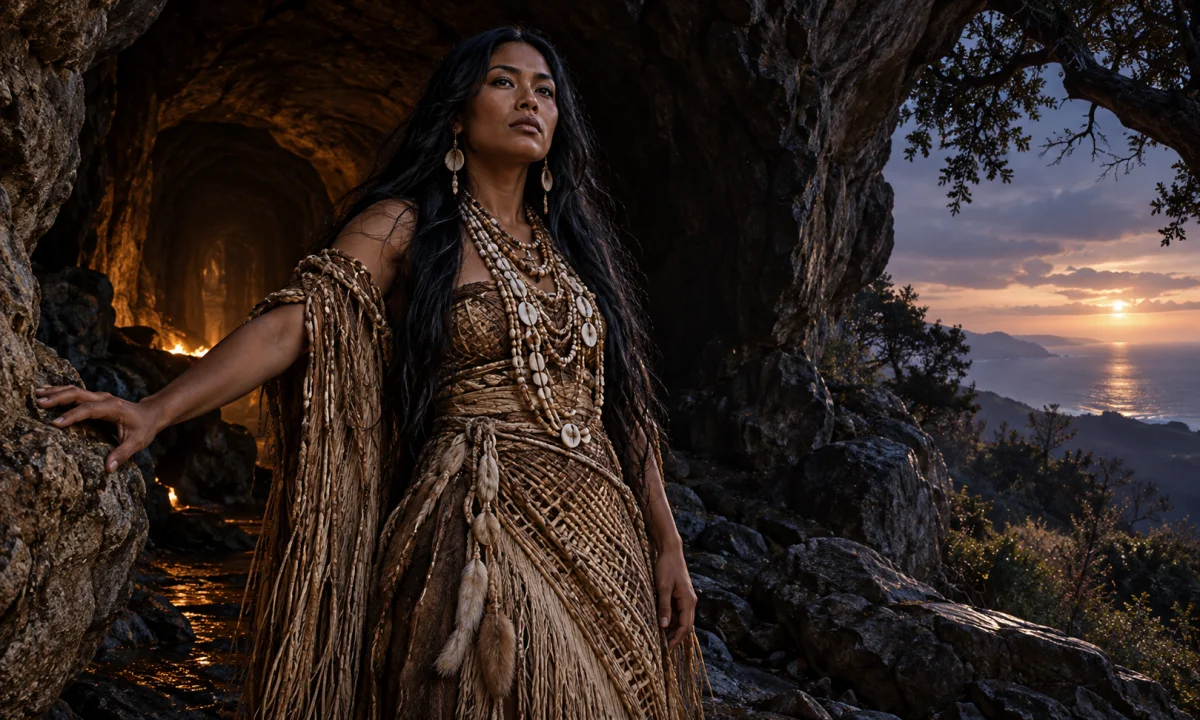
Tolmalok is a name associated in some modern reference lists with Native American mythology, but its traditional identity is uncertain. It is sometimes presented as a spirit or deity connected with death, the underworld, or the realm of the dead. However, no single, well-attested tradition establishes Tolmalok as a universally recognised figure, and the name is not securely connected to one specific Indigenous nation in the surviving material commonly available in English.
This uncertainty is important. “Native American mythology” covers hundreds of distinct cultural traditions, languages, and religious systems across North America. A name appearing in a general mythology dictionary or on a modern website does not, by itself, demonstrate that it belonged to a widespread or historically documented belief system. In Tolmalok’s case, the evidence is too limited and inconsistent to provide a conventional biography comparable to that of figures such as Coyote, Raven, or the Iroquois Creator.
The difficulty of identifying Tolmalok
The main problem is not simply that different sources spell the name differently. The deeper issue is that Tolmalok lacks a stable cultural profile. Accounts that mention the name may give little or no information about the people who used it, the language from which it was supposedly translated, the stories in which it appeared, or the ceremonies associated with it.
Some modern summaries describe Tolmalok as a god of death. Others use broader terms such as “spirit,” “underworld being,” or “guardian of the dead.” These descriptions are not necessarily equivalent. In Indigenous religious traditions, a being associated with death might be a creator, a judge, a guide, an ancestor, a dangerous spirit, or simply a figure appearing in one particular story. Translating all such beings as a “god of death” can impose categories from European mythology that do not fit the original tradition.
There is also no dependable basis for treating Tolmalok as a pan-Native American figure. Indigenous peoples of North America did not share one mythology, and similar ideas about death arose independently in many regions. A name with no securely identified language or community should therefore be treated cautiously rather than assigned to an entire continent.
Origins and cultural setting
The name is sometimes placed in discussions of Indigenous traditions from western North America, especially California, but this attribution is not sufficiently secure to be stated as an established fact. It is possible that Tolmalok represents a transcription, mistranscription, altered spelling, or loose interpretation of a name from a particular language. It is also possible that the term entered modern mythology lists without enough contextual information to preserve its original meaning.
Historical documentation of Native American religions was often produced by outsiders, including missionaries, government officials, travellers, and early ethnographers. Their records vary greatly in quality. Names could be written according to unfamiliar pronunciation, translated inconsistently, or detached from the stories and ritual settings that gave them meaning. In addition, some sacred teachings were shared selectively, while other traditions survived primarily through oral transmission.
These conditions make it dangerous to reconstruct a detailed mythology from a name alone. A responsible account can distinguish between what is sometimes claimed in secondary material and what is supported by a clearly identified cultural tradition. In Tolmalok’s case, the former is easier to find than the latter.
Name and classification
The spelling Tolmalok should not automatically be assumed to be original. Indigenous languages of North America use sound systems and grammatical structures that are often difficult to represent with English spelling. Historical writers used different alphabets and spelling conventions, and a single name could appear in several forms when recorded by different people.
No widely accepted etymology for Tolmalok can be given without identifying its language of origin. Claims that the name means “death,” “underworld,” or a similar concept should therefore be treated as unverified unless they are tied to a reliable linguistic explanation. A translated label may describe how a modern writer understood the figure rather than what the original name actually meant.
Classification is equally uncertain. Calling Tolmalok a god may be misleading because many Indigenous traditions do not divide supernatural beings into the same categories used in classical mythology. Terms such as spirit, power, person, ancestor, monster, culture hero, and deity can overlap or have meanings that change according to context. “Supernatural being” is the safest general description when the cultural setting has not been established.
Reported association with death
The most persistent modern description of Tolmalok connects the name with death or the world beyond ordinary human life. This association may explain why the figure appears in lists of Native American gods and spirits. Yet a death-related role should not be expanded into a complete mythology without evidence.
There is no securely established body of traditional stories that explains Tolmalok’s origin, appearance, family, dwelling, powers, or relationship with human beings. In particular, it is not possible to confirm from the available general references whether Tolmalok was believed to receive the dead, punish them, guide them, create them, or merely inhabit a region associated with them.
Many Indigenous traditions describe death as a transition rather than a simple ending. The dead may travel to another settlement, join ancestors, return in altered form, or remain connected with living relatives through dreams and ceremony. Some traditions also distinguish between different kinds of death, such as an ordinary death, a violent death, or death caused by spiritual interference. A vague label such as “god of death” cannot express these differences.
Nor should an association with the dead automatically imply an evil character. In many religious systems, beings connected with death are not demons or villains. They may represent the order of the cosmos, protect the boundaries between worlds, or embody a necessary stage in the renewal of life. Without stories or ritual context, Tolmalok’s moral character cannot be established.
Absence of a securely preserved mythology
Well-documented mythological figures are usually known through multiple related elements: named stories, distinctive actions, relationships with other beings, ceremonial references, or explanations supplied by members of the tradition itself. Tolmalok does not have a comparable record in the broadly circulated English material.
There are no securely established traditional narratives that can be retold as “the myths of Tolmalok.” Stories sometimes attached to the name in unsourced compilations should not be presented as authentic simply because they resemble familiar themes such as the creation of humanity, the origin of death, or a journey to the underworld. Such themes occur throughout world mythology and do not prove a connection to Tolmalok.
This lack of evidence does not prove that the name was invented recently. A poorly documented name may reflect damaged records, an obscure local tradition, or a translation separated from its original community. It does mean that confidence should be limited. The absence of accessible documentation is a reason for careful wording, not an invitation to fill the gaps with invented details.
Distinguishing Tolmalok from other Indigenous figures
Tolmalok should not be merged with better-documented figures merely because they share a possible connection with death or the underworld.
- Coyote appears in numerous Indigenous traditions across western North America, but each community gives Coyote different qualities and stories. Coyote is often a trickster, creator, culture hero, or disruptive transformer. He is not an established alternate name for Tolmalok.
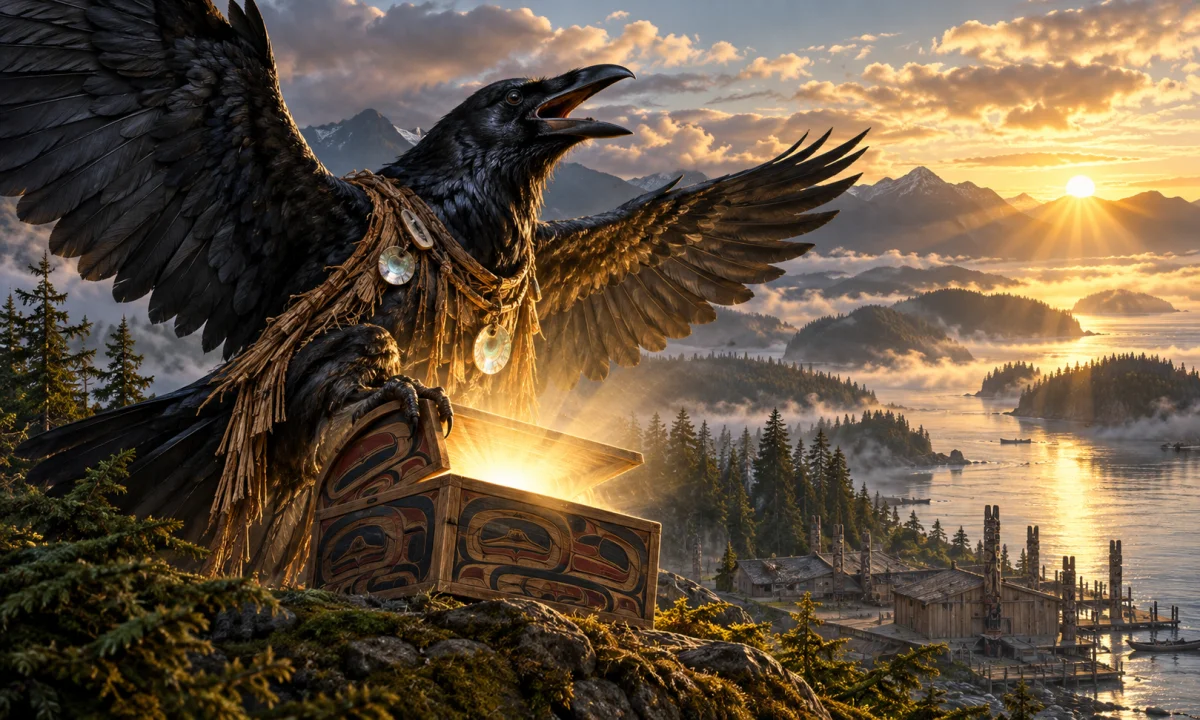
- Raven is a major culture hero and transformer in several traditions of the Pacific Northwest and neighbouring regions. Raven’s role in bringing light or reshaping the world does not identify him with an uncertain death-related name.
- Wendigo belongs particularly to Algonquian-speaking traditions and has been heavily reshaped by modern horror fiction. It should not be treated as a general Native American death spirit or as another name for Tolmalok.
- Chinigchinich, Wiyot, and other named beings associated with particular peoples of California belong to specific religious and historical contexts. Similar geographic speculation is not enough to establish that any of them was Tolmalok.
- Aztec, Maya, and other Mesoamerican deities of death come from distinct civilizations south of the cultural regions usually meant by “Native American mythology.” They should not be used to supply missing details about Tolmalok.
These distinctions matter because popular mythology lists often combine beings from unrelated peoples under broad labels. A figure from an Algonquian-speaking community, a California community, and a Mesoamerican civilization may all be described as a “death god,” even though their languages, histories, rituals, and religious concepts are entirely different.
Interpretation and cultural significance
The modern interest in Tolmalok appears to arise largely from the human desire to classify every unusual mythological name. Readers often expect each entry to have a fixed domain, physical form, origin story, and set of powers. That format works poorly for names whose documentation is fragmentary.
Tolmalok is therefore significant less as a clearly defined mythological character than as an example of the problems involved in recording and transmitting Indigenous traditions. It shows why cultural identification, language, authorship, and historical context are essential. A short entry that labels a figure “the Native American god of death” can conceal a long chain of uncertain copying and interpretation.
It is also important to respect the difference between traditional knowledge and modern classification. Indigenous religions are living traditions, not merely collections of mythological characters. Sacred names may have meanings that are known within a community but absent from general reference works. Conversely, a name may have been recorded by outsiders in a way that community members would not recognise.
Tolmalok in modern reference culture
Tolmalok occasionally appears in online mythology databases, lists of deities, fantasy encyclopedias, and discussions of obscure supernatural beings. These appearances generally provide more certainty than the historical evidence warrants. Repetition across websites can make a claim look ancient or well documented even when the sites are copying one another.
Modern fantasy may also use Tolmalok as a convenient name for a death deity, underworld ruler, or dark spirit. Such uses belong to contemporary fiction and should not be confused with Indigenous tradition. Unless a work identifies its own invented setting, readers may mistake a fictional character for a traditional religious figure, especially when the name is placed beside genuine figures from Native American cultures.
The most accurate description, at present, is that Tolmalok is an uncertain and poorly documented name associated in some modern sources with a Native American death-related spirit or deity. Its exact origin, community, language, traditional role, and spelling remain unresolved. More specific claims require verifiable cultural and linguistic evidence rather than repetition of unsupported mythology-list descriptions.