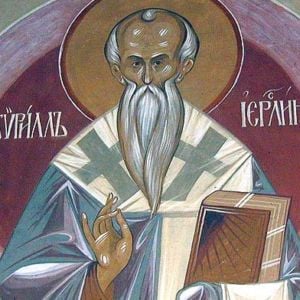
St. Cyril of Jerusalem was a significant figure in the early Christian church, known for his teachings and contributions to Christian theology. He served as the Bishop of Jerusalem during the fourth century and played a crucial role in the development of early Christian doctrine. His work primarily focused on the importance of the sacraments and the teachings of the faith, which were vital in a time when the church was still defining its beliefs. His writings and teachings continue to influence Christian thought today.
Early Life and Education
Cyril was born around 315 AD in Jerusalem. He grew up in a city that was a center for early Christian thought. From a young age, he showed a keen interest in religious studies and theology. His education was heavily influenced by the growing Christian community around him, which was trying to establish its beliefs amidst various challenges. As he matured, he became deeply involved in the church, eventually being ordained as a deacon and later as a priest.
 St. Cyril Of Alexandria
During his formative years, Cyril witnessed the transition of Jerusalem from a predominantly pagan city to a center of Christian worship. This change was not without conflict. The church faced numerous challenges, including heretical teachings and external pressures from the Roman Empire. Cyril’s education was marked by these struggles, which shaped his understanding of the faith and his commitment to defending it. His studies likely included the works of early Church Fathers, which would later inform his teachings and writings.
Role as Bishop of Jerusalem
Cyril became the Bishop of Jerusalem around 348 AD, a time when the church was still solidifying its doctrines. His role as bishop placed him in a position of great responsibility, especially in a city that was the cradle of Christianity. One of his primary tasks was to combat heresies that threatened the unity of the church. He worked tirelessly to promote the Nicene Creed, which was established to affirm the core beliefs of Christianity. Cyril’s commitment to the creed was essential in maintaining the faith during a tumultuous period.
As bishop, Cyril also focused on the education of new converts. He developed a series of catechetical lectures that aimed to instruct those preparing for baptism. These lectures were not only theological in nature but also practical, addressing the moral and ethical implications of living a Christian life. Cyril believed that understanding the faith was essential for a strong spiritual foundation. His catechetical lectures became highly regarded and were used by future generations of church leaders.
 St. Cyricus
Contributions to Christian Doctrine
One of Cyril’s most significant contributions to Christian doctrine was his emphasis on the importance of the sacraments. He believed that the sacraments were vital means of grace, essential for the spiritual life of believers. Cyril taught that through the sacraments, Christians could experience a deeper relationship with God. His teachings on baptism, the Eucharist, and confirmation were particularly influential. He saw baptism as the gateway to the Christian life, necessary for salvation.
Cyril’s writings on the Eucharist emphasized its significance as the true body and blood of Christ. He argued that participating in the Eucharist was not merely a symbolic act but a real encounter with the divine. This understanding of the sacrament helped to solidify the belief in transubstantiation, which became a central tenet of Catholic theology. Cyril’s teachings provided a framework for understanding the nature of the sacraments, which continues to be relevant in Christian practice today.
Writings and Legacy
Cyril’s writings are a testament to his theological depth and pastoral concern. His most famous work is the “Catechetical Lectures,” a series of 23 lectures that outline the Christian faith. These lectures cover a wide range of topics, including the nature of God, the role of Jesus Christ, the importance of the Holy Spirit, and the significance of the church. Cyril’s clear and systematic approach made these lectures accessible to a broad audience, from new converts to established believers.
 St. Cyprian Of Carthage
In addition to the “Catechetical Lectures,” Cyril also wrote several letters and theological treatises. His correspondence with other church leaders reflects his commitment to maintaining unity within the church. He often addressed issues related to heresy and the need for a clear understanding of Christian doctrine. Cyril’s writings were instrumental in shaping the theological landscape of the early church and continue to be studied by theologians and scholars today.
Controversies and Challenges
Despite his significant contributions, Cyril’s life was not without controversy. His tenure as bishop was marked by conflicts with various groups, including the Jews and heretical sects. Cyril was known for his strong stance against heresies, which sometimes led to tensions within the community. His opposition to Arianism, a belief that denied the divinity of Christ, was particularly fervent. This conflict often put him at odds with those who held different views, leading to disputes that sometimes escalated into violence.
Additionally, Cyril faced challenges from within the church. His authority was questioned by other bishops and church leaders who disagreed with his teachings. These internal conflicts highlighted the struggles within the early church as it sought to define its beliefs and practices. Cyril’s unwavering commitment to his convictions, however, helped to establish him as a key figure in the development of early Christian doctrine, even amidst the challenges he faced.
Impact on Christian Worship
Cyril’s influence extended beyond theology; he also played a crucial role in shaping Christian worship practices. His teachings on the sacraments, particularly baptism and the Eucharist, influenced how these rites were conducted in the church. Cyril’s emphasis on the importance of proper preparation for these sacraments helped to establish guidelines that are still followed in many Christian traditions today. He believed that worship should be both reverent and accessible, allowing all believers to engage fully in the liturgical life of the church.
Moreover, Cyril’s work contributed to the development of the liturgy in Jerusalem. He was instrumental in creating a worship environment that reflected the richness of the Christian faith. His focus on the significance of symbols and rituals helped to deepen the spiritual experience of worshippers. The practices he established in Jerusalem spread to other regions, influencing the broader Christian community and contributing to the development of a unified liturgical tradition.
Recognition and Canonization
St. Cyril of Jerusalem was recognized as a saint by the early church, and his feast day is celebrated on March 18th. His contributions to Christian theology and worship have earned him a lasting legacy within the Christian tradition. The church has honored him for his unwavering commitment to the faith and his role in defending orthodox beliefs against heresy. His writings continue to be a valuable resource for those seeking to understand the foundations of Christian doctrine.
Cyril’s recognition as a saint reflects the esteem in which he was held by his contemporaries and subsequent generations. His teachings and writings have been preserved through the centuries, and he is often cited by theologians and scholars. His influence can be seen in various Christian denominations, where his insights into the sacraments and the nature of the church continue to resonate with believers today.
St. Cyril of Jerusalem remains a pivotal figure in Christian history. His life and work exemplify the challenges and triumphs of the early church as it sought to define its beliefs and practices. Through his teachings on the sacraments, his catechetical lectures, and his commitment to the faith, Cyril has left an indelible mark on Christian theology and worship. His legacy continues to inspire and guide Christians in their spiritual journeys, making him a vital figure in the story of Christianity.