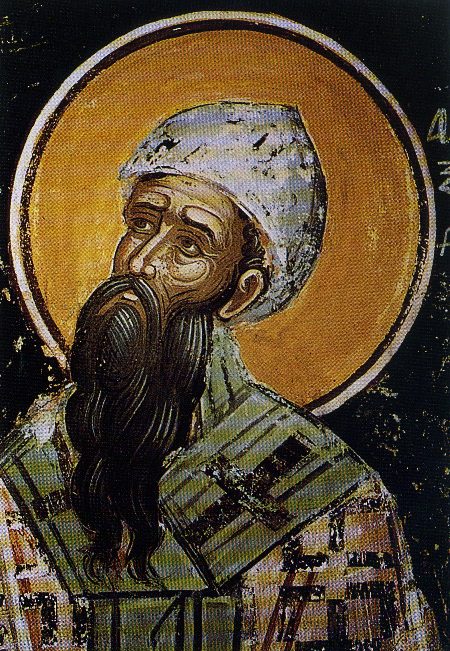
St. Cyril of Alexandria was a prominent figure in early Christian history, known for his theological contributions and his role in the Christological controversies of the fifth century. He was born in 376 AD in Alexandria, Egypt, and became the Patriarch of Alexandria in 412 AD. Cyril was a fierce defender of the faith and played a crucial role in the development of Christian doctrine. His life and works have had a lasting impact on Christianity, making him a significant figure in Christian mythology.
The Early Life of St. Cyril
 St. Cyricus
St. Cyril was born into a Christian family, which greatly influenced his spiritual development. His early education was likely conducted in Alexandria, a city known for its rich intellectual and cultural heritage. Cyril was well-versed in the Scriptures and the teachings of the Church Fathers, which laid the foundation for his later theological pursuits. His uncle, Theophilus, was the Patriarch of Alexandria before him, and he played a significant role in Cyril’s ascension to the patriarchal throne.
As a young man, Cyril exhibited a deep commitment to the Christian faith. His passion for theology was evident in his writings and teachings. He sought to understand the nature of Christ and the relationship between the divine and human natures within Him. This inquiry would later define much of his theological work. His upbringing in a vibrant Christian community also exposed him to various theological debates that were prevalent at the time.
Theological Contributions
Cyril’s most significant contributions to Christian theology revolve around the nature of Christ. He is best known for his assertion that Christ is both fully divine and fully human, a doctrine known as the hypostatic union. This belief was crucial in the context of the Nestorian controversy, where some argued for a separation between the divine and human natures of Christ. Cyril vehemently opposed this view, arguing that such a separation would undermine the integrity of Christ’s person.
 St. Cyprian Of Carthage
One of Cyril’s major works is the “Thesaurus,” where he outlines his Christological views. In this work, he emphasizes that the two natures of Christ are united in one person without confusion or division. This theological stance would later be affirmed at the Council of Ephesus in 431 AD, where Cyril played a pivotal role. His teachings on the nature of Christ continue to influence Christian doctrine to this day.
Key Theological Concepts
- Hypostatic Union: The belief that Christ is both fully divine and fully human.
- Incarnation: The doctrine that the Word of God became flesh in the person of Jesus Christ.
- Theotokos: The title given to Mary, meaning “God-bearer,” affirming her role in the incarnation.
Cyril’s theological concepts were not only significant in their time but also laid the groundwork for future theological discussions. His defense of the term “Theotokos” for Mary, for instance, was crucial in affirming the doctrine of the Incarnation. By recognizing Mary as the Mother of God, Cyril emphasized the unity of Christ’s divine and human natures, countering any attempts to diminish the significance of the Incarnation.
Conflict with Nestorius
The conflict with Nestorius, the Patriarch of Constantinople, marked a significant chapter in Cyril’s life. Nestorius proposed a different understanding of Christ’s nature, suggesting a division between His divine and human aspects. This perspective sparked a heated debate within the Church, leading to the Council of Ephesus in 431 AD. Cyril, as a staunch opponent of Nestorius, took a leading role in the proceedings of the council.
 St. Eparchius
Cyril’s letters to Nestorius were filled with strong theological arguments and passionate appeals for unity within the Church. He argued that separating Christ’s natures would lead to a distorted understanding of salvation. The council ultimately sided with Cyril, condemning Nestorius’ teachings and affirming the orthodox position on the nature of Christ. This victory solidified Cyril’s reputation as a defender of the faith and a key figure in early Christological debates.
Impact of the Council of Ephesus
- Condemnation of Nestorianism: The council condemned Nestorius and his teachings.
- Affirmation of Christ’s Nature: It affirmed the belief in the hypostatic union of Christ.
- Strengthening of Cyril’s Authority: The council solidified Cyril’s role as a leading theologian.
The outcome of the Council of Ephesus had profound implications for the Church. It not only condemned Nestorianism but also established a clearer understanding of Christ’s nature that would be upheld in subsequent theological discussions. Cyril’s authority as a theologian was greatly enhanced, and his writings became foundational texts for understanding the Incarnation. His influence extended beyond the council, shaping Christian thought for centuries.
Writings and Legacy
St. Cyril’s writings are extensive and cover various aspects of Christian theology, including biblical exegesis, apologetics, and pastoral letters. His commentaries on the Scriptures are particularly noteworthy, as they demonstrate his deep understanding of the biblical text and its theological implications. One of his most famous works is the “Commentary on the Gospel of John,” where he explores the profound mysteries of the Incarnation and the nature of God.
In addition to his theological works, Cyril also wrote extensively against heresies. His treatises against the teachings of Arius and Nestorius were crucial in defending the orthodox faith. His ability to articulate complex theological concepts in a clear and accessible manner made his writings influential among both clergy and laypeople. Many of his works were later included in the collections of the Church Fathers, further solidifying his legacy.
Key Writings of St. Cyril
- Thesaurus: A key work outlining his Christological views.
- Commentary on the Gospel of John: An important theological exploration of the Incarnation.
- Treatises against Heresies: Writings that defended orthodox Christianity.
Cyril’s legacy extends beyond his writings; he is venerated as a saint in both the Eastern Orthodox and Roman Catholic traditions. His feast day is celebrated on June 27th in the Eastern Orthodox Church and on June 9th in the Roman Catholic Church. His contributions to Christian theology and his unwavering commitment to the faith have made him a revered figure in Christian history.
St. Cyril’s Influence on Christian Doctrine
St. Cyril of Alexandria’s influence on Christian doctrine cannot be overstated. His theological positions laid the groundwork for the future development of Christology, particularly in the context of the debates surrounding the nature of Christ. His insistence on the hypostatic union became a cornerstone of Christian belief, shaping the understanding of the Incarnation for generations of Christians.
The Council of Chalcedon in 451 AD, which further clarified the nature of Christ, was significantly influenced by Cyril’s earlier teachings. The definitions established at Chalcedon built upon the foundation laid by Cyril, affirming the importance of his Christological insights. His theological framework helped to unify the Church around a common understanding of Christ, which was essential for the development of orthodox Christian doctrine.
Long-Term Effects on Christianity
- Development of Christology: Cyril’s teachings shaped the understanding of Christ’s nature.
- Unification of the Church: His work contributed to the consolidation of Christian beliefs.
- Influence on Later Theologians: Many later theologians drew upon Cyril’s writings.
Cyril’s impact is evident in the works of later theologians such as Augustine and Aquinas, who engaged with his ideas in their own writings. His emphasis on the unity of Christ’s natures provided a framework for understanding the complexities of salvation and the role of Christ in the redemption of humanity. This theological heritage continues to resonate within the Church today, reflecting the enduring significance of St. Cyril’s contributions.
Veneration and Canonization
St. Cyril of Alexandria was canonized as a saint by the Church, recognizing his contributions to Christian theology and his defense of the faith. His veneration is particularly strong in the Eastern Orthodox Church, where he is honored as one of the great Church Fathers. The Orthodox Church commemorates him as a champion of orthodoxy and a defender of the Incarnation, celebrating his life and works with reverence.
In the Roman Catholic Church, Cyril is also recognized as a saint and is included in the Roman Martyrology. His feast day is observed with special liturgical celebrations, reflecting the importance of his theological legacy. The recognition of Cyril as a saint underscores the impact of his teachings on the development of Christian thought and the ongoing relevance of his work in contemporary theology.
Modern Recognition of St. Cyril
- Feast Days: Celebrated in both Eastern and Western traditions.
- Influence on Ecumenical Dialogues: His teachings continue to be discussed in modern theological discussions.
- St. Cyril’s Patronage: He is considered the patron saint of scholars and theologians.
Today, St. Cyril’s teachings are studied and revered by theologians and scholars around the world. His contributions to Christology and his defense of the faith continue to inspire discussions on the nature of Christ and the significance of the Incarnation. As the Church faces new challenges and questions, the insights of St. Cyril remain a valuable resource for understanding the foundations of Christian belief.
St. Cyril of Alexandria’s life and works represent a pivotal moment in the history of Christianity. His theological contributions, particularly regarding the nature of Christ, have shaped the development of Christian doctrine and continue to influence the faith today. As a defender of orthodoxy and a champion of the Incarnation, Cyril’s legacy endures, reminding Christians of the importance of understanding the complexities of their faith.