WORLD
WORLD
Pemba
Pemba is a figure associated principally with Bambara, or Bamana, and other Mandé traditions of West Africa. In accounts of Mandé creation, Pemba is a primordial being linked with the earth, seeds, cultivation and the imperfect or disorderly beginnings of human existence. He is often presented alongside Faro, a powerful water-associated being who restores balance and order. The details differ considerably between communities and recorded versions, so Pemba should not be treated as a single, universally defined African god.
Cultural setting
The traditions surrounding Pemba belong to the wider cultural world of the Mandé peoples, whose languages and histories extend across parts of Mali, Guinea, Senegal, Côte d’Ivoire, Burkina Faso and neighbouring regions. The Bambara or Bamana are especially important in published discussions of Pemba, although related ideas may appear in other Mandé contexts under different names, emphases or genealogies.
Mandé religious thought does not rest on one canonical scripture containing a fixed version of creation. Knowledge has traditionally been transmitted through oral teaching, ritual practice, initiation, praise traditions and the work of specialist custodians of history and esoteric knowledge. Accounts recorded by researchers may therefore represent a particular community, teacher or interpretive tradition rather than a doctrine shared by every Mandé-speaking society.
In these traditions, creation is not always described as a finished act that occurred once in the distant past. The formation of the world, the ordering of nature and the establishment of human society can be understood as connected processes. Water, earth, seed, speech, fertility, death and social order are often treated as mutually dependent aspects of existence. Pemba’s significance comes from this cosmological setting rather than from a long sequence of independent heroic adventures.
Name and identity
The spelling Pemba is common in English-language treatments, but the representation of Mandé names varies according to language, pronunciation and the conventions used by individual writers. A name appearing in an English source may not correspond exactly to the spelling used in a local language. The name should also be distinguished from unrelated geographical and personal uses of “Pemba”.
Pemba’s classification is uncertain because the word “god” can impose a misleadingly rigid category. Some accounts describe Pemba as a deity or creator being. Others present him as a primordial ancestor, a culture-bringing figure or one of the first beings involved in the ordering of the world. In many African religious systems, the boundaries between god, ancestor, spirit and primordial being do not necessarily match the categories used in modern Western mythology textbooks.
Where Pemba is connected with Faro, both figures may be described as members of a primordial pair or as complementary powers. In some retellings they are brothers or twins; in others, their relationship is presented more broadly as a contrast between two cosmic principles. These differences are not merely spelling variations. They reflect the diversity of oral traditions and the fact that Mandé cosmological teachings have been recorded in different places and at different times.
Pemba in creation traditions
A widely repeated outline places Pemba within a creation ordered by a supreme or originating power whose name is variously rendered as Mangala, Maa Ngala or by other forms in discussions of Mandé cosmology. The spelling and interpretation of this name vary, and accounts should not automatically be assumed to describe an identical theology across all Mandé communities.
In versions that include Pemba and Faro, the primordial world begins in a state of potential rather than in the fully structured environment known to human beings. Pemba is associated with an early movement from the celestial or primordial realm toward the earth. His actions bring seeds, living potential or the conditions for cultivation into the terrestrial world. The earth therefore becomes a place of growth, but also of limitation, mortality and unpredictability.
One common interpretation portrays Pemba as acting prematurely or independently. He separates himself from the proper order established by the creator, descends or breaks away from the original cosmic arrangement, and becomes associated with the earth. In some tellings, this action is described as a transgression; in others, it is part of the necessary process through which the world becomes inhabitable. The same act can consequently be read as both creative and disruptive.
Some versions connect Pemba with the taking or planting of seeds. The precise nature of the seeds varies in retellings, and not every account gives this episode the same prominence. The basic symbolism is clear: Pemba helps establish the conditions of agriculture and earthly life, but does so through an act that disturbs the original balance. This makes him different from a simple benefactor who calmly gives culture to humanity. His creative role carries consequences.
Faro’s intervention is often presented as a response to this disturbance. Associated with water, rain, fertility, speech and the restoration of cosmic order, Faro helps make the world productive and intelligible. In some interpretations, Pemba represents the earth’s raw or untamed potential, while Faro represents the forces that regulate, irrigate and organize it. Their opposition is therefore not always an absolute battle between good and evil. It can be a relationship of tension and complementarity.
Earth, seed and cultivation
Pemba’s principal symbolism is terrestrial. He is linked with soil, the planted seed and the transformation of a wild or unformed world into a place where life can take root. This association makes agriculture central to his meaning. Cultivation is not simply an economic activity in such a cosmology; it is a repetition of the world’s first creative processes.
The seed provides an especially appropriate image for Pemba. It is hidden in the earth, apparently inactive, yet contains the possibility of new life. It requires water, labour, seasonal change and an ordered relationship between human beings and the land. Pemba’s connection with seeds therefore places him at the meeting point of fertility and danger. The earth sustains life, but it also receives the dead, limits human power and can become barren when balance is broken.
Because of this ambiguity, Pemba is sometimes characterized as a trickster-like or disordering figure. That description should be used carefully. A trickster is not necessarily a comic character or a villain, and Pemba is not simply equivalent to trickster figures from other African traditions. His disruptive quality arises from his relationship to the first separation from cosmic order. He can be innovative, productive and necessary while also being associated with error, impatience or rebellion.
Relationship with Faro
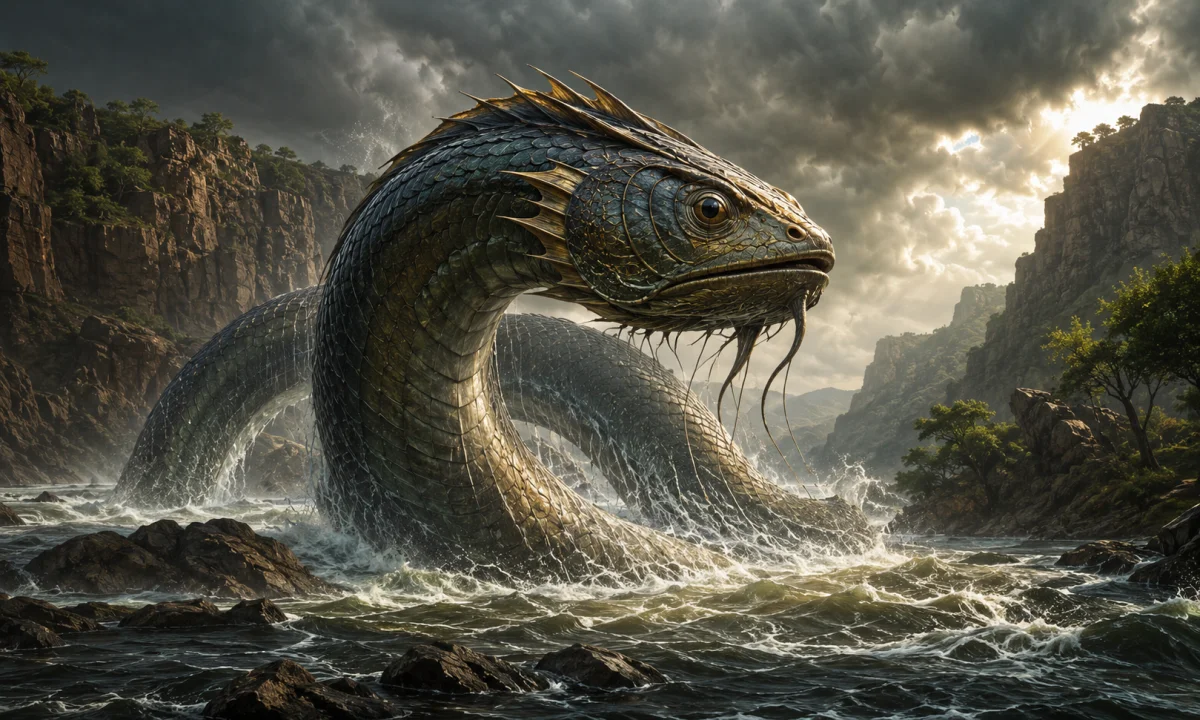
Faro is the figure most frequently discussed in relation to Pemba. In broad outlines, Faro is connected with water and with the ordering powers that make life possible. Water fertilizes the earth, supports growth and creates channels through which the world can be structured. Faro may also be associated with speech, knowledge, classification and the establishment of social and ritual order, although the exact set of attributes depends on the source and community.
The contrast between the two figures can be expressed symbolically:
- Pemba is associated with earth, seed, descent, growth and the untamed or unstable potential of the material world.
- Faro is associated with water, fertility, speech, regulation and the restoration of balance.
- Their relationship expresses the dependence of earth upon water and the need to bring creative potential into an ordered form.
This contrast does not mean that Pemba is wholly negative or that Faro is a perfectly separate force of goodness. Earth without water cannot flourish, but water without a receptive earth cannot produce crops. The pairing can therefore be understood as a cosmological model of interdependence. In some interpretations, Pemba and Faro are rival powers; in others, they represent stages or dimensions of one creative process.
Attributes and representation
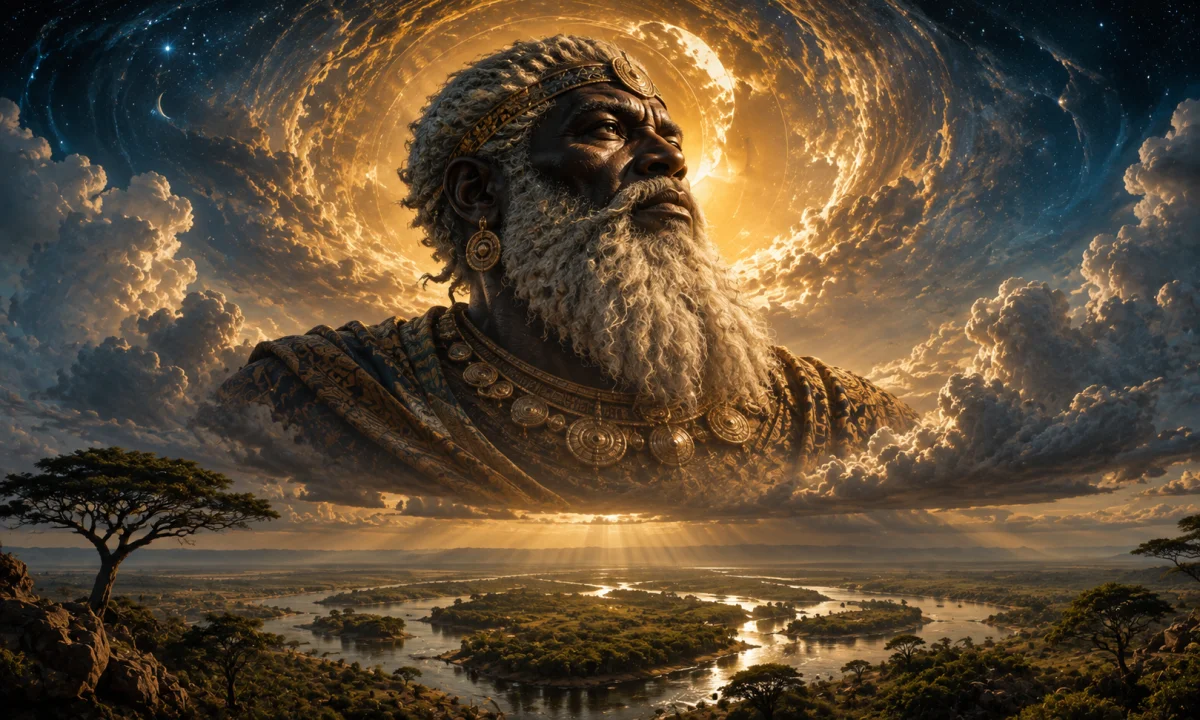
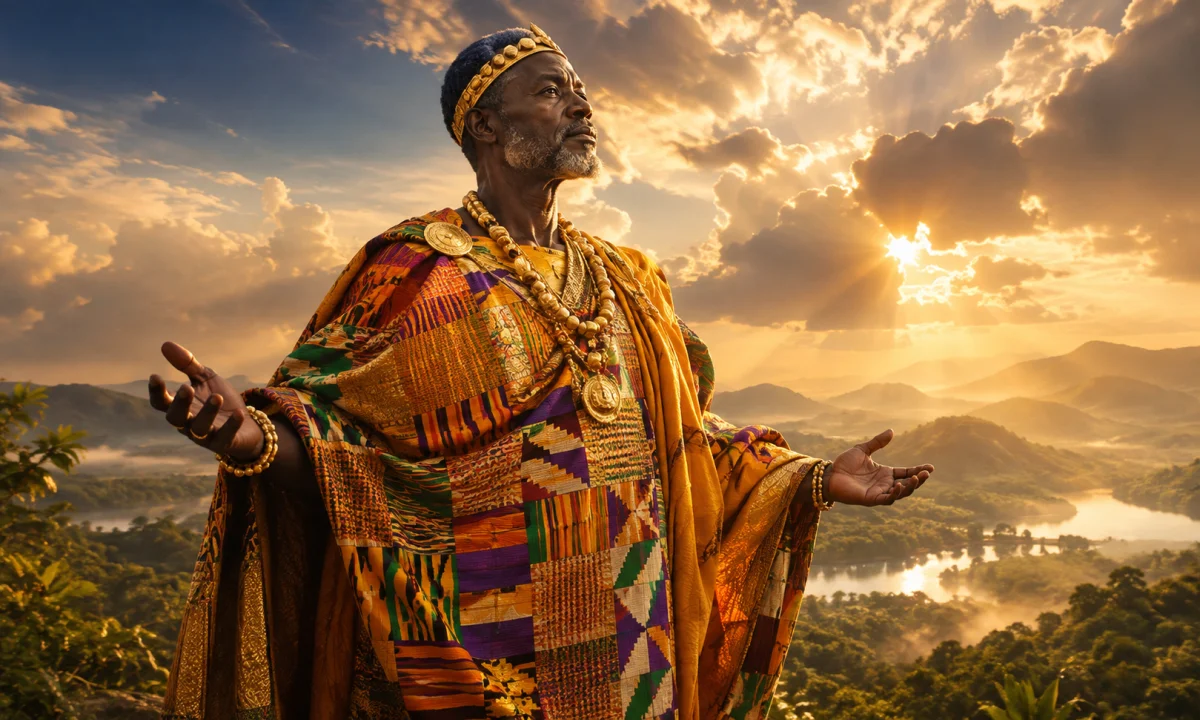
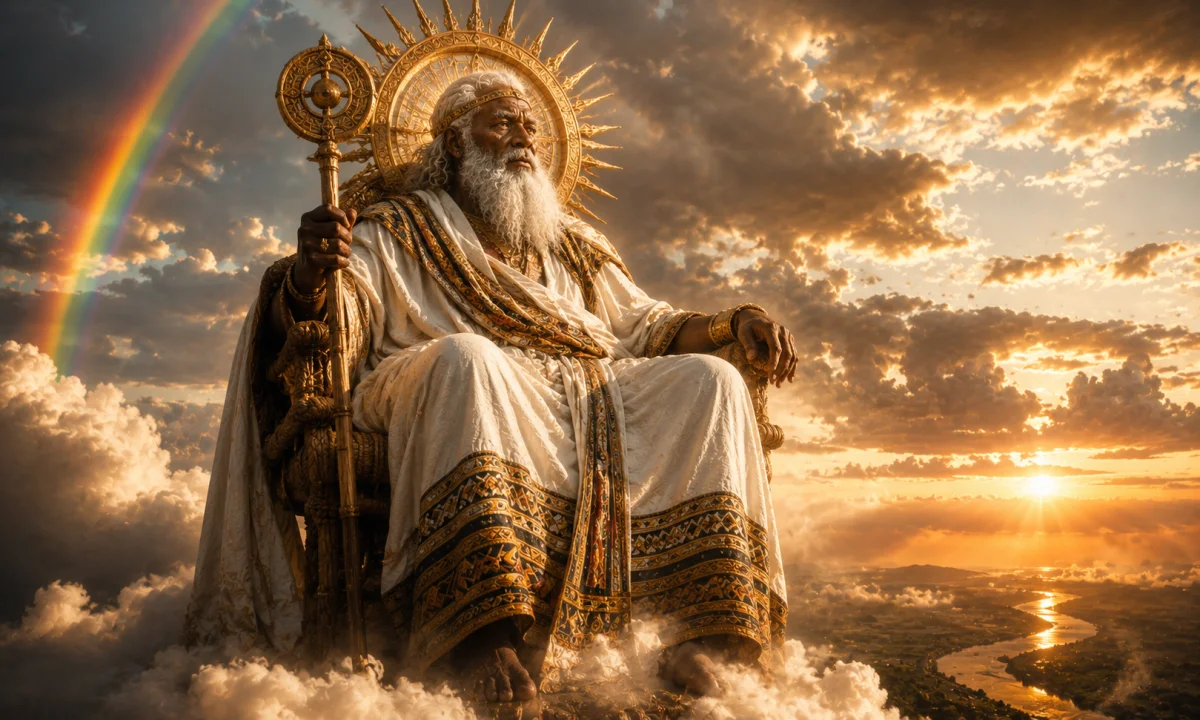
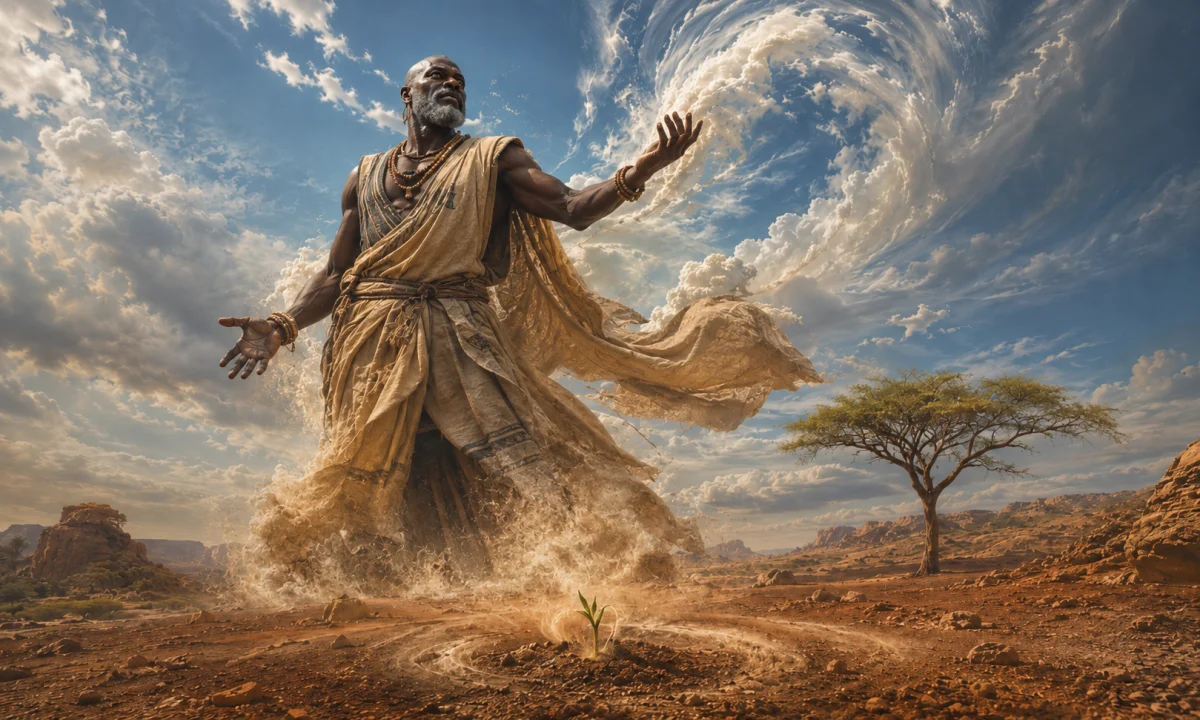
There is no universally recognized image of Pemba comparable to the standardized statues or iconographic forms associated with some ancient Mediterranean deities. Traditional knowledge about him is primarily verbal and cosmological. Descriptions may focus on his actions, relationships and symbolic associations rather than on a fixed bodily appearance.
For that reason, claims that Pemba always has a particular animal form, weapon, garment or physical feature should be treated with caution. Such details may arise from a local account, an artistic interpretation or a modern attempt to give an abstract being a recognizable visual identity. The available tradition does not support a single definitive portrait shared by all Mandé peoples.
The most important “attributes” of Pemba are conceptual: the earth, the planted seed, descent from an original realm, the beginning of cultivation and the disturbance that accompanies the transition from primordial potential to ordinary life. His symbolism is ecological as well as religious. It concerns the conditions under which land becomes fertile and the obligations involved in living from it.
Order, disorder and human existence
Pemba’s story can be interpreted as an explanation of why human life is both creative and constrained. People can cultivate land, establish settlements and transform the world, yet they remain subject to drought, disease, death and the limits of nature. The origin of agriculture is consequently not represented as a simple gift without cost. It belongs to a world already marked by separation, imbalance and the need for continuous repair.
The movement from the primordial realm to the earth may also symbolize the movement from unity to differentiation. Once beings, elements and forms of life become distinct, relationships must be maintained between them. Water must meet earth; human communities must preserve ritual and social obligations; speech must convey knowledge accurately; and cultivation must respect seasonal and environmental realities.
In this sense, Pemba is useful for understanding a broader Mandé concern with the management of powers that can either sustain or disrupt society. The figure is not merely an agricultural god in a narrow sense. He belongs to a larger account of how the world became morally and materially difficult, and why order must be created rather than assumed.
Sources and variation
Knowledge of Pemba comes through oral traditions and later written descriptions, including ethnographic and comparative works on Mandé religion. Such records are valuable, but they do not function like a single ancient manuscript. A written account may preserve a particular performance or explanation, and the researcher’s translation may influence how terms such as “god”, “spirit”, “ancestor”, “sin” or “creation” are understood.
Several differences recur among accounts:
- Pemba may be called a deity, primordial ancestor, first being or culture-bringing power.
- His relationship with Faro may be described as brotherhood, twinship, rivalry or complementary partnership.
- The originating creator may be named Mangala, Maa Ngala or another form, depending on language and transcription.
- The act associated with Pemba may involve descent, separation, theft, planting or premature creation, with different moral interpretations.
- Some traditions emphasize agriculture, while others place greater weight on cosmic disorder and the restoration of balance.
These variations should not be forced into one “official” biography. They show that Pemba belongs to a living and regionally diverse religious environment. The absence of a single fixed version is not evidence that the tradition is confused; it is a normal feature of oral religious systems in which knowledge is transmitted through context, performance and specialized teaching.
Distinguishing Pemba from other names
Pemba is easily confused with unrelated subjects. Pemba Island, part of the Zanzibar archipelago, has a geographical name that does not by itself establish a connection with the Mandé cosmological figure. Likewise, Pemba may be used as a personal name in several African and non-African societies. A person, place or modern fictional character called Pemba should not automatically be identified with the figure of Bambara or Mandé tradition.
Pemba should also not be merged with every African earth deity, agricultural spirit or trickster. African religious traditions are highly diverse, and similar associations with soil, fertility or disorder do not prove that different figures share a common origin. Comparisons can be useful when they are clearly marked as comparisons, but they should not replace the specific Mandé context in which Pemba is known.
Later interpretation
Modern summaries sometimes reduce Pemba to a simple “earth god” and Faro to a simple “water god”. These labels communicate part of the symbolism, but they can obscure the more complex relationship between creation, agriculture, disorder and restoration. Pemba’s importance lies less in a list of supernatural powers than in his place within a cosmological explanation of how the world acquired its present conditions.
Contemporary writers, artists and educators may use Pemba as a symbol of the earth, the seed or the difficult beginnings of human culture. Such uses can be meaningful, but they are interpretations rather than evidence of a newly discovered traditional attribute. There is no single dominant global popular-culture portrayal of Pemba, and modern illustrations should not be mistaken for a universally accepted traditional image.