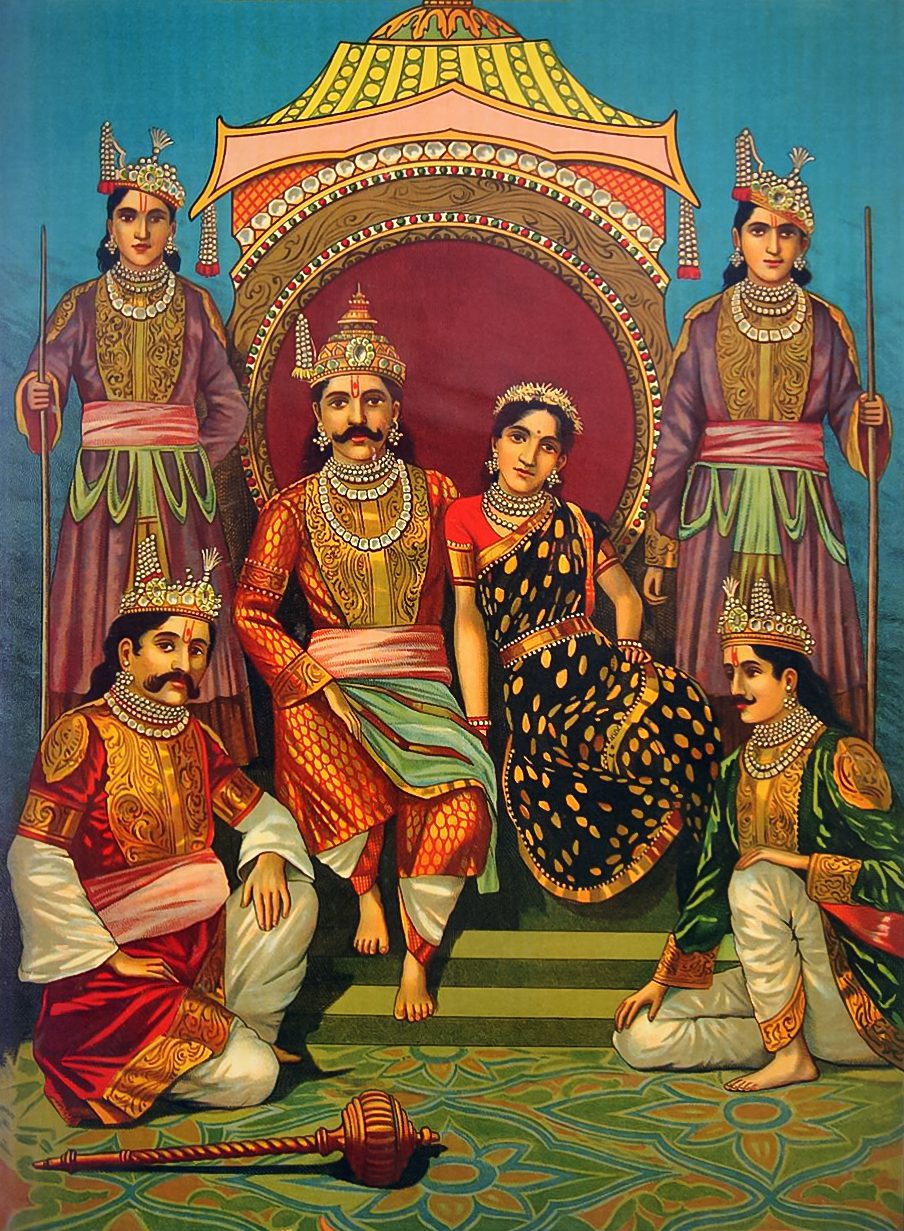
The Pandavas are central figures in the epic Indian tale known as the Mahabharata. They are five brothers who play a crucial role in the story’s complex narrative, which includes themes of duty, righteousness, and the struggles between good and evil. The Pandavas are known for their valor, wisdom, and adherence to dharma, which is the moral law that governs individual conduct. Their story is filled with adventures, challenges, and moral dilemmas, making them enduring symbols in Hindu mythology.
The Birth of the Pandavas
The birth of the Pandavas is steeped in divine intervention and the fulfillment of ancient prophecies. According to the Mahabharata, King Pandu, their father, was cursed to die if he ever engaged in intimate relations with his wives. In despair, he sought the guidance of sages who advised him to have children through a unique method known as niyoga. This practice involved invoking gods to father children with his wives, Kunti and Madri.
 Nirrti
Kunti, the first wife, was blessed with a mantra that allowed her to summon any god of her choice. She first called upon Yama, the god of death, and gave birth to Yudhishthira, the eldest Pandava. Next, she invoked Vayu, the wind god, resulting in the birth of Bhim. Finally, she summoned Indra, the king of gods, leading to the birth of Arjuna.
Madri, the second wife, used the same mantra to call upon the twin gods, the Ashwini Kumaras, resulting in the birth of Nakula and Sahadeva. Thus, the five Pandavas were born, each embodying unique qualities and strengths that would later define their roles in the epic. Their birth is not just a mere narrative detail; it signifies the divine destiny that awaits them as they embark on their journey.
The Early Life of the Pandavas
The early life of the Pandavas was marked by both privilege and hardship. They were raised in the royal palace of Hastinapura, where they received an education in martial arts, governance, and philosophy. Despite their royal status, they faced numerous challenges, especially from their cousins, the Kauravas. The Kauravas, led by their eldest brother Duryodhana, were envious of the Pandavas and sought to undermine them at every turn.
 Nirrta
One of the significant events during their childhood was the archery contest held in Hastinapura. This contest was organized to showcase the skills of the princes. Arjuna, with his exceptional talent, emerged victorious, earning accolades from the assembled crowd. However, this victory further fueled the Kauravas’ jealousy, leading to a series of confrontations between the two factions.
The Pandavas also developed strong bonds of friendship with their teacher, Drona, and their cousin Krishna, who would later play a pivotal role in their lives. Krishna, an incarnation of the god Vishnu, became their ally and guide. His wisdom and strategic thinking would prove invaluable during the challenges that lay ahead, especially during the great war of Kurukshetra.
The Game of Dice
One of the most pivotal moments in the lives of the Pandavas was the infamous game of dice. This event marked a turning point in the narrative and set the stage for the impending conflict. Duryodhana, in a bid to eliminate the Pandavas, invited them to a game of dice, fully aware of their naivety and trust in the Kauravas.
 Navadurgas
The game was rigged from the start, with Shakuni, Duryodhana’s uncle, manipulating the dice to ensure the Pandavas’ defeat. Yudhishthira, unable to refuse the challenge, gambled away his kingdom, wealth, and even his brothers. The final blow came when he staked his wife, Draupadi, and lost her as well. This act of humiliation sparked outrage and set the stage for revenge.
The aftermath of the game led to the Pandavas being exiled for thirteen years, including one year of incognito. This exile was filled with trials and tribulations, but it also allowed them to grow stronger and wiser. During this period, they sought alliances and prepared for the inevitable confrontation with the Kauravas, setting the stage for the great war.
The Role of Krishna
Krishna plays a crucial role in the lives of the Pandavas, serving as their charioteer, advisor, and friend. His relationship with Arjuna, in particular, is one of deep mutual respect and understanding. As the war of Kurukshetra approached, Krishna provided guidance to Arjuna, who was plagued with doubt and moral dilemmas about fighting against his own kin.
One of the most significant contributions of Krishna is the delivery of the Bhagavad Gita, a sacred text that encapsulates his teachings on duty, righteousness, and the nature of life and death. In this dialogue, Krishna encourages Arjuna to fulfill his duty as a warrior, emphasizing the importance of dharma and the inevitability of change in the cycle of life.
Krishna’s wisdom and strategic mind were instrumental in the Pandavas’ success during the war. He orchestrated several key battles and provided counsel that helped the Pandavas overcome formidable foes. His unwavering support and divine guidance made him a pivotal figure in their journey, showcasing the deep bond between the divine and the mortal.
The War of Kurukshetra
The War of Kurukshetra is the climax of the Mahabharata, a monumental conflict between the Pandavas and the Kauravas. The war lasted for eighteen days and was marked by intense battles, heroic sacrifices, and profound lessons on morality and ethics. Each day of the war saw the fall of great warriors, including Bhishma, Drona, and Karna, who were bound by loyalty yet fought on opposite sides.
Throughout the war, the Pandavas faced numerous challenges, including their own doubts and fears. The teachings of Krishna resonated deeply with them, guiding their actions and decisions. Yudhishthira, known for his adherence to truth, struggled with the harsh realities of war but remained committed to righteousness.
The strategies employed by Krishna and the valor displayed by the Pandavas were crucial in their eventual victory. However, the cost of the war was immense, with the loss of countless lives and the destruction of families. This outcome prompted reflections on the nature of conflict, the consequences of ambition, and the importance of ethical conduct in the face of adversity.
The Legacy of the Pandavas
The legacy of the Pandavas extends far beyond their victory in the war. They are often celebrated as embodiments of dharma, demonstrating the complexities of morality in human life. Each brother represents different aspects of virtue: Yudhishthira embodies truth and justice, Bhima symbolizes strength and loyalty, Arjuna stands for valor and skill, while Nakula and Sahadeva represent beauty and knowledge.
Their story continues to inspire countless generations, serving as a reminder of the importance of righteousness and the challenges of adhering to one’s principles. The lessons learned from their lives are often referenced in discussions on ethics, leadership, and personal conduct.
Moreover, the Pandavas are integral to various cultural expressions in India, from dance and theater to literature and art. Their adventures and moral dilemmas resonate with audiences, reflecting the timeless nature of their struggles and triumphs. They serve as a source of inspiration for those seeking to navigate the complexities of life while remaining true to their values.
The Pandavas in Modern Culture
In modern culture, the Pandavas continue to be celebrated through various mediums, including films, television series, and literature. Their stories have been adapted and retold in numerous ways, making them accessible to contemporary audiences. These adaptations often emphasize the moral lessons embedded in their tales, highlighting the relevance of their struggles in today’s world.
Television adaptations, in particular, have played a significant role in bringing the epic of the Mahabharata to life for new generations. These series not only depict the grand battles and divine interventions but also delve into the emotional and psychological aspects of the characters, making them relatable to viewers. The portrayal of the Pandavas’ virtues and challenges resonates with audiences seeking guidance in their own lives.
Moreover, the themes of the Mahabharata, as represented by the Pandavas, find parallels in modern discussions about justice, leadership, and ethical dilemmas. Scholars and philosophers often reference their story in debates about morality and the responsibilities of individuals in society. The Pandavas serve as a lens through which one can explore the complexities of human nature and the quest for righteousness.
the Pandavas are more than just characters in a mythological narrative; they represent timeless ideals of virtue, duty, and resilience. Their journey through the Mahabharata encapsulates the struggles of humanity in the pursuit of righteousness, making their story eternally relevant. As symbols of strength and integrity, the Pandavas inspire individuals to uphold their values in the face of adversity and navigate the complexities of life with wisdom and courage.