WORLD
WORLD
Nyiko
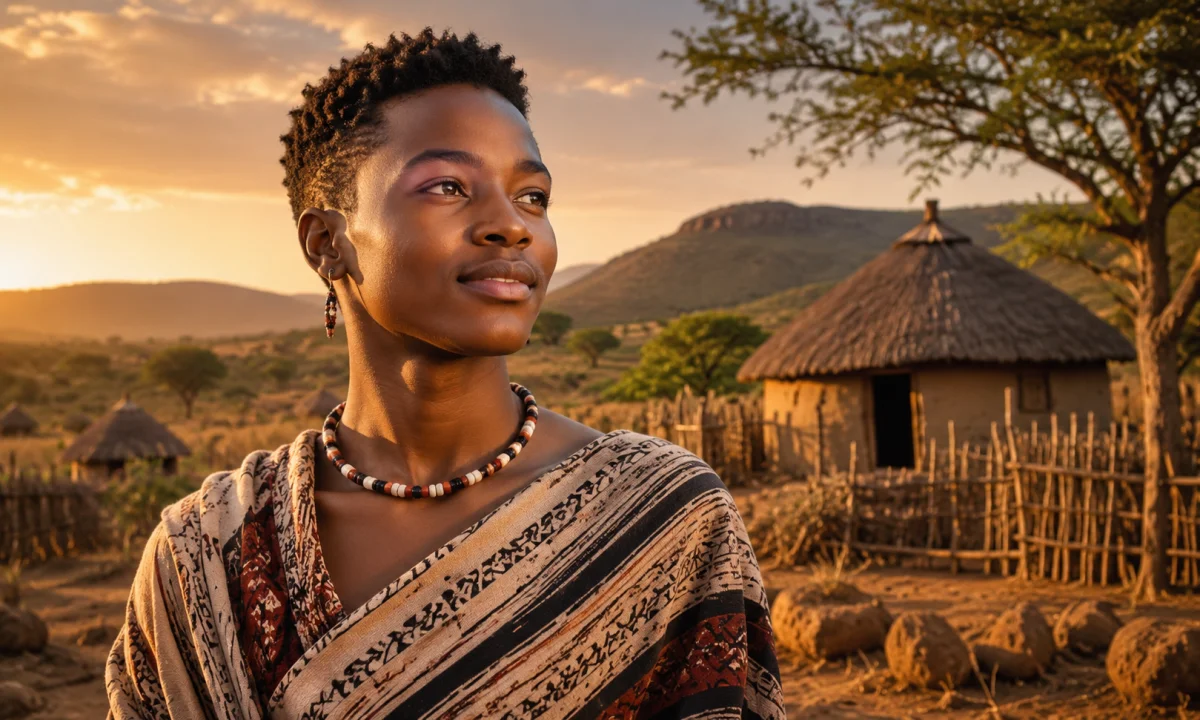
Nyiko is not securely documented as a single, widely recognised god, spirit, hero or monster in African mythology. In many contemporary references, the name is associated with Tsonga or Xitsonga-speaking communities of southern Africa, where nyiko is commonly understood as “gift” or “blessing”. It is also used as a personal name. The name’s appearance in lists of “African mythological beings” can therefore be misleading: a personal name or meaningful word is not automatically the name of a supernatural figure.
Identity and classification
Africa contains thousands of cultural and linguistic traditions, and “African mythology” is a modern umbrella term rather than the name of one unified religious system. Beliefs among Tsonga-speaking communities cannot be assumed to represent the traditions of the Yoruba, Akan, Kongo, Zulu, Shona, Venda or other peoples. They also vary between regions, families, religious communities and historical periods.
Within that broad setting, Nyiko has no firmly established pan-African identity. There is no generally accepted body of traditional narratives describing Nyiko as a deity with a fixed genealogy, sacred dwelling, standard appearance or universally recognised powers. Nor is there strong evidence that Nyiko belongs to a major, consistently recorded pantheon under that exact spelling.
The most cautious interpretation is that Nyiko is primarily a word and personal name in a southern African linguistic context. When it is presented as a mythological being, the description may derive from a modern retelling, an unsourced catalogue, a confusion with another name, or an attempt to turn the meaning of a personal name into a supernatural character. Those possibilities should be kept separate from established oral traditions.
The meaning of the name
In Xitsonga, nyiko is commonly associated with a gift, offering or blessing. As a personal name, Nyiko may express gratitude for a child, hope that the child will bring good fortune, or recognition of a birth understood as a blessing to the family. Personal names in southern African societies often carry statements about circumstances, relationships, values or religious belief. They may refer to gratitude, hardship overcome, divine protection, prosperity or the importance of family continuity.
A name with a religious meaning does not necessarily identify a god. For example, a person may be called “Gift” without the word referring to a separate spirit named Gift. The same distinction applies to Nyiko. The name can carry spiritual significance while remaining an ordinary human name rather than the title of a mythological being.
Spelling and pronunciation can also change when words move between oral traditions, local orthographies and English-language writing. Xitsonga itself includes regional variation, and words may be represented differently in older records or in informal modern usage. A similar-looking name in another southern African language should not automatically be treated as the same figure.
Tsonga cultural setting
Tsonga-speaking peoples, often referred to in the plural as the Vatsonga, live principally in parts of South Africa and southern Mozambique, with communities elsewhere in the region. “Tsonga” covers related communities and traditions rather than a single completely uniform culture. Historical movement, contact with neighbouring peoples, colonial classification, Christian missions and modern national borders have all influenced the way Tsonga identity and religious practice have been described.
Traditional religious ideas in the region have often included a high creator or supreme power, relationships with ancestors, sacred places, ritual specialists and explanations for illness, misfortune, fertility, rain and social disorder. The terminology and interpretation of these ideas differ between communities. Some accounts use names that are now also familiar through Christian language, while other traditions preserve local concepts that do not fit neatly into the categories “god”, “spirit” or “demon”.
These categories matter because older European descriptions frequently reorganised African religious systems according to European assumptions. A being described as a “god” in one account might elsewhere be understood as an ancestor, a nature spirit, a personified force, a legendary character or a figure in a particular story. Conversely, a meaningful word or ritual expression could later be treated as the name of a deity by writers who did not understand its original grammatical or cultural context.
For Nyiko, there is no dependable basis for assigning a precise place within Tsonga cosmology. It should not be described as the supreme creator, an ancestral spirit, a rain deity, a fertility goddess or a guardian being unless a specific, identifiable tradition supports that claim. General information about Tsonga religion provides cultural context, but it does not prove that Nyiko is a supernatural figure within it.
Attributes and powers
No stable traditional profile of Nyiko has been established. In particular, there is no widely attested description that gives Nyiko:
- a fixed gender or human-like form;
- a standard animal form, such as a serpent, lion or bird;
- a sacred weapon, colour, emblem or dwelling;
- a defined relationship to a creator, ancestors or other named beings;
- a recognised festival or sacrifice performed specifically for Nyiko;
- control over a particular natural force such as rain, lightning, rivers or fertility; or
- a consistent set of myths known across Tsonga-speaking communities.
Some modern websites may attach qualities such as generosity, protection, abundance or good fortune to Nyiko. These qualities are understandable extensions of the word’s meaning as “gift” or “blessing”, but they should not be presented as ancient attributes without evidence from a particular oral or written tradition. Symbolic interpretation and traditional mythology are not the same thing.
If Nyiko is used in a contemporary story, poem, game or artwork as a spirit of generosity, that is a creative interpretation. It may be inspired by the name’s meaning, but it does not establish a historical cult or an ancient mythological character.
Stories and relationships
A recognised mythological figure normally appears in one or more narratives: a creation account, an origin story, a conflict among supernatural beings, a journey, a transformation or a relationship with a community. No single cycle of stories about Nyiko is securely documented in the commonly available record of African mythology.
It is therefore not possible to give a traditional story in which Nyiko creates the world, defeats a monster, marries another deity, teaches a custom or punishes human wrongdoing without risking invention. Claims of this kind sometimes arise when a name is extracted from a list without its original context or when a modern writer expands a short definition into a complete biography.
There may, of course, be local uses of the name in family histories, church communities, songs, oral narratives or contemporary fiction. The absence of a widely documented myth does not prove that no individual storyteller has ever used Nyiko in a supernatural or symbolic way. It does mean that such a use should be identified as local, personal, modern or otherwise specific rather than treated as a universal Tsonga belief.
Religious significance of “gift” and “blessing”
Although Nyiko is not securely established as a deity, its meaning can still have religious and cultural importance. Naming a child as a “gift” may express the family’s gratitude for the child’s birth and place that birth within a moral and spiritual understanding of family life. In societies where kinship, ancestry and community obligations are important, a name can function as a compact statement about the family’s experience.
The idea of a gift may also imply responsibility. A child regarded as a blessing is not merely a source of private happiness; the child may be understood as part of the family’s continuing relationships and duties. Such meanings are personal and social rather than evidence of worship directed towards a being called Nyiko.
Religious interpretation can change over time. A name may be used in a traditional setting, a Christian setting, a secular family or a multicultural urban environment, with slightly different associations in each. The name’s presence in a Christian family, for example, does not make it a biblical name, just as its use in a traditional cultural context does not make it the name of a traditional deity.
Distinguishing Nyiko from similar names
Confusion is especially likely because southern Africa contains many related languages and names with similar sounds or spellings. A name beginning with nyi-, nwi- or another similar sequence may belong to a different language or refer to a different person, place or concept. The spelling alone is not enough to identify a mythological figure.
Nyiko should also not be conflated with:
- the supreme being or creator terminology used in particular Tsonga religious or Christian contexts;
- named ancestors or local spirits whose traditions belong to a specific family or community;
- water beings, serpent figures or rain spirits from neighbouring southern African traditions;
- characters from Shona, Venda, Zulu, Sotho or other mythologies merely because they share a broad regional setting; or
- modern fictional characters whose authors have chosen Nyiko as a name.
The meaning “gift” may have equivalents in many African languages, but equivalent meanings do not indicate a common deity. Language families, migration histories and cultural contact can produce similar words without producing a shared myth.
Sources and limits of the evidence
Knowledge of African traditional religion has often been transmitted orally. Oral tradition is not necessarily less authoritative than written tradition, but it can be local, variable and dependent on the teller, audience and occasion. Written records may preserve only a portion of a community’s religious vocabulary, and many records were created by outsiders who used categories that do not correspond exactly to local concepts.
Modern online lists create an additional problem. A short entry may be copied repeatedly until an uncertain claim appears established. If a page identifies Nyiko as a god but provides no community, language, story, ritual context or identifiable tradition, the claim requires caution. Repetition is not independent confirmation.
A responsible account should distinguish four different possibilities:
- Traditional evidence: a name and role preserved in a specific community’s oral or written tradition;
- Linguistic evidence: the meaning or grammatical use of the word Nyiko;
- Scholarly interpretation: an informed explanation of how the word or tradition fits its cultural setting; and
- Modern invention: a new character, symbolic reading or popular classification based on the name.
At present, the linguistic and naming evidence for Nyiko is clearer than the mythological evidence. It is reasonable to discuss Nyiko as a culturally meaningful southern African name associated with a gift or blessing. It is not reasonable to supply a detailed divine biography, appearance or set of powers as though these were universally preserved traditions.
Modern use
Nyiko remains relevant as a personal name and as an expression of identity in contemporary southern Africa. It may appear in families, schools, churches, music, literature and public life. In those settings, its significance can be emotional, religious, cultural or simply personal.
A novelist, game designer or artist may also use Nyiko for a fictional spirit or hero. Such a character might represent generosity, unexpected fortune, family hope or a blessing received after hardship. This can be a meaningful modern adaptation, especially when the creator explains the linguistic inspiration and does not present the invention as an ancient pan-African deity.
The clearest description of Nyiko is therefore a careful one: Nyiko is chiefly known as a southern African, especially Xitsonga-associated, word and personal name connected with the idea of a gift or blessing; its status as a distinct mythological being is uncertain and not broadly established. Any more specific identification depends on a named local tradition or a particular modern work rather than on a universally recognised African myth.