WORLD
WORLD
Moshiri Ikkewe Chep
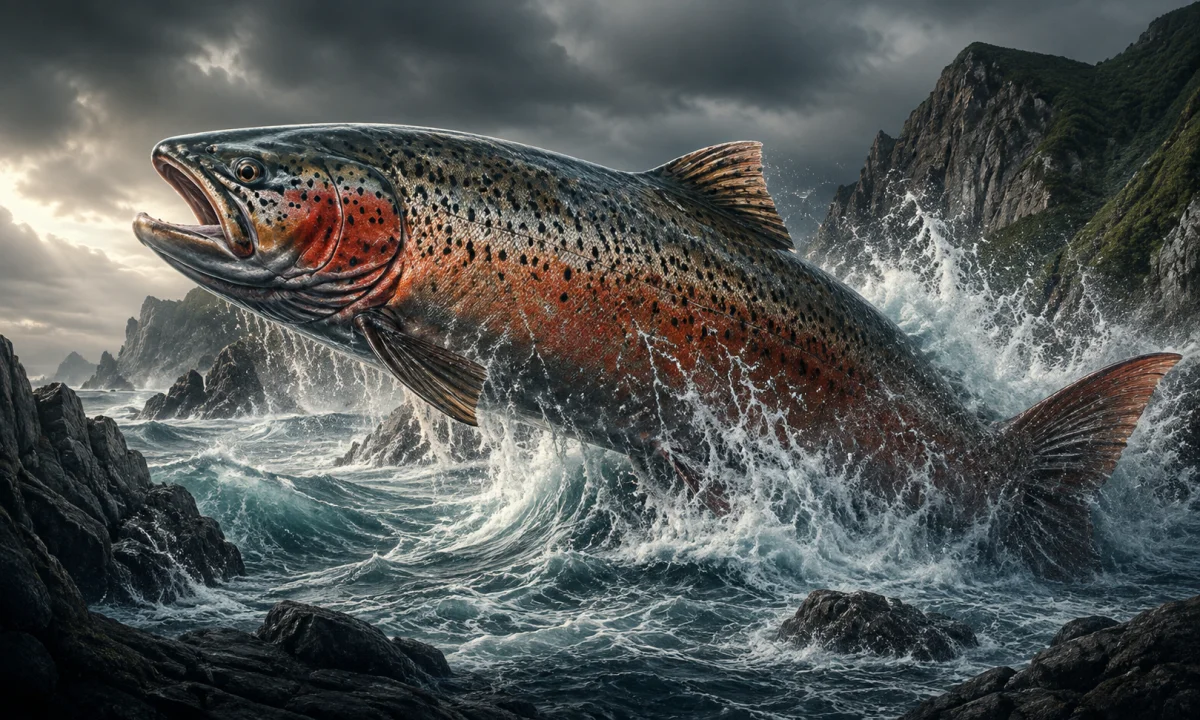
Moshiri Ikkewe Chep is a little-known name associated with Ainu tradition in northern Japan. It is sometimes described in modern accounts as a vast fish connected with the land itself, or with the foundations of the world. However, the figure’s identity is not securely documented in the major, widely known collections of Japanese mythology, and the name appears to have uncertain spelling, transcription and interpretation. Claims about its appearance, powers and stories should therefore be treated cautiously rather than presented as settled facts.
Ainu cultural setting
The name is generally linked not to the mythology of Japan as a whole, but to the religious and oral traditions of the Ainu, the Indigenous people of northern Japan and neighbouring regions. Ainu communities historically lived especially in Hokkaido, as well as in Sakhalin and the Kuril Islands. Their traditional culture developed in a different historical and linguistic setting from the religious traditions of central and western Japan.
Ainu religious thought recognises numerous kamuy. The word is often translated as “god,” “spirit” or “divine being,” although none of these English terms fully covers its range of meaning. Kamuy may be associated with animals, plants, natural forces, places, tools or other beings that possess power and significance in human life. The bear, salmon, owl, fox and fire all have important roles in different Ainu traditions, but their meanings and stories vary between communities.
Traditional Ainu beliefs were transmitted primarily through oral performance rather than through a single canonical scripture. Important forms include long heroic and religious narratives often called yukar or kamuy yukar, as well as shorter tales and explanatory narratives known as uwepeker. Performers, narrators and communities preserved stories through repeated telling, but oral traditions naturally allow variation in wording, emphasis and detail.
This background matters when considering Moshiri Ikkewe Chep. A name found in a modern catalogue, glossary or translation does not necessarily represent a universally recognised Ainu deity. It may preserve a local expression, a description rather than a proper name, a transcription made by an outsider, or a later interpretation of a story.
The name and its uncertain interpretation
The spelling Moshiri Ikkewe Chep is not standardised in English. Ainu words have been written using several different systems, and older records often reflect Japanese pronunciation or the orthographic conventions of the person who recorded them. The same word may therefore appear with different vowels, consonants, spacing or endings.
The element mosir, often written moysir or in other forms depending on the transcription system, is commonly associated with land, country or the inhabited world. In Ainu contexts, it can refer to a territory or homeland rather than to an abstract planet in the modern scientific sense. The element chep, also written in forms such as cep, is generally associated with fish. Salmon are particularly important in Ainu life, so the word may carry cultural associations beyond the broad English category “fish.”
The middle element, rendered here as ikkewe, is more difficult to interpret with confidence. It is not safe to assign it a precise translation without knowing the original Ainu spelling, dialect, grammatical context and source. For that reason, translations such as “the fish beneath the land,” “the fish supporting the world” or “the backbone fish of the land” should be regarded as provisional interpretations, not established definitions.
Some modern descriptions present Moshiri Ikkewe Chep as a giant fish located beneath the land. That interpretation may explain why the name is sometimes classified as a cosmic or earth-supporting being. Yet the available description is too limited to establish whether the term refers to a named supernatural creature, a mythic image used in one story, or a phrase preserved through a secondary compilation.
Possible role as a world-supporting fish
The most common modern presentation of Moshiri Ikkewe Chep associates it with the idea of a fish beneath the earth or land. In such a reading, the being belongs to a class of cosmic animals: creatures whose movement or position helps explain earthquakes, instability or the structure of the visible world.
This concept should not automatically be treated as a direct Ainu equivalent of the Japanese Namazu, the giant catfish traditionally blamed in later Japanese folklore for causing earthquakes. The two figures arise from different cultural contexts, and the name Moshiri Ikkewe Chep should not be replaced by Namazu simply because both have been connected with seismic events in modern comparisons.
Nor is there enough secure evidence to describe Moshiri Ikkewe Chep as a fully developed creator deity. A fish that supports or underlies the land would have a cosmological function, but that does not by itself make the being a maker of humans, a ruler of other kamuy or an object of a separate cult. The distinction between a cosmic image and a personal divine figure is particularly important in traditions transmitted through fragments and later summaries.
If the interpretation of an underground or land-bearing fish is correct, its imagined movement could provide a traditional explanation for changes in the ground. Such explanations are not “scientific theories” in the modern sense. They are mythic accounts that place natural events within a world of living powers, relationships and responsibilities. The purpose of a story may include explaining an event, expressing fear of environmental forces, or teaching appropriate conduct toward the non-human world.
Attributes and appearance
No consistently documented physical description of Moshiri Ikkewe Chep can be given. Modern summaries may describe it as enormous, but size alone is an inference from its supposed cosmic function. A being imagined beneath the land would necessarily be large in relation to human beings, yet this does not prove that traditional narratives assigned it a particular length, colour, species or anatomy.
There is also no secure basis for depicting it with horns, glowing eyes, fins shaped like mountains or other dramatic features often added to illustrations of obscure mythological beings. Such details belong to artistic invention unless they can be traced to a specific tradition. The same caution applies to claims that the creature has immortality, controls storms, causes floods or communicates with named gods.
The fish image itself is culturally meaningful. Fish, especially salmon, were central to the subsistence, economy and ritual life of many Ainu communities. Salmon were not merely food but part of a relationship between human communities and the kamuy world. In Ainu religious practice, respectful treatment of animals and the return of spiritual power to the other world were important themes. A mythic fish connected with the land would therefore belong to a cultural environment in which fish could be regarded as powerful beings, not simply as monsters.
Stories and relationships
No widely attested cycle of stories about Moshiri Ikkewe Chep is known. There is no securely established body of tales that identifies its parents, enemies, descendants or relationships with famous Ainu figures. It should not be assigned a place in the adventures of heroes such as Okikurmi or Aynu-rakkur without direct evidence from a particular narrative.
Likewise, it is uncertain whether the being appears in a traditional account of a specific earthquake. A short description in a modern source may compress a larger cosmological idea into a single sentence, while a translated name may have been detached from the story in which it originally appeared. Without the original-language passage and information about its narrator, location and date of recording, the historical meaning remains difficult to establish.
This uncertainty is common in the study of oral traditions. A story recorded in Hokkaido in the nineteenth or twentieth century may reflect the knowledge of one narrator or community rather than a belief shared by every Ainu group. Regional differences, individual storytelling styles and changes caused by colonial pressure all affect what survives in written records.
Religious and symbolic significance
Interpreted carefully, Moshiri Ikkewe Chep may represent the idea that the land is not inert. Mountains, rivers, forests and animals can possess agency and spiritual force, while human survival depends on maintaining respectful relations with them. A fish beneath the country would make the stability of the human world dependent on a living presence outside ordinary human perception.
This kind of image also challenges the assumption that mythology is merely a collection of fantastic creatures. In Ainu tradition, stories about kamuy can express practical and ethical knowledge. They may explain why animals must be treated properly, why ritual exchanges matter, or why human beings should recognise limits to their control over nature. Even when a particular figure is poorly documented, its possible symbolism should be considered within that broader religious framework.
At the same time, it is important not to romanticise the tradition as a simple “nature worship” system. Ainu religion includes complex ideas about personhood, exchange, death, ritual performance and the movement between human and kamuy realms. The term “nature spirit” can be useful as a rough introduction, but it can also flatten distinctions that matter within Ainu thought.
Distinction from similar figures
Namazu
Namazu is a giant catfish in Japanese folklore, especially in early modern and nineteenth-century earthquake imagery. Prints and stories often show the fish beneath the land, sometimes restrained by the deity Kashima. Namazu belongs to a different Japanese folkloric tradition and became especially prominent in urban earthquake culture. Similarities between Namazu and the reported description of Moshiri Ikkewe Chep do not demonstrate that they are the same being.
World turtles and cosmic serpents
Many cultures have stories in which a turtle, serpent, fish or other animal supports the world. These parallels can be useful for comparative mythology, but they should not be used to fill gaps in the evidence. There is no sound reason to identify Moshiri Ikkewe Chep with a world turtle, a dragon or a serpent from another tradition merely because all are associated with cosmic structure.
Salmon kamuy
Ainu traditions contain important beliefs and rituals concerning salmon, but a generic salmon kamuy is not automatically Moshiri Ikkewe Chep. Salmon may appear as a divine visitor, a source of livelihood or a being involved in a particular narrative. The name discussed here should remain separate unless a source explicitly connects it with a named salmon deity or story.
Documentation and modern reception
The main difficulty surrounding Moshiri Ikkewe Chep is not a lack of imaginative interpretations but a lack of securely identifiable documentation. The name is occasionally repeated in online lists of Japanese monsters, obscure gods or mythological creatures, where a brief description may be copied from one unsourced entry to another. Repetition does not establish antiquity or authenticity.
There is no strong indication that Moshiri Ikkewe Chep has a major presence in contemporary Japanese popular culture. It is not comparable in public recognition to figures such as Namazu, the kappa or the yuki-onna. When the name appears in modern encyclopaedic lists, fantasy projects or creature databases, those uses should be distinguished from evidence for an older Ainu tradition.
A responsible depiction should preserve the uncertainty: the name is associated with an Ainu-related idea of a powerful fish connected with the land, but its exact meaning, traditional status and narrative context are unclear. Further interpretation would require attention to original Ainu-language forms, regional traditions and the history of the record in which the name occurs.