WORLD
WORLD
Morimi
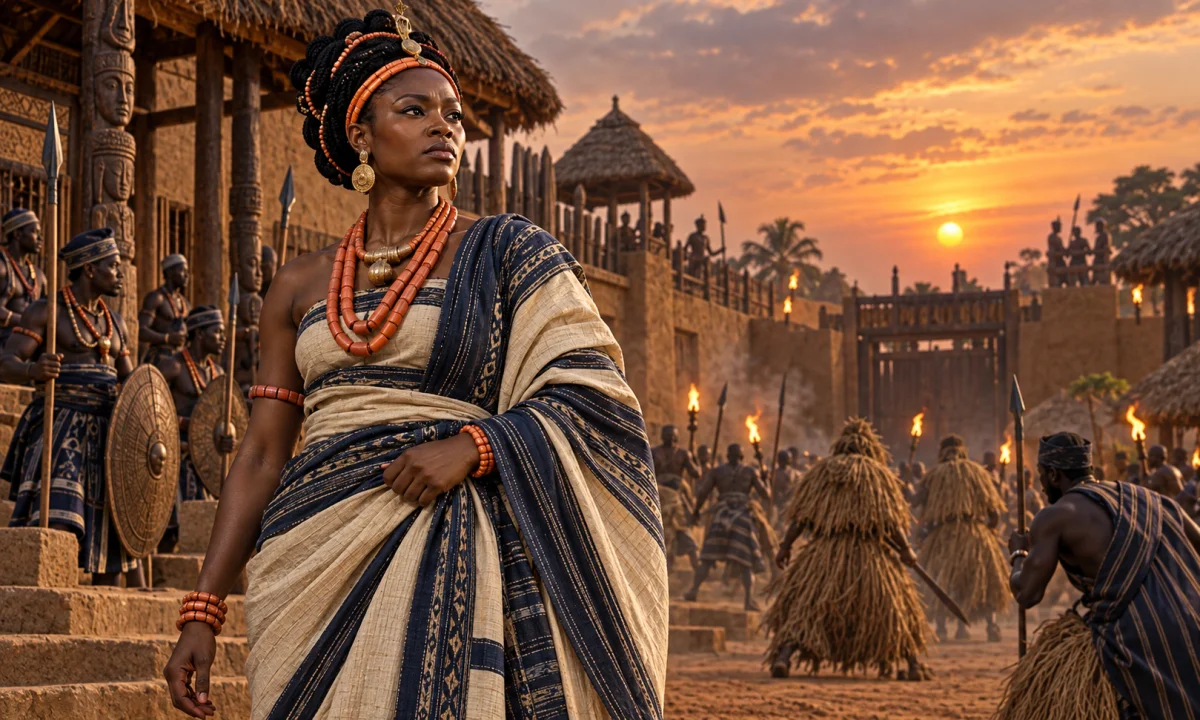
Morimi, more commonly written Moremi in contemporary English-language writing, is a celebrated heroine of Yoruba tradition. She is associated especially with Ile-Ife, the ancient Yoruba sacred and political centre in present-day southwestern Nigeria. In the best-known tradition, Moremi was a royal woman who helped protect Ife from repeated attacks by an enemy whose warriors appeared impossible to defeat. Her courage, intelligence and willingness to make a personal sacrifice made her an enduring symbol of leadership and communal responsibility.
The name Morimi is a spelling variant or alternate rendering of Moremi rather than a securely separate mythological being. Yoruba names have sometimes been represented in different ways in older English texts, popular retellings and regional writing. The form Moremi is now especially common when referring to Moremi Ajasoro, the legendary queen of Ife. Accounts of her genealogy, marriage, opponents and relationship with the supernatural world vary, because the tradition was transmitted primarily through oral history, praise poetry, ritual performance and local historical narratives rather than through a single canonical scripture.
Moremi in Yoruba cultural tradition
Moremi belongs to the legendary history of Ile-Ife, a city regarded in Yoruba religious thought as one of the principal places from which the world was ordered and human communities were established. Ile-Ife is closely connected with Odùduwà, a foundational ancestor and ruler in many Yoruba traditions. The city has also been an important centre of kingship, artistry, ritual authority and the worship of the òrìṣà, the divine powers and sacred beings of Yoruba religion.
Within this setting, Moremi is usually remembered not simply as a fictional warrior but as a figure situated between royal history, heroic legend and sacred tradition. She is commonly described as a queen or royal consort connected with Odùduwà and as the mother of Oluorogbo, although the precise family relationships differ among accounts. Her story is tied to the origin or explanation of the Edi festival at Ile-Ife, a major celebration associated with her defence of the city.
It is important to distinguish the cultural status of Moremi from that of a primordial deity. She is generally portrayed as a human woman, queen and heroine rather than as one of the creator deities or òrìṣà. Nevertheless, her memory acquired a sacred dimension. Her sacrifice, her association with the river Esimirin and the continuing ritual remembrance of her have led some descriptions to call her a deified ancestor or culture hero. Such terms are interpretive and should not be treated as evidence that every Yoruba community understands her in exactly the same way.
The name and identity of Morimi
Moremi Ajasoro is the name most often used for the heroine in modern accounts. “Morimi” may reflect an alternative spelling, a simplified transcription or a form preserved in particular retellings. Without a specific local source, it is safest to treat Morimi and Moremi as variant names for the same Ife heroine, not as two separate figures.
The title or name Ajasoro is also interpreted differently in popular and scholarly discussions. Yoruba names may carry poetic, historical or praise meanings, and their significance can depend on the wording and context of a particular oral tradition. The central identity of the heroine, however, remains relatively consistent: she is the woman who investigated the enemy threatening Ife and returned with knowledge that allowed the city to resist them.
Some retellings place her origins in Offa, presenting her as a princess who later became connected with the ruling house of Ife. Other narratives concentrate less on her birthplace and more on her role in the city’s survival. Genealogical traditions concerning Odùduwà, Moremi and Oluorogbo are not uniform, and they should not be reduced to one universally accepted family tree.
The threat to Ile-Ife
The central episode begins with the people of Ile-Ife suffering attacks from an unidentified enemy. These attackers are described in different versions as raiders, forest people or a frightening group whose appearance caused the inhabitants to flee. They repeatedly entered the city, carried away people and property, and seemed to possess supernatural strength or protection.
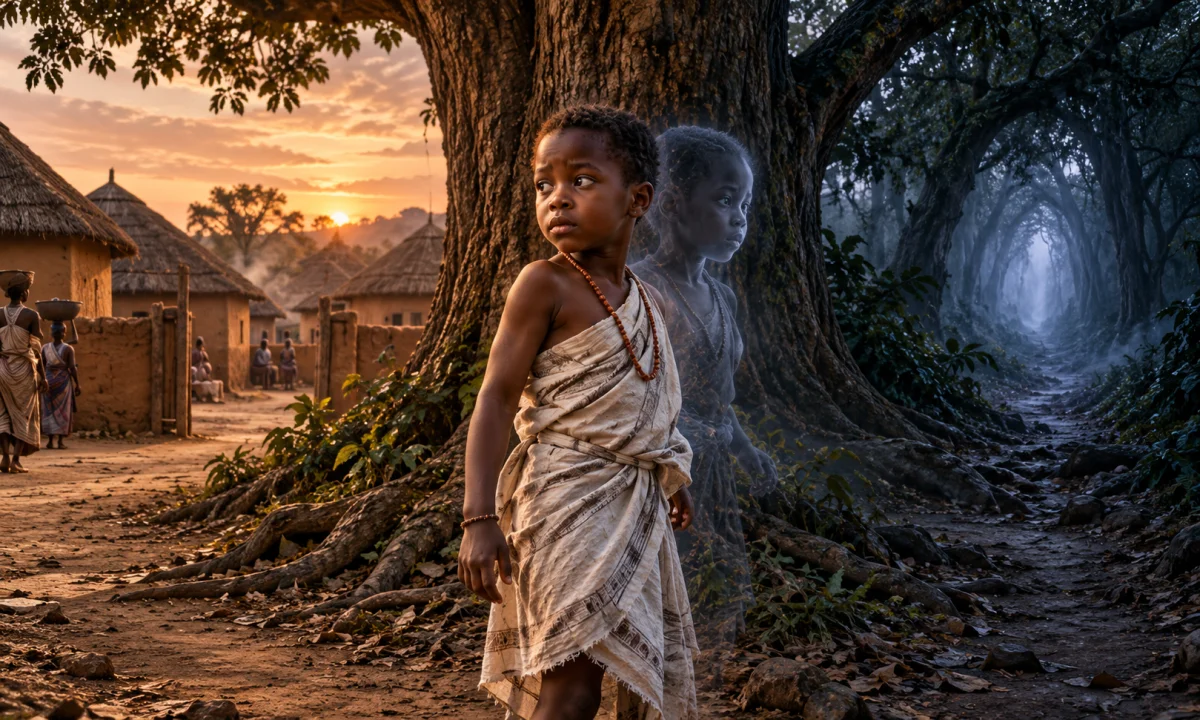
A striking feature of the story is the attackers’ appearance. In many retellings, they wore coverings made from grass, raffia or other plant material. To the people of Ife, these figures looked like spirits or beings from the wilderness. Their unusual clothing made them terrifying, but it also became the clue that eventually allowed Moremi to understand how they could be defeated.
The exact identity of the enemy varies. They are sometimes called the Ugbo, while other accounts use related names or describe them in less specific terms. It is not appropriate to assume that every version presents the same historical ethnic group. The tale may preserve memories of conflict, political rivalry or encounters between settled communities and outsiders, but the surviving narrative does not provide a simple, verifiable historical record of one particular war.
Moremi’s plan
Moremi wanted to discover why the attackers were so successful. Rather than relying only on force, she decided to enter their territory and learn their methods from within. In the heroic tradition, this decision is presented as an act of extraordinary courage because capture by the enemy was a real possibility.
She allowed herself to be taken by the attacking people. Because of her beauty and royal status, she was brought before their ruler and eventually became his wife or consort in many versions of the story. This part of the narrative is not presented as a romantic adventure in the modern sense. Moremi’s marriage functions as a dangerous form of infiltration, enabling her to observe the enemy and gain information that could save Ife.
During her time among them, she discovered that the frightening warriors were not invulnerable spirits. Their grass or raffia coverings were central to their military appearance, and they were especially vulnerable to fire. After learning this secret, Moremi escaped or was released and returned to Ile-Ife. She then explained the weakness to the city’s defenders.
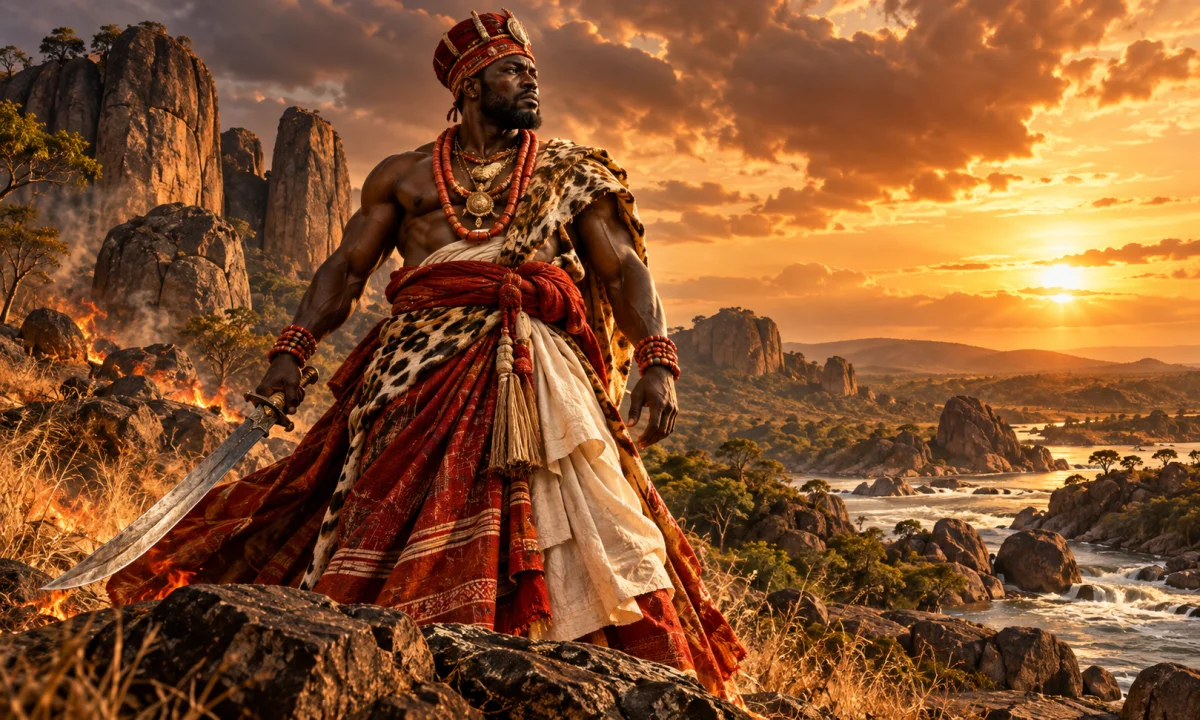
The people of Ife prepared burning materials and used fire against the attackers. When the warriors’ plant-fibre coverings caught fire, their terrifying disguise was destroyed and they were defeated or driven away. In some versions, the attackers were revealed as ordinary human beings beneath the coverings. The episode therefore turns fear into knowledge: what appeared to be supernatural power was overcome through observation, strategy and collective action.
The vow to Esimirin
Moremi’s victory is followed by the story of her sacrifice. Before undertaking her mission, she is said to have appealed to Esimirin, a river deity or spirit associated with the waterway that protected or bordered her community. She promised to offer the most precious thing she possessed if the deity helped her defeat the enemy and return safely.
After her success, Esimirin demanded her son, Oluorogbo, as the fulfilment of the vow. Moremi was devastated but, in the most widely repeated version, surrendered him. The sacrifice explains the depth of her grief and gives the story a tragic dimension: the woman who saved the city was required to pay a price within her own family.
Other versions handle this episode differently. Some describe Oluorogbo as being offered to the deity and dying; others soften or alter the event, while some accounts focus on Moremi’s grief without providing the same ritual details. The story should therefore not be presented as a single fixed account of Yoruba religious practice. It is a sacred legend connected with a particular heroine, a river power and the moral seriousness of vows.
The episode also reflects a recurring theme in African and world mythology: the protection of a community may demand a sacrifice from its most honoured defender. In Moremi’s case, the sacrifice is not merely a test of bravery. It raises questions about the obligations of rulers, the cost of public duty and the painful relationship between personal love and communal survival.
Relationship with Odùduwà and Oluorogbo
Moremi’s relationship with Odùduwà is central to many Ife traditions, but it is not represented identically in every telling. She is often described as his wife or queen, placing her within the founding royal lineage of Ile-Ife. Her son Oluorogbo is then remembered as a prince whose death or ritual offering followed the rescue of the city.
Some traditional narratives give Oluorogbo an important role beyond the sacrifice episode. He may appear as a figure connected with the continuation of the royal line or with the ritual memory of Moremi’s service. The details depend on the local tradition and the purpose of the account. Genealogical claims about ancient Ife should be treated carefully, since royal origin traditions often combine history, political legitimacy, praise and sacred symbolism.
Moremi’s importance does not depend solely on her position beside a male founder. Her defining achievement is her own decision to act when the city was unable to defend itself. In the story, she proposes the plan, accepts the danger, gathers intelligence and reveals the enemy’s weakness. This makes her one of the most prominent female heroic figures in Yoruba cultural memory.
The Edi festival
Moremi is strongly associated with the Edi festival of Ile-Ife. The festival is connected with the defeat of the hostile forces and with the heroine’s role in protecting the city. Ritual festivals do not merely retell stories as entertainment; they can preserve relationships between ancestors, rulers, communities and sacred powers.
Public observances connected with Moremi may include processions, performances, praise, drumming, dancing and the representation of events from the legend. The exact form of the festival has changed over time, and contemporary celebrations may combine inherited ritual elements with civic, cultural and tourist interests. It is therefore useful to distinguish the living festival from simplified summaries that present it only as a dramatic reenactment of a single battle.
Her association with Edi also demonstrates how Yoruba historical memory is maintained through performance. A story can remain meaningful without being preserved in one written text. The authority of a tradition may come from its continued ritual use, the recognition of local custodians and its place in the history of a community.
Attributes and symbolism
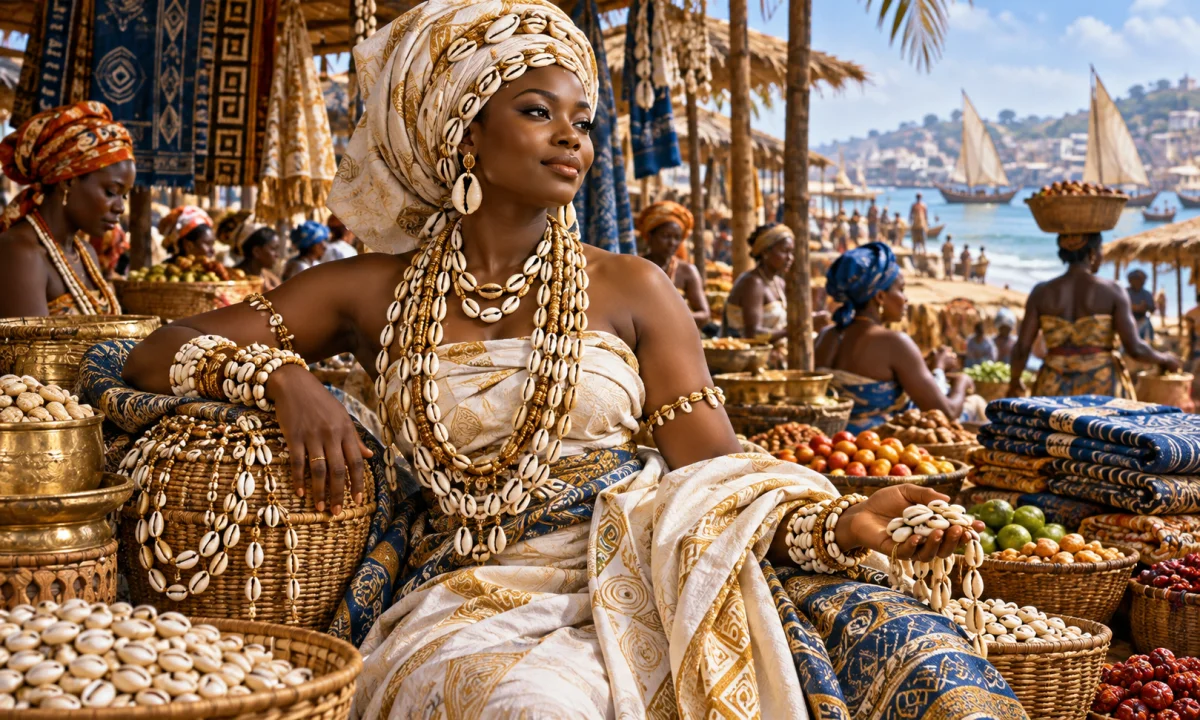
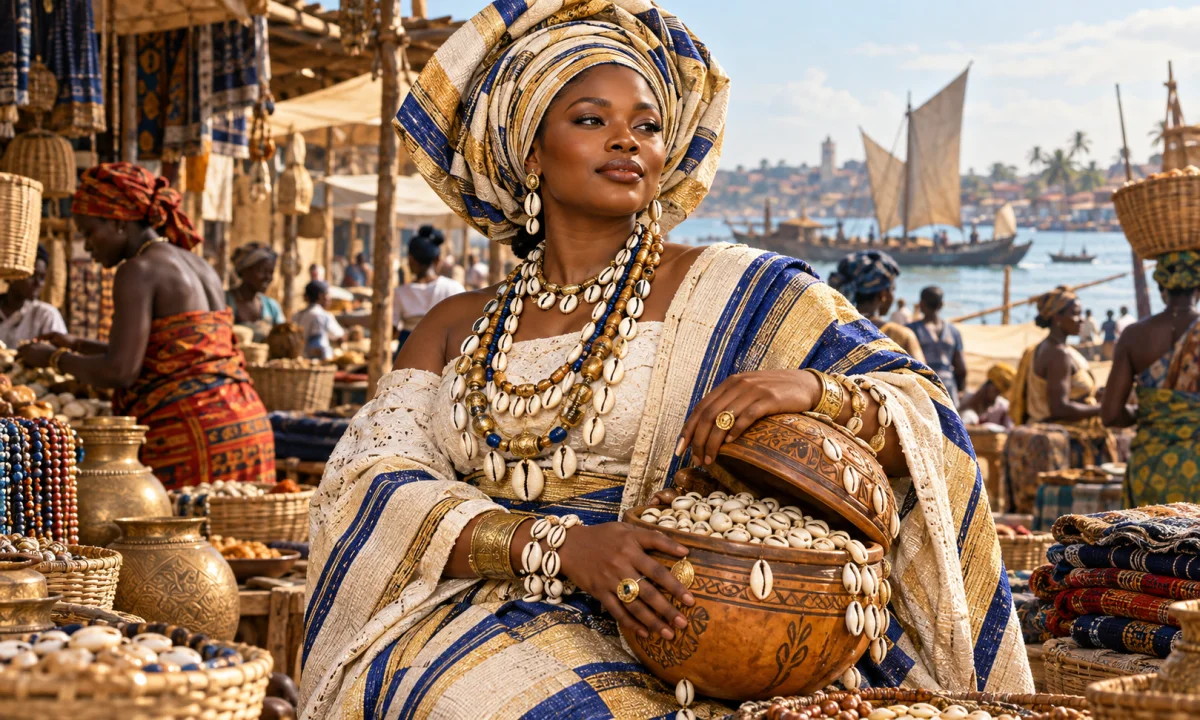
Moremi is not normally defined by a fixed set of supernatural powers or a standardized physical appearance. Her distinctive qualities are intelligence, courage, loyalty, strategic skill and willingness to sacrifice. Artistic representations often show her as a crowned queen, a richly dressed woman or a heroic figure associated with fire, water and royal authority. These visual details are usually interpretive rather than descriptions preserved in an ancient canonical text.
Several symbols are especially important in her story:
- Raffia or grass coverings represent fear, disguise and the transformation of an apparently supernatural enemy into a vulnerable human force.
- Fire represents practical knowledge and the decisive weapon used to expose the attackers.
- The river represents the sacred power of Esimirin and the obligations created by a vow.
- The child represents the personal cost of public protection and the painful demands of sacrifice.
- The city of Ile-Ife represents the community that Moremi protects and the wider sacred importance of Ife in Yoruba tradition.
Her legend can also be read as a story about women’s political agency. Moremi does not defeat the enemy through physical strength alone. She enters a hostile social world, observes its customs and discovers information that male defenders had failed to obtain. Her success is based on intelligence gathering, patience and the ability to act under conditions of extreme personal danger.
Historical tradition and interpretation
There is no secure evidence that allows every event in Moremi’s story to be reconstructed as ordinary political history. Ile-Ife is an ancient urban centre with a rich archaeological and artistic record, but archaeology cannot confirm the specific episodes of the legend. The story belongs to a body of oral traditions in which historical memory and sacred meaning are closely connected.
Some interpreters have suggested that the tale may preserve a memory of conflict between Ife and neighbouring groups. The frightening raffia costumes could reflect masquerade practices, military disguise or the way an unfamiliar community was represented in an enemy narrative. These possibilities remain interpretations rather than established facts. The identity of the Ugbo, the date of the conflict and the historical status of Moremi herself cannot be stated with certainty on the basis of the legend alone.
Other interpretations focus on ritual and ethics. Moremi’s vow to a river power shows that success in warfare does not end a person’s obligations to the supernatural world. Her grief indicates that public honour does not cancel private suffering. The narrative may therefore be understood not only as a foundation story for Edi but also as a reflection on promises, sacrifice and the burden carried by those who protect a community.
Distinguishing Moremi from other figures
Moremi should not be confused with an òrìṣà such as Ọ̀ṣun, Yemoja or Ọya. Those figures belong to broader Yoruba religious traditions concerning divine powers, sacred forces and cosmic or natural domains. Moremi is generally a legendary human queen or heroine who later acquired an honoured and partly sacred status.
She should also not be merged with every Yoruba royal woman named in local histories, nor with unrelated African figures whose stories involve disguise, fire, captivity or the sacrifice of a child. Similar narrative motifs occur across many cultures, but resemblance does not establish a shared identity or origin. Likewise, “Morimi” should not automatically be treated as the name of a separate goddess simply because some modern lists classify her under mythology rather than legendary history.
Later reception
Moremi remains a powerful cultural symbol in Nigeria, especially in connection with Ife, Yoruba identity and the celebration of courageous women. Her name has been given to educational institutions, public monuments, cultural organizations and works of literature and drama. Such uses often emphasize female leadership, sacrifice, national service and the importance of strategic thinking.
Modern retellings may simplify the story, present the enemy as wholly supernatural or portray Moremi through contemporary ideas of romance and individual heroism. These adaptations can keep the legend accessible, but they are not identical to the diverse oral and ritual traditions from which the story comes. The traditional figure is best understood within the religious and historical culture of Ile-Ife, where heroic action, royal legitimacy, ancestral memory and relations with sacred powers are closely intertwined.