WORLD
WORLD
Mopaditis
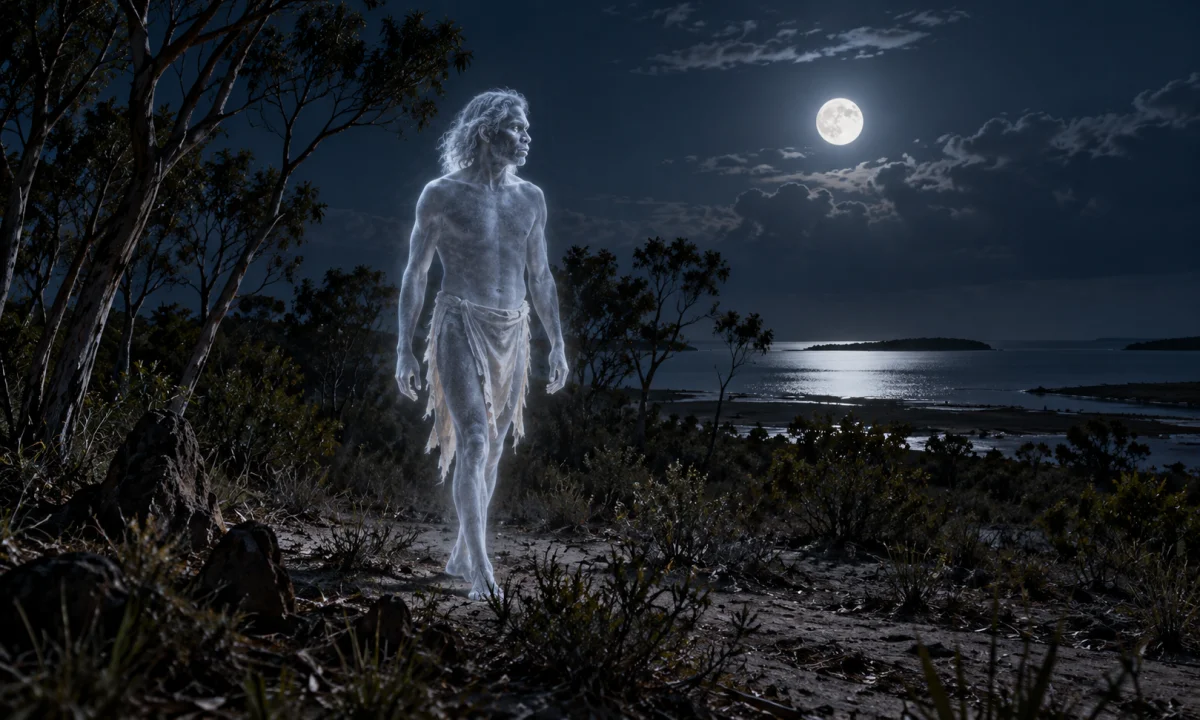
Mopaditis is a very obscure name associated in some modern reference lists with Australian Aboriginal mythology. Its identity, cultural origin and traditional role are uncertain. Unlike well-documented figures such as Baiame, Bunjil, Daramulum or Tiddalik, Mopaditis is not consistently connected in accessible records with a particular Aboriginal language group, country, ceremonial tradition or body of recorded narratives. The name should therefore be treated cautiously rather than presented as the universally recognised name of a single Australian god or spirit.
A name with an uncertain tradition
Australian Aboriginal mythology is not one unified system. Aboriginal and Torres Strait Islander peoples belong to many distinct cultural and linguistic communities, each with its own sacred geography, ancestral beings, laws, ceremonies and systems of knowledge. A figure known in one community may have no equivalent in another, while similar roles may be expressed through entirely different names and stories.
The word Mopaditis does not have a securely established place in the widely discussed ethnographic traditions of a clearly identified Aboriginal nation. It appears chiefly in modern mythological compilations and short catalogue-style accounts, where information about the name is often limited or repeated without a clear indication of its original language, location or traditional narrative. Such references do not by themselves establish that Mopaditis was a pan-Aboriginal deity.
This uncertainty matters because many Indigenous names were recorded by outsiders using inconsistent spelling systems. A recorder might write down a word according to the sound as heard, while a later compiler might alter the spelling or treat a descriptive phrase as a proper name. Words could also be transferred between sources without the cultural context that explained them. A rare name may consequently represent a local figure, a transcription variant, a misunderstanding, or a modern classification rather than a widely recognised mythological personage.
Aboriginal cultural and religious context
Traditional Aboriginal religious life is often described through the English term Dreaming or Dreamtime. These terms are useful but incomplete. They can suggest a distant period in the past, whereas many Aboriginal traditions understand ancestral actions, sacred places and founding events as continuing realities. The ancestral beings of the Dreaming establish relationships between people, land, animals, plants, waterways and moral law. Their presence is not limited to stories told for entertainment.
Knowledge is traditionally transmitted through interconnected forms: spoken narratives, song, dance, visual designs, initiation, ritual practice, kinship obligations and knowledge of particular places. Some teachings are public, while others are restricted according to age, gender, initiation status, family, clan or ceremonial authority. Written accounts made by missionaries, explorers, anthropologists and government officials therefore represent only partial records. They may omit sacred information or describe it through categories that do not correspond precisely to Indigenous concepts.
Against this background, the absence of a substantial published record for Mopaditis cannot be interpreted in only one way. It does not prove that the name is meaningless, and it does not prove that the figure never belonged to an oral tradition. A local or restricted tradition may have been poorly recorded. At the same time, a name appearing in a modern list should not automatically be treated as evidence for an ancient, widely shared deity.
Identity and classification
There is no stable scholarly classification of Mopaditis. It is sometimes labelled a god, but that description may reflect the habits of European mythological catalogues rather than an Aboriginal understanding of the being. In many Indigenous traditions, ancestral beings cannot be divided neatly into categories such as “god,” “hero,” “spirit,” “animal ancestor” and “culture hero.” One being may be associated with creation, law, landscape, weather, a species or a particular ceremonial responsibility at the same time.
No dependable account establishes Mopaditis as a creator of the world, a ruler of the sky, a guardian of the dead or a specifically defined natural force. Claims assigning one of these roles should therefore be regarded as unverified unless they can be connected to a named cultural tradition and a reliable record. The same caution applies to descriptions of the figure’s sex, appearance, powers, family relationships and place of residence.
The spelling itself may also be unstable. A name recorded in English orthography can conceal sounds that English does not represent accurately. However, similar-looking names cannot safely be treated as variants without evidence. In Aboriginal Australia, small differences in spelling may distinguish different languages, places or beings. Conversely, two spellings that look different may refer to the same name when recorded by different observers. Mopaditis should not be merged with another figure merely because a catalogue gives it a similar-sounding name.
Attributes and appearance
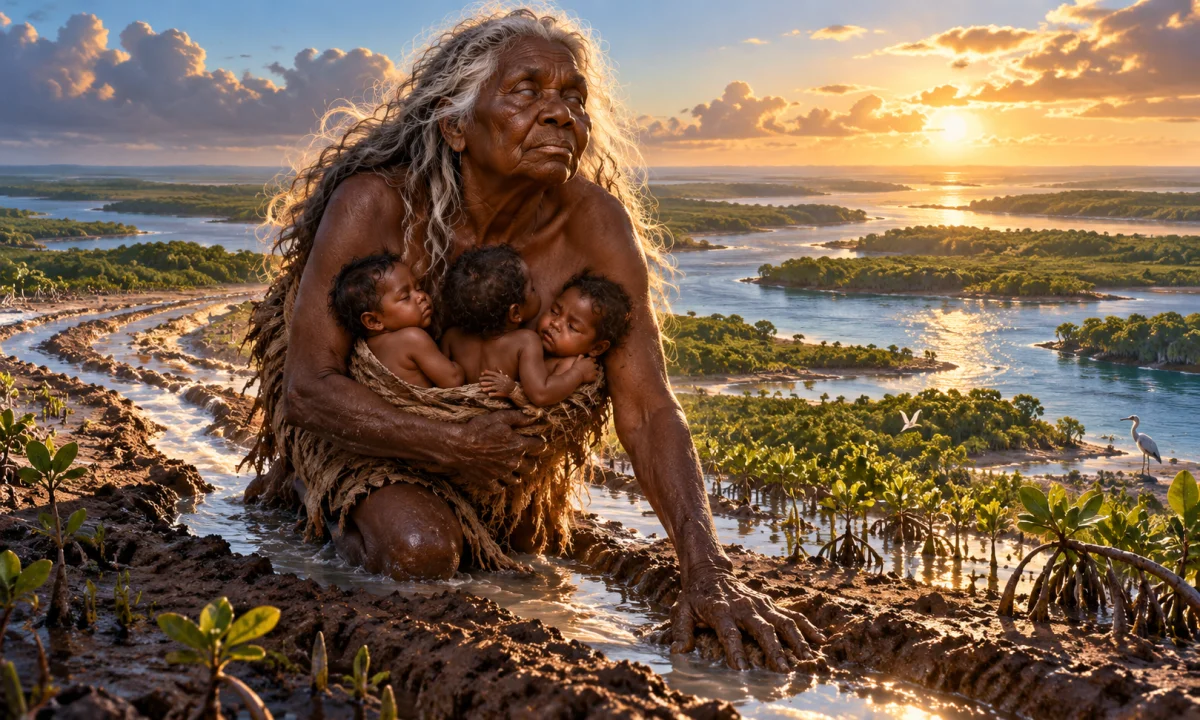
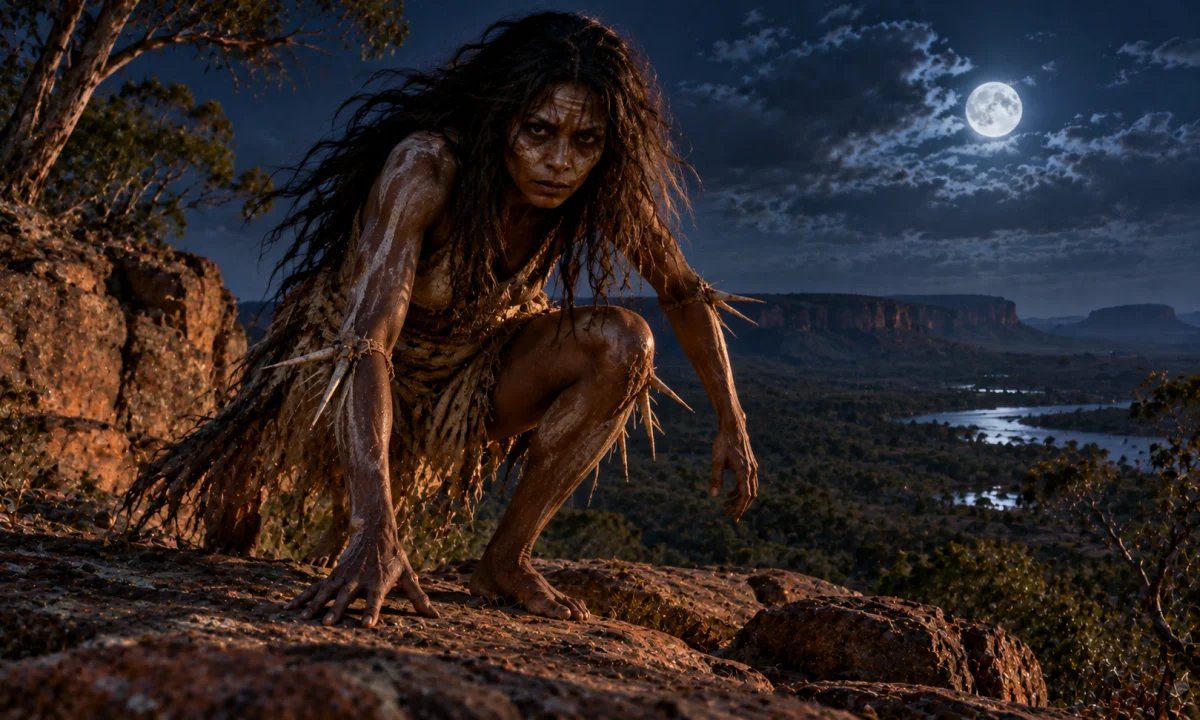
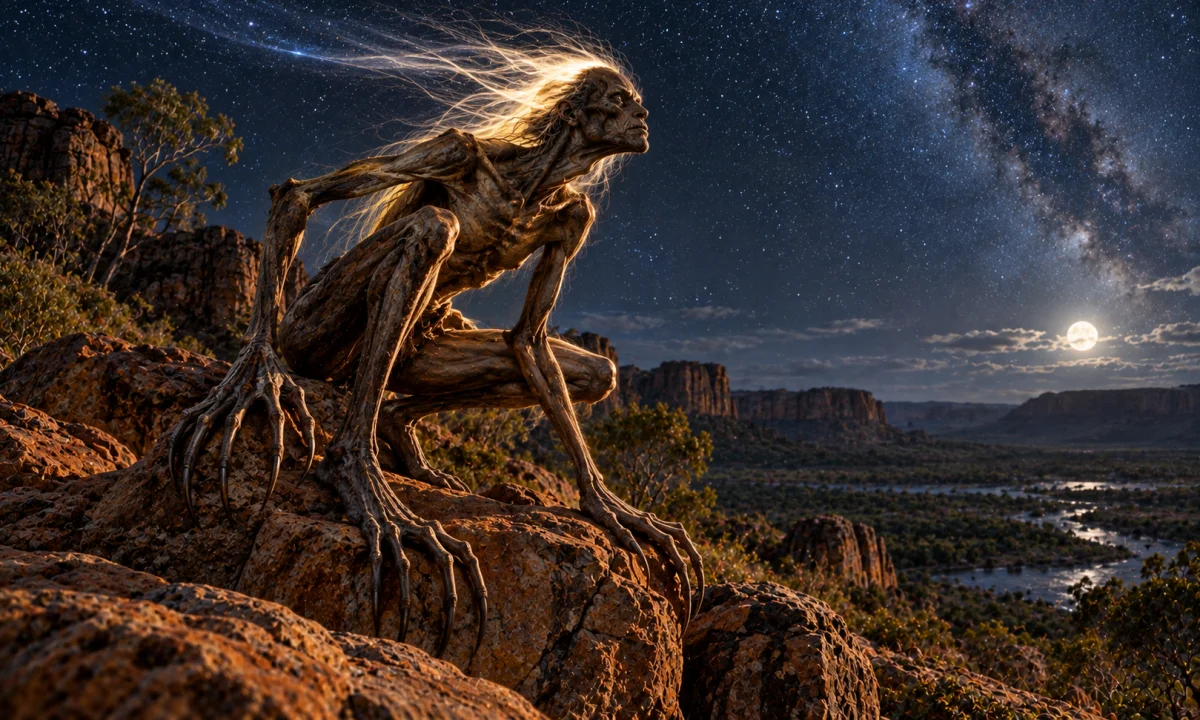
No consistent traditional description of Mopaditis’s physical form is securely available. It is therefore not responsible to assign the figure a human body, animal features, a monstrous appearance, weapons, ornaments or a particular colour. Illustrations found in modern mythology books or online collections may be artistic inventions rather than representations based on Indigenous visual tradition.
There is likewise no firmly established account of distinctive powers. Some secondary lists attach broad functions to obscure mythological names, such as control of rain, water, fire, fertility or death. These categories are common in comparative mythology and can easily be applied without adequate evidence. They should not be repeated as facts in the case of Mopaditis.
The lack of a recorded attribute does not mean that the name had no significance. In Aboriginal traditions, the importance of an ancestral being may lie less in a set of supernatural abilities than in the being’s relationship to a particular tract of country, waterhole, animal species, ritual site, ancestral law or kinship group. A short outsider record might preserve a name while losing the network of meanings that made it important.
Stories and relationships
No widely attested cycle of stories about Mopaditis can be identified with confidence. There is no secure narrative establishing a beginning, journey, conflict, marriage, transformation, death or departure from the human world. Nor is there a reliably documented genealogy linking Mopaditis to better-known figures from Aboriginal traditions.
This means that Mopaditis should not be presented as the companion, child, enemy or counterpart of Baiame, Bunjil, Daramulum, Eingana, Ngalyod, the Wawilak or Wawalag Sisters, Tiddalik, or any other named being without specific evidence. These figures belong to different cultural and regional contexts, and similarities in their broad mythological functions do not establish a relationship.
Stories about ancestral beings are also often tied to geographical features. A narrative may explain why a hill has a certain shape, why a watercourse follows its path, why a species behaves in a particular way, or why a community observes a law. Without knowing the country and language associated with Mopaditis, it is impossible to reconstruct such a relationship accurately. Inventing a journey across an unspecified “Australian landscape” would erase the local character that is central to Aboriginal storytelling.
Why obscure names become difficult to interpret
Several historical processes have contributed to uncertainty around minor or rarely recorded mythological names.
- Fragmentary recording: Early observers often wrote down isolated words or short accounts rather than complete ceremonial and narrative contexts.
- Inconsistent spelling: Aboriginal languages were represented through changing English spelling systems, and the same sound could be written in several ways.
- Loss of context: A name may survive while information about its country, clan, ritual use or restrictions disappears from the record available to later readers.
- Comparative classification: European writers sometimes grouped diverse beings under familiar labels such as god, demon, monster or nature spirit.
- Repetition in modern compilations: A brief, uncertain entry can be copied into later lists until it appears more authoritative than the original evidence warrants.
These problems affect many traditions, but they are especially important when discussing Indigenous cultures whose knowledge systems were disrupted by colonisation, dispossession, missionisation and language loss. A responsible account must distinguish between what a community traditionally teaches, what an outsider recorded, what a later editor inferred and what remains unknown.
Distinction from better-documented Aboriginal beings
Mopaditis should not be used as a general name for Aboriginal creator beings. Baiame, for example, is associated in several southeastern Australian traditions with a powerful ancestral or sky-being role, although the details vary between communities. Bunjil is a major ancestral figure in traditions of southeastern Australia and is often represented in connection with the wedge-tailed eagle. Daramulum appears in traditions associated with parts of New South Wales and has important relationships to initiation and ancestral law. These figures have their own cultural settings and should not be treated as interchangeable examples of an Aboriginal “supreme god.”
Nor should Mopaditis be automatically identified with the many ancestral snakes and water beings found across Australia. Serpentine figures such as the Rainbow Serpent or regional beings such as Ngalyod may be connected with water, fertility, landscape formation and law, but these traditions are not one single myth. A similarity in a modern catalogue, such as an association with water or creation, would not be enough to equate Mopaditis with any of them.
Cultural significance and responsible interpretation
The most accurate interpretation of Mopaditis at present is that it is a poorly documented and possibly secondary-catalogue name whose original cultural identity cannot be established with confidence from commonly available material. That conclusion is narrower than declaring the name fictitious, but it is also more accurate than assigning it a detailed mythology unsupported by evidence.
Researchers seeking to clarify the name would need to establish its earliest recorded form, identify the language and community connected with it, compare spelling variants, and consult Indigenous custodians or specialists in the relevant regional traditions. Oral authority is particularly important because written records may be incomplete, mistranslated or subject to cultural restrictions. A community’s own account should take precedence over a generic mythology database.
For general readers, the name is best approached as a reminder that “Australian Aboriginal mythology” describes thousands of living and historical traditions rather than a single pantheon. The uncertainty surrounding Mopaditis is itself historically meaningful: it shows how easily a name can become detached from country, language and ceremony when it passes through colonial records and later popular summaries.
Modern reception
Mopaditis does not have a prominent, well-established role in major modern popular culture. Its presence is mainly associated with brief internet entries, mythology lists or encyclopaedic catalogues that may provide little context. Such appearances can give the impression that every listed name belongs to a clearly defined pantheon, even when the underlying documentation is slight.
Modern writers, artists and game designers may use obscure mythological names creatively, but an invented depiction should be distinguished from Aboriginal tradition. A fictional Mopaditis with a fixed appearance, domain, personality or set of powers would represent a contemporary adaptation, not confirmed traditional evidence. Until a specific cultural origin and narrative record are identified, the name should remain marked by uncertainty rather than expanded into a detailed mythology.