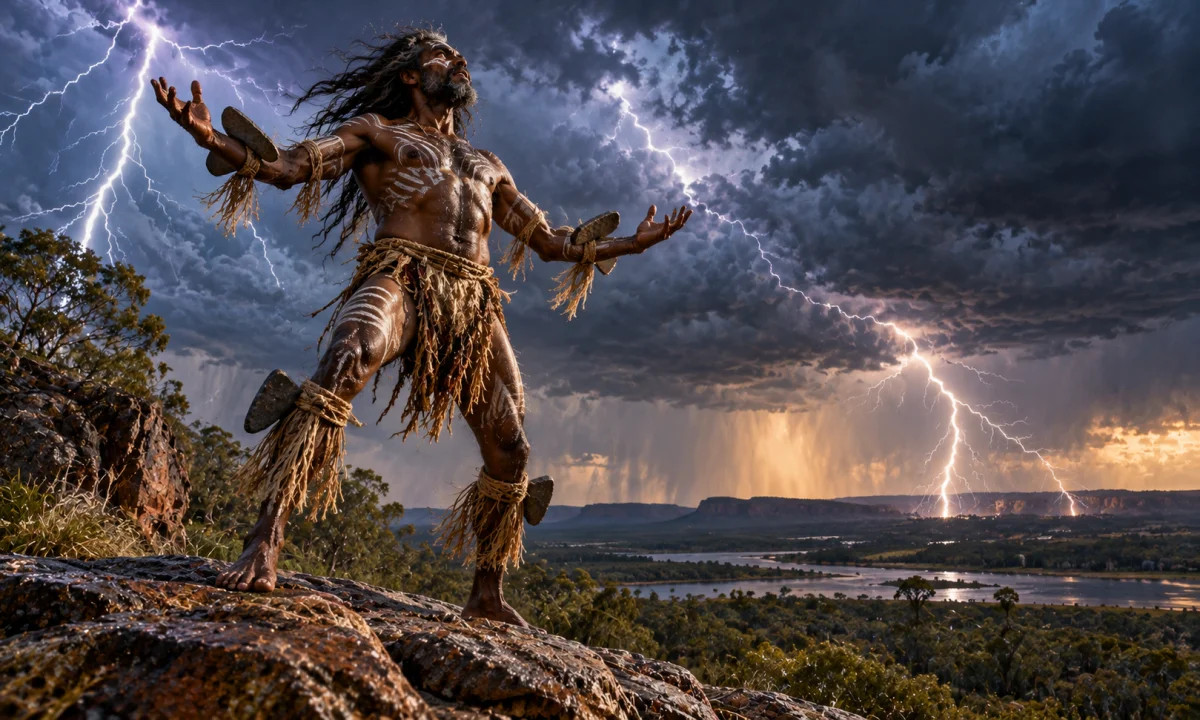
WORLD
WORLD
Ngalyod
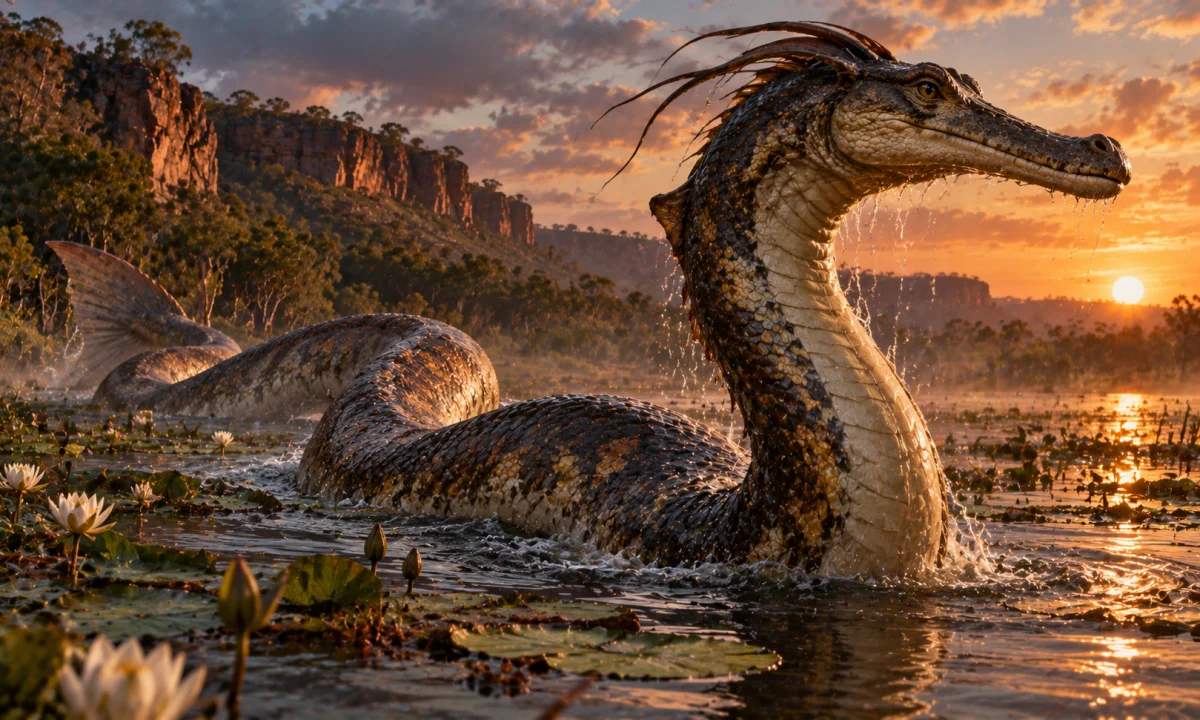
Ngalyod is a powerful ancestral being of western Arnhem Land in northern Australia, especially in Kunwinjku and related Aboriginal traditions. Ngalyod is commonly described in English as a Rainbow Serpent, although that translation can conceal important cultural differences. Aboriginal peoples throughout Australia have their own ancestral serpent beings, names, stories and ceremonial contexts; they are not all versions of one universal deity. In Kunwinjku tradition, Ngalyod is associated with water, rainbows, fertility, landscape formation and the continuing powers of the ancestral world.
Cultural setting and sources
Stories about Ngalyod belong to the religious and cultural traditions of western Arnhem Land, a region known for its rich artistic heritage, distinctive languages and continuing ceremonial life. The communities most often associated with the name include Kunwinjku-speaking people and neighbouring groups whose traditions are related but not identical. The term may therefore appear in accounts that differ in detail, emphasis or spelling.
Knowledge of Ngalyod has been preserved through oral teaching, ceremony, visual art, place-based traditions and relationships to particular waterholes, rivers, hills and other features of the country. Aboriginal traditions are not merely collections of old stories. They connect ancestral actions with law, kinship, responsibilities to country, ceremonial authority and the proper use of natural resources. The ancestral era is often called the Dreaming in English, although Aboriginal languages and communities have their own concepts and words that do not always correspond exactly to that term.
Public descriptions provide only part of the tradition. Some knowledge is restricted according to clan, gender, initiation status, family or ceremonial responsibility. A general account of Ngalyod should therefore not be treated as a complete statement of Kunwinjku religious teaching. Details can also vary between communities and between artists, storytellers and local places.
The name and identity of Ngalyod
Ngalyod is generally identified as a rainbow-associated serpent or snake-like ancestral being. English-language descriptions sometimes call Ngalyod “the Rainbow Serpent,” but this is a category rather than a precise translation of a single pan-Aboriginal figure. The name Ngalyod belongs particularly to traditions of western Arnhem Land, and the being’s identity should be kept distinct from serpent beings known by other names elsewhere in Australia.
In many Kunwinjku accounts, Ngalyod is described as female, or as having a strongly maternal and generative role. Some interpretations emphasise that Ngalyod does not fit comfortably into fixed European categories of gender, species or divinity. As an ancestral power, Ngalyod may be represented in human, serpent-like, hybrid or highly stylised forms. The precise description depends on the tradition, place and context in which the being is discussed.
The word “serpent” is also an approximation. Ngalyod is not simply a large snake imagined as an animal of unusual size. Ngalyod belongs to a sacred order of ancestral beings whose actions established features of the world and whose power remains present in the country. A waterhole associated with Ngalyod is not only a physical source of water; it may also be a place of ancestral presence, danger, ceremony and obligation.
Appearance and powers
Ngalyod is often imagined as an immense serpent with a body capable of moving through water, across land and through the sky. The rainbow is one of the being’s most recognisable signs. When a rainbow appears over a waterhole or across the landscape, it may be understood as evidence of Ngalyod’s presence or movement, although the meaning of a particular rainbow depends on local knowledge.
Traditional and contemporary artworks may show Ngalyod with an elongated, winding body, a large head, prominent teeth, horns, fins or other unusual features. These details are not universal rules. Artists may use different visual conventions to express the being’s power, its relationship to a particular site or the story they are authorised to represent. Some images are naturalistic, while others combine serpent, human and supernatural qualities.
Ngalyod is closely connected with water. Waterholes, springs, rivers and billabongs can be places where the being lives, rests or travels. As a result, Ngalyod may be associated with the presence of water during the dry season, the arrival of rain and the fertility of plants, animals and people. The connection is both environmental and religious: caring for country and behaving properly around significant waters are connected with respect for ancestral power.
Ngalyod can also be dangerous. A sacred waterhole is not automatically safe simply because it provides life. Entering a place without permission, disturbing it, taking resources improperly or breaking a social or ceremonial rule may bring illness, misfortune or other consequences. Stories of Ngalyod’s anger communicate more than fear of a monster. They express the obligations people have toward country, law and the beings who made and continue to sustain it.
Ngalyod and the formation of the landscape
One of the most important themes in stories of Ngalyod is the creation or shaping of country. As Ngalyod moved through the ancestral landscape, the being made or transformed watercourses, hills, plains and waterholes. Particular landforms may be explained through an event involving Ngalyod, another ancestral being or an encounter between several powerful figures.
These accounts do not present creation as a single event that occurred everywhere in exactly the same way. They are tied to named places and to the histories of particular communities. A story may explain why a waterhole has a certain shape, why a rocky outcrop is dangerous, or why a site must be approached according to specific rules. The narrative, the country and the law are therefore inseparable.
Ngalyod’s movement can be constructive and destructive at the same time. The being makes water available and helps establish the conditions for life, but can also cause flooding, swallow people or punish violations. This dual role is common in accounts of powerful ancestral beings: creative force is not necessarily gentle force. The same power that produces fertility and abundance can destroy those who fail to respect it.
Rain, fertility and seasonal change
The rainbow links Ngalyod with rain and the seasonal cycle. Western Arnhem Land experiences dramatic changes between wet and dry seasons, and water is central to travel, food gathering, ceremony and settlement. Ngalyod’s presence can therefore be understood through the practical realities of the environment as well as through sacred tradition.
Ngalyod’s relationship with fertility may extend to humans, animals, vegetation and the renewal of country. In some accounts, ancestral beings establish the reproductive and ecological order of the world. The serpent’s connection with water makes it an appropriate symbol of life, but the symbol should not be reduced to a general “fertility myth.” Its meaning is grounded in particular places, relationships and cultural responsibilities.
Rainbows may also carry warnings. A rainbow can signal that a powerful water being is nearby, that rain is coming or that people should observe restrictions connected with a site. Such interpretations are not identical in every Aboriginal community. The appearance of a rainbow is not automatically evidence of Ngalyod in all Australian traditions, and the meaning assigned to it depends on local cultural knowledge.
Stories, relationships and local variants
There is no single universally authorised story of Ngalyod. Public accounts may describe the being travelling through country, creating waterholes, confronting other ancestral figures or taking revenge on people who violated important rules. Other accounts focus on Ngalyod as a guardian of water and a source of life. The order of events, the names of other beings and the significance of particular places vary between traditions.
Some stories describe Ngalyod as swallowing people or taking them into the water. These narratives can explain the danger of entering certain places and the consequences of ignoring ancestral law. They should not be treated merely as folktales about a predatory creature. Within their cultural setting, such accounts may carry instructions about conduct, authority, kinship and the treatment of sacred country.
Ngalyod may also be discussed alongside other powerful beings of western Arnhem Land. That does not mean that all such beings are interchangeable. A story can involve several ancestral figures with separate identities, responsibilities and relationships to particular sites. Names and roles may shift between neighbouring language groups, and an account recorded in one community should not automatically be used to define another community’s tradition.
Ngalyod in art
Ngalyod is an important subject in Aboriginal art from Arnhem Land. Images appear in rock art traditions, bark paintings, carved objects, ochre works and contemporary paintings. However, identifying a serpent image as Ngalyod is not always straightforward. Some ancient serpent figures have been interpreted by outsiders as Rainbow Serpents, but the original meaning of a particular image may be uncertain or known only through local tradition.
In Kunwinjku art, the depiction of Ngalyod can communicate the being’s relationship to a particular site or story. Artists may show the body as a long looping form, use bands and internal markings, or combine animal features with supernatural elements. Visual style is not simply decorative. It may indicate ancestral power, water, movement, transformation or the artist’s connection to country.
Contemporary artists from western Arnhem Land continue to paint Ngalyod within living cultural traditions. A modern painting is not necessarily a museum reconstruction of an ancient belief. It may express present-day cultural authority, a relationship to country, a family’s artistic practice or knowledge passed through generations. At the same time, artists do not have unrestricted permission to represent every aspect of Ngalyod. The right to paint a story or sacred site can be governed by customary responsibilities.
Interpretation and cultural significance
Outside observers have often treated the Rainbow Serpent as a single symbol shared by all Aboriginal Australians. This approach is convenient but misleading. Serpent beings with links to rain, water, creation and law occur in many regions, yet their names, genders, stories and ceremonial meanings differ. Ngalyod should be understood first through the communities and countries in which the name is used.
Ngalyod can be interpreted as a figure of transformation because the being links different realms: water and land, sky and earth, animal and human, danger and fertility. These comparisons can be useful when carefully made, but they should not replace the specific cultural meanings of the tradition. Ngalyod is not simply an Australian equivalent of a dragon, sea serpent or universal mother goddess.
The being also demonstrates why the division between “nature” and “religion” can be inadequate in describing Aboriginal traditions. Waterholes and rivers are ecological resources, ancestral places and parts of a moral landscape. Knowledge about where water is found is connected with knowledge about who may approach it, how it should be used and what obligations apply there. Ngalyod’s significance lies partly in this integration of environment, ancestry and law.
Distinguishing Ngalyod from other Rainbow Serpent figures
Many Aboriginal communities have ancestral beings that English writers group under the label “Rainbow Serpent.” Examples include Wagyl in Noongar traditions of south-western Australia, Bolung in parts of the Kimberley and Yurlunggur in Yolngu traditions of north-east Arnhem Land. These names belong to different cultural and linguistic settings. Similarities in the themes of water, rainbows and creation do not make the beings identical.
Ngalyod should also not be confused with every snake-like figure in Aboriginal art or rock art. Some images represent specific ancestral beings, while others may have meanings that are not publicly known. Nor should Ngalyod be merged with figures from popular fantasy, where “the Rainbow Serpent” is often turned into a generic monster, dragon or supernatural animal.
Modern reception
Ngalyod is relevant in contemporary discussions of Aboriginal art, cultural heritage, environmental responsibility and the protection of sacred sites. Museums, galleries and educational materials may use the name when presenting works from western Arnhem Land, but respectful interpretation requires attention to the artist’s community, language and authority. A general label can obscure the local tradition if it is presented as though all Aboriginal serpent beings were the same.
Modern popular culture sometimes borrows the phrase “Rainbow Serpent” for fantasy creatures, games, tourism imagery or generalized ideas about Aboriginal spirituality. Such uses may have little connection with Ngalyod itself. Traditional accounts should therefore be distinguished from later symbolic or commercial adaptations, especially when the original cultural setting, restrictions and community ownership have been removed.