WORLD
WORLD
Malinalxochi
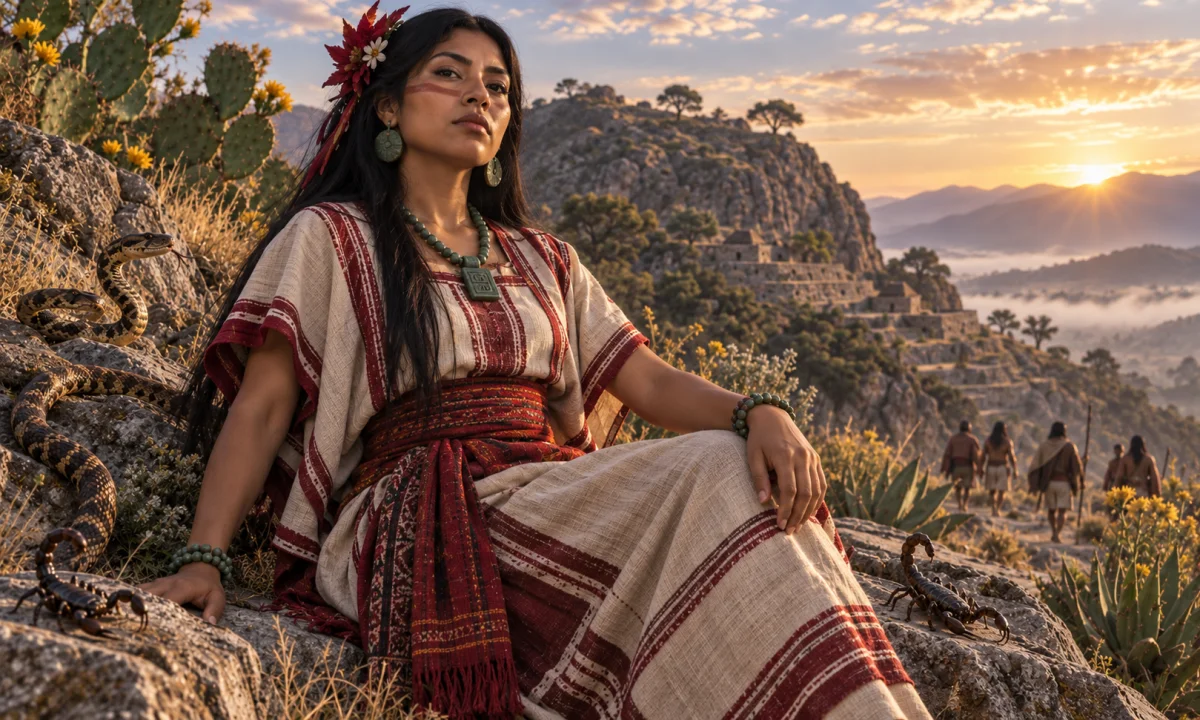
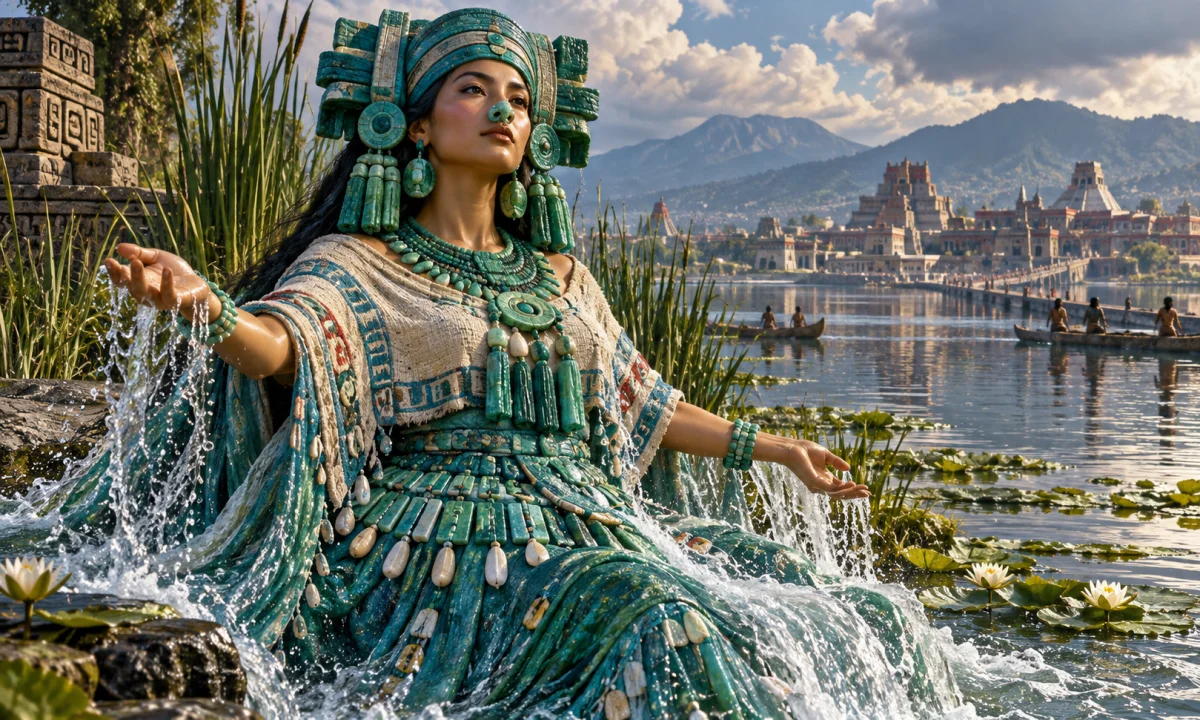
Malinalxochi, also written Malinalxochitl or Malinalxoch, is a female figure associated with Mexica, commonly called Aztec, migration traditions. She is usually presented as the sister of Huitzilopochtli, the Mexica patron deity, and as a powerful sorceress whose followers were left behind during the migration that eventually led to the founding of Mexico-Tenochtitlan. Her story survives mainly in colonial-era Nahuatl and Spanish accounts, where details differ considerably.
Malinalxochi occupies an uncertain position between goddess, supernatural woman, ancestral leader and legendary antagonist. Some modern descriptions call her an Aztec goddess, but the surviving narratives do not classify her consistently in that way. They more often describe her as a woman with extraordinary magical abilities and a close relationship to Huitzilopochtli. Her story is important because it presents a rival form of sacred power within the Mexica migration: while Huitzilopochtli represents the emerging authority of the Mexica tribal god, Malinalxochi embodies an older, dangerous and independent power that cannot easily be incorporated into his community.
Name and spelling
The name appears in several forms because Nahuatl names were recorded by different colonial authors and scribes. Malinalxochitl is a common scholarly spelling, while Malinalxochi is also widely used. The final element xochitl means “flower.” The first element is connected with malinalli, a grass or grass-like plant associated with twisting or woven forms. The name is therefore often translated as “Flower of the Malinalli” or “Malinalli Flower,” although translations vary and should not be treated as exact equivalents of the original name.
The name is related linguistically to other Nahuatl words and place names, but those connections do not mean that all similarly named figures are the same being. In particular, Malinalxochi should not be confused with Malinalli, the Nahua woman known in colonial history as Malintzin or La Malinche. The two names share linguistic elements, but Malintzin was a historical interpreter and political intermediary who lived in the sixteenth century, many generations after the traditional migration stories associated with Malinalxochi.
Sources and cultural setting
Malinalxochi’s story belongs to the body of traditions about the Mexica movement from their ancestral homeland toward the Basin of Mexico. These traditions were recorded after the Spanish conquest, when Indigenous historians, informants and scribes worked within new colonial conditions. Important accounts of Mexica origins and migration include the Florentine Codex, the Historia de los mexicanos por sus pinturas, the Codex Aubin, and narratives associated with authors such as Diego Durán and the compiler known as the author of the Codex Ramírez.
These sources do not present one unified version of Mexica history. They preserve overlapping traditions, political memories and explanations of place names, rituals and ethnic relationships. A story that appears in one account may be absent from another, or may have different characters and consequences. Spanish-language summaries can also interpret Nahuatl religious concepts through European categories such as “witch,” “sorceress” or “devil.” Such terms are useful only with caution, since they do not perfectly represent Indigenous ideas about ritual expertise, supernatural power or religious authority.
Malinalxochi’s narrative should therefore be understood as part of a layered tradition rather than as a single, fully standardized myth. The surviving accounts were written down in the colonial period, but the events and characters they describe belong to older Indigenous historical and sacred traditions.
Identity and relationship to Huitzilopochtli
In the best-known versions, Malinalxochi is the sister of Huitzilopochtli. Their relationship is not portrayed as peaceful. Huitzilopochtli is the leader and divine protector of the migrating Mexica, while Malinalxochi exercises a separate and troubling form of power. Her abilities are described as harmful to ordinary people, and her conduct causes concern among the community.
She is commonly characterized as a tlacatecolotl or “sorceress” in translation, although the precise meaning and implications of the terminology vary between accounts. She is said to command or send dangerous creatures, including snakes, scorpions, centipedes and other biting or venomous animals. In some narratives she harms people during sleep or uses magical practices that make her followers feared by others. These details make her less like a benevolent household or agricultural goddess and more like a formidable ritual specialist whose power is both real and socially disruptive within the story.
Her connection with Huitzilopochtli also reflects a recurring theme in Mesoamerican mythology: divine or semi-divine relatives may embody competing forms of order. The conflict is not simply a quarrel between two individuals. It expresses a struggle over leadership, acceptable religious practice and the future identity of a migrating people.
The abandonment at Malinalco
The central episode tells how Huitzilopochtli and the Mexica left Malinalxochi behind during the migration. In one widely repeated version, the community complained about her magical behavior and the danger she posed. Huitzilopochtli then arranged for her to be abandoned while she slept. When she awoke, she discovered that her brother and the main body of the migrants had departed.
Malinalxochi and her followers remained in the area that became known as Malinalco, in the modern State of Mexico. The place name is traditionally linked to her, although the exact relationship between the legendary woman and the historical development of the settlement cannot be demonstrated from the story alone. Some accounts treat her as the founder or namesake of the community, while others focus on her as a leader who was left there by the migrating Mexica.
The abandonment is a striking example of exclusion in a migration narrative. Huitzilopochtli’s chosen people continue toward their destined homeland, but Malinalxochi establishes a separate community. Her removal does not erase her influence. Instead, it creates an alternative lineage and a rival memory connected with Malinalco.
In certain versions, Malinalxochi later gives birth to Copil. The identity of Copil’s father is not presented consistently in all sources; some accounts name a figure called Chimal, while others give little or no information about his father. Copil becomes important because of his hostility toward Huitzilopochtli and the Mexica.
Copil and the conflict with the Mexica
According to migration traditions, Copil grows up carrying the grievance created by his mother’s abandonment. He eventually seeks to oppose Huitzilopochtli or to avenge Malinalxochi. The precise sequence differs by source, but Huitzilopochtli confronts and kills him.
Copil’s death is linked in several accounts to the Mexica founding of Tenochtitlan. Huitzilopochtli orders that Copil’s heart be cast away. It falls at the place where the Mexica later see the signs that identify their destined settlement: an eagle perched on a nopal cactus, often with a serpent in the later and now familiar version of the image. In some accounts, the heart itself becomes the origin of the place or is connected with the stone or foundation associated with Tenochtitlan.
This episode gives Malinalxochi’s family a paradoxical role in Mexica history. Her son is an enemy, yet his death helps produce the sacred geography of the Mexica capital. The rival lineage is not merely defeated and forgotten; it becomes part of the explanation for how the central city was established. The narrative may preserve memories of conflict between groups or places that were later incorporated into an account of Mexica destiny.
The relationship between Malinalco and Tenochtitlan also has a broader historical context. Malinalco was an important settlement and ritual center in central Mexico, especially in the period before and during the expansion of the Aztec Empire. The famous rock-cut sanctuary at the site is associated particularly with the later Mexica military order of the Eagle and Jaguar warriors. That later archaeological and imperial context should not be treated as proof that every detail of Malinalxochi’s story reflects an earlier historical event, but it helps explain why Malinalco held lasting importance in central Mexican cultural memory.
Abilities and symbolism
Malinalxochi’s defining attributes are her command of harmful animals and her knowledge of magic. Snakes, scorpions, centipedes and other creatures associated with bites, poison and hidden danger place her in a symbolic world of wilderness and bodily vulnerability. They also distinguish her power from the martial and solar imagery often associated with Huitzilopochtli.
Her portrayal may reflect anxiety about forms of ritual authority that operate outside official communal control. A person who can send animals against others, affect people during sleep or act through hidden forces is difficult to regulate. The story presents such power as threatening, but it does not make it insignificant. Malinalxochi is not weak or easily defeated; she is excluded precisely because her abilities are potent.
Her association with grass and flowers in her name introduces a different symbolic register. The name does not by itself prove that she was a plant goddess, agricultural deity or patron of a specific crop. It may connect her to a place, a lineage or a meaningful natural image rather than define her entire religious character. Interpretations that turn the name alone into a complete description of her functions go beyond what the surviving narratives securely establish.
Malinalxochi can also be read as a figure of female autonomy. She is not merely identified through a husband or domestic role. She commands supernatural forces, leads or influences a community and remains central to a conflict involving the destiny of the Mexica. At the same time, the narratives are preserved within traditions that ultimately privilege Huitzilopochtli and the Mexica state. Her power is acknowledged, but it is framed as dangerous, improper or incompatible with the dominant migration.
Malinalxochi, Malinalco and related figures
Malinalxochi is most closely linked with Malinalco, but the exact nature of that connection varies. The place may be presented as the settlement where she remained after the abandonment, as a community founded by her followers or as a location whose name was explained through her legend. A traditional etymology is not the same as a modern historical demonstration, and the myth should not be used on its own to reconstruct the settlement’s origins.
She should also be distinguished from Huitzilopochtli’s other female relatives and adversaries. In some Mexica traditions, Huitzilopochtli’s mother is Coatlicue, and his sister Coyolxauhqui leads the Centzon Huitznahua against him in the famous story of the birth at Coatepec. Malinalxochi is not Coyolxauhqui, even though both are female relatives involved in conflicts surrounding Huitzilopochtli. Coyolxauhqui is especially associated with the moon in later interpretations and with the monumental sculpture found at the Templo Mayor; Malinalxochi belongs primarily to the migration and Malinalco traditions.
Nor should Malinalxochi be automatically identified with a general “witch goddess” or with every female supernatural being in Aztec religion. The evidence supports a specific figure with a particular narrative role, but it does not support assigning her all forms of magic or all dangerous feminine symbolism found in Mesoamerican traditions.
Interpretation and cultural significance
Malinalxochi’s story can be understood as a narrative about the formation of political identity. The Mexica migration traditions explain not only where the Mexica came from but also why they possessed a special destiny and why other groups or communities stood outside that destiny. By presenting Malinalxochi as a powerful relative who is left behind, the story creates a boundary between the Mexica community guided by Huitzilopochtli and an alternative community associated with Malinalco.
The story may also preserve a memory of competition between neighboring peoples. Mythic genealogies frequently transform political relationships into family relationships, making rivalry appear as a conflict between siblings, parents and children. Malinalxochi and Copil provide a way to explain why another important place is connected to the Mexica while remaining distinct from them.
Scholars must nevertheless avoid treating the narrative as a straightforward historical record. The accounts were recorded after the conquest, their details vary, and colonial writers sometimes reshaped Indigenous concepts through Christian or European categories. Malinalxochi’s significance lies in the meanings created by the tradition—kinship, exclusion, dangerous knowledge, rival settlement and the founding of Tenochtitlan—not in an independently verified biography.
Later reception
Malinalxochi has received increasing attention in modern discussions of Indigenous women, Mesoamerican mythology and the representation of female power. Contemporary writers may portray her as an unjustly demonized goddess, a suppressed political founder or a symbol of female independence. Such readings can be meaningful reinterpretations, but they are modern interpretations rather than uniform conclusions established by all traditional sources.
She appears less frequently in mainstream popular culture than Huitzilopochtli, Quetzalcoatl, Coatlicue or La Malinche. When she is adapted for novels, games, visual art or modern spiritual movements, her magical abilities and connection with Malinalco are often expanded beyond the evidence of the colonial narratives. These adaptations belong to living processes of cultural imagination and should be distinguished from the older traditions in which Malinalxochi is a dangerous, powerful and contested figure within the story of Mexica origins.