WORLD
WORLD
Macuilmalinalli
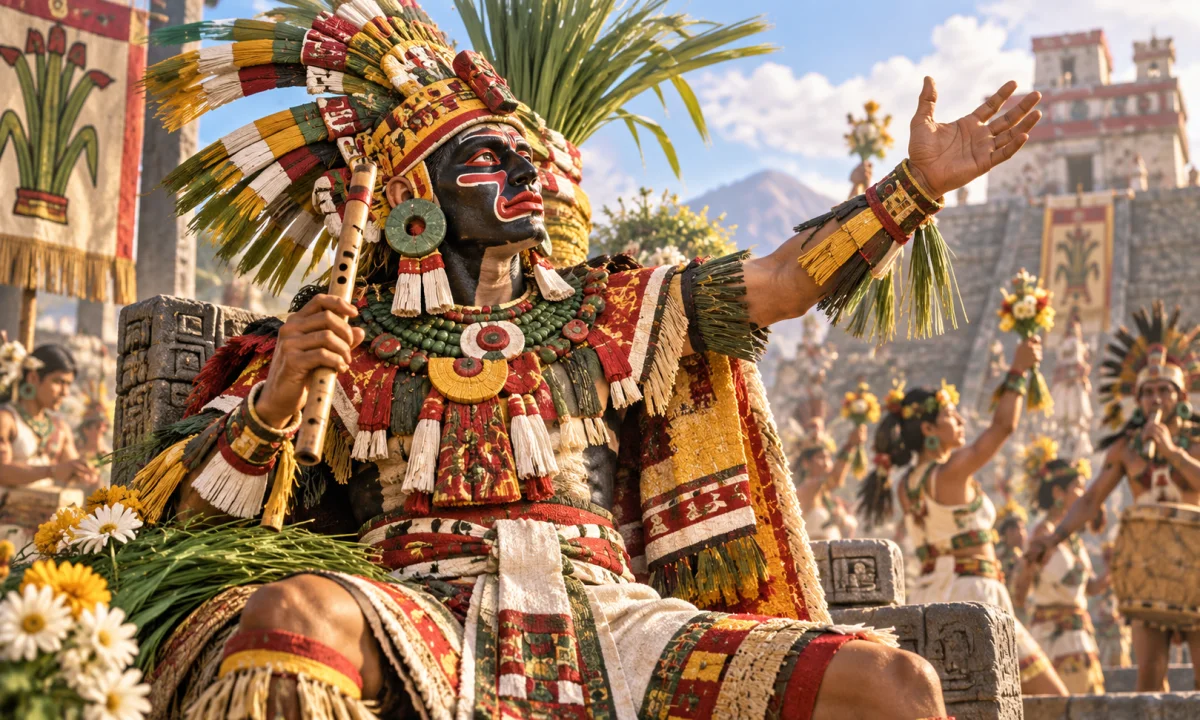
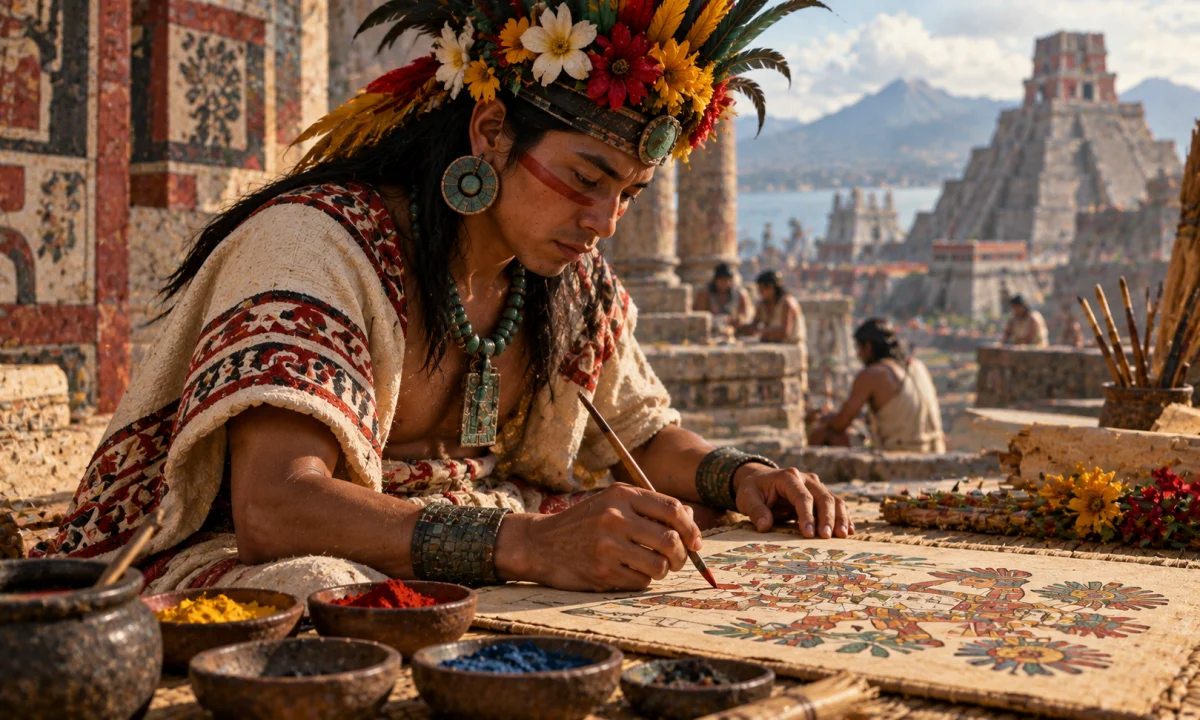
Macuilmalinalli is a relatively obscure figure in the religious traditions of central Mexico. The name is usually translated from Nahuatl as “Five Grass” or “Five Grass-Stalk,” combining macuil, “five,” with malinalli, a word associated with grass, weeds, or twisting plant fibre. In surviving colonial descriptions and post-Conquest manuscripts, Macuilmalinalli appears among a group of five beings connected with pleasure, excess, and the dangers of overindulgence. The evidence does not present a single, complete mythology for the figure, and scholars cannot always determine whether Macuilmalinalli was understood as a fully independent god, a calendrical manifestation, or one aspect of a larger group of related powers.
The cultural setting
Macuilmalinalli belongs to the religious world of Nahua-speaking peoples, including the Mexica, often called the Aztecs. Their ritual life was organized partly through several interlocking calendars. One of these was the tonalpohualli, a 260-day divinatory cycle made from twenty day signs combined with the numbers one through thirteen.
Each day in the tonalpohualli had a particular combination of sign and number. These combinations were used to interpret a person’s character, prospects, ritual obligations, and possible dangers. The day sign Malinalli was the twelfth sign in the standard sequence. It referred to grass or tough plant growth, especially vegetation that could be twisted into cordage. As with other day signs, Malinalli was not merely a description of nature. It carried religious and divinatory associations that could vary according to the accompanying number and the larger calendar cycle.
The numeral five was also significant in Nahua religious thought. It could be connected with the centre, with groups of five powers, and with a set of deities known as the Macuiltonaleque, literally something like “the five fortune-bringers” or “the five tonalli.” The word tonalli refers to a day, a day-sign influence, heat, or a vital force, depending on context. The meaning of the group’s name is therefore not perfectly captured by any single English translation.
Name and identity
Macuilmalinalli is conventionally understood as “Five Grass.” Nahuatl names were often formed from a numeral and a noun, and this structure links the figure both to the Malinalli day sign and to the set of beings whose names begin with Macuil-.
The name should not be treated as evidence for a simple god of grass. In Mesoamerican religious systems, calendrical names could identify a divine power, a ritual day, an omen, or an aspect of a deity. A name such as Macuilmalinalli therefore carried several levels of meaning at once: the number five, the sign Malinalli, and the ritual associations attached to the group of five beings.
Colonial records written in Nahuatl and Spanish do not describe Macuilmalinalli with the same clarity given to more prominent gods such as Huitzilopochtli, Tlaloc, or Quetzalcoatl. The figure is usually encountered in lists, calendrical contexts, or discussions of the five Macuil beings. As a result, it is safest to describe Macuilmalinalli as a poorly documented calendrical and religious figure rather than assigning it a fully developed independent mythology.
The five Macuil beings
Macuilmalinalli is generally listed with four other named powers:
- Macuilxochitl, “Five Flower”;
- Macuilcuetzpalin, “Five Lizard”;
- Macuilcozcacuauhtli, “Five Vulture”; and
- Macuiltochtli, “Five Rabbit.”
Together they are often called the Macuiltonaleque or associated with the Ahuiateteo, a group whose name is commonly translated as “gods of excess” or “gods of pleasure.” The spelling and classification vary among sources because the surviving information was recorded after the Spanish invasion by Christian missionaries, Indigenous scribes, and colonial-era scholars working within different contexts.
The Ahuiateteo were associated with the pleasures and destructive consequences of excessive behaviour. Their sphere could include drunkenness, sexual excess, gluttony, gambling, and other forms of uncontrolled indulgence. This did not mean that Nahua religion regarded every pleasure as evil. Rather, the group represented the way pleasure could become dangerous when it exceeded proper limits. Their presence in religious and calendrical thought reflects a concern with balance, self-control, bodily vulnerability, and the consequences of violating social or ritual norms.
Macuilxochitl is the best-known member of this group and had wider associations with games, music, dance, flowers, feasting, and pleasure. The prominence of Macuilxochitl in the evidence can make the other four figures appear more clearly defined than they actually are. Macuilmalinalli should not automatically be given all the attributes associated with Macuilxochitl merely because both names begin with Macuil-.
Relationship to the Malinalli day sign
The most important clue to Macuilmalinalli’s identity is its relationship to Malinalli, the twelfth day sign of the tonalpohualli. Malinalli referred to a resilient grass or plant material that could be twisted into rope. The image of grass has several possible symbolic implications: toughness, entanglement, renewal, binding, and the capacity to survive after cutting or trampling.
These associations should be treated as interpretive rather than as a fixed set of attributes belonging specifically to Macuilmalinalli. The surviving records do not provide a universally accepted explanation stating that the figure possessed particular powers over ropes, plants, or regeneration. The plant imagery may have contributed to the name’s religious significance, but the figure’s place within the fivefold group is at least as important as the literal meaning of the word.
In the tonalpohualli, a day sign did not function alone. Its meaning was shaped by its number, its position in a thirteen-day period, and the deities or forces assigned to that period. Consequently, “Five Grass” could be understood as a particular calendrical combination as well as the name of a supernatural being. This overlapping use of names is common in Mesoamerican religious terminology and makes simple one-to-one translations misleading.
Attributes and symbolism
No securely standardized physical description of Macuilmalinalli survives. It is not possible to state confidently that the figure always had a particular costume, weapon, animal companion, facial marking, or body colour. Images in pre-Hispanic and early colonial manuscripts often present related calendrical powers through signs, emblems, and conventional groupings rather than through portraits that can be identified without doubt.
The number five is central to the figure’s symbolism. Macuilmalinalli is not simply “Malinalli with the number five added”; the numeral places the figure within a broader religious pattern. The five Macuil beings may be understood as powers of intense sensation and dangerous excess, especially when considered alongside the Ahuiateteo. Some scholars have also connected the group with directional and calendrical arrangements, but the exact structure of these relationships differs between interpretations and cannot be treated as an uncontested doctrine.
The grass element introduces a second symbolic layer. Malinalli was associated with vegetation that could be twisted into useful fibre, and this may evoke both resilience and binding. Grass can also suggest the ordinary, bodily, and earthly aspects of life. Yet no single interpretation explains every reference to Malinalli in Nahua sources. It is more accurate to say that the name participates in a network of calendrical and botanical meanings than to reduce it to one symbolic message.
Stories and relationships
There is no widely preserved myth in which Macuilmalinalli acts as the central protagonist. Unlike major deities whose stories concern creation, warfare, rain, rulership, or journeys between worlds, Macuilmalinalli is usually documented through classification and calendrical association.
Nor is there firm evidence for a distinctive family relationship involving Macuilmalinalli. The five Macuil figures are sometimes discussed as a group, and their shared names suggest a deliberate religious relationship, but this does not necessarily mean that they were imagined as siblings in a narrative sense. They may instead have formed a ritual or calendrical set.
The group’s connection with excess gives Macuilmalinalli a place in a moral and bodily system of cause and consequence. Pleasure could strengthen social bonds through feasting, music, and celebration, but uncontrolled pleasure could lead to illness, disorder, shame, or divine punishment. Macuilmalinalli’s significance therefore emerges less from a personal adventure than from the larger Nahua understanding of how human conduct interacted with sacred forces.
Distinction from similar names
Macuilmalinalli should not be confused with several other figures and terms that resemble it.
- Malinalli: This is the name of a day sign and a Nahuatl word associated with grass or plant fibre. It is not automatically the name of the same being as Macuilmalinalli.
- Malinalxochitl: This figure appears in Mexica migration traditions as a powerful woman associated with magic and with Huitzilopochtli’s group. Despite the shared element malinalli, Malinalxochitl and Macuilmalinalli are different figures.
- Malintzin or La Malinche: The Spanish-era interpreter and political intermediary known as Malintzin was also called Malinalli or Malinche in different contexts. She is a historical person, not an Aztec goddess, and her name should not be used as evidence for Macuilmalinalli’s mythology.
- Macuilxochitl: This is another member of the fivefold group and a more extensively attested deity. Attributes associated with Macuilxochitl should not be transferred automatically to Macuilmalinalli.
These similarities are especially easy to overlook in English, where the distinctions between a personal name, a day sign, and a divine title can disappear in translation. Nahuatl spelling also varies in colonial documents, and the absence of standardized modern spelling can create additional confusion.
Cultural significance
Macuilmalinalli illustrates how much of Nahua religion was organized through relationships rather than isolated divine biographies. A figure could be meaningful because of a number, a day sign, a group of five, a ritual cycle, and a set of human behaviours all at once. The surviving evidence invites interpretation, but it does not justify inventing a complete character profile where the sources preserve only fragments.
The figure is also a reminder that “Aztec mythology” is a modern umbrella term. The Mexica were part of a broader Nahua cultural and linguistic world, and religious concepts were shared, adapted, and expressed differently in different communities. Colonial records preserve important information, but they were produced under conditions of conquest and religious transformation. Some Indigenous concepts were translated into European categories, while others were recorded incompletely or reorganized according to missionary interests.
For that reason, Macuilmalinalli is best approached as a calendrical power connected with the Malinalli sign, the number five, and the group of beings associated with excessive pleasure. The grass imagery is significant, but the figure’s exact individual role remains uncertain. There is no reliable basis for presenting Macuilmalinalli as a clearly defined warrior, nature goddess, healing deity, or ruler of a separate divine realm.
Later reception
Macuilmalinalli has had little established presence in mainstream modern popular culture compared with figures such as Quetzalcoatl, Tezcatlipoca, or Huitzilopochtli. When the name appears in modern fiction, games, online encyclopedias, or fantasy reinterpretations, it may be expanded into a character with a distinct appearance, personality, or set of supernatural abilities. Such portrayals are modern inventions or interpretations unless they can be supported by the limited traditional evidence.
Contemporary interest in Macuilmalinalli often comes from the study of Nahua calendrical systems and the attempt to recover lesser-known names from colonial manuscripts. Its importance lies precisely in the evidence it offers about the complexity of Nahua religious classification: not every sacred figure was the subject of a long myth, and not every divine name represented a separate god with a stable biography.