WORLD
WORLD
Mac Cécht
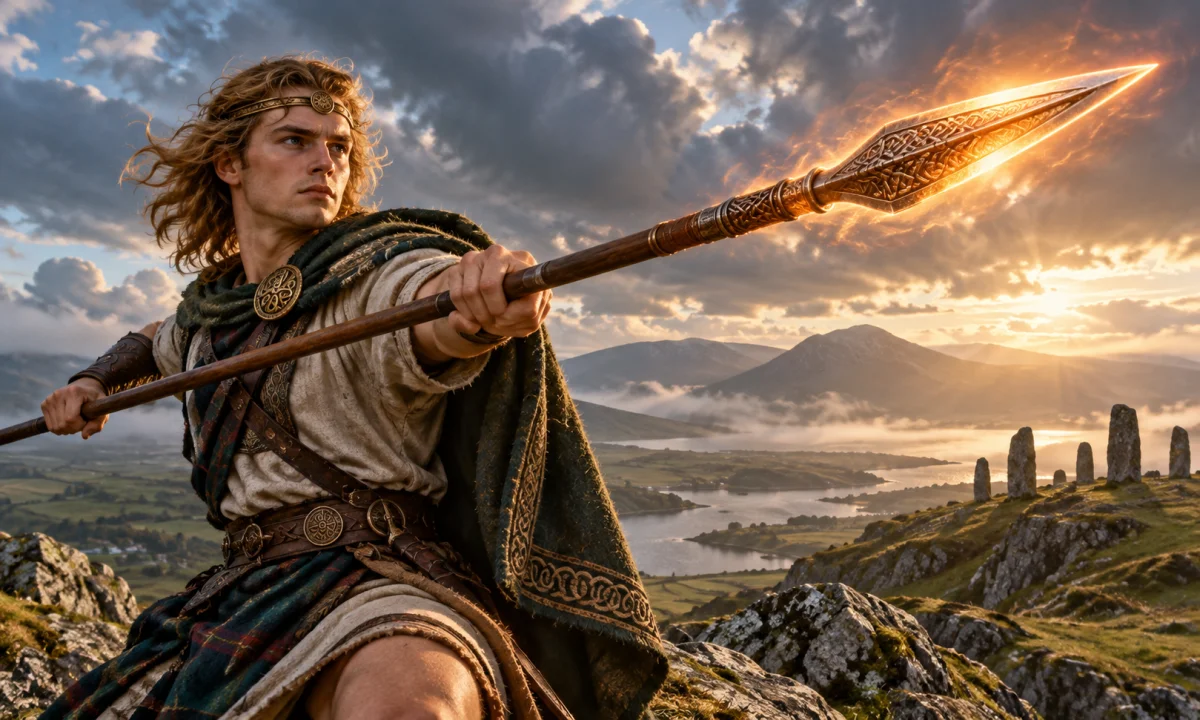
Mac Cécht is a name associated with more than one figure in medieval Irish literature. Most often, it identifies a member of the Tuatha Dé Danann, the supernatural people who appear in Ireland’s mythological history, and one of the last Tuatha Dé Danann kings before the coming of the Milesians. A second Mac Cécht appears as a heroic warrior in stories of the Ulster Cycle, especially The Destruction of Da Derga’s Hostel. The two figures belong to different narrative settings and should not automatically be treated as the same person.
Mac Cécht in Irish mythological tradition
The best-known Mac Cécht belongs to the tradition of the Tuatha Dé Danann. These beings are presented in medieval Irish literature as a race of powerful inhabitants of Ireland, associated with supernatural knowledge, magic, kingship and skilled craftsmanship. Their stories preserve elements of pre-Christian Irish religious tradition, but they survive through Christian-era manuscripts and have been shaped by medieval ideas about sacred history.
Mac Cécht is generally described as one of the three sons of Cermait Milbél, who was himself a son of the Dagda in genealogical traditions concerning the Tuatha Dé Danann. His brothers are Mac Cuill and Mac Gréine. The three brothers become especially important in the account of the Milesian invasion, when the Tuatha Dé Danann lose control of Ireland and withdraw from the visible world.
Genealogies and narrative details vary among texts. Irish mythological literature was copied and reshaped over many centuries, and medieval compilers did not always preserve a single consistent family tree. Mac Cécht’s place among the Tuatha Dé Danann is nevertheless relatively stable: he is connected with the ruling generation that stands between the ancient supernatural history of Ireland and the later human dynasties.
The name Mac Cécht
The name is written in several forms, including Mac Cécht, Mac Cecht and MacCecht. The element mac means “son of,” while the meaning and grammatical force of Cécht are less certain. It is often interpreted in connection with a plough or ploughman, leading to translations such as “son of the ploughman” or “son of the plough.” Such translations should be treated cautiously. A name that originally functioned as an epithet may not have been understood by later storytellers as a literal genealogical description.
The name should not be confused with Goibniu, the divine smith of the Tuatha Dé Danann, even though modern readers may encounter uncertain translations or explanations involving craft and skill. Nor should Mac Cécht be merged with unrelated characters who happen to bear the same name. Medieval Irish literature contains repeated personal names and inherited epithets, and identical names do not by themselves establish that the figures are one individual.
The three sons of Cermait
One important episode concerns the death of Cermait. In the Lebor Gabála Érenn and related traditions, Cermait is killed by Lugh after a quarrel involving one of Cermait’s wives. The three sons—Mac Cuill, Mac Cécht and Mac Gréine—avenge their father by killing Lugh. This episode belongs to the complicated cycle of rivalries among the Tuatha Dé Danann and shows that even the supernatural ruling class is marked by family loyalty, vengeance and succession disputes.
The sons later occupy the kingship of Ireland. Their names are closely linked with the three female figures Banba, Fódla and Ériu, who personify or represent Ireland in different versions of the national origin story. The marital pairings are usually given as follows:
- Mac Cuill with Banba
- Mac Cécht with Fódla
- Mac Gréine with Ériu
These relationships are significant because the three women are not merely presented as ordinary queens. Their names become poetic or symbolic names for Ireland. Ériu gives rise to the modern English name Ireland through the older form Éire, while Banba and Fódla remain alternative literary names for the island. In this context, Mac Cécht participates in a mythic system that connects kingship, marriage and the possession of the land.
The coming of the Milesians
The final major appearance of the Tuatha Dé Danann in the mythological history of Ireland is the arrival of the Milesians, the human ancestors of the later Irish people. According to the Lebor Gabála Érenn, the Milesians approach Ireland by sea and demand the right to land. The three Tuatha Dé Danann kings negotiate with them and ask for a period of time before the newcomers take possession of the island.
The negotiations do not prevent conflict. The Milesians eventually defeat the Tuatha Dé Danann, who retreat from ordinary human society. In later Irish tradition, the Tuatha Dé Danann become associated with the sídhe, the inhabitants of the magical mounds and the hidden supernatural realm. This transformation is one of the clearest examples of how older divine or semi-divine figures were reinterpreted within a Christian literary culture. They were not simply erased; instead, they were recast as an ancient supernatural race living beneath hills, within mounds or in an otherworldly dimension.
Mac Cécht is therefore part of a transitional generation. He belongs to the supernatural rulers of Ireland, yet his political role ends when the Milesians establish the human order. His story is less about an individual adventure than about the fate of the Tuatha Dé Danann as a whole: their kingship, their connection with the land and their withdrawal from visible history.
Mac Cécht as king and warrior
The mythological Mac Cécht is chiefly defined by his dynastic and political position. Unlike the Dagda, Lugh or Nuadu, he does not possess a large body of independent stories describing a distinctive weapon, magical object or specialised divine function. Medieval texts present him as a king and warrior, but they do not consistently assign him a single clear domain such as healing, smithcraft, sovereignty or war.
His importance comes from his place within the structure of the tradition. As the husband of Fódla and one of the three kings opposing the Milesians, he helps embody the older order of Ireland. The three brothers collectively represent a ruling triad, and their story explains how the supernatural people relinquish the island to the ancestors of historical humanity.
It is possible to interpret this triad in relation to recurring Irish ideas about the division of sovereignty among several rulers or the symbolic partition of the land. Such interpretations are scholarly readings rather than explicit statements made by the medieval texts. The sources do not provide a single theological explanation of Mac Cécht’s character or of the relationship between the three brothers and the three female names of Ireland.
A second Mac Cécht in the Ulster Cycle
A different Mac Cécht appears in the heroic literature of the Ulster Cycle. The most substantial account is found in Togail Bruidne Da Derga, usually translated as The Destruction of Da Derga’s Hostel. This story concerns Conaire Mór, a king of Ireland whose reign is governed by a series of supernatural prohibitions, or geasa. When those prohibitions are broken, Conaire travels toward the hostel of Da Derga, where he and his companions are attacked by raiders.
In this story, Mac Cécht is a formidable human champion associated with the royal world of Conaire. He is characterised by extraordinary physical strength, courage and loyalty. During the attack on the hostel, he fights to defend the king and the people trapped inside. The narrative emphasises the scale of the battle and the almost impossible demands placed on the champion.
One of the memorable episodes describes Mac Cécht carrying the wounded or exhausted king while seeking water. The details vary according to translation and textual version, but the essential image is consistent: the warrior combines strength with devotion, attempting to preserve the king even when the situation has become disastrous. When he returns, the hostel has been destroyed and Conaire is dead. Mac Cécht then takes vengeance on the attackers, pursuing and killing survivors according to the story’s grim heroic logic.
This figure belongs to the world of mortal kings, warrior retinues and heroic tragedy. He is not one of the three Tuatha Dé Danann sons of Cermait simply because he shares their name. Some names in early Irish literature may have circulated as titles or conventional heroic names, and the surviving texts do not offer enough evidence to prove that every occurrence of Mac Cécht represents a single continuous character.
Mac Cécht and the Ulster heroic tradition
The Ulster-cycle Mac Cécht is connected with the culture of the rath, the royal household and the warrior champion. His story belongs to a literary environment in which loyalty to a king is tested through impossible obligations. Heroic strength does not guarantee survival or victory; it often serves to make the final catastrophe more impressive.
His role in The Destruction of Da Derga’s Hostel also illustrates a major feature of Irish heroic narrative: a champion may be almost superhuman in battle but remain unable to overcome prophecy, ritual restriction or the collapse of the social order. Mac Cécht can confront raiders and protect a king, yet he cannot reverse the chain of events that leads to Conaire’s death.
Other medieval texts may mention a Mac Cécht in connection with the wider heroic tradition, but the name’s appearances are not always easy to harmonise. Modern summaries sometimes combine details from the Tuatha Dé Danann material, the Ulster Cycle and later genealogical writing. A careful account should identify the narrative setting before assigning relationships, ancestry or exploits.
Sources and the problem of the tradition
Information about Mac Cécht comes mainly from medieval Irish literary works rather than from a surviving pre-Christian mythological text. The Lebor Gabála Érenn presents a pseudo-historical sequence of peoples who occupied Ireland, including the Tuatha Dé Danann and the Milesians. It survives in manuscripts copied long after the period in which the underlying traditions may have circulated.
Mac Cécht’s family relationships are also connected with genealogical and mythological materials concerning the Dagda, Cermait and the three Tuatha Dé Danann kings. The Ulster-cycle Mac Cécht is preserved in a different group of narratives, including The Destruction of Da Derga’s Hostel. These works differ in style and purpose. The mythological texts organise divine or supernatural history, while the heroic tales focus on kings, champions, taboos, honour and catastrophe.
Because the evidence is literary and composite, it is not possible to reconstruct a single original pagan biography for Mac Cécht. The medieval texts may preserve older names and motifs, but they also reflect Christian chronology, learned genealogy and the conventions of medieval storytelling. Claims that Mac Cécht was a universally recognised ancient god of a specific function go beyond what the surviving evidence securely demonstrates.
Symbolism and cultural significance
In the Tuatha Dé Danann material, Mac Cécht represents the continuity of an older ruling order. His marriage to Fódla links him to one of the poetic names of Ireland, while his kingship places him among the beings who claim authority over the island before the arrival of the Milesians. His role is consequently tied to land, sovereignty and succession.
In the Ulster Cycle, the other Mac Cécht represents the ideal of the loyal champion. His defining quality is not a distinctive magical object but his willingness to endure danger on behalf of the king. The contrast between the two figures is useful: one is a supernatural king in a mythic account of Ireland’s origins, while the other is a heroic warrior in a tragic tale of royal collapse.
The name’s repeated appearance may reflect the popularity of inherited heroic names, poetic convention or the later blending of traditions by scribes and storytellers. It is also possible that some readers in the medieval period perceived connections that cannot now be recovered. The surviving evidence supports caution rather than a confident claim that all references describe one ancient deity.
Mac Cécht in modern interpretation
Mac Cécht is less prominent in modern popular culture than figures such as Lugh, the Morrígan, the Dagda or Cú Chulainn. When he appears in modern retellings, encyclopaedic lists or role-playing settings, he may be presented simply as a Tuatha Dé Danann warrior or as a demigod with a fixed set of powers. Such portrayals are modern simplifications unless they clearly distinguish creative invention from medieval tradition.
Modern discussions also sometimes treat the mythological king and the Ulster champion as one character with an unusually long career. That approach can be useful in fiction, but it is not established by the texts. In traditional material, Mac Cécht is best understood as a name shared by at least two important figures: a Tuatha Dé Danann king associated with Fódla and the Milesian conquest, and a heroic champion whose loyalty is displayed during the destruction of Da Derga’s Hostel.