WORLD
WORLD
Lugh
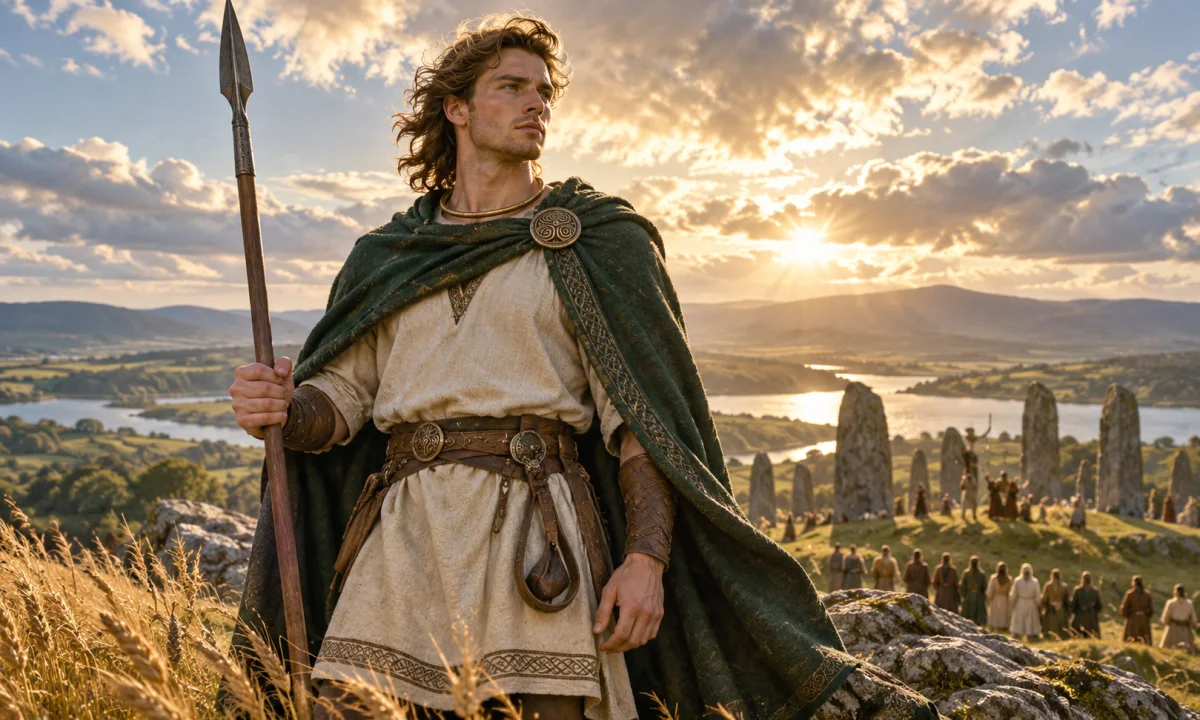
Lugh is one of the most prominent figures in Irish mythology. A member of the Tuatha Dé Danann, the supernatural people who become associated with Ireland’s pre-Christian divine world, he is celebrated as a warrior, ruler, craftsman and master of many arts. His best-known achievements include leading the Tuatha Dé Danann against the Fomorians and killing the monstrous Balor during the Second Battle of Mag Tuired.
Origins in Irish tradition
The surviving stories of Lugh come from medieval Irish manuscripts written by Christian scribes. These texts preserve older mythological material, but they do not provide a direct record of pre-Christian worship. Their descriptions of the Tuatha Dé Danann combine heroic narrative, genealogy, euhemerising history and supernatural tradition. As a result, Lugh is both a mythological personage and part of a literary tradition shaped over many centuries.
His central appearances occur in the Lebor Gabála Érenn, or Book of the Taking of Ireland, and in Cath Maige Tuired, the account of the Battles of Mag Tuired. The first of these presents a legendary history of Ireland through successive invasions. The second describes the conflicts between the Tuatha Dé Danann and the Fomorians, including Lugh’s rise to leadership.
Lugh belongs to the Tuatha Dé Danann, a group that includes Nuada, the Dagda, Brigid, Dian Cécht, Goibniu and other powerful beings. In the narrative tradition, they are not simply one uniform race of gods. They are portrayed as a people possessing extraordinary knowledge, magical skills and political authority. Later Irish tradition places them in the sídhe, the supernatural mounds or otherworldly places that become associated with the aos sí, commonly called fairies in English.
Name and epithets
The name appears in several forms, including Lugh, Lug and Lú. In modern Irish, Lugh is generally pronounced approximately like “loo.” His most famous epithet is Lámfada, usually translated as “Long-Hand” or “Long-Arm.” The epithet may refer to his reach, his skill with weapons or his extraordinary power, although the surviving stories do not offer a single definitive explanation.
Another important title is Samildánach, often translated as “skilled in many arts” or “equally accomplished in many crafts.” This title reflects Lugh’s unusual versatility. He is not defined by one narrow function. He can act as a warrior, strategist, ruler, poet, magician, physician, smith and musician. The emphasis on mastery is central to his character.
Lugh is sometimes described in modern writing as an Irish sun god. That classification is not securely established by the medieval Irish texts. His brilliance, skill and association with seasonal celebration have encouraged solar interpretations, and his name may be related to the Gaulish god Lugus. However, the exact relationship between Lugh and Lugus is debated, and the evidence does not justify treating Lugh simply as a sun deity. It is more accurate to describe him as a many-skilled divine hero and king whose symbolism can include light, mastery and order.
Family and uncertain traditions
In the principal account of the Second Battle of Mag Tuired, Lugh is the son of Cian, a member of the Tuatha Dé Danann, and Ethniu, daughter of the Fomorian ruler Balor. This makes Lugh’s ancestry politically significant: he is connected to both the Tuatha Dé Danann and their Fomorian enemies.
Some elements of his family history vary between texts and later retellings. His mother’s name may appear in forms such as Ethne or Ethliu, and the genealogies surrounding both the Tuatha Dé Danann and the Fomorians are not always consistent. Lugh’s fosterage is also treated differently in different traditions. Tailtiu, a woman associated with the Fir Bolg, is often named as his foster mother, while other accounts or later interpretations give him connections with figures such as Manannán mac Lir.
In the Ulster Cycle, Lugh is presented as the divine father of Cú Chulainn. The relationship is especially important in the Táin Bó Cúailnge, where Lugh appears to the wounded hero and helps him. Cú Chulainn’s parentage is presented through a complex mixture of divine conception, human family relationships and social paternity. Lugh should therefore not be treated as simply another name for Cú Chulainn or as an ordinary human ancestor.
The arrival at Tara
One of Lugh’s most memorable episodes occurs when he comes to the court of Nuada, king of the Tuatha Dé Danann, at Tara. The gatekeeper asks him what skill he possesses, because entry to the royal household is restricted according to a person’s occupation and usefulness.
Lugh first identifies himself as a smith, but the court already has a smith. He then claims to be a champion, a harper, a warrior, a poet, a historian, a sorcerer and a craftsman. Each time, the gatekeeper replies that the Tuatha Dé Danann already have someone who performs that role. Lugh then asks whether they have anyone who can perform all these skills. Since they do not, he is admitted.
In some versions, Lugh proves his abilities through contests. He plays the harp, defeats the champion, wins a board game and demonstrates his command of weapons. This scene establishes the meaning of Samildánach: Lugh’s greatness lies not merely in physical strength but in his complete cultural competence. He possesses the skills required to govern, fight, create, entertain and understand.
The episode also has a political function. Nuada has lost a hand in the First Battle of Mag Tuired and is temporarily unable to rule, because a king of the Tuatha Dé Danann is expected to be physically whole. Lugh’s arrival provides the group with a new leader at a moment of crisis. He represents a younger and more flexible form of authority, while Nuada remains an important king and warrior.
The Second Battle of Mag Tuired
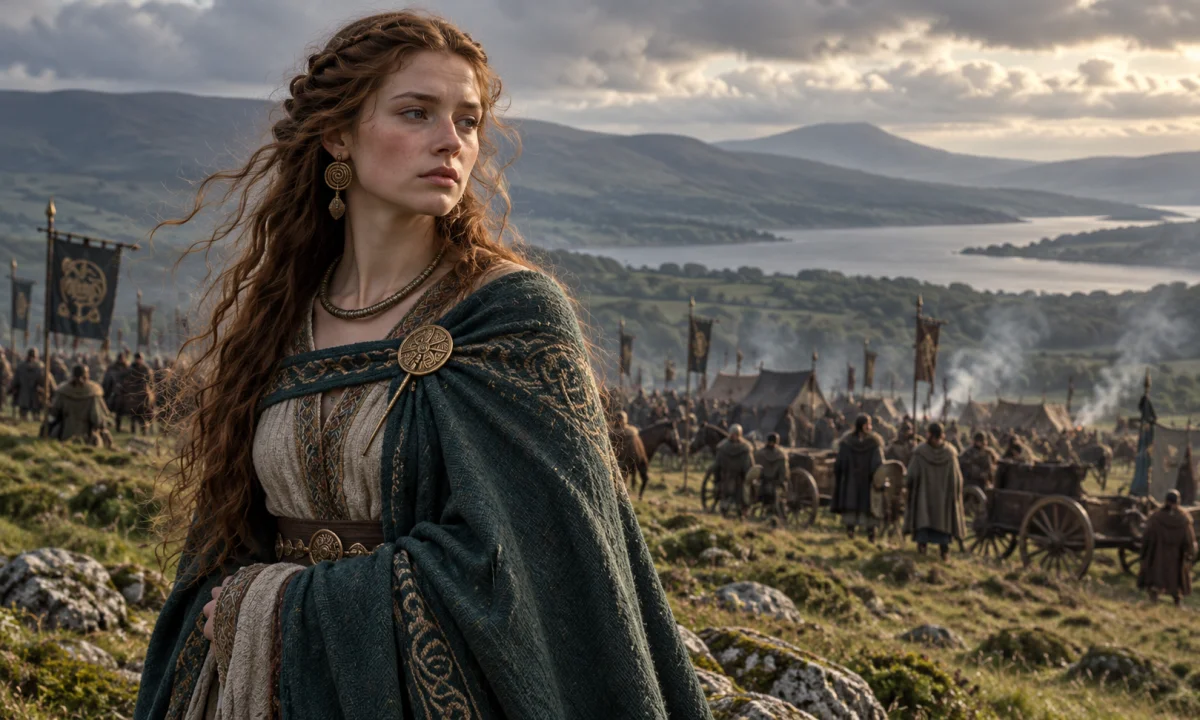
The Second Battle of Mag Tuired is the main setting for Lugh’s heroic career. The Tuatha Dé Danann are under pressure from the Fomorians, who are depicted as powerful and often oppressive supernatural beings. The Fomorian king Bres has ruled the Tuatha Dé Danann for a time, but his failure to honour the obligations of kingship helps create the conditions for rebellion and war.
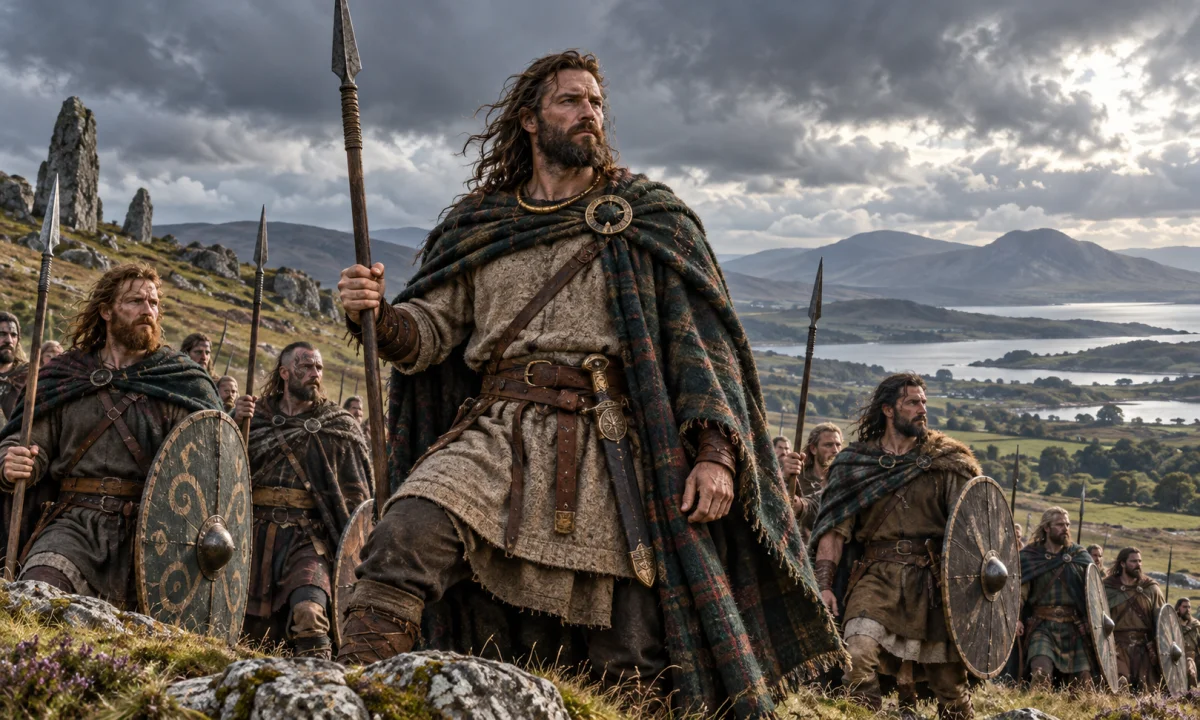
Lugh becomes the strategic leader of the Tuatha Dé Danann. Rather than rushing immediately into battle, he organises the resources of his people. He assigns tasks to skilled figures such as Goibniu the smith, Credne the metalworker and Luchta the carpenter. Weapons are repaired and produced, provisions are gathered, and the army is prepared for the final conflict.
His leadership is practical as well as heroic. Lugh understands that victory depends on the coordinated efforts of specialists. The myth therefore links his many talents with the wider organisation of society. A successful king is not merely the strongest fighter; he knows how to bring different forms of knowledge together.
During the battle, Lugh is targeted by the Fomorian forces and is kept away from the main fighting for a period. He escapes or returns through a combination of cunning and supernatural ability, depending on the episode being considered. The narrative presents him as a figure whose intelligence is as important as his weaponry.
The death of Balor
Lugh’s most famous deed is the killing of Balor, his maternal grandfather. Balor is a Fomorian ruler whose destructive eye is usually kept closed because its gaze can kill or devastate those who face it. The story connects Balor’s power with a prophecy that a grandson would one day cause his death.
During the battle, Balor’s eye is opened and directed towards the Tuatha Dé Danann. In the best-known version, Lugh uses a sling to strike the eye and force it back toward the Fomorian army. Balor is then killed, and his power turns against his own side. This episode fulfils the prophecy while also showing Lugh’s characteristic combination of courage, precision and tactical intelligence.
The story creates a striking contrast between the two figures. Balor possesses a single overwhelming and destructive power, while Lugh embodies a wide range of controlled abilities. Balor’s eye acts blindly and violently; Lugh’s weapon is guided by deliberate skill. Their conflict can therefore be read as more than a simple contest between grandfather and grandson: it opposes destructive domination to disciplined mastery.
Weapons, skills and symbolic qualities
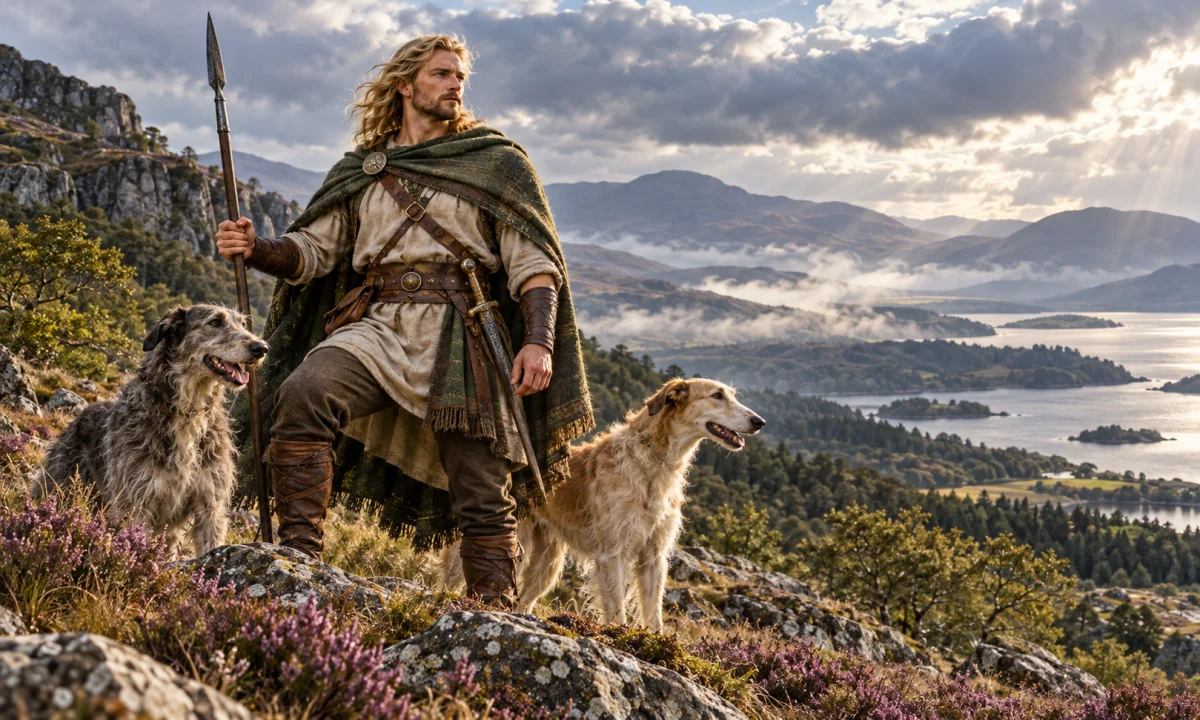
Lugh is associated with a spear in several traditions. Later descriptions sometimes call it an invincible or fiery weapon, although the details vary and should not be treated as a single fixed canon. His sling is especially important in the story of Balor. Unlike some mythological heroes who are identified with one famous sword or club, Lugh’s defining attribute is his ability to use whatever skill the situation requires.
His talents include warfare, poetry, music, magic, craftsmanship, history and games of strategy. These skills reflect valued areas of early Irish elite culture. A poet preserved memory and law; a smith produced essential weapons; a warrior defended the community; a ruler maintained order; and a skilled player demonstrated intelligence and judgement. Lugh’s identity gathers these specialised roles into one figure.
His epithet “Long-Hand” may also suggest effectiveness at a distance, authority over a wide area or exceptional reach in battle. The interpretation remains uncertain. It is safer to treat the epithet as a mark of extraordinary capability rather than to assign it one precise physical meaning.
Lugh and Lughnasadh
Lugh’s name is traditionally connected with Lughnasadh, the Gaelic festival held around the beginning of August. The festival marked the seasonal transition from summer toward harvest and was associated with assemblies, games, trade, contests and communal celebrations. In Ireland, Lughnasadh was observed at several locations, including places linked by tradition with royal or mythological gatherings.
Medieval explanations often connect the festival with Lugh’s foster mother, Tailtiu. According to the Lebor Gabála Érenn, Tailtiu cleared a great plain in Ireland and died from exhaustion after completing the work. Lugh established funeral games and an annual assembly in her honour. The festival’s name is therefore sometimes interpreted as “the assembly of Lugh,” though the precise linguistic and historical development is more complicated than a simple translation suggests.
The connection between Lugh and Lughnasadh does not prove that the festival was originally a celebration of a god called Lugh in the exact form described by medieval literature. The festival may preserve older seasonal practices that were later explained through the story of Lugh and Tailtiu. Nor should Lughnasadh be reduced to a harvest festival alone: athletic competitions, legal gatherings, matchmaking, commerce and political assembly were also part of its traditional significance.
Interpretation and religious context
Lugh’s mythological role is often understood through the idea of sovereignty expressed through skill. He is a legitimate leader because he can protect the community, coordinate its specialists and defeat its enemies. His mixed ancestry is also meaningful. Through Cian and the Tuatha Dé Danann, he belongs to the people he leads; through Ethniu and Balor, he is linked to the opposing Fomorian world. His victory does not erase that connection but makes it part of his identity.
Scholars have compared Lugh with the Gaulish Lugus, whose name appears in ancient inscriptions and place names such as Lugdunum, the source of the names Lyon and Leiden. The comparison is important because it suggests that related Celtic traditions may once have known a widely distributed deity or divine figure. Nevertheless, the evidence does not allow every feature of Lugus to be transferred directly to the Irish Lugh. Celtic religious traditions varied across regions, and the surviving Irish narratives were written much later than the Roman-period inscriptions associated with Lugus.
Interpretations connecting Lugh with the sun, kingship, craft, seasonal change or a divine “bright one” remain useful as scholarly hypotheses or modern symbolic readings, but they are not all equally supported. The medieval stories themselves focus most clearly on his versatility, leadership and role in the defeat of Balor.
Distinguishing Lugh from similar figures
Lugh should not be confused with Lugus, the Gaulish figure known from inscriptions. The two names may be historically related, but the surviving evidence comes from different cultures and periods. Nor is Lugh identical to Nuada, the earlier king of the Tuatha Dé Danann, or to the Dagda, another major member of that group. Lugh succeeds in a political and military role, but he has his own ancestry, titles and stories.
He is also distinct from Manannán mac Lir, the sea-associated otherworldly figure, even though some traditions connect the two through fosterage or alliance. Finally, Lugh is not simply a Celtic equivalent of a classical sun god or a universal “god of all skills.” Such comparisons can illuminate certain themes, but they should not replace the specific evidence of Irish tradition.
Later reception
Lugh remains important in contemporary discussions of Irish mythology, Celtic religion and the seasonal festival of Lughnasadh. Modern Pagan and Celtic reconstructionist communities may honour him as a figure of skill, sovereignty, craftsmanship or seasonal transition. These practices are modern religious interpretations rather than unchanged survivals of pre-Christian ritual, and they differ between communities.
He also appears in novels, games, comics and other popular media, where his spear, long reach, mixed ancestry or mastery of many arts may be adapted in imaginative ways. Such portrayals can introduce audiences to his name, but the traditional Lugh is best understood through the Irish stories in which his defining qualities are intelligence, versatility, political responsibility and the ability to unite many skills against a common threat.