WORLD
WORLD
Kwikwilyaqa
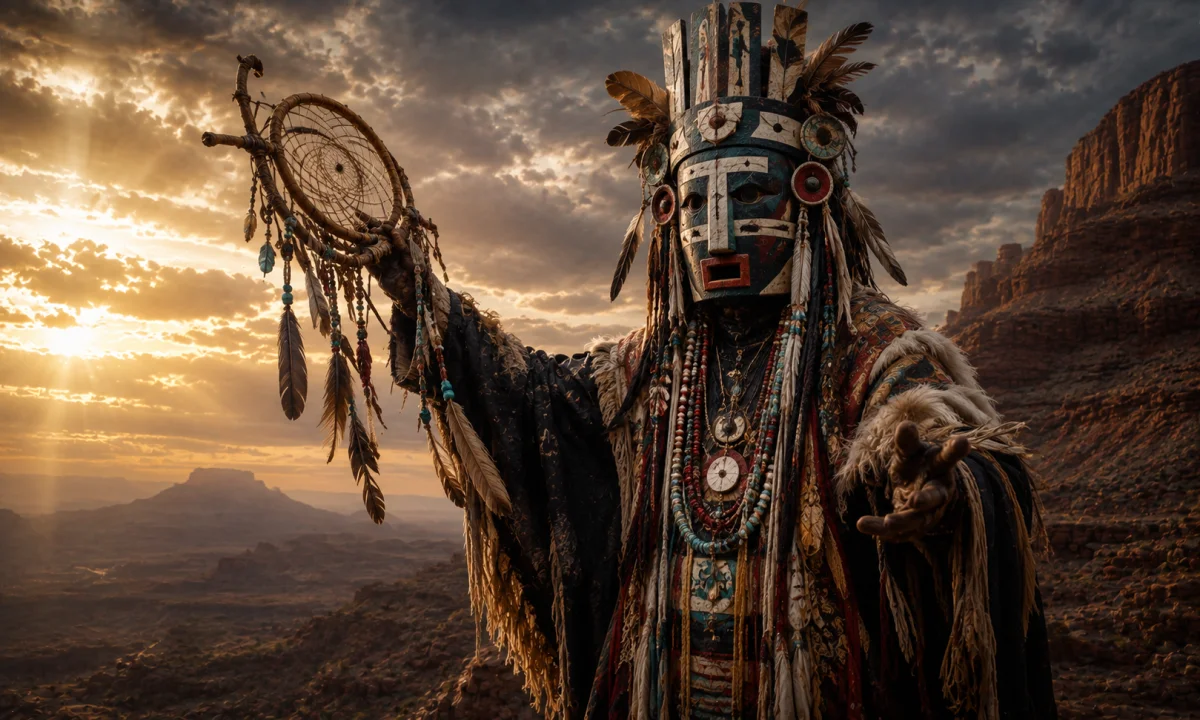
Kwikwilyaqa is a Hopi katsina associated in many English-language descriptions with the butterfly. The name is often translated or explained as “Butterfly Maiden,” although translations of Hopi religious names are not always exact, and the figure’s appearance and ceremonial role can vary between Hopi communities and sources. Kwikwilyaqa should be understood within the living Hopi katsina tradition rather than as a fixed character from a single standardized mythology.
Hopi religious and cultural setting
The Hopi are an Indigenous Pueblo people whose communities are located chiefly in northeastern Arizona. Hopi religious life includes complex ceremonial cycles connected with rainfall, agriculture, community welfare, healing, moral order and relations between human beings and the wider world. These ceremonies are traditionally organized through village religious societies and are not simply performances for entertainment.
In Hopi English, the word kachina is widely used, but katsina is closer to the Hopi form, and katsinam is commonly used as a plural. A katsina may be understood as a spiritual being, a ceremonial presence, or a particular kind of sacred role embodied by a dancer. Katsinam are associated with natural forces, animals, plants, ancestors, social relationships and elements of the Hopi cosmos.
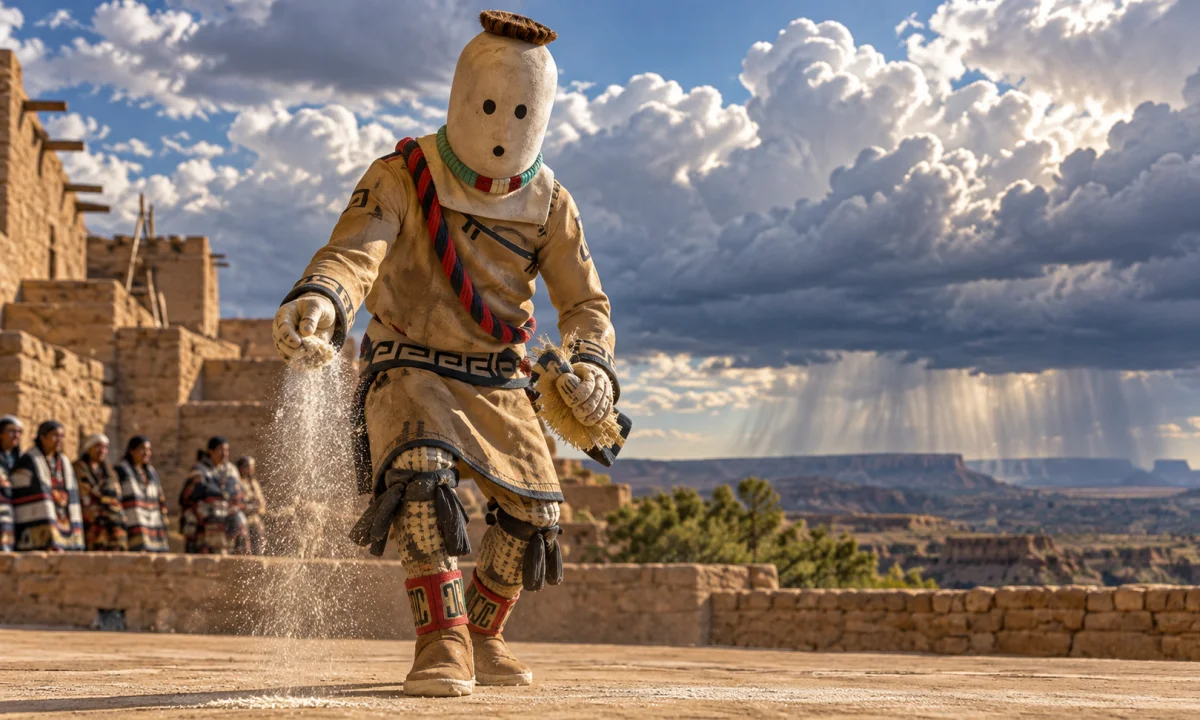
During appropriate ceremonies, trained dancers wear masks and clothing that identify them with particular katsinam. From a traditional religious perspective, the masked dancer is not merely pretending to be a supernatural character. The ceremony creates a relationship between the human community and the sacred being represented. The meaning of a particular appearance therefore depends on the ritual setting, the people involved and the village tradition.
Carved wooden figures are also commonly called kachina dolls in English. The term can be misleading if it suggests a toy or a simple image of a mythological character. Traditionally, such carvings are representations or teaching objects associated with katsinam. They help children learn to recognize the beings and understand aspects of Hopi ceremonial life. They are not themselves identical to the spiritual beings encountered in ceremony.
The name and identity of Kwikwilyaqa
Kwikwilyaqa is generally identified as a female or maiden katsina connected with butterflies. The English designation Butterfly Maiden is useful as a broad description, but it should not be treated as a complete or universally authoritative translation of the Hopi name. Hopi words can contain meanings and associations that are not fully conveyed by a short English gloss, and spellings may differ when Hopi names are written for English-speaking audiences.
Descriptions of Kwikwilyaqa are not entirely uniform. Some present her primarily as a butterfly katsina; others emphasize her feminine appearance, association with flowers and seasonal renewal, or connection with dances involving young people. These differences do not necessarily indicate separate beings. They may reflect variations in village practice, the purpose of a particular representation, or the limited and sometimes simplified way in which ceremonial knowledge has been recorded outside Hopi communities.
Kwikwilyaqa is not best classified as a supreme creator, a goddess in the classical Mediterranean sense, or a single heroine with a universally known narrative. She belongs to the broader community of katsinam whose presence supports the balance between people, nature and the spiritual world. Her significance is therefore often expressed through ceremony, appearance and associations rather than through a long written cycle of myths.
Butterflies and symbolic associations
Butterflies can suggest transformation because of their movement from caterpillar to winged adult. In a Hopi context, however, it is important not to impose a generic modern symbolism on the figure. The significance of Kwikwilyaqa comes from Hopi ceremonial understandings, not simply from the widespread idea that butterflies symbolize change.
Descriptions of the katsina commonly associate her with the beauty and delicacy of butterflies, as well as with flowers, vegetation and the renewal of life. These associations fit the wider importance of seasonal change in Hopi religious thought. Agriculture depends on rain, healthy plants and the continuation of life through generations. A female katsina linked with butterflies may consequently be understood in relation to vitality, growth and the social future of the community.
Some accounts also connect Kwikwilyaqa with grace, adornment and the participation of young women in ceremonial life. Such interpretations should remain cautious. A symbolic reading of a figure does not replace the specific knowledge held by Hopi religious practitioners, and not every interpretation found in museum catalogues or commercial descriptions reflects the same ceremonial tradition.
Appearance and ceremonial representation
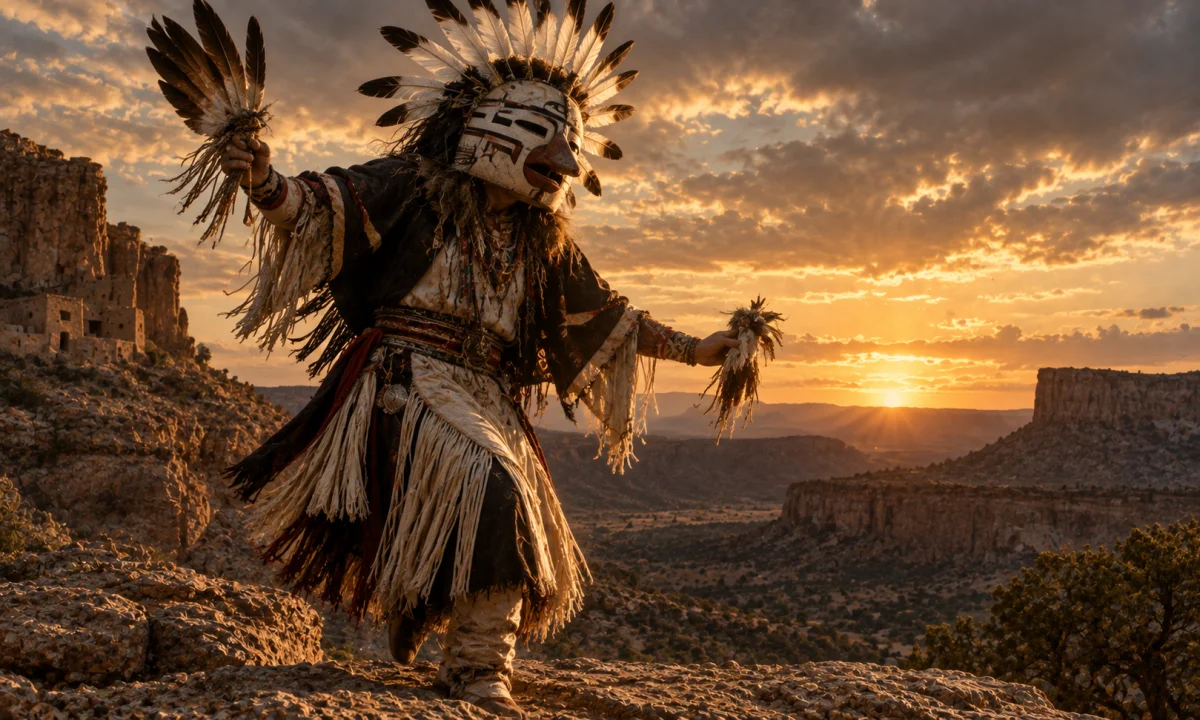
Representations of Kwikwilyaqa often emphasize a feminine figure and butterfly imagery. A carved figure may show a woman with a stylized butterfly form, painted designs or an elaborate headpiece suggesting wings. Dancers representing a butterfly katsina may use clothing, face paint or other elements that communicate the same association. The details are not necessarily identical from one artist, dancer or community to another.
Katsina masks are not portraits in the modern sense. Their colors, lines, projections and other features can identify a ceremonial being, but their meaning is part of a larger visual and ritual language. A commercially produced carving may also simplify or reinterpret these details for collectors. Consequently, an object sold under the name Kwikwilyaqa should not automatically be treated as a definitive description of how the katsina appears in every Hopi setting.
The presence of a mask also carries religious significance. Masks connected with katsina ceremonies are not merely costumes, and their treatment after a ceremony may follow rules that are not visible to outsiders. Public photographs, tourist displays and commercial art can show only a small portion of the knowledge surrounding the being.
Dance and seasonal context
Kwikwilyaqa is frequently discussed in connection with the Hopi Butterfly Dance or with ceremonial settings in which butterfly imagery is important. The Butterfly Dance is a well-known Hopi social and ceremonial dance, but descriptions of its meaning, participants and relationship to particular katsinam are not identical in every account. It is safer to speak of an association than to claim that Kwikwilyaqa has one fixed role in a single performance throughout Hopi country.
Hopi dances can combine religious, social and educational dimensions. They may bring communities together, mark stages in the ceremonial year, celebrate young people or express hopes for health, fertility and prosperity. A butterfly-associated katsina can therefore be relevant not only as an embodiment of an insect but also as part of a wider pattern of renewal and communal continuity.
Some public accounts describe female katsinam as appearing alongside male counterparts or other beings during dances. That does not mean that every katsina has a permanent mythological spouse, family or set of relationships. Hopi ceremonial groupings can depend on the event, the religious society and local practice. Claims about Kwikwilyaqa’s relationships should therefore be treated carefully unless they are tied to a clearly identified Hopi tradition.
Stories and the limits of written mythology
There is no single, universally accepted written story of Kwikwilyaqa comparable to a continuous epic. Much of Hopi religious knowledge has been transmitted orally and ceremonially, and important teachings may be restricted according to community, religious office, gender, age or ritual responsibility. Early outside observers often recorded selected stories or descriptions, but their accounts cannot be assumed to contain the whole tradition.
This lack of a long published narrative does not make Kwikwilyaqa an insignificant figure. In oral religious traditions, a being’s identity may be carried by its name, visual form, dance, ritual relationships and place within a ceremonial calendar rather than by a sequence of literary adventures. A catalogue entry or a modern list of “Hopi gods” can give the false impression that every katsina is a character with a biography, fixed powers and a stable family tree.
The Hopi emergence narratives and accounts of the ordering of the world include important sacred beings and events, but Kwikwilyaqa should not automatically be inserted into every general summary of Hopi creation. Her identification as a butterfly katsina belongs to a particular part of the katsina tradition, and evidence for a prominent role in the oldest emergence narratives is not established simply by her appearance in modern lists.
Cultural significance
Kwikwilyaqa can be approached as a figure of living relationship rather than as an isolated supernatural character. Butterflies, plants, rain, people and ceremonial life are interconnected in a landscape where agricultural survival depends on cooperation between human action and forces beyond human control. The katsina’s importance lies partly in helping maintain that relationship through the ceremonial system.
Her feminine form may also be understood within the broader presence of female katsinam in Hopi religious life. Female katsinam can express aspects of nourishment, fertility, beauty, maturity, social identity and the continuation of the community. These categories should not be treated as rigid universal meanings: Hopi ideas about gender and ceremonial responsibility are more specific than the generalized “goddess” language often used in popular mythology.
The figure also illustrates why the word “mythology” can be inadequate when used without explanation. For many readers, mythology means a collection of old stories about beings who no longer receive worship. Hopi katsina traditions are connected with living communities, ceremonial obligations and continuing religious practice. Kwikwilyaqa is consequently better described as a Hopi katsina within a living spiritual tradition than as a character belonging only to the distant past.
Differences from similar figures
Kwikwilyaqa should not be confused with every female or nature-associated katsina. Hopi ceremonial traditions include many female figures, and several may be linked in outside descriptions with water, flowers, agriculture, youth or fertility. A general resemblance in a carving or costume does not prove that two names refer to the same being.
She is also distinct from Butterfly Maiden figures in other Indigenous traditions of North America. “Butterfly Maiden” is an English descriptive label and can be applied by non-Hopi writers to unrelated beings. Similar names do not establish a shared origin, and the Hopi Kwikwilyaqa belongs specifically to Hopi ceremonial culture.
Kwikwilyaqa should likewise be distinguished from modern fantasy characters, insect fairies and generalized “butterfly goddesses.” Those figures may borrow visual motifs from many cultures without preserving the religious meaning of a Hopi katsina. A stylized butterfly woman in a game, fantasy illustration or commercial product is not evidence about traditional Hopi belief.
Carvings, museums and modern reception
Kwikwilyaqa carvings are encountered in museums, galleries and the market for Pueblo art. Their artistic value can be considerable, but the history of collecting has often separated ceremonial objects and images from the communities that gave them meaning. Labels may use simplified spellings, broad translations or statements that combine information from different Hopi sources.
Contemporary Hopi artists and cultural authorities may have their own views about how katsina figures should be represented, sold and discussed. Not every carving is intended to reproduce a ceremonial mask exactly, and not every public description reflects knowledge that would be appropriate to disclose. Respectful interpretation therefore requires acknowledging both the skill of individual artists and the limits of outside access to Hopi religious life.
Kwikwilyaqa has no major, widely established role in mainstream popular culture comparable to figures such as the Greek gods or famous legendary heroes. When the name appears online, it is more often in discussions of Hopi katsina carvings, Native American art or lists of mythological beings. Such lists frequently remove the figure from its ceremonial setting. The most accurate understanding keeps the butterfly association, the variation between sources and the living Hopi context together rather than treating Kwikwilyaqa as a generic butterfly deity.