WORLD
WORLD
Kunitsu-kami
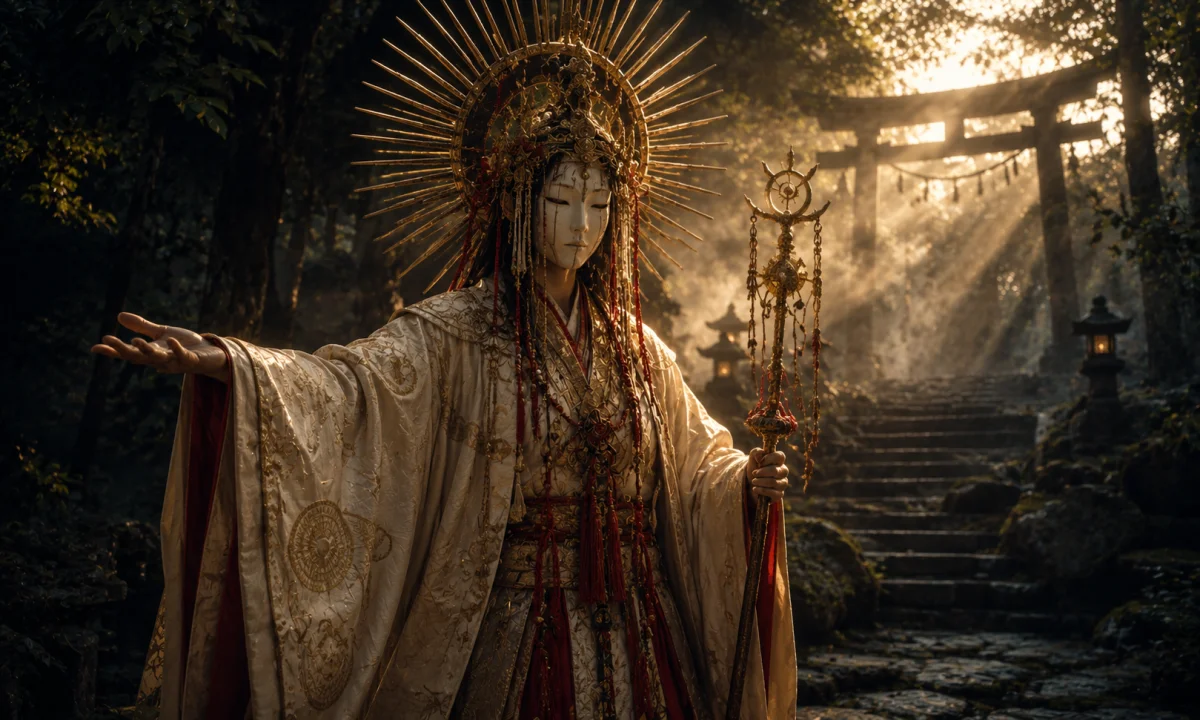
Kunitsu-kami (国津神, also written 国つ神 or 国神 in some contexts) is a collective term in Japanese mythology for the “gods of the land” or “earthly deities.” Rather than naming one particular supernatural being, it describes a broad class of kami associated with the Japanese islands, local territories and the earthly realm. In the mythic narratives of the Kojiki and Nihon Shoki, kunitsu-kami are often contrasted with amatsu-kami, the “heavenly gods” who descend from the high celestial realm and establish a new divine order.
The distinction is especially important in myths concerning the transfer of authority over Japan from the land-based gods to the descendants of the heavenly deities. These stories are not simple accounts of “nature gods” opposing “sky gods.” They also express ideas about political legitimacy, regional traditions, ancestry and the relationship between local communities and the imperial line. The category is therefore both religious and ideological, and its meaning varies according to the text and historical context.
Meaning of the name
The word kunitsu-kami combines kuni, meaning “land,” “country” or “realm,” with kami, the Japanese term for a sacred or spiritually powerful being. The name may be translated as “gods of the land,” “earthly gods” or “terrestrial deities.” None of these translations captures every use of the Japanese expression, because kami does not correspond exactly to the English word “god.” Kami can include deities, ancestral powers, sacred forces of nature and beings connected with particular places or communities.
The contrasting term amatsu-kami means “gods of heaven” or “heavenly deities.” In the classical myths, the amatsu-kami belong to Takamagahara, the High Plain of Heaven. The kunitsu-kami, by contrast, are linked with the terrestrial realm, often called Ashihara no Nakatsukuni, the “Central Land of Reed Plains.” The opposition is not always absolute. Some figures change status or occupy more than one sphere, and the surviving myths use the terms within particular narrative and political frameworks rather than as a complete theological system.
Sources and cultural setting
The principal written sources for the mythology of the kunitsu-kami are the Kojiki, completed in 712, and the Nihon Shoki, completed in 720. Both texts were compiled at the imperial court during the early eighth century, a period when the Yamato state was consolidating its authority over different regions of the Japanese archipelago. Their myths preserve older oral traditions, regional narratives and genealogical claims, but they were also arranged to support an account of imperial descent and rule.
The Kojiki presents a particularly developed sequence in which the heavenly deities send envoys to obtain control of the terrestrial land. The Nihon Shoki includes related episodes, sometimes with different names, details or emphases. Neither work should be treated as a neutral record of a single, uniform prehistoric religion. They are courtly compilations that combine mythology, genealogy and political history, and their treatment of local deities reflects the concerns of the period in which they were written.
Many local traditions were never written down in these chronicles, or survive only in later shrine records, ritual traditions and regional legends. As a result, “kunitsu-kami” is not a complete catalogue of Japan’s indigenous religious beings. It is a category imposed or organised within particular textual and ritual contexts. A local deity may be described in modern scholarship as a kunitsu-kami because of its connection with land-based or regional traditions, even when ancient sources do not consistently classify it that way.
Who are the kunitsu-kami?
Kunitsu-kami are best understood as a class of terrestrial or local kami, not as a single race with a fixed appearance or shared personality. They can be associated with mountains, fields, rivers, settlements, territorial boundaries, clans and ancestral lines. Some are rulers of particular regions; others are powerful beings connected with fertility, agriculture or the protection of a place.
The most prominent figure associated with this group is Ōkuninushi, whose name means “Great Master of the Land” or “Great Landholder.” He is a major deity of Izumo mythology and is portrayed as a ruler, culture-bringer, healer and organiser of the terrestrial realm. Ōkuninushi is also known by other names and has a complex genealogy. His relationship to the category is strong, but he should not be treated as identical with “the kunitsu-kami” as a whole.
Other figures connected with the earthly side of the myths include Ōkuninushi’s son or heir Kotoshironushi, the powerful local deity Takeminakata in traditions associated with the transfer of the land, and various regional deities who appear as rulers or inhabitants of the terrestrial world. Some genealogies also connect earthly deities with Susanoo, although Susanoo’s identity is unusually varied. He can appear as a storm-associated deity, a disorderly figure from heaven, a ruler of the underworld or a progenitor of important Izumo lineages. His classification cannot be reduced to a simple “earth god” label.
Appearance and powers
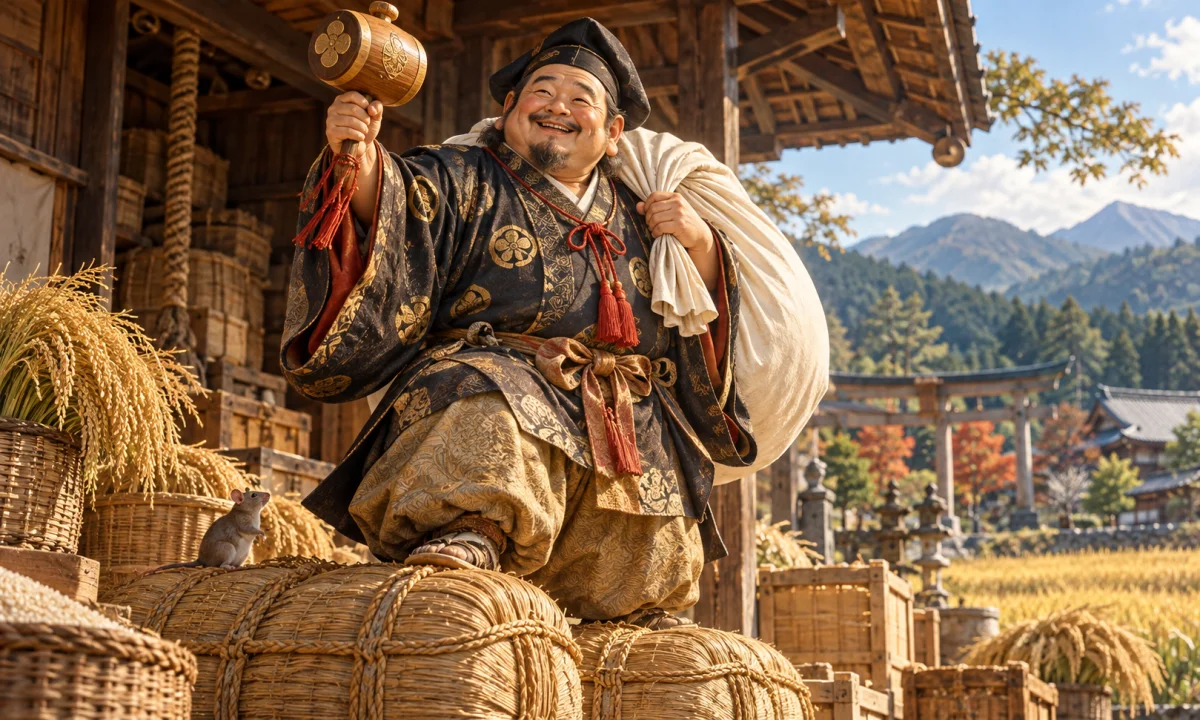
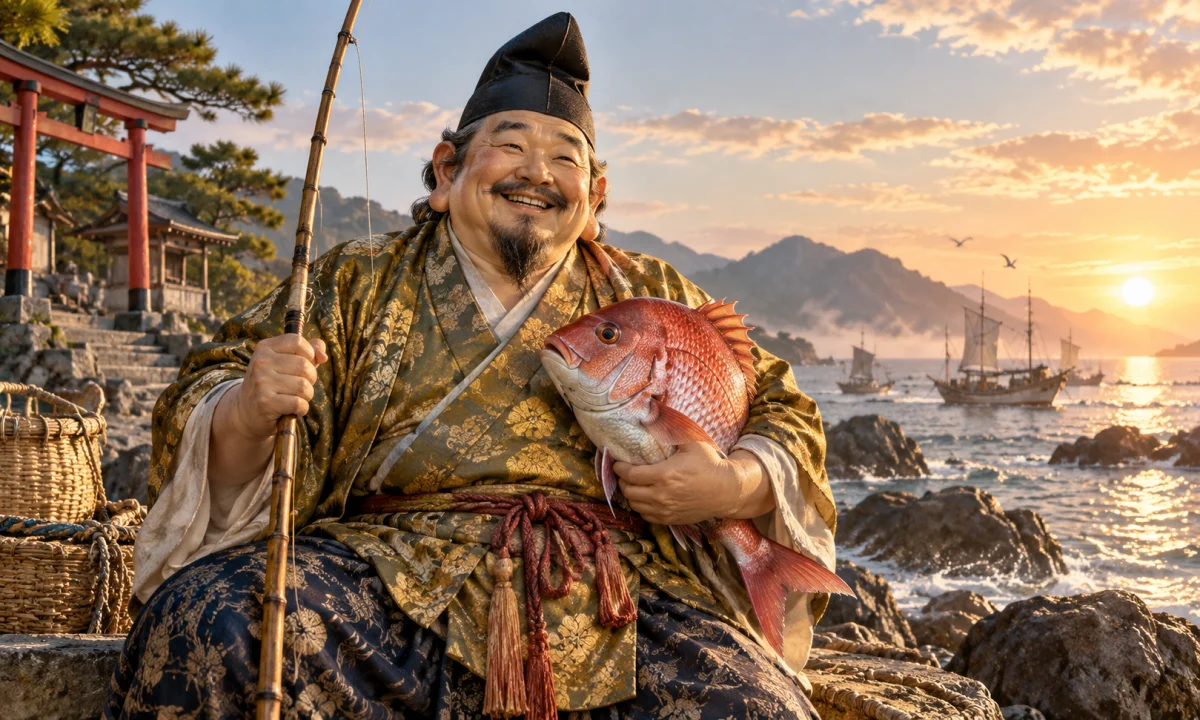
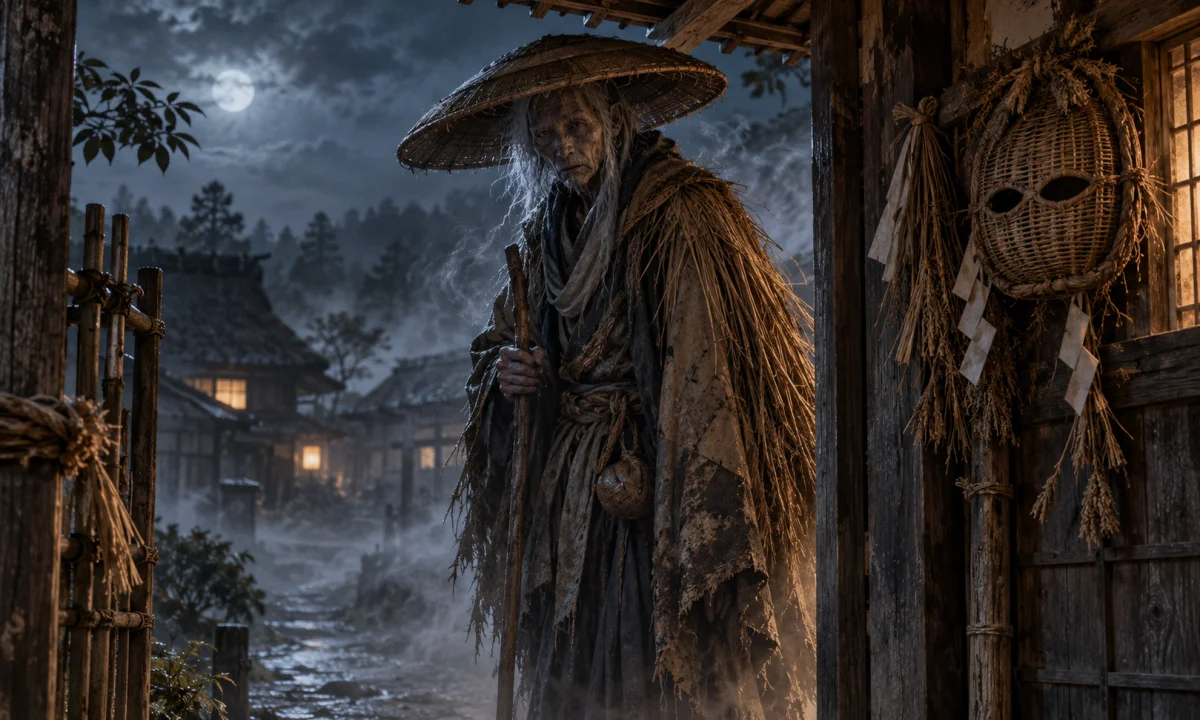
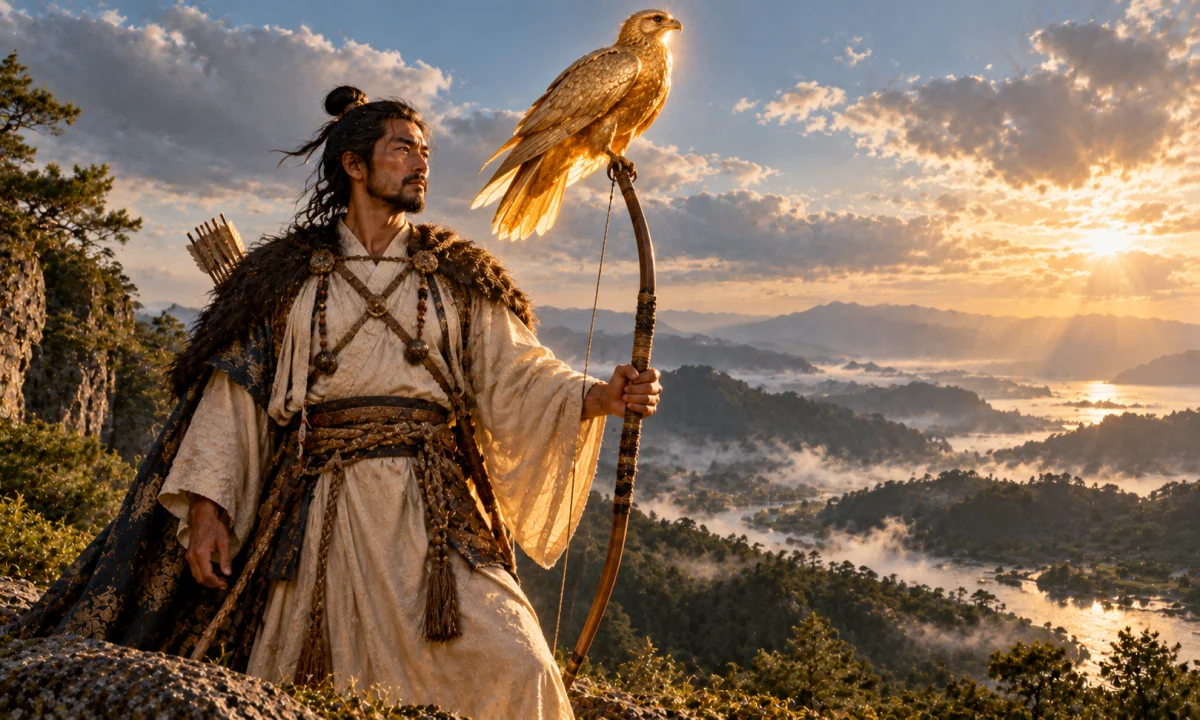
Traditional sources do not provide a standard physical appearance for kunitsu-kami. They are not a species of creature comparable to a dragon, ogre or fairy. A kunitsu-kami may be imagined through the sacred feature of its territory, represented by a shrine object, embodied in an ancestral lineage or described in human-like form within a mythic narrative.
Their powers likewise differ from one deity to another. A local kami may protect a settlement, control a mountain, ensure harvests, govern a river or preserve the prosperity of a clan. In mythological stories, important kunitsu-kami may possess exceptional strength, knowledge, fertility, healing ability or authority over the land. These qualities arise from the individual deity’s story and cult rather than from membership in the category alone.
The land itself is often presented as inhabited, ordered and politically meaningful. Mountains, forests, rocks, waterways and cultivated fields could all be associated with sacred presences. The kunitsu-kami therefore represent more than an abstract “earth element.” They express the idea that human communities live within territories already shaped and possessed by powerful beings, and that political rule requires recognition, negotiation or ritual settlement with those beings.
The transfer of the land
The most famous kunitsu-kami narrative is the transfer of the land, often called kuniyuzuri. In the Kojiki, the heavenly deities decide that the Central Land of Reed Plains should be ruled by descendants of the heavenly lineage. They send a succession of envoys to Ōkuninushi, who governs the land from Izumo.
The first envoy, 天穂日命 usually rendered Ame-no-Hohi-no-Mikoto, does not promptly return with a report. Another figure, Ame-no-Wakahiko, is sent and becomes entangled in the affairs of the terrestrial realm. The story then turns to more forceful negotiations. The heavenly side sends Takemikazuchi, a powerful martial deity, accompanied in the Kojiki by Ame-no-Torifune. Their mission is to demand that Ōkuninushi surrender authority over the land.
Ōkuninushi directs the envoys to consult his sons. Kotoshironushi accepts the heavenly demand, while Takeminakata challenges Takemikazuchi. The encounter between Takeminakata and Takemikazuchi is a contest of supernatural strength. Takeminakata is defeated and retreats to the region of Suwa, where he promises not to oppose the heavenly authority. This episode is important in the mythology of Suwa Shrine, although the relationship between the written myth and the living regional tradition is historically complex.
Ōkuninushi eventually agrees to yield political authority, but asks that a great shrine be established for him. The Grand Shrine of Izumo, or Izumo Ōyashiro, is linked in the Kojiki with this settlement. The myth does not portray Ōkuninushi as simply destroyed or erased. He remains a powerful deity with his own sacred domain, while the heavenly descendants receive authority to govern the human realm.
The story can therefore be read in several ways. Within the court mythology, it legitimises the rule of the heavenly-descended imperial line. From another perspective, it preserves the prestige of Izumo and its deity by making the transfer a negotiated exchange rather than an uncomplicated conquest. Scholars have also examined the narrative as a mythic reflection of relationships between the Yamato court and regional powers, though the precise historical events behind it cannot be established from the myth alone.
Ōkuninushi and Izumo
Ōkuninushi is central to the religious imagination of the kunitsu-kami because he embodies the power and complexity of the earthly realm. His stories include the founding or ordering of the land, encounters with rivals and relatives, death and restoration, marriage alliances, and the acquisition of knowledge or sacred objects. In some traditions he is connected with Ōmononushi, a deity associated with Mount Miwa, although the relationship between these figures differs across sources and should not be treated as universally identical.
Ōkuninushi is also widely revered as a deity of en-musubi, the forming and binding of relationships. In modern explanations this is often associated with marriage, but the broader idea includes connections among people, communities and events. The association reflects his role as a deity who establishes relationships and order within the terrestrial world. It should not be mistaken for a universal attribute shared by every kunitsu-kami.
Izumo mythology gives special prominence to the annual gathering of kami, traditionally associated with the tenth month of the old lunar calendar. In much of Japan this month is popularly called Kannazuki, the “month without gods,” while in Izumo it is called 神在月, often romanised as Kamiarizuki, the “month when the gods are present.” The custom is connected with beliefs that kami gather at Izumo. This later religious and regional tradition is related to the importance of Ōkuninushi and Izumo, but it should not be projected uncritically into the original eighth-century myths.
Relations with heavenly kami
The opposition between kunitsu-kami and amatsu-kami should not be understood as a simple battle between good and evil. The heavenly deities are not uniformly benevolent, and the earthly deities are not uniformly rebellious or morally superior. The narrative is concerned chiefly with authority, succession and the rightful ordering of the land.
Some episodes depict submission, diplomacy and marriage as much as warfare. Kotoshironushi’s acceptance of the transfer and Ōkuninushi’s negotiated settlement are as important as Takeminakata’s defeat. The stories also preserve the dignity of the terrestrial deities by granting them continuing ritual importance. In this sense, the myths establish a hierarchy while also acknowledging the sacred authority of local and regional powers.
The distinction may also reflect different kinds of religious authority. Heavenly kami are associated in the court narratives with creation, heavenly command and the imperial ancestry. Kunitsu-kami are associated with the already inhabited land, local cults, fertility, territorial power and older lineages. These associations are interpretive patterns rather than rigid rules. Japanese religious traditions frequently allow the same deity to acquire multiple identities and functions over time.
Religious and cultural significance
The concept of kunitsu-kami helps explain why land and place are so important in Japanese mythology. A territory is not merely a geographical possession. It may have an existing sacred owner, guardian or lineage of powers. Political control, agricultural activity and settlement can therefore be imagined as relationships requiring ritual recognition.
The category also reveals how mythology can preserve different layers of cultural memory. The court texts place heavenly descendants at the centre of national authority, but they retain stories in which local deities rule, negotiate and demand honours. The resulting mythology is not a single consistent system. It is a layered record of religious ideas, regional identities and state formation.
In later Shinto thought, individual kami were interpreted through changing systems of shrine classification, Buddhist-Shinto combinations and state religious policies. The broad contrast between heavenly and earthly deities remained useful, but it did not function as a universal classification for every kami worshipped in Japan. Modern discussions sometimes use “kunitsu-kami” to mean indigenous, native or chthonic deities. Such language can be helpful when carefully defined, but it may oversimplify the diverse histories of Japanese shrines and local cults.
Distinctions from similar terms
- Amatsu-kami: Heavenly deities, especially those associated with Takamagahara and the celestial ancestry of the imperial line. They form the principal contrast with kunitsu-kami in the land-transfer myths.
- Kami: The general Japanese term for sacred beings or powers. Not every kami is classified as either kunitsu-kami or amatsu-kami in a strict or permanent sense.
- Ōkuninushi: A particular deity, not another name for the entire class of kunitsu-kami. He is the most prominent earthly ruler in the land-transfer narratives.
- Yomi: The land of the dead in Japanese mythology. Kunitsu-kami are not simply “gods of the underworld,” and the terrestrial realm should not be confused with Yomi.
- Chthonic deities: A comparative scholarly expression referring to beings associated with the earth, below-ground realms or fertility. It can illuminate certain aspects of kunitsu-kami, but it is not an exact Japanese equivalent.
Modern understanding
Outside specialist discussions, kunitsu-kami are sometimes presented as a clearly defined pantheon of ancient nature gods opposed to a separate pantheon of sky gods. That simplified picture is convenient but misleading. The term is collective, the classifications vary, and the surviving evidence comes mainly from later written compilations that reorganised older traditions.
Modern fiction, games and popular fantasy may use kunitsu-kami as the name of a faction, species or group of earth-aligned deities. Such uses can draw inspiration from the heavenly-versus-earthly contrast in Japanese mythology, but they are creative adaptations rather than direct descriptions of traditional Shinto belief. Traditional kunitsu-kami are better understood through their relationships with particular lands, shrines, communities and mythic genealogies than through a fixed set of fantasy powers or visual characteristics.