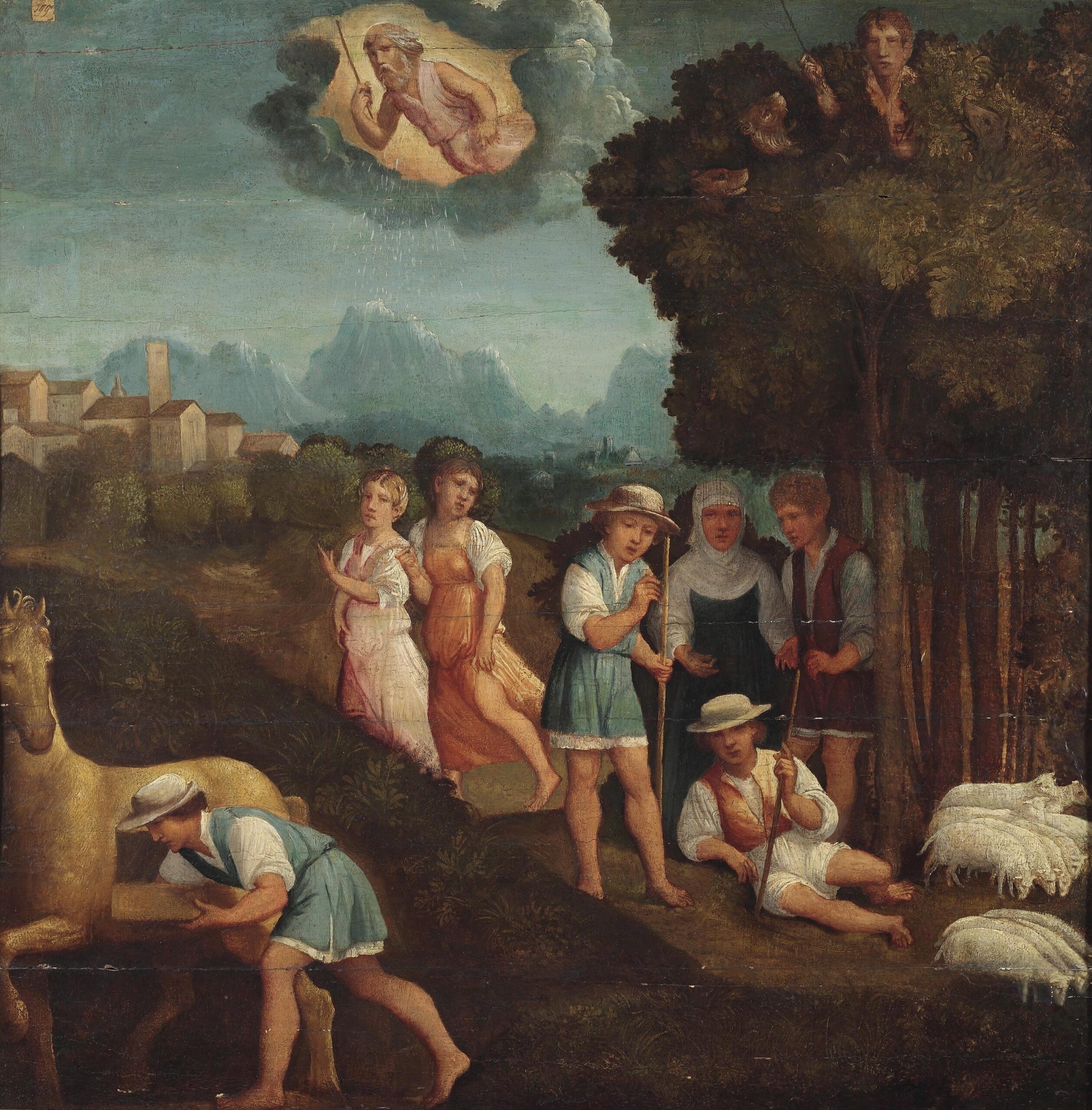
In Greek mythology, the story of Gyges is a fascinating tale that explores themes of power, morality, and human nature. Gyges was a shepherd for the Lydian king, and his life took a dramatic turn when he discovered a magical ring that granted him the power of invisibility. This ring changed Gyges’ life forever, leading him to make choices that would have lasting consequences. The tale of Gyges serves as a moral lesson about the nature of power and the ethical dilemmas that arise when one is not held accountable for their actions.
The Origins of Gyges
The origins of Gyges can be traced back to ancient texts, particularly in the works of the philosopher Plato. In Plato’s work, “The Republic,” he presents the story of Gyges as a thought experiment. The tale begins with Gyges being a humble shepherd who served the king of Lydia, Candaules. While tending to his flock, Gyges stumbled upon a hidden cave that contained the body of a giant. Among the remains, he found a golden ring that would change his life forever.
 Hades
HadesWhen Gyges turned the ring, he discovered that he became invisible to everyone around him. This newfound power opened up a world of possibilities for him. However, it also posed a significant moral question: what would a person do if they could act without fear of being caught? This question is central to the story of Gyges and sets the stage for the events that follow.
The Ring of Invisibility
The ring of invisibility is not just a magical object; it symbolizes the allure of power and the ethical dilemmas that come with it. Once Gyges realized he could become invisible, he used this ability to his advantage. He began to exploit his invisibility to observe the private lives of others without their knowledge. This act of spying on others reflects the darker side of human nature and the temptations that come with power.
 Hamadryads
Gyges soon found himself in a position where he could act without consequences. He used his invisibility to approach the queen and, ultimately, to seduce her. This act of betrayal led him to assassinate King Candaules and seize the throne for himself. The story raises important questions about the morality of Gyges’ actions. Would he have committed such acts if he had been visible and accountable for his actions? The ring serves as a metaphor for the corrupting influence of power.
The Moral Implications
The story of Gyges is often discussed in the context of ethics and morality. The fundamental question it raises is whether a person would still act morally if they were not held accountable for their actions. Gyges’ actions suggest that, when given the opportunity to act without consequences, he chose to pursue his desires, regardless of the harm he caused to others. This reflects a common theme in moral philosophy known as ethical egoism, where individuals prioritize their own interests over the well-being of others.
Philosophers have debated the implications of Gyges’ story for centuries. Some argue that the story demonstrates that morality is dependent on social accountability. Without the fear of repercussions, individuals may abandon their moral compass. Others suggest that the story illustrates the inherent flaws in human nature, suggesting that power can corrupt even the most well-intentioned individuals. The tale of Gyges serves as a cautionary reminder of the potential dangers of unchecked power.
 Harmonia
Gyges in Literature and Philosophy
The story of Gyges has been referenced and analyzed by numerous philosophers and writers throughout history. Plato’s account in “The Republic” is perhaps the most famous, where he uses Gyges to illustrate the idea of justice and the nature of the soul. He argues that a just person would act morally regardless of whether they were invisible or not, while an unjust person would succumb to temptation if they believed they could escape judgment.
In addition to Plato, other philosophers, such as Thomas Hobbes and Friedrich Nietzsche, have also drawn upon the story of Gyges to discuss themes of power and morality. Hobbes, for instance, used the story to illustrate his views on human nature and the need for a social contract to maintain order. Nietzsche, on the other hand, interpreted the story as a reflection of the will to power and the idea that individuals must assert their own values in a world without inherent morality.
Modern Interpretations
In modern times, the story of Gyges continues to resonate with audiences. It has been adapted in various forms of media, including literature, film, and art. The themes of invisibility and moral choice are particularly relevant in today’s society, where issues of surveillance, privacy, and ethical behavior are increasingly prominent. The idea of being able to act without accountability can be seen in many contemporary contexts, such as politics, business, and personal relationships.
Many modern interpretations of the Gyges story explore the consequences of power in a digital age. With the rise of social media and technology, individuals can often act anonymously, leading to behaviors that they might not engage in if their actions were visible to others. This raises important questions about accountability and the ethical implications of our actions in a world where invisibility is a reality.
Lessons from the Story of Gyges
The story of Gyges offers valuable lessons about power, morality, and the nature of human behavior. One of the primary lessons is the importance of accountability. When individuals believe they can act without consequences, they may engage in unethical behavior that harms others. The tale serves as a reminder of the need for systems of accountability in society, whether through laws, social norms, or personal ethics.
- Accountability: The need for individuals to be responsible for their actions.
- Ethics: The importance of maintaining moral principles, even when faced with temptation.
- Power: The corrupting influence that power can have on individuals.
- Human Nature: The inherent flaws and complexities of human behavior.
Another lesson from Gyges’ story is the idea that true morality comes from within. A just person will act ethically regardless of external circumstances. This concept encourages individuals to cultivate their own moral values and to strive for integrity in their actions. The story challenges us to consider how we would behave if we had the power to act without consequence and to reflect on our own moral beliefs.
Gyges and the Nature of Power
The nature of power is a central theme in the story of Gyges. Power can be both a tool for good and a source of corruption. Gyges’ transformation from a humble shepherd to a king illustrates how power can change an individual’s character and choices. When people are given power, they often face choices that test their moral integrity.
The story also prompts us to consider the responsibilities that come with power. Leaders and individuals in positions of authority must be aware of the impact of their actions on others. The tale of Gyges serves as a cautionary reminder that the pursuit of power without ethical considerations can lead to devastating consequences, not only for the individual but for society as a whole.
Gyges in Popular Culture
The story of Gyges has found its way into popular culture in various forms. From literature to film, the themes of invisibility, power, and morality continue to captivate audiences. Many contemporary stories draw upon the idea of characters who can act without being seen, exploring the moral dilemmas that arise from such power. These adaptations often reflect modern societal issues, such as surveillance, privacy, and ethical behavior.
In literature, the story of Gyges has inspired numerous authors to explore similar themes. Works of fiction often feature characters who grapple with the consequences of their actions when they believe they can escape judgment. These narratives resonate with readers, prompting them to reflect on their own moral choices and the impact of their actions on others.
Philosophical Discussions on Gyges
The philosophical implications of the story of Gyges have sparked extensive discussions among scholars and thinkers. The questions it raises about morality, power, and human nature continue to be relevant in contemporary philosophical discourse. Various ethical frameworks, such as utilitarianism and deontology, provide different lenses through which to analyze Gyges’ actions and the consequences of power.
Utilitarianism, for instance, focuses on the outcomes of actions and suggests that the right choice is the one that maximizes overall happiness. In the case of Gyges, one might argue that his actions led to personal gain but caused harm to others. On the other hand, deontological ethics emphasizes the importance of duty and moral rules, suggesting that Gyges’ betrayal was inherently wrong, regardless of the consequences.
The Enduring Legacy of Gyges
The legacy of Gyges endures through its exploration of timeless themes that resonate across cultures and eras. The story continues to be a powerful tool for examining the complexities of human behavior, the nature of power, and the ethical dilemmas that arise in everyday life. As society grapples with issues of accountability, privacy, and the impact of technology, the lessons from Gyges remain as relevant today as they were in ancient Greece.
Through various interpretations and adaptations, the story of Gyges encourages individuals to reflect on their own moral choices and the consequences of their actions. It serves as a reminder of the importance of integrity, accountability, and the need to cultivate a strong moral compass in a world where the lines between right and wrong can often become blurred.