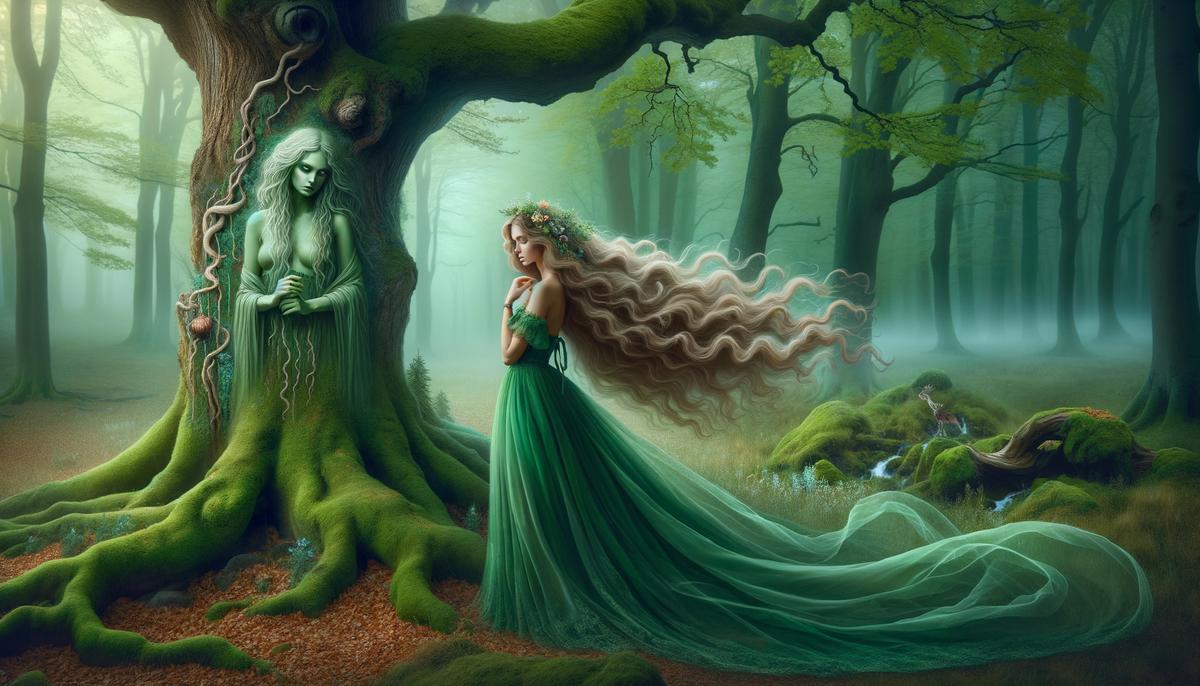
The term Hamadryads refers to a group of nymphs in Greek mythology who are intimately connected to trees. Each Hamadryad is believed to be born from and to live within a specific tree. The life of a Hamadryad is intricately tied to the life of the tree she inhabits; if the tree dies, so does the Hamadryad. This connection between the nymphs and their trees symbolizes the bond between nature and divinity, illustrating how the ancient Greeks viewed the natural world as a living entity filled with spirits.
Origins of the Hamadryads
The origins of the Hamadryads can be traced back to the ancient Greek belief in nature spirits. These nymphs are often associated with oak trees, although they can also inhabit other types of trees such as ash and pine. According to mythology, the first Hamadryads were born from the union of Gaia, the Earth, and the primordial gods. This connection to Gaia highlights their role as guardians of nature and emphasizes their importance in the Greek pantheon.
 Harmonia
In many myths, the Hamadryads are depicted as beautiful young women, embodying the grace and allure of nature. They are often described as playful and carefree, spending their time dancing and singing in the forests. The Hamadryads serve as a reminder of the beauty of the natural world and the importance of preserving it. Their stories reflect the ancient Greeks’ reverence for trees and the belief that they are sacred.
Roles and Responsibilities
The Hamadryads had various roles in Greek mythology, primarily serving as protectors of the trees and forests. They were responsible for ensuring the health and vitality of their trees, often invoking divine powers to promote growth and prosperity. When a tree was harmed, the Hamadryad associated with it would feel the pain and suffering, which is why they were often depicted as fierce protectors of their domains.
In addition to their protective roles, the Hamadryads also played a part in the cycle of life and death in nature. They were believed to influence the changing seasons, with their moods reflecting the state of the trees. For example, when a Hamadryad was happy, the tree would flourish, while a sorrowful Hamadryad would cause the tree to wither. This connection between the Hamadryads and the natural world underscores the belief that human emotions can impact the environment.
 Harpies
Hamadryads in Mythology
Several myths feature Hamadryads, showcasing their significance in Greek culture. One notable story involves Hippolytus, the son of Theseus. In this myth, a Hamadryad named Hecate fell in love with him. However, their love was doomed due to the tragic circumstances surrounding Hippolytus’s life. This story illustrates the theme of unrequited love and the inevitable connection between the Hamadryads and the mortals they encounter.
Another famous myth involves the hero Heracles, who encountered a Hamadryad while on his quest to retrieve the golden apples of the Hesperides. The Hamadryad, whose tree was one of the sacred trees bearing these apples, offered assistance to Heracles. This myth emphasizes the idea of cooperation between humans and nature, as the Hamadryad helps the hero while also fulfilling her duty to protect her tree.
Symbolism of Hamadryads
The Hamadryads symbolize various aspects of nature and life. They represent the delicate balance between humanity and the environment, reminding us of our responsibility to care for the natural world. The connection between the Hamadryads and their trees serves as a powerful metaphor for the interdependence of all living beings. Just as the Hamadryads cannot survive without their trees, humans rely on nature for sustenance and well-being.
 Harpocrates
Furthermore, the Hamadryads embody the spirit of renewal and growth. Their cyclical relationship with their trees reflects the changing seasons and the natural processes of life. When a tree dies, it makes way for new growth, symbolizing the idea that death is not the end but rather a transformation. This perspective on life and death can be seen in many ancient cultures, where nature is viewed as a continuous cycle.
Modern Interpretations of Hamadryads
In contemporary culture, the concept of Hamadryads has been revisited and reinterpreted in various forms of art, literature, and media. Many modern authors draw inspiration from Greek mythology, incorporating Hamadryads into their stories as symbols of nature’s resilience. These interpretations often highlight the importance of environmental conservation and the need to protect our natural resources.
In literature, Hamadryads are frequently portrayed as ethereal beings who guide or assist protagonists on their journeys. They serve as reminders of the wisdom and beauty found in nature. Additionally, their stories often emphasize themes of unity, love, and sacrifice, resonating with readers in today’s world. As society grapples with environmental issues, the tales of Hamadryads serve as a call to action to protect the planet.
Hamadryads in Art and Culture
The representation of Hamadryads in art has evolved over the centuries. In ancient Greek pottery and sculptures, these nymphs were often depicted alongside trees, showcasing their close relationship with nature. Artists captured their beauty and grace, emphasizing their role as guardians of the forest. These artworks served as a celebration of nature and its divine aspects, reflecting the ancient Greeks’ reverence for the environment.
In modern art, Hamadryads continue to inspire artists, who portray them in various styles and mediums. From paintings to sculptures, these representations often emphasize the fragility of nature and the need for conservation. By depicting Hamadryads as protectors of the environment, artists encourage viewers to reflect on their relationship with nature and the impact of human actions on the planet.
Although the ancient myths of the Hamadryads may seem distant, their significance resonates today. As we face environmental challenges, the stories of these nymphs remind us of the importance of protecting nature and nurturing our connection to the earth. The Hamadryads serve as symbols of beauty, resilience, and the intricate relationships that exist within the natural world. By learning from these ancient tales, we can strive to create a more harmonious relationship with the environment and appreciate the wonders of nature.