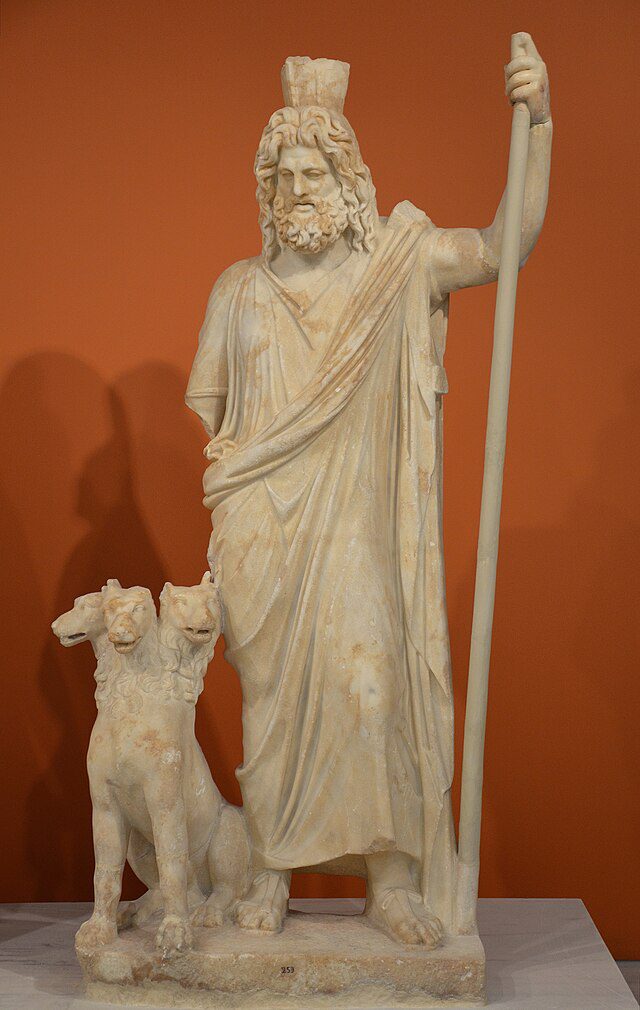
In Greek mythology, Hades is one of the most significant deities. He is often misunderstood, primarily due to the negative connotations associated with his realm. Hades is known as the god of the underworld, a place where souls go after death. This underworld is not merely a dark and terrifying place, but rather a complex domain where the dead reside. Hades himself is depicted as a stern figure, ruling over this realm with a sense of authority and justice. His character is essential for understanding the balance between life and death in Greek mythology.
The Origin of Hades
The origins of Hades can be traced back to the ancient Greek creation myths. According to these stories, he is one of the three sons of the Titans Cronus and Rhea, alongside his brothers Zeus and Poseidon. After the overthrow of their father, the three brothers drew lots to divide the cosmos among themselves. Zeus received the sky, Poseidon took the sea, and Hades was given dominion over the underworld. This division of realms illustrates the distinct roles each god plays in Greek mythology and highlights the significance of Hades as the ruler of the dead.
 Hamadryads
Hades is often referred to as Pluto in Roman mythology, a name that emphasizes his wealth, as the word “Pluto” is derived from the Greek word for wealth, ploutos. This connection between Hades and wealth is important because it underscores the idea that precious minerals and resources are found underground. Despite being the god of the underworld, Hades is not a malevolent figure; rather, he is a necessary part of the cycle of life and death. His realm is often viewed as a place of rest for the souls of the deceased.
The Realm of Hades
The underworld, ruled by Hades, is a vast and intricate domain. It is often depicted as a dark, shadowy place, but it is also home to various regions and rivers that reflect different aspects of the afterlife. One of the most famous rivers is the Styx, which souls must cross to enter the underworld. According to myth, Charon, the ferryman, transports the souls across the Styx, but only if they have received proper burial rites. This belief emphasizes the importance of honoring the dead in ancient Greek culture.
In addition to the Styx, there are other rivers in the underworld, including the Acheron, the river of woe, and the Lethe, the river of forgetfulness. Souls who drink from the Lethe forget their earthly lives, which is an essential part of their journey in the afterlife. Hades’ realm is also home to various regions, such as the Elysium Fields, where the virtuous souls reside in eternal bliss, and Tartarus, a place of punishment for the wicked. This duality in the underworld reflects the moral beliefs of ancient Greeks about justice and retribution.
 Harmonia
Depictions of Hades
Hades is typically depicted as a somber figure, often with a dark beard and a stern expression. He is usually shown wearing a crown or a helmet that grants him invisibility, known as the Helm of Darkness. This helmet allows him to move unseen among mortals and other gods. His presence is often accompanied by symbols associated with death, such as the cypress tree and the pomegranate, the latter of which is linked to the myth of Persephone.
In artistic representations, Hades is often shown alongside Persephone, his queen, who plays a crucial role in his mythology. Their relationship symbolizes the changing seasons, as Persephone spends part of the year in the underworld and part on earth. This cyclical nature of their union reflects the agricultural cycles and the importance of fertility in ancient Greek culture. Hades is not merely a ruler of the dead but also a figure representing the balance between life and death.
 Harpies
The Myth of Persephone
The myth of Persephone is one of the most well-known stories associated with Hades. According to the myth, Hades fell in love with Persephone, the daughter of Demeter, the goddess of agriculture. One day, while Persephone was gathering flowers in a meadow, Hades emerged from the underworld in his chariot and abducted her. This act led to great sorrow for Demeter, who searched for her daughter and caused the earth to become barren in her grief.
Eventually, Zeus intervened and demanded that Hades return Persephone. However, before she left the underworld, Hades offered her some pomegranate seeds. Because she ate them, she was bound to return to the underworld for part of the year. This myth explains the changing seasons, with Persephone’s ascent to the earth symbolizing spring and her descent into the underworld representing autumn and winter. The story illustrates the themes of love, loss, and the cycle of life, making it a significant part of Hades’ narrative.
Hades and the Other Gods
Hades’ relationship with the other gods is complex. Although he is one of the Olympian gods, he does not reside on Mount Olympus like Zeus and Poseidon. Instead, he rules the underworld, which often leads to a sense of separation from the other deities. This distance contributes to his reputation as a dark and brooding figure. However, he is not entirely isolated from the affairs of the gods. In many myths, Hades is shown to be just and fair, maintaining order in his realm.
Despite his stern demeanor, Hades has moments of interaction with the other gods. For instance, he plays a role in the myth of Heracles, who descends into the underworld to retrieve the three-headed dog, Cerberus. Hades allows Heracles to take Cerberus as long as he returns him afterward. This agreement demonstrates Hades’ willingness to cooperate with the heroes of Greek mythology while still asserting his authority over the underworld.
Worship and Cult of Hades
Unlike many other gods in the Greek pantheon, Hades was not widely worshipped. The ancient Greeks had a complex relationship with death, often fearing the underworld and the god who ruled it. As a result, there were few temples dedicated to Hades, and rituals associated with him were typically solemn rather than celebratory. However, he was respected and feared, and many Greeks would make offerings to him in hopes of appeasing his spirit.
One of the few festivals associated with Hades was the Thesmophoria, which was primarily dedicated to Demeter and Persephone. During this festival, participants would honor the cycle of life and death, reflecting the intertwined fates of the three deities. While Hades was not the main focus of this celebration, his presence was acknowledged, and rituals were performed to ensure a harmonious relationship with the underworld.
Modern Interpretations of Hades
In contemporary culture, Hades is often portrayed in various forms of media, including literature, film, and video games. These modern interpretations frequently depict him as a more complex character, exploring themes of loneliness, power, and redemption. For instance, in the animated film “Hercules,” Hades is characterized as a cunning and humorous villain, diverging from the traditional portrayal of the god. This adaptation reflects a shift in how audiences perceive ancient mythological figures.
Video games, such as “Hades,” have also contributed to a renewed interest in the character. In this game, players take on the role of Zagreus, the son of Hades, as he attempts to escape the underworld. This narrative provides a fresh perspective on Hades, showcasing him as a father figure who is both protective and authoritative. Such modern interpretations allow audiences to engage with Greek mythology in new and exciting ways, highlighting the enduring relevance of these ancient stories.
Hades remains a fascinating and multifaceted figure in Greek mythology. His role as the god of the underworld is essential for understanding the ancient Greeks’ views on death and the afterlife. Through his relationships with other gods, his domain, and his connections to myths like that of Persephone, Hades embodies the complexities of life, death, and rebirth. As modern interpretations continue to evolve, Hades will likely remain a significant figure in both ancient and contemporary narratives.