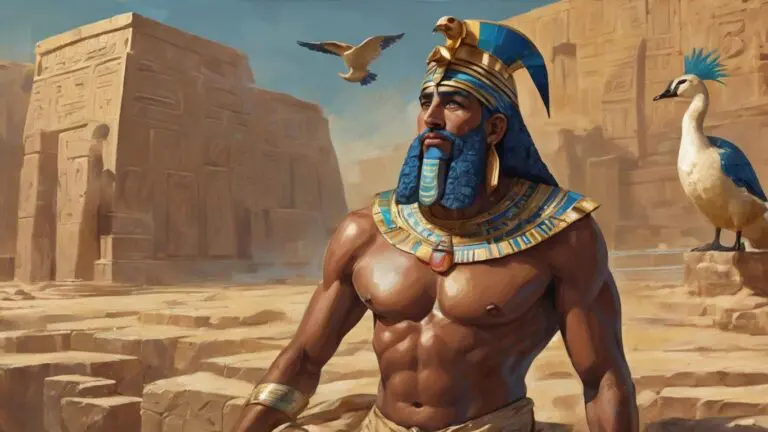
Geb is a significant figure in Egyptian mythology, known as the god of the Earth. He is often depicted lying on the ground, with his body covered in green vegetation, symbolizing fertility and growth. Geb is part of the Heliopolitan Ennead, a group of nine deities worshipped in ancient Egypt. His role in the creation myth is essential, as he is the son of the sky goddess Nut and the air god Shu. Together with Nut, Geb forms a pair that represents the Earth and the sky, showcasing the balance and harmony in the universe.
The Family of Geb
Geb’s family is quite intriguing and plays a crucial role in the Egyptian pantheon. His parents, Nut and Shu, are significant deities in their own right. Nut is the goddess of the sky, often depicted as a woman arching over the Earth, while Shu represents air and light. Their union resulted in the birth of several important gods, including Osiris, Isis, Set, and Nephthys. Each of these deities has a distinct role and story, contributing to the rich tapestry of Egyptian mythology.
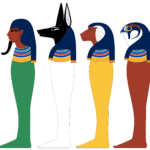 Sons Of Horus
Osiris, the most notable of Geb’s children, is the god of the afterlife and resurrection. His story is one of betrayal, death, and rebirth, making him a central figure in Egyptian beliefs about the afterlife. Isis, his sister, is known for her magical abilities and her role as a protector of the pharaohs. Set, often associated with chaos and disorder, represents the forces of nature that can disrupt harmony. Nephthys, the sister of Isis and Set, is associated with mourning and is often depicted as a protective figure.
The Role of Geb in Creation
In the creation myth of ancient Egypt, Geb plays a vital role. According to the myth, in the beginning, there was only chaos, represented by the primordial waters of Nu. From this chaos, the god Atum emerged and created the first gods. He created Shu and Nut, who later gave birth to Geb and his siblings. This creation story highlights the importance of Geb as the Earth, the foundation of life.
As the Earth, Geb is responsible for providing sustenance and support to all living things. He is often associated with fertility, and his laughter is said to cause the growth of plants. Ancient Egyptians believed that Geb’s body was the land itself, which explains the green color often associated with him. This connection to nature made Geb a vital deity for agriculture and the well-being of the people.
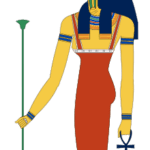 Renenet
Symbolism and Depictions of Geb
Geb is commonly depicted in various forms in ancient Egyptian art. One of the most recognized images is that of a man lying on the ground, often with green skin, symbolizing fertility. In some representations, he is shown with a goose on his head, which is significant because the word “Geb” in ancient Egyptian also means “goose.” This connection further emphasizes his role as a god of the Earth and nature.
- Green Skin: Represents fertility and vegetation.
- Goose Symbolism: The goose is associated with Geb, highlighting his connection to nature.
- Earthly Imagery: Geb is often depicted in scenes of agriculture and growth.
Moreover, Geb’s relationship with Nut, the sky goddess, is often illustrated in ancient art. In many depictions, Nut arches over Geb, emphasizing the separation between the Earth and the sky. This visual representation symbolizes the balance of the universe, with Geb providing a solid foundation and Nut offering protection from above. This dynamic is essential to understanding the interdependence of these two deities in Egyptian mythology.
Worship and Temples of Geb
Although Geb was not as widely worshipped as some other deities in the Egyptian pantheon, he still held an important place in religious practices. Temples dedicated to Geb were often built in agricultural regions, where the connection to the Earth was most apparent. Farmers would offer prayers and sacrifices to Geb, seeking his blessings for a bountiful harvest.
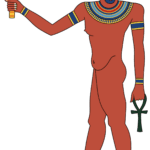 Ihu
IhuOne notable site associated with Geb is the ancient city of Heliopolis, which was a center of worship for the sun god Ra. Here, Geb was often revered alongside other deities, particularly in the context of creation myths. Rituals and ceremonies performed in honor of Geb often involved offerings of grain and other agricultural products, highlighting his role as a provider of sustenance.
The Relationship Between Geb and Other Deities
Geb’s relationships with other deities are complex and often intertwined. As the father of Osiris, Isis, Set, and Nephthys, his influence extends into many aspects of Egyptian mythology. The stories of his children are deeply connected to the themes of life, death, and rebirth, reflecting the cyclical nature of existence. For instance, the myth of Osiris’ death and resurrection directly ties back to Geb’s role as the Earth.
Additionally, Geb’s connection with Nut is one of the most profound relationships in Egyptian mythology. Their union and separation symbolize the balance of the universe. Geb’s grounding nature complements Nut’s expansive sky, creating a harmonious existence. This balance is vital to understanding the Egyptian worldview, where every deity has a specific role that contributes to the overall order of the cosmos.
Myths Involving Geb
Several myths highlight Geb’s importance in the Egyptian pantheon. One of the most famous is the story of the separation between Geb and Nut. According to the myth, Geb and Nut were originally inseparable, locked in a close embrace. However, their father, Shu, intervened and separated them, allowing the sky to arch over the Earth. This act created the world as it is known, establishing Geb as the Earth and Nut as the sky.
Another significant myth involves Geb’s relationship with his son, Osiris. After Set killed Osiris, it was Geb who mourned the loss and played a role in Osiris’ resurrection. This myth not only emphasizes Geb’s connection to life and death but also highlights the themes of love and loss prevalent in Egyptian mythology. The cycle of life, death, and rebirth is a recurring motif, and Geb’s involvement in these stories showcases his importance in maintaining the balance of existence.
Legacy of Geb in Modern Culture
The legacy of Geb continues to resonate in modern culture, particularly in literature and art. Many authors and artists draw inspiration from Egyptian mythology, incorporating figures like Geb into their works. The themes of nature, fertility, and the balance of the universe remain relevant, as they reflect fundamental aspects of human existence.
In contemporary discussions of mythology and spirituality, Geb is often referenced in the context of environmentalism. As the god of the Earth, he symbolizes the importance of caring for our planet and recognizing the interconnectedness of all living things. This modern interpretation encourages individuals to reflect on their relationship with nature and the impact of their actions on the environment.
Geb’s significance in Egyptian mythology cannot be overstated. As the god of the Earth, he embodies themes of fertility, growth, and the balance of the universe. His relationships with other deities, particularly Nut and his children, highlight the interconnectedness of life and death in Egyptian beliefs. Through various myths and worship practices, Geb’s influence continues to be felt, reminding us of the importance of nature and the delicate balance that sustains life.