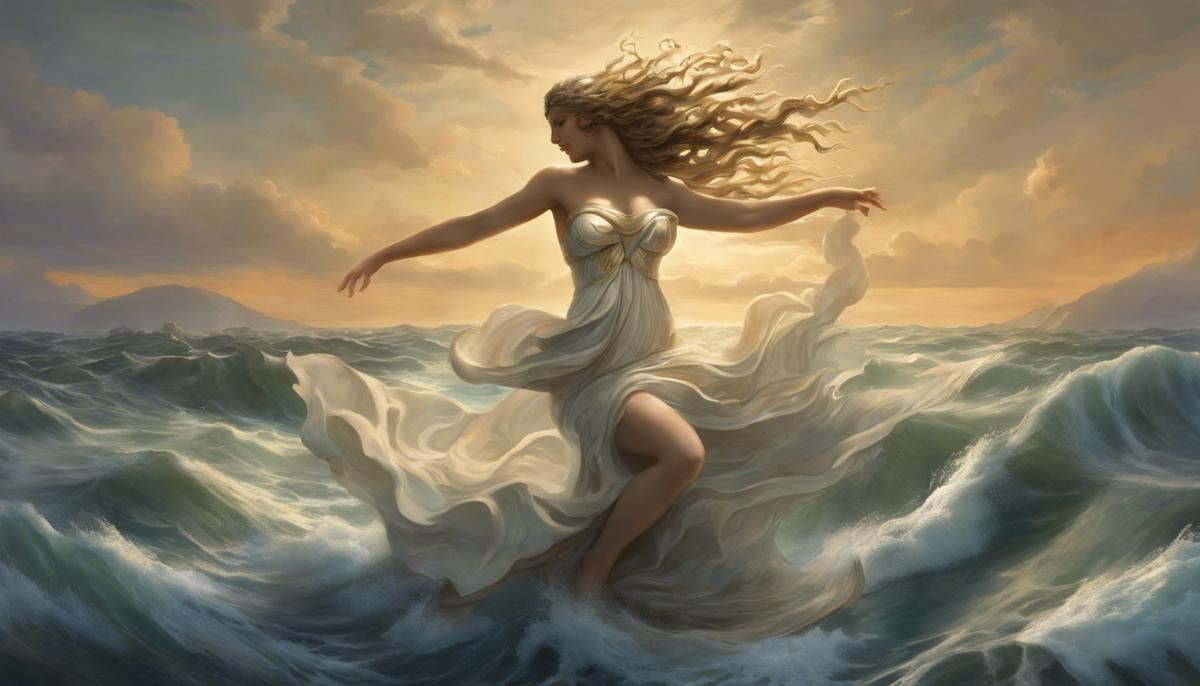
Eurynome is a fascinating figure in Greek mythology, often depicted as a goddess of the sea and the mother of various deities. Her story is not as widely known as those of other gods and goddesses, yet she plays a significant role in the ancient tales that shaped the cultural landscape of Greece. Eurynome is primarily associated with the creation myths, particularly in connection to the origins of the world and the emergence of life. Her character embodies the themes of creation, fertility, and the nurturing aspects of nature, making her an essential figure in the pantheon of Greek deities.
The Origins of Eurynome
According to some sources, Eurynome is one of the primordial deities, emerging from the chaos that existed before the world was formed. She is often described as a daughter of Oceanus and Tethys, the personifications of the ocean and the nourishing waters. In this role, Eurynome is closely linked to the sea, which was vital for the ancient Greeks, both as a source of sustenance and as a means of transportation. The Greeks believed that the sea was not just a physical entity but also a realm inhabited by divine beings, including Eurynome.
 Eurystheus
In some myths, Eurynome is portrayed as a goddess who danced upon the waves of the ocean, symbolizing her connection to the waters. Her beauty and grace are often emphasized, and she is sometimes depicted as a woman with flowing hair and a serene expression. This imagery underscores her role as a nurturing figure, one who embodies the life-giving properties of the sea. The dance of Eurynome is said to have contributed to the creation of the world, as her movements stirred the waters and brought forth the first forms of life.
Eurynome and the Creation of Life
Eurynome’s most notable contribution to Greek mythology is her role in the creation of life. According to some accounts, she is credited with giving birth to the first creatures that inhabited the earth. In these myths, Eurynome is often depicted as a mother figure, nurturing the beings that emerged from the waters. Her role as a creator goddess emphasizes the importance of femininity in the process of creation, highlighting the idea that life springs forth from the nurturing forces of nature.
One of the most famous myths involving Eurynome describes how she created the first living beings from the elements of the sea. After emerging from the chaos, she danced upon the waves, and from her movements, various creatures began to take form. These included fish, birds, and even the first humans. This act of creation reflects the ancient Greeks’ reverence for nature and their understanding of the interconnectedness of all living things.
 Euterpe
List of Creatures Associated with Eurynome
- Fish
- Birds
- Humans
- Sea creatures
In addition to creating individual species, Eurynome is also believed to have established the balance of life in the natural world. Her nurturing spirit ensured that all creatures could coexist harmoniously. This balance is a recurring theme in many myths, reflecting the ancient Greeks’ understanding of the delicate interplay between different elements of nature. Eurynome’s influence can be seen in various aspects of the natural world, from the cycles of the seasons to the rhythms of the tides.
Eurynome and Other Deities
Eurynome’s connections to other deities are essential to understanding her place in Greek mythology. She is often linked to Phorcys and Ceto, two primordial sea deities. Phorcys is associated with the hidden dangers of the sea, while Ceto embodies the monstrous aspects of marine life. Together, they represent the duality of the sea as both a source of life and a realm of peril. Eurynome’s relationship with these deities highlights her role as a mediator between the nurturing and dangerous aspects of nature.
 Fates
FatesMoreover, Eurynome is sometimes considered the mother of the Charites or Graces, who are goddesses of beauty, charm, and creativity. This connection further emphasizes her nurturing nature and her role as a source of inspiration for art and culture. The Charites are often depicted as companions of other deities, such as Aphrodite, the goddess of love, and Apollo, the god of music and poetry. Eurynome’s influence extends beyond the realm of creation, touching upon the aspects of beauty and artistic expression in the world.
The Symbolism of Eurynome
The symbolism associated with Eurynome is rich and varied. As a goddess of the sea, she embodies the vastness and mystery of the ocean. The sea has always been a symbol of unpredictability and transformation, reflecting the ever-changing nature of life. Eurynome’s dance upon the waves represents the fluidity of existence and the potential for new beginnings. Her movements evoke the idea that life is not static but rather a dynamic process shaped by the forces of nature.
Additionally, Eurynome symbolizes fertility and abundance. The sea is often viewed as a source of nourishment, providing food and resources for those who live near its shores. Eurynome’s nurturing aspect is a reminder of the importance of caring for the environment and recognizing the interconnectedness of all living things. This symbolism resonates with modern themes of sustainability and ecological balance, highlighting the timeless relevance of Eurynome’s story.
Eurynome in Literature and Art
Throughout history, Eurynome has been depicted in various forms of literature and art. Although she may not be as well-known as other deities, her influence can be seen in works that explore themes of creation and the natural world. In ancient texts, Eurynome is often mentioned alongside other primordial deities, emphasizing her role in the cosmic order. Poets and playwrights have drawn inspiration from her character, weaving her into narratives that reflect the complexities of life and existence.
In art, Eurynome is often portrayed in scenes that highlight her connection to the sea and her role as a creator goddess. Artists may depict her dancing upon the waves, surrounded by the creatures she has brought to life. These images serve to capture her essence as a nurturing and transformative figure, reminding viewers of the beauty and mystery of the natural world. The artistic representations of Eurynome continue to inspire contemporary artists, reflecting the enduring power of her story.
The Legacy of Eurynome
The legacy of Eurynome is significant in the context of Greek mythology and its impact on culture. While she may not be as widely recognized as other deities, her role as a creator goddess and a symbol of the sea has left an indelible mark on the stories and beliefs of ancient Greece. Her influence can be seen in the reverence for nature that permeates Greek thought, as well as in the artistic expressions that celebrate the beauty of the natural world.
Moreover, Eurynome’s story serves as a reminder of the importance of nurturing and caring for the environment. In a modern context, her character resonates with contemporary issues such as climate change and ecological conservation. The themes of creation, balance, and interconnectedness that Eurynome embodies are increasingly relevant as society grapples with the challenges posed by environmental degradation. Her legacy encourages a deeper understanding of our relationship with nature and the need to protect the delicate ecosystems that sustain life.
Conclusion: A Timeless Figure
Eurynome stands as a timeless figure in Greek mythology, embodying the themes of creation, fertility, and the nurturing aspects of nature. Her story, though not as widely known, holds profound significance in understanding the ancient Greeks’ relationship with the world around them. Eurynome’s influence extends beyond mythology, resonating with contemporary issues and inspiring a deeper appreciation for the beauty and complexity of life.