WORLD

Ériu
Ériu is a figure from medieval Irish mythological tradition who personifies Ireland and gives her name to Éire, the Irish name for the country. She is usually presented as one of three female figures associated with the island, alongside Banba and Fódla. In the stories that survive, Ériu is both a supernatural woman of the Tuatha Dé Danann and an embodiment of the land itself.
Origins in Irish tradition
Ériu belongs to the mythological history of Ireland preserved in medieval Irish literature. The most important account of her appears in the Lebor Gabála Érenn, usually translated as the Book of the Taking of Ireland. This extensive compilation describes a succession of peoples who are said to have settled or conquered Ireland, culminating in the arrival of the Milesians, the legendary ancestors of the Gaels.
The Lebor Gabála Érenn was written down in a Christian society many centuries after the period it presents as Ireland's remote past. Its stories combine mythology, biblical chronology, pseudo-history, genealogy and local tradition. They should not be treated as straightforward records of pre-Christian religion. At the same time, the work may preserve older names, narrative patterns and ideas that were adapted by medieval scholars and storytellers.
Ériu also appears in related medieval traditions concerning the Tuatha Dé Danann, the supernatural people who occupy Ireland before the Milesians. The Tuatha Dé Danann are sometimes called gods in modern descriptions, but the medieval texts do not present them as a single, clearly organised pantheon in the manner of the Olympian gods. They are a varied group of divine, heroic and otherworldly figures whose status changes according to the text.
No securely dated pre-Christian inscription or contemporary ancient account provides an independent portrait of Ériu. Her surviving identity comes primarily from medieval manuscripts and the literary traditions they preserve. Claims about a much earlier goddess named Ériu therefore involve interpretation rather than direct historical proof.
The name Ériu and the name of Ireland
Ériu is an Old Irish form related to the modern Irish name Éire. The genitive form Érenn appears in the title of the Lebor Gabála Érenn and is also associated with the traditional name of the island. The English poetic name Erin derives from the same linguistic family.
The broader history of the name Ireland is connected by many scholars with ancient forms such as Greek Iέρνη and Latin Hibernia, although the exact linguistic development and original meaning remain debated. Proposed explanations have included connections with ideas such as fertility, abundance or the land itself, but no single interpretation is universally accepted.
The mythological account works through personification: the name of the island is represented as a woman who can speak, make claims and participate in political events. This does not necessarily mean that the name was originally created from the goddess. It is equally possible that a place name was later explained through a legendary woman. Medieval myth often turns geographical names into ancestors, rulers or supernatural beings in this way.
Ériu, Banba and Fódla
Ériu is most often grouped with Banba and Fódla, the three women who represent Ireland under different names. Their precise relationships vary in medieval genealogical material. In some traditions they are presented as sisters and members of the Tuatha Dé Danann. Other passages give them different genealogical descriptions or connect them with the three kings who ruled the Tuatha Dé Danann at the time of the Milesian invasion.
The three figures are commonly associated with the husbands or ruling partners named Mac Cuill, Mac Cecht and Mac Gréine. These names are often understood as referring respectively to the hazel, the plough and the sun, although the symbolic implications are not always made explicit in the texts. Ériu is generally linked with Mac Gréine, while Banba and Fódla are linked with Mac Cuill and Mac Cecht. The arrangement is not entirely uniform across all versions, so it is best treated as a recurring tradition rather than a fixed mythological system.
In the Lebor Gabála Érenn, the names of Ériu, Banba and Fódla function as poetic or alternative names for Ireland. Modern Irish still uses Éire, while Banba and Fódla survive mainly in poetic, antiquarian or literary contexts. The three are therefore not simply three unrelated goddesses. They form a group of female figures through whom the island's identity, ownership and sovereignty are expressed.
The encounter with the Milesians
Ériu's best-known appearance occurs during the Milesian conquest of Ireland. The Milesians arrive after earlier peoples, including the Tuatha Dé Danann, have become established on the island. In the narrative, Ériu and her sisters encounter the newcomers and assert their connection with the land.
Each woman asks that the island be named after her. The Milesians do not simply receive the island as an empty territory; they meet figures who embody its existing claim to identity. Ériu's name becomes the one that is retained as the principal name of Ireland, while Banba and Fódla remain traditional alternative names.
The story is not merely an explanation of vocabulary. It presents the arrival of the Milesians as a transfer of rule that must be acknowledged by the land itself. The newcomers may defeat the Tuatha Dé Danann, but their victory is framed through an encounter with female representatives of Ireland. Ériu's request gives the conquest a ritual and symbolic dimension: the new rulers gain possession of the island while accepting a name rooted in its older supernatural inhabitants.
Different versions and summaries vary in their treatment of the encounter, including the order in which the women appear and the details of their relationships with the Tuatha Dé Danann kings. The central element remains stable: Ériu is linked to the island's name and to the change of sovereignty brought by the Milesians.
Role and attributes
Ériu has no consistently described physical appearance, set of weapons or catalogue of magical powers. She is not characterised in the same detailed way as figures such as the Morrígan, Lugh or Cú Chulainn. Her importance comes from her position and speech rather than from a sequence of individual adventures.
Her principal attributes are:
- Personification of Ireland: Ériu represents the island as a living female presence.
- Connection with sovereignty: Her recognition is involved in the transfer of power from the Tuatha Dé Danann to the Milesians.
- Custody of a name: She asks that the land retain a name derived from her identity.
- Association with the Tuatha Dé Danann: She belongs to the supernatural population that rules Ireland before the Milesians.
- Kinship with Banba and Fódla: Together, the three women express multiple traditional names and identities of the island.
Because Ériu is connected with the land and its rightful rule, she is often described as a sovereignty goddess. This is a useful scholarly and comparative term, but it should not be mistaken for a title that all medieval texts explicitly give her. The surviving stories do not provide a complete religious doctrine centred on Ériu, nor do they describe a standard ceremony devoted to her.
The sovereignty interpretation reflects a broader pattern in Irish literature. Female figures may represent a kingdom or territory and test, welcome or reject a prospective ruler. In such stories, the ruler's legitimacy is connected with his relationship to the land. Ériu's encounter with the Milesians fits this pattern, although her role is more specifically tied to the island's naming and its mythological succession of peoples.
Genealogy and changing identities
Medieval Irish mythology frequently preserves several overlapping genealogies for supernatural figures. Ériu may be named among the daughters of Ernmas, a prominent woman of the Tuatha Dé Danann, while other passages focus on her marriage to Mac Gréine. These accounts reflect the way different genealogical and narrative traditions were brought together rather than a single consistent family tree.
Ériu should therefore not be assigned a rigid genealogy without qualification. Her association with Banba and Fódla is widespread, but the identities of these women and their relationship to other Tuatha Dé Danann figures can shift from one text or recension to another. Medieval compilers were often interested in connecting famous names, royal lines and places, even when the resulting traditions were not fully harmonised.
It is also important not to identify Ériu automatically with every Irish female supernatural figure associated with land, kingship or war. The Morrígan, Badb, Macha, Danu or Danann, and Áine each have distinct traditions, although some genealogies and modern interpretations bring them into broader patterns of divine femininity. Similar themes do not prove that these figures were originally one goddess.
Religious and cultural significance
Ériu's tradition reflects the importance of land and legitimate rule in early Irish literary culture. Ireland is not portrayed as a passive setting. It has a name, a history and representatives capable of addressing the peoples who claim it. The island's identity precedes the arrival of the Milesians, even though the later ruling population becomes central to Gaelic origin mythology.
The narrative also reveals how medieval Irish writers handled older religious material. Figures who may once have belonged to a pre-Christian mythological tradition appear in a framework shaped by Christian learning. They are placed into long genealogies, assigned historical roles and fitted into a sequence of invasions that begins with events connected to biblical history. Ériu consequently occupies an uncertain space between goddess, legendary queen, ancestral figure and personification.
Her story is especially significant because it links language, geography and political legitimacy. A name for Ireland becomes the name of a woman; that woman becomes a witness to conquest; and her recognition helps establish the identity of the new order. The myth does not erase the earlier inhabitants of the island. Instead, it makes their relationship with the land part of the foundation inherited by the newcomers.
Ériu and similar names
Ériu is sometimes confused with figures whose names are similar in spelling or sound. She should be distinguished from Eir, the Norse goddess associated in later sources with healing. Eir belongs to Old Norse tradition and is not an Irish form or alternate identity of Ériu.
Ériu is also different from Éire. Éire is the modern Irish name of the country, while Ériu is the mythological woman associated with the name in medieval tradition. The two are linguistically related, but a place name and its personification are not exactly the same thing.
Erin, the English literary name for Ireland, is likewise not a separate goddess. It is an English form derived from the Irish naming tradition connected with Ériu. Banba and Fódla are related figures and alternative names for Ireland in mythological literature, but they are not simply different spellings of Ériu.
Later reception
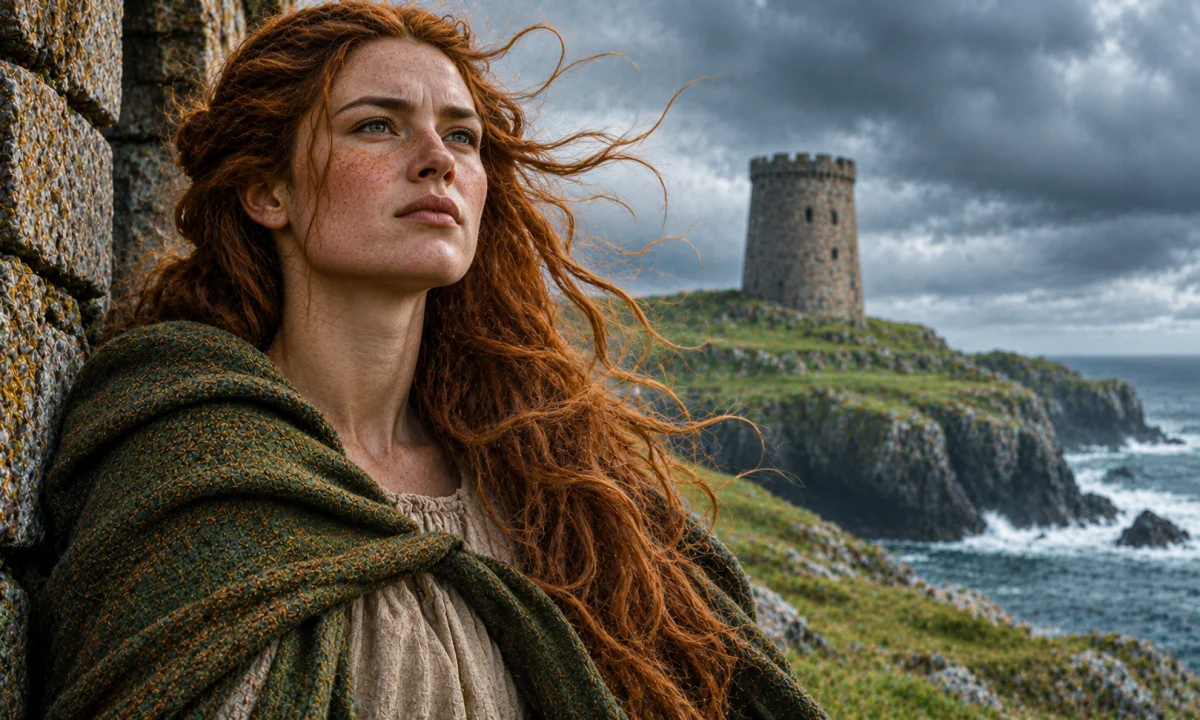
Ériu has continued to appear in discussions of Irish identity, mythology and the symbolic representation of the nation. Her association with the name of Ireland makes her particularly suitable for literary and artistic reinterpretation. In modern fantasy, historical fiction and neopagan writing, she may be presented as a powerful national goddess, queen or guardian of the island.
These portrayals often expand her character beyond what the medieval texts describe. A modern work may give Ériu a detailed appearance, a personal mythology, magical abilities or a central role in a divine family. Such additions can be creative interpretations, but they should not be treated as evidence for the ancient or medieval tradition itself.
Ériu is also sometimes merged with other Irish goddesses in modern accounts that seek a single all-encompassing mother or sovereignty deity. The medieval material does not establish such a simple identity. Ériu's strongest traditional features remain her connection with Ireland's name, her place among Banba and Fódla, and her role in the mythological transition from the Tuatha Dé Danann to the Milesians.