WORLD
WORLD
Dada
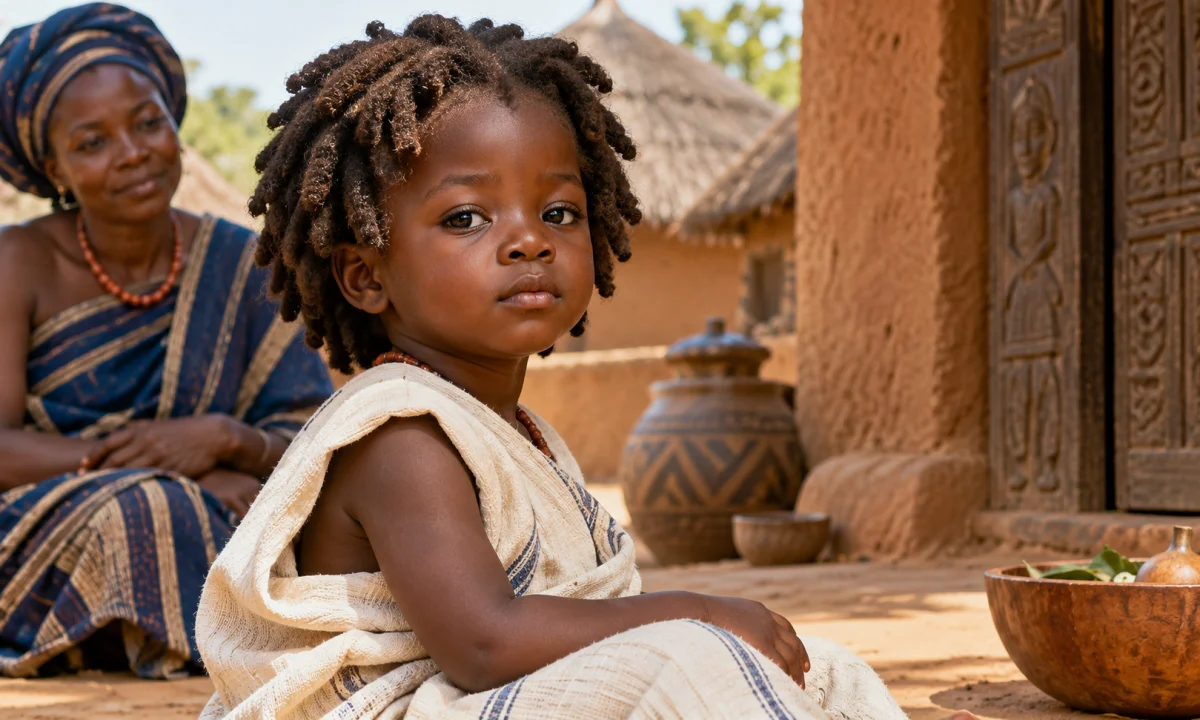
Dada is a figure associated with Yoruba religious tradition, especially with children born with unusually thick, naturally matted or tightly curled hair. In different Yoruba accounts, Dada is described as an òrìṣà connected with vegetation, abundance and distinctive hair, or as an epithet linked to Ajaka, the elder brother of Ṣàngó and an early ruler of Oyo. These traditions overlap in some retellings but should not automatically be treated as identical. The name, identity and religious status of Dada vary according to region, lineage and source.
Yoruba religious and cultural setting
Yoruba religion developed among Yoruba-speaking peoples of West Africa, particularly in present-day southwestern Nigeria and neighbouring parts of Benin and Togo. It includes devotion to a supreme creator, often called Olódùmarè or Ọlọ́run, together with reverence for numerous òrìṣà. These divine powers are associated with natural forces, moral qualities, professions, communities, royal lineages and important events in human life.
Yoruba religious knowledge has been preserved through oral traditions, praise poetry, ritual practice, royal histories, divination verses and family or community accounts. The same figure may therefore appear differently in separate traditions. A name can function as a personal name, a title, a praise name, a ritual designation or a reference to a particular manifestation of divine power. This is especially important in the case of Dada, whose identity is not presented uniformly in all accounts.
Hair has a powerful cultural and religious significance in many Yoruba contexts. It is part of a person's visible identity and may also be understood as connected with spiritual vitality, destiny and the relationship between the human and sacred realms. A child whose hair develops in an unusual natural pattern may consequently receive special attention rather than being treated as merely unusual in a physical sense.
The meaning of the name Dada
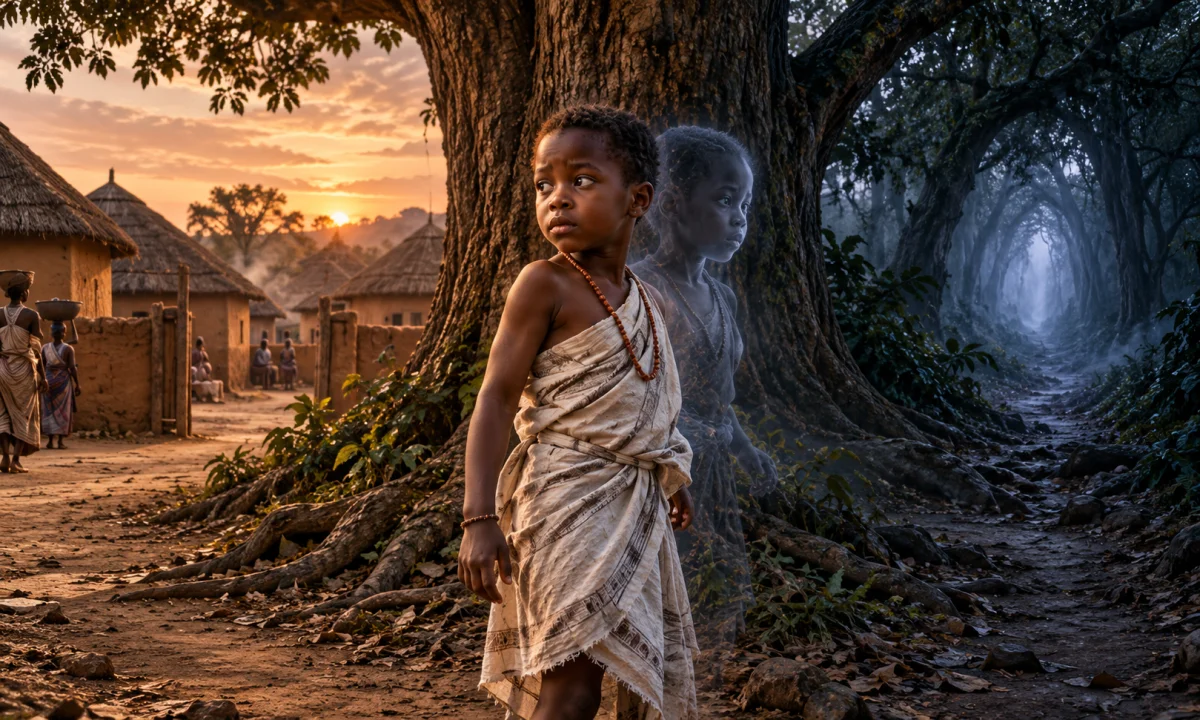
In Yoruba usage, Dàdá may refer to a child born with hair that is naturally matted, locked or unusually abundant. Such children have traditionally been regarded in some communities as marked by a special spiritual condition. The hair might be left uncut or handled according to particular family and ritual customs. A child may also receive Dada as a personal name or descriptive name.
The word does not have one simple equivalent in English. Descriptions such as “dreadlocked child,” “child with matted hair” or “curly-haired child” convey part of the meaning but do not reproduce its cultural implications. The term refers not only to physical appearance but, in relevant traditions, to the child's special relationship with the sacred.
Accounts differ over whether Dada is primarily a deity, a class of spiritually marked children, a title or an epithet of a particular royal figure. Some descriptions treat Dada as an òrìṣà in the usual sense. Others focus on Dada children and on the connection between the name and Ajaka, also known as Dada Ajaka. It is therefore more accurate to describe Dada as a complex and variable religious figure than to impose a single fixed classification.
Dada and children born with unusual hair
In traditions concerning Dada children, naturally matted hair is treated as a sign of difference and possible spiritual importance. The child may be considered under the protection of Dada or understood as possessing a special connection with the divine. Such interpretations belong to traditional religious culture and should not be confused with a universal rule followed by every Yoruba family.
Customs surrounding the child's hair have varied. In some accounts, cutting the hair without appropriate ritual attention could be considered improper or dangerous. In others, the hair was simply respected as part of the child's condition. The details may depend on local practice, the advice of elders, diviners or ritual specialists, and the family's religious commitments.
Dada's association with these children can be interpreted through several related ideas:
- Distinctive destiny: unusual birth conditions may indicate that a child has a particular path or spiritual significance.
- Protection: the child may be placed under the care or influence of a sacred power connected with Dada.
- Vitality: abundant or persistent hair can symbolize life, growth and spiritual force.
- Continuity: a child's condition may connect the household with ancestors, divination and the wider religious community.
These interpretations do not mean that every person with naturally locked or textured hair is regarded as a manifestation of Dada. The tradition concerns a particular cultural interpretation of a child's birth and hair, not a general judgment about appearance.
Associations with vegetation and abundance
Dada is also associated in some accounts with vegetation, fertility and abundance. This connection is understandable within a symbolic system that links luxuriant growth in nature with luxuriant hair on the human body. Thick foliage, flourishing crops and abundant hair can all suggest vitality, increase and the power of life to continue developing.
Descriptions of Dada as a guardian or spirit of vegetation are not as consistently presented as the association with Dada children. Some accounts place greater emphasis on hair and children, while others include plant growth, prosperity or natural abundance among Dada's attributes. These differences may reflect distinct regional traditions or the tendency of oral religious systems to connect related symbols without reducing them to a single standardized doctrine.
Where Dada is invoked in relation to abundance, the idea need not be limited to wealth. It can include healthy growth, the well-being of children, productive land, flourishing households and the continuation of a family or community. As with other Yoruba religious concepts, material and spiritual prosperity are often closely related rather than sharply separated.
Dada Ajaka and the royal traditions of Oyo
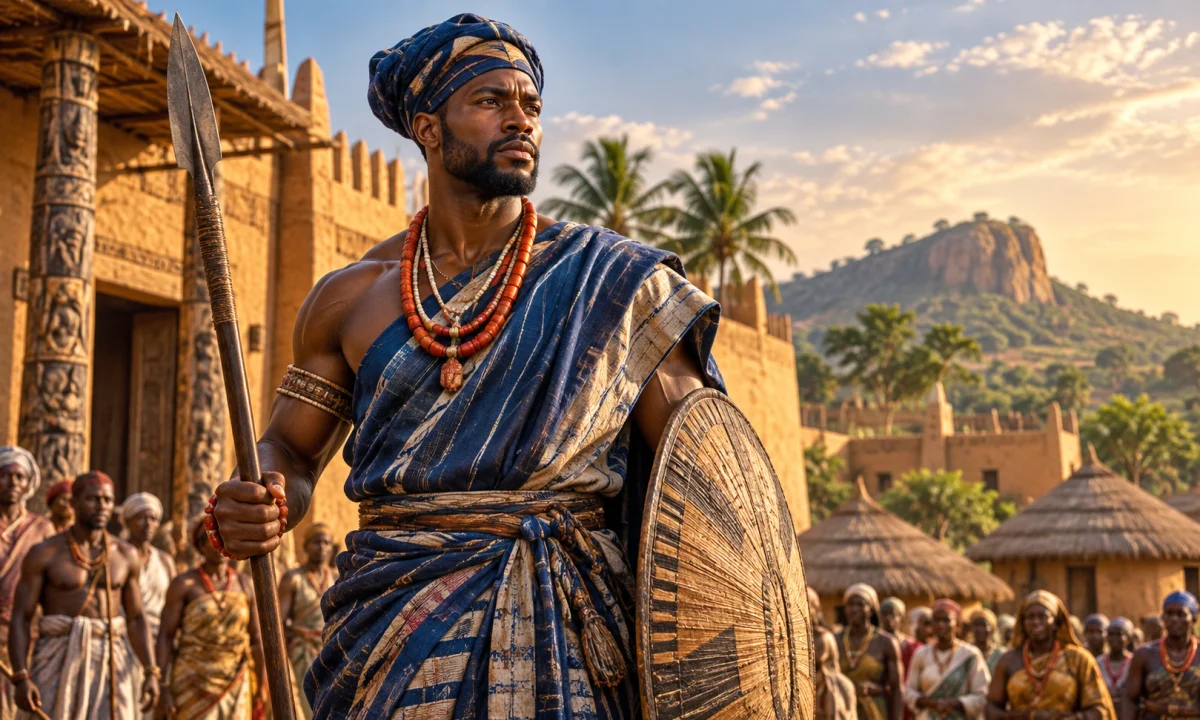
The name Dada is frequently connected with Ajaka, an early ruler of Oyo and the elder brother of Ṣàngó. Ajaka is also called Dada Ajaka in many retellings. He belongs to the cycle of traditions surrounding the Oyo monarchy, Oranyan, Ṣàngó and the founding history of the Oyo kingdom.
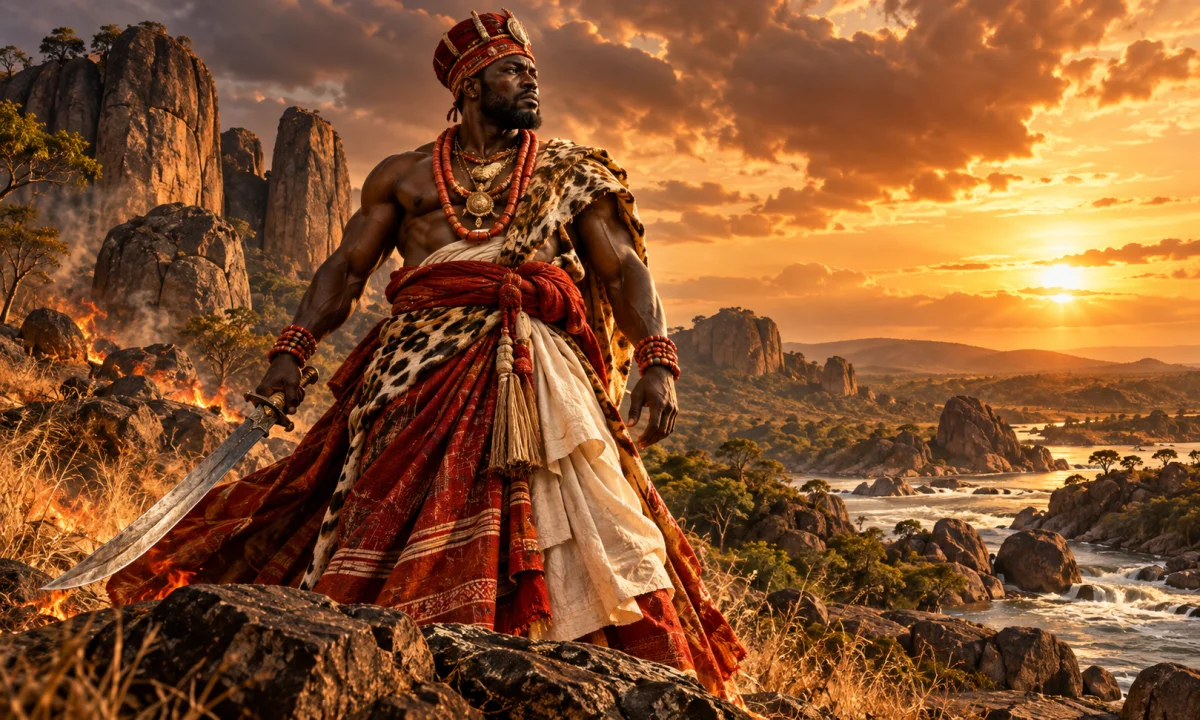
In accounts of Ajaka's reign, he is commonly portrayed as mild, patient or insufficiently aggressive for a kingdom that valued military authority. Ṣàngó, by contrast, is presented as forceful, warlike and associated with thunder and lightning. In a widely circulated version of the story, Ṣàngó replaces Ajaka as ruler. Later, after Ṣàngó's own reign ends, Ajaka returns to the throne.
The story is not a single universally fixed historical record. Oyo traditions combine royal genealogy, political memory, praise poetry and sacred narrative. Different versions change the sequence of events, the evaluation of Ajaka's character and the precise relationship between royal history and divine mythology. It is therefore safer to speak of a major tradition concerning Ajaka than to present every detail as an independently verified historical fact.
Is Dada the same as Ajaka?
The relationship between Dada and Ajaka is one of the main points requiring caution. In some traditions, Dada Ajaka is simply a name or title for Ajaka, the elder brother of Ṣàngó. In other presentations, Dada appears as a distinct sacred figure associated with children, hair and vegetation, while Ajaka remains a royal ancestor or legendary king. Some modern summaries combine these strands and describe Dada as both an orisha and Ṣàngó's older brother.
There is no reason to assume that every use of the name Dada refers to the same being. A name connected with a category of children, an orisha and a royal epithet can acquire different meanings in different contexts. The most responsible description is that Dada traditions overlap with Ajaka traditions, but the two should not be conflated without qualification.
Relationship with Ṣàngó
When Dada is identified with Dada Ajaka, the figure is related to Ṣàngó as his elder brother. This relationship helps explain why some accounts place Dada within the same royal and mythic cycle as the famous thunder deity. It also creates a contrast between two models of authority: Ajaka's gentler and more restrained kingship and Ṣàngó's spectacular, forceful rule.
Ṣàngó is one of the best-known Yoruba òrìṣà. He is associated with thunder, lightning, fire, royal power, justice and the historical memory of Oyo kingship. Dada should not be treated as another name for Ṣàngó. Even in traditions that connect the two as brothers, they occupy different roles. Dada or Ajaka represents a distinct figure whose relationship with Ṣàngó is part of the story rather than evidence that the two are identical.
Appearance and symbolic attributes
There is no single canonical physical description of Dada comparable to a standardized iconographic portrait. The most important visual marker is the presence of abundant, tightly curled or naturally matted hair. When Dada is represented through the image of a Dada child, the hair itself carries much of the figure's meaning.
In accounts that treat Dada as an orisha of vegetation or abundance, imagery of leaves, plants and luxuriant growth may be relevant. However, specific ritual objects, colours, offerings or ceremonial forms should not be generalized across all Yoruba communities. Religious practice is often localized, and details can belong to particular lineages rather than to Yoruba tradition as a whole.
The symbolic meanings associated with Dada include:
- Growth: hair and vegetation provide parallel images of life unfolding over time.
- Difference: the Dada child is marked as distinct from birth and may require special care.
- Royal legitimacy: in the Ajaka traditions, the name belongs to the history of Oyo kingship.
- Gentle authority: Ajaka's portrayal contrasts with the more aggressive model of kingship associated with Ṣàngó.
- Continuity: children, crops and dynastic succession all express the continuation of life and community.
Tradition, history and interpretation
Dada illustrates why Yoruba mythology cannot always be separated neatly into categories such as “god,” “ancestor,” “king” and “folkloric character.” Yoruba traditions may preserve a memory of a historical ruler while also giving that ruler a place in sacred genealogy. A personal condition, such as naturally matted hair, may become associated with an òrìṣà. A royal title may be remembered in a religious setting. These layers can coexist without forming one standardized system.
Historical evidence for early Oyo rulers is limited and must be approached through oral traditions, later written records and comparative historical study. Oral tradition is not simply an unreliable substitute for written history; it preserves valuable cultural knowledge through forms suited to performance and community memory. At the same time, narratives transmitted over generations can change, combine events or express political and religious meanings beyond literal biography.
Scholars and cultural historians therefore distinguish between the historical question of whether a particular ruler existed, the traditional narratives attached to that ruler, and the religious significance later communities assign to the name. This distinction is particularly useful for Dada Ajaka, whose identity lies at the intersection of Oyo royal tradition and the wider sacred meanings of Dada.
Distinguishing Dada from similar names and figures
Dada should not be confused with every person, spirit or cultural term that happens to resemble the name. Yoruba names often have related spellings and meanings, and transliteration can vary because Yoruba uses tone marks and underdots that are frequently omitted in English-language writing.
- Dada and Ajaka: these names are closely connected in traditions concerning Dada Ajaka, but Dada may also refer to a distinct sacred association with children and hair.
- Dada and Ṣàngó: they may be described as brothers in royal mythology, but they are not the same deity. Ṣàngó is principally linked with thunder, lightning, fire and royal power.
- Dada children and all children with locked hair: the traditional term concerns a cultural and religious interpretation, not a universal label for everyone with a particular hairstyle.
- Dada and unrelated names in other cultures: similar spellings in African, European or Caribbean contexts do not establish a shared origin.
English-language sources may write the name as Dada, Dàdá, Dada Ajaka or Dada-Ajaka. Omitted diacritics can conceal differences in Yoruba pronunciation and meaning. The spelling Dada is widely used in English, but it should not be taken as proof that all references describe precisely the same figure.
Cultural significance
Dada is significant because the tradition places spiritual meaning in an aspect of ordinary human life: the way a child is born and the way the child's hair develops. It shows how Yoruba religious thought can interpret bodily difference as a point of relationship between a person, a family and the unseen world. The tradition also reflects the importance of children as carriers of continuity and destiny.
The connection with Ajaka adds a political dimension. Through Dada Ajaka, the name participates in reflections on leadership, succession and the qualities expected of a ruler. Ajaka's relative gentleness is not merely a personal trait in these narratives; it becomes part of a contrast between different forms of authority. The stories ask whether a ruler should be judged by military strength, restraint, legitimacy, wisdom or the ability to preserve order.
Because Dada is preserved through varied oral and religious traditions, no single list of powers or a universally prescribed ritual can represent every community that recognizes the name. Its enduring meaning lies in the combination of sacred difference, growth, children, abundance and the layered memory of Oyo's royal past.