WORLD
WORLD
Cihuateteo
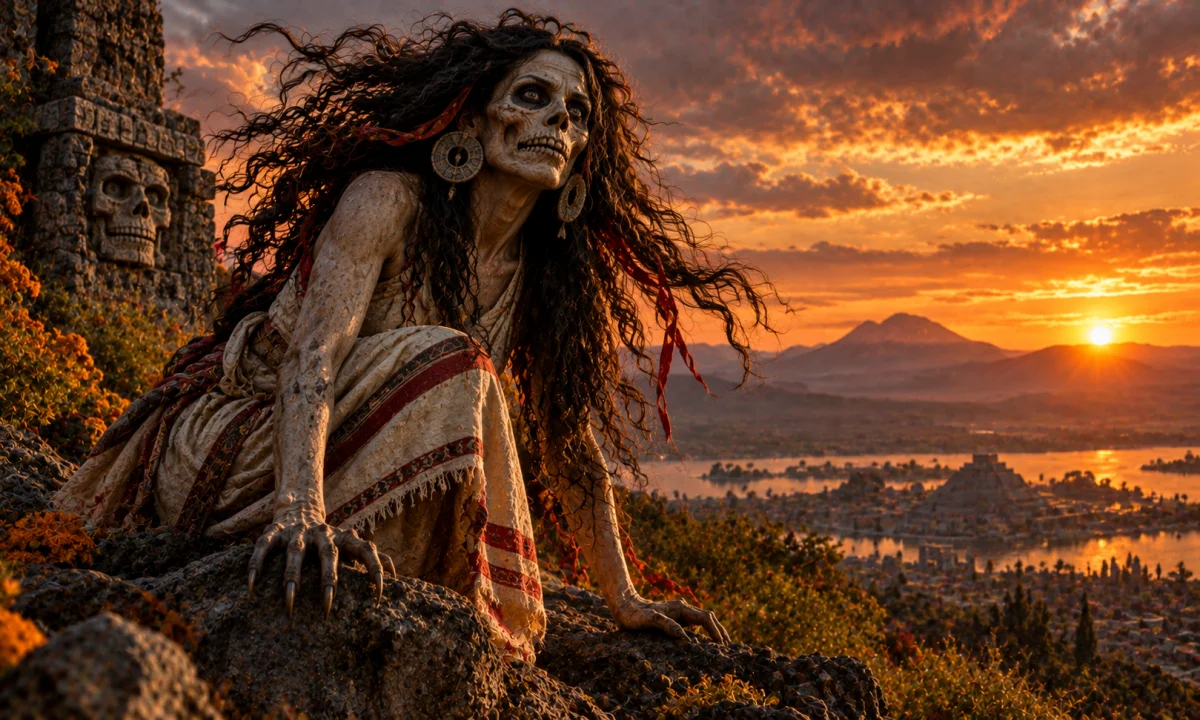
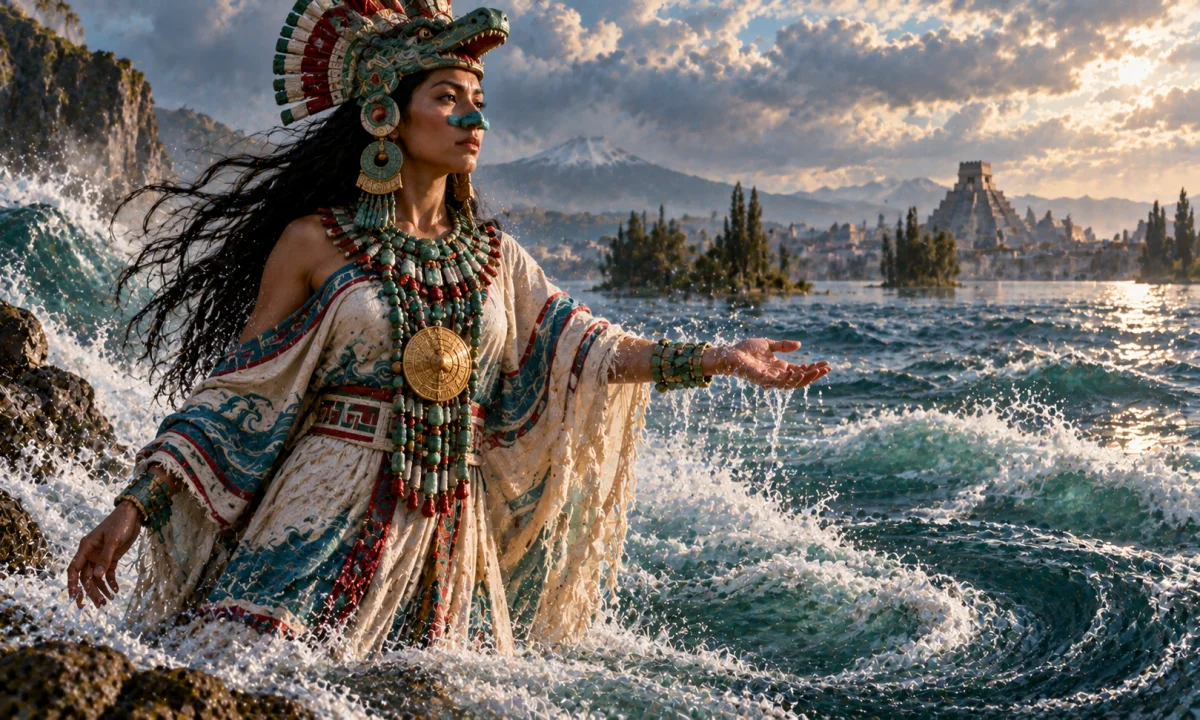
Cihuateteo are the sacred and dangerous spirits of women who died in childbirth in the religious traditions of the Nahua peoples of central Mexico, including the Mexica commonly known as the Aztecs. Their name is usually translated as “divine women” or “goddess-women,” although spelling and grammatical interpretations vary. They were not simply ghosts in the ordinary sense. A woman who died giving birth was understood to have died in a struggle comparable to battle, and her spirit could receive an honored place in the cosmic order while also becoming a feared supernatural presence.
Origins and cultural setting
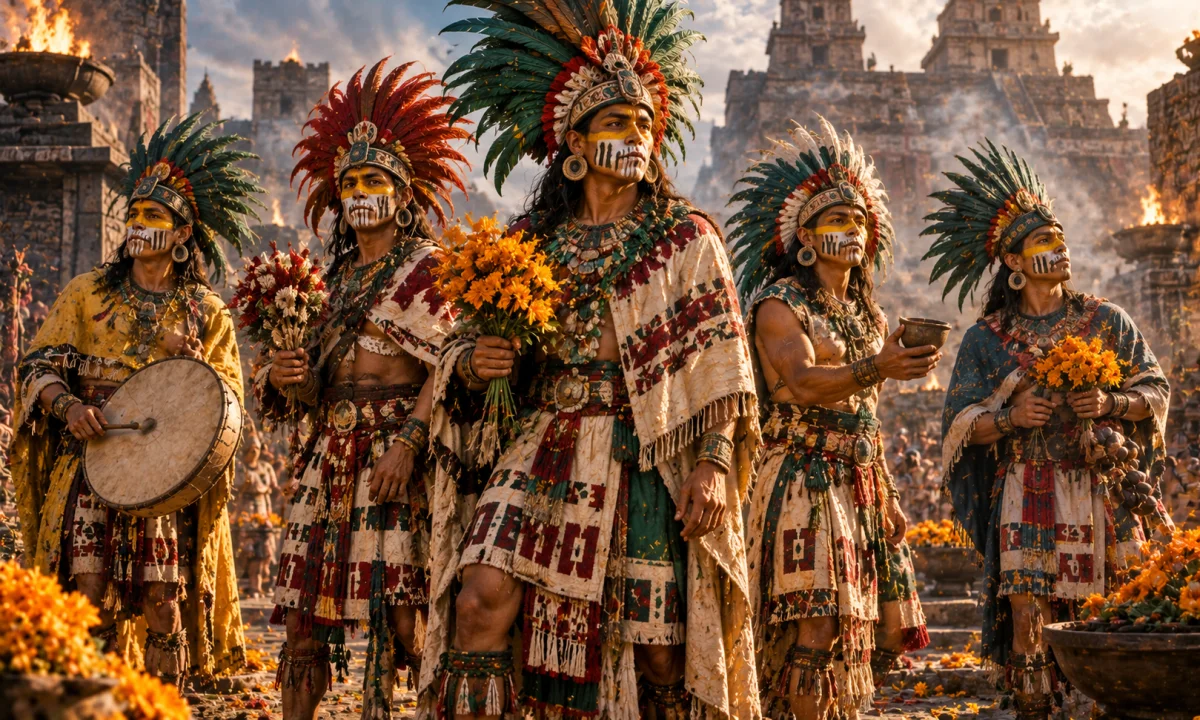
Cihuateteo belong to a religious world in which death did not lead every person to the same destination. A person’s manner of death, rather than moral virtue alone, could determine the realm or condition associated with the afterlife. Those who died in battle or through ritual sacrifice possessed a special relationship with the sun, while those who drowned, or died from certain water-related conditions, were associated with the rain deity Tlaloc. Women who died in childbirth belonged to this same larger system of death-related destinies.
Childbirth was regarded as a form of combat. Nahua language and ritual treated the laboring woman as a warrior engaged in a dangerous contest. The newborn child could be described in terms associated with a captive taken in war, and the midwife performed actions that echoed military language and ritual. Death in childbirth therefore represented both a devastating loss and a heroic death. The woman had not died passively: she had fought to bring new life into the world.
Colonial-era accounts written after the Spanish conquest preserve much of the available information about the Cihuateteo. The most important evidence comes from Nahuatl-language testimonies recorded by Indigenous informants and friars, especially the material associated with Bernardino de Sahagún’s Florentine Codex. Indigenous-style painted manuscripts, including the Codex Borgia and related religious codices, also depict supernatural female figures that scholars commonly identify with the Cihuateteo.
These sources must be read carefully. They were recorded in a colonial setting, often through collaboration between Nahua speakers and Christian missionaries. Descriptions may reflect translation choices, European ideas about demons or spirits, or differences among local traditions. The Cihuateteo were part of a living and varied religious culture, not a single character with one fixed biography.
Name and identity
The name appears in several forms, including Cihuateteo, Cihuateteotl, and spellings that reflect different attempts to represent Classical Nahuatl sounds. The word combines a term for “woman” with teotl, a word often translated as “god,” “deity,” or “sacred power.” “Divine women” is therefore a useful approximate translation, but it should not be assumed that the term means “goddesses” in exactly the same sense as the female deities of a modern pantheon.
The form cihuateteo is frequently used as a plural name for the spirits collectively. The singular and plural forms vary in English-language scholarship and popular writing, partly because Nahuatl spelling conventions differ and partly because colonial sources do not always use the same grammatical forms. The related term mocihuaquetzqueh, often translated as “women warriors” or “women who died in childbirth,” refers to the honored dead more broadly. The terms overlap, but they are not necessarily interchangeable in every source.
Cihuateteo were therefore both honored dead women and potentially harmful spirits. Their sacred status did not make them benevolent. In many traditional religious systems, powerful dead beings can protect, punish, bless, or injure depending on circumstances. Their danger was connected to the extraordinary force of their deaths and to the boundary between life and death that they continued to represent.
Relationship with the sun
One of the most important roles attributed to women who died in childbirth was their association with the sun’s daily journey. Warriors who died in battle or sacrifice were described as accompanying the sun during the first part of its passage across the sky, from sunrise until midday. Women who died in childbirth were associated with the sun’s later movement, from the point of midday toward the western horizon.
This division gave childbirth death a cosmic significance. The dead woman was not imagined merely as an unfortunate victim; she had earned a place among beings who helped sustain the movement of the sun. The journey of the sun was understood through images of combat, procession, and renewal. The participation of female dead in the afternoon phase balanced the male warrior role associated with the morning.
The symbolism also reveals the high value placed on reproductive labor, even within a strongly martial society. The dangers of childbirth were recognized as real and profound. By comparing the woman in labor with a warrior, Nahua religious thought expressed both the physical peril of birth and the importance of the life it produced.
This solar role should not be confused with a claim that every Cihuateteo was a solar goddess. The sources generally describe a class or condition of sacred dead women rather than one independent deity with a single personal identity. Their relationship with the sun formed part of their posthumous status.
Night wandering and dangerous days
The Cihuateteo were also feared as nocturnal apparitions. According to colonial descriptions, they could descend or appear in the human world at particular times, especially on ominous days in the 260-day ritual calendar known as the tonalpohualli. Five day-sign combinations are especially associated with them in surviving accounts: 1 Deer, 1 Rain, 1 Monkey, 1 House, and 1 Eagle.
These were not necessarily “holidays” dedicated to the Cihuateteo. They were considered dangerous or unlucky times when the spirits might appear and cause harm. The five dates recur as a group in descriptions of the Cihuateteo, although the precise explanations and ritual details vary among sources. Their significance was linked to the structure of the sacred calendar, whose days possessed different qualities, associations, and levels of danger.
People were particularly cautious about crossroads and other liminal places. A crossroads is a natural setting for supernatural encounters because it joins different routes and symbolically connects separate regions of the world. In accounts of the Cihuateteo, such places could become sites where the dead entered the domain of the living.
The spirits were feared for causing illness or misfortune, especially to children. Some sources associate them with seizures, paralysis, wasting sickness, or other sudden afflictions. The exact disease identifications are uncertain because colonial descriptions used premodern medical categories and were translated through European frameworks. It is safer to say that the Cihuateteo were believed capable of bringing serious illness and harm than to assign them one specific medical condition.
Parents could take precautions on the days associated with the spirits. The danger to children may reflect both a religious concern and a practical fear of infant illness, which was common and poorly understood in the premodern world. The Cihuateteo thus embodied anxieties surrounding childbirth, the vulnerability of young children, and the unpredictable arrival of death.
Appearance in Indigenous manuscripts
Painted manuscripts portray figures identified as Cihuateteo with visual signs of death, supernatural power, and female identity. They may appear with corpse-like or skeletal features, pale or white body markings, clawed hands and feet, disordered hair, and elaborate skirts or headdresses. Some images show them in rigid or threatening poses rather than in the dignified procession associated with their solar role.
These depictions should not be treated as portraits of one fixed appearance. Indigenous manuscripts communicate through a complex visual language in which color, posture, costume, body markings, and symbolic objects carry meaning. A figure’s appearance may emphasize her status as a dead woman, a dangerous spirit, a calendar being, or a participant in a particular ritual context.
Modern descriptions sometimes call the Cihuateteo “female demons.” That term can be misleading. Christian writers used “demon” as a way to classify non-Christian supernatural beings, but the Cihuateteo were not simply equivalent to demons in Nahua religious thought. They occupied a more complex position: honored because of the manner of their death, connected with the sun, and feared because of their power to cross into the world of the living.
Childbirth, gender, and sacred power
The Cihuateteo reveal an important tension in Nahua ideas about gender. The deaths of warriors and women in childbirth were treated as comparable in religious importance, but the two groups were not identical. Male warriors were associated with warfare and the eastern or morning phase of the sun. Women who died in childbirth were associated with reproductive struggle and the western or afternoon phase.
This parallel gave women a powerful symbolic role without erasing the dangers and inequalities of their society. Childbirth was honored, yet it remained dangerous. A woman’s transformation into a Cihuateteo could be understood as an elevation into sacred status, but it also marked the terrible cost of reproduction. The tradition therefore combines reverence, grief, fear, and social recognition.
Midwives held an important place in this religious setting. They guided women through labor and interpreted childbirth through ritual language. Accounts of childbirth ceremonies compare the laboring woman with a fighter and treat the successful birth as a victory. When a woman died, her funeral could draw on the same martial symbolism, reinforcing the idea that she had fallen in combat.
The Cihuateteo also show that the boundary between deity and ancestor was not always sharp. A woman could remain connected to her family and community as a deceased person while also becoming part of a wider supernatural order. Her power came from her transformed condition, not from a long mythological biography like those attributed to major deities such as Huitzilopochtli or Quetzalcoatl.
Distinctions from related figures
Mictecacihuatl
Mictecacihuatl is a different figure. She is commonly described as the female ruler or guardian of the underworld, Mictlan, alongside Mictlantecuhtli. Although both Mictecacihuatl and the Cihuateteo are connected with death, Mictecacihuatl is a distinct underworld deity, while the Cihuateteo are the spirits or sacred dead of women who died in childbirth. They should not be merged simply because both are female figures associated with the dead.
Tzitzimime
The Tzitzimime are another distinct category of dangerous supernatural beings. They were associated with the stars and with the possibility that cosmic order could fail, especially during periods of darkness. Some broad descriptions of female supernatural beings may create overlap in modern summaries, but the Cihuateteo and Tzitzimime have different identities and religious associations.
La Llorona
La Llorona, the weeping woman who wanders while mourning or seeking her children, belongs primarily to later colonial and modern Mexican folklore. Her stories developed through a mixture of Indigenous, European, and colonial influences. Because she is female, nocturnal, associated with children, and sometimes linked with water or roads, she is often compared with the Cihuateteo. The comparison may be useful when discussing the later history of frightening female apparitions, but La Llorona is not simply another name for the Cihuateteo.
Surviving traditions and interpretation
No complete pre-conquest text written by the Mexica survives in the form of a single mythological book devoted to the Cihuateteo. Knowledge of them comes from several kinds of evidence: painted manuscripts, colonial-era Nahuatl texts, Spanish accounts, descriptions of ritual calendars, and comparative study of related Nahua traditions. These sources do not always agree in detail.
It is also important not to reduce the Cihuateteo to a simple story about “evil female ghosts.” Their tradition contains at least three connected dimensions. First, they are honored dead women whose deaths in childbirth parallel the deaths of warriors. Second, they participate symbolically in the sun’s movement and the maintenance of cosmic order. Third, they are feared apparitions associated with illness, children, crossroads, and dangerous calendar days.
The coexistence of honor and fear is central to their meaning. A death could be sacred without being harmless. The Cihuateteo represented the power of women who had crossed one of the most dangerous thresholds recognized by Nahua society: the passage through childbirth between death and new life. Their presence in religious imagery and calendar lore preserved the memory of that danger while giving it a place within the structure of the cosmos.
Modern reception
In contemporary writing, the Cihuateteo sometimes appear in fantasy fiction, horror, games, comics, and discussions of Mesoamerican mythology. Modern adaptations may portray them as undead warriors, child-stealing ghosts, or generalized female demons. Such portrayals can draw on genuine elements of the tradition, especially their association with death, childbirth, night, and danger, but they often simplify the distinction between their honored solar role and their threatening behavior.
Modern popular culture also frequently combines the Cihuateteo with Mictecacihuatl, La Llorona, or other female figures connected with death. These combinations are creative reinterpretations rather than evidence that the figures were identical in Nahua religion. Traditional accounts present the Cihuateteo as a specific category of sacred dead women whose identity arose from the religious significance of death in childbirth.