WORLD
WORLD
Barbiel
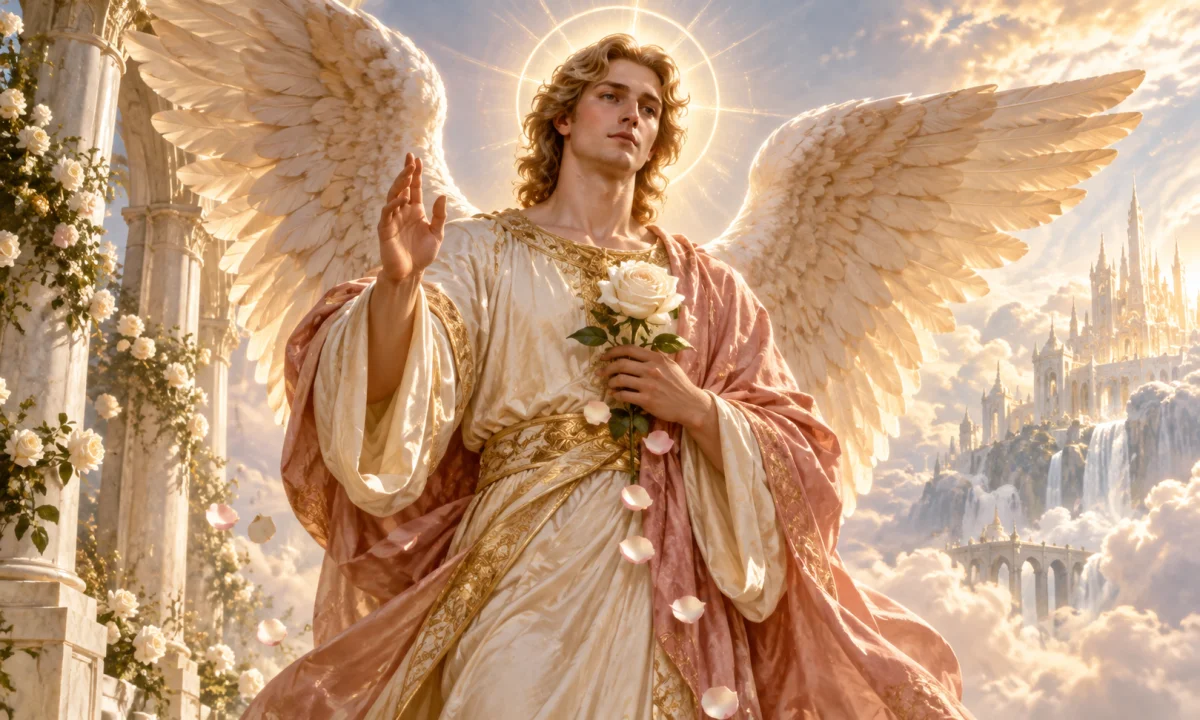
Barbiel is an angelic name found chiefly in Renaissance and later occult systems of correspondences. In the best-known tradition associated with the name, Barbiel is the angel assigned to October. The figure does not have a clearly established role in the Bible, the major Jewish and Christian scriptural traditions, or a widely shared body of religious stories. Instead, Barbiel belongs to a calendar-based form of angelology that connected angels with months, zodiacal signs, planets, seasons and other parts of the created world.
Origins and cultural setting
Barbiel’s principal historical setting is the learned occultism of Renaissance Europe. Christian occult writers of this period attempted to organize many different kinds of spiritual and cosmic correspondence into a single system. They drew on biblical language, Jewish and Christian angelology, astrology, Neoplatonic philosophy, late antique magical traditions and medieval ideas about the hierarchy of creation.
One important source for the month association is De occulta philosophia libri tres, usually known in English as Three Books of Occult Philosophy, by the German scholar and occult writer Heinrich Cornelius Agrippa. First published in the sixteenth century, the work presents lists of angels connected with the twelve months. In that sequence, Barbiel is assigned to October. The other names in the list include Barchiel for February, Machidiel for March, Asmodel for April, Ambriel for May, Muriel for June, Verchiel for July, Hamaliel for August, Uriel for September, Adnachiel for November and Hanael for December.
Such lists should not be treated as evidence of a single ancient or universally accepted angelic calendar. They belong to a particular intellectual tradition and were copied, adapted and rearranged by later writers. Different manuscripts, editions and occult manuals may vary in spelling, order and interpretation. Barbiel therefore has a more limited and specialized historical status than figures such as Michael, Gabriel or Raphael, whose names and roles are established across much broader religious traditions.
The name Barbiel
The spelling Barbiel is not completely stable. Occult and esoteric sources may use forms that are similar in appearance, and typesetters or translators have sometimes altered angelic names. The ending -el is common in names of angels and generally reflects the Hebrew element associated with God. That pattern alone, however, does not establish a precise meaning for the first part of the name.
No universally accepted ancient etymology for Barbiel survives. Attempts to assign the name a specific translation or elaborate theological meaning often come from modern occult interpretation rather than from a securely documented historical source. It is therefore more accurate to treat Barbiel as a traditional angelic name within a particular list than to claim that its meaning is known with certainty.
Barbiel and the month of October
Barbiel’s most consistent traditional association is with October. In a month-based angelology, assigning an angel to a month creates a spiritual framework for understanding the yearly cycle. October occupies a transitional position in the northern European seasonal calendar: summer has ended, daylight is diminishing, and the natural world is moving toward winter. Later writers have consequently interpreted Barbiel through themes such as transition, decline, preparation and inward reflection.
These seasonal meanings are reasonable symbolic readings, but they should not be confused with fixed attributes found in an ancient narrative. The surviving tradition does not provide a well-known story in which Barbiel governs October, performs a particular miracle or speaks with a named human or divine figure. The association is primarily classificatory: Barbiel appears in a list that gives each month an angelic guardian or ruler.
Some later occult systems connect Barbiel with the zodiac sign Scorpio, since much of October falls under Scorpio in the tropical zodiac. This connection is not identical to the original month assignment and is not universal. October also includes the greater part of Libra, and astrological systems differ in how they align months, signs and angelic names. Scorpio, therefore, is best described as a later or parallel correspondence rather than an unquestioned ancient attribute of Barbiel.
Rank and classification
Barbiel is sometimes called an archangel in modern occult writing. Historically, however, there is no broad agreement that Barbiel belongs to the same category as the major archangels recognized in Jewish, Christian or Islamic traditions. The month lists generally identify figures as angels without providing a detailed hierarchy or a consistent account of their authority.
The title “archangel” can be used in several different ways. In scripture and formal theology, it may refer to a specific rank or a small group of exalted heavenly beings. In esoteric literature, it is often used more loosely for an angel associated with a month, planet, zodiac sign or sphere of influence. Calling Barbiel an archangel thus reflects a later classification rather than a universally recognized religious doctrine.
Attributes and symbolism
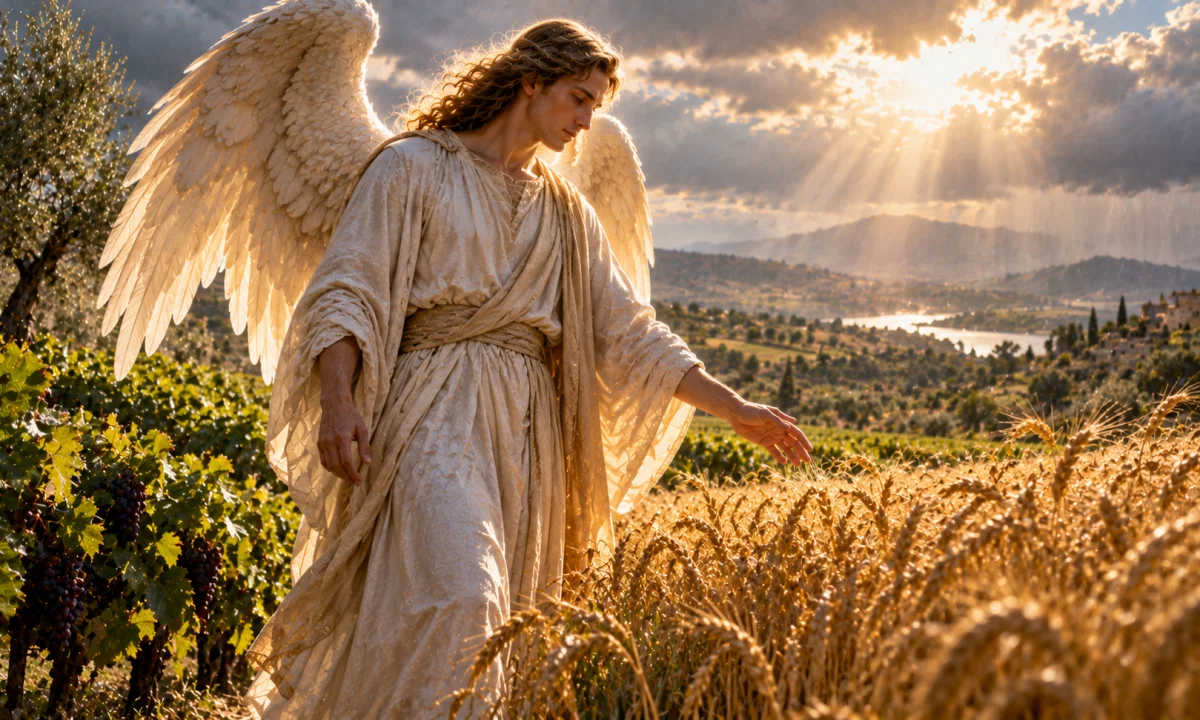
Barbiel has no standard appearance in ancient religious art. There is no widely accepted iconographic tradition that depicts the angel with a particular garment, weapon, animal, colour or object. Images found in modern occult publications are usually artistic inventions based on seasonal or astrological ideas.
Contemporary esoteric interpretations commonly associate Barbiel with:
- the month of October and the autumn season;
- change, transition and the closing of a yearly cycle;
- self-examination and preparation for a period of darkness or rest;
- the astrological symbolism of Scorpio in systems that make that connection;
- emotional intensity, hidden matters and transformation.
These themes are interpretive rather than universally traditional. They arise from the symbolic meanings of autumn and Scorpio, not from a stable body of stories about Barbiel. Other writers may emphasize protection, balance or the preservation of knowledge instead. There is no single authoritative list of Barbiel’s powers comparable to the established roles attributed to Michael as a warrior or Raphael as a healer in widely known religious traditions.
Stories and relationships
No major surviving mythological narrative centres on Barbiel. The name is not attached to a famous episode in the Hebrew Bible, the New Testament, the Qur’an or the principal apocryphal angelic narratives most familiar to historians of religion. Barbiel is also not a prominent character in the Book of Enoch, the standard Christian accounts of angels, or the best-known medieval legends of archangels.
The figure’s importance is therefore not narrative but cosmological. Barbiel represents one point in an ordered arrangement of time. In the Renaissance occult imagination, the calendar could be understood as part of a living universe in which earthly seasons reflected heavenly powers. An angel assigned to a month helped connect ordinary human experience—birth, harvest, weather, ageing and religious observance—with a larger spiritual structure.
Later occult practitioners sometimes treat Barbiel as a guardian, patron or spiritual guide for people born in October. This use is a modern devotional or magical development, not a practice that can be assumed for all historical versions of the name. The early month lists do not necessarily imply that each angel personally protects everyone born during the relevant month.
Barbiel in Renaissance occult thought
Renaissance occult philosophy did not always draw a sharp boundary between religion, astrology, natural philosophy and magic. Writers such as Agrippa believed that the universe was filled with correspondences. Numbers, colours, metals, plants, planets, zodiacal signs and angels could be related because they participated in a divinely ordered creation.
Within this framework, a month angel was not simply a character with a personality. The name functioned as part of a symbolic map. Knowing the corresponding angel could be considered useful for meditation, prayer, ritual timing or the interpretation of astrological qualities. The precise religious status of such practices varied, and many established Christian authorities rejected magical applications of angelic names. Barbiel should consequently be understood within the history of esoteric speculation rather than presented as a standard object of Christian worship.
The lists also show how angelic traditions can develop through compilation. A name may appear in one late source, become associated with a particular calendar position, and then acquire additional qualities as later authors repeat or expand the original material. Over time, a brief entry such as “Barbiel, October” can become the basis for a much more elaborate portrait, even when the older evidence contains no such description.
Distinction from Barachiel and Barchiel
Barbiel is easily confused with Barachiel, also spelled Barakiel or Barachiel, and with Barchiel. The resemblance between these names has encouraged variant spellings and occasional conflation, but the traditions are not automatically identical.
Barachiel is a more widely known angelic figure in certain Eastern Christian traditions, where he is associated with blessing and is sometimes counted among the seven archangels. His name and devotional role belong to a different stream of angelology. Barchiel, meanwhile, appears in some month-angel lists as the angel of February. In later occult books, forms of these names may be copied incorrectly, treated as alternatives or merged with one another.
There is no reliable basis for assuming that Barbiel is simply another name for Barachiel. Nor should Barbiel be identified with every angel whose name ends in -iel. Similar spelling is not sufficient evidence of common identity, especially in traditions where names were transmitted through different languages, manuscripts and systems of transliteration.
Interpretation and cultural significance
Barbiel illustrates how religious and esoteric traditions preserve figures of very different kinds. Some angels have deep roots in scripture and liturgy; others emerge from visionary literature, magical handbooks or systems of philosophical correspondence. The existence of an angelic name in an influential occult text does not make it part of a universal religious tradition, but it does make the name significant for the history of European esotericism.
The figure also demonstrates the importance of distinguishing symbolic association from narrative identity. Barbiel is not primarily remembered because of a legendary deed. The name survives because it occupies a place in a scheme that organizes the year. Modern readers may find meaning in the seasonal transition represented by October, but that personal symbolism should be separated from the limited historical evidence for the original tradition.
Later esoteric and popular use
In contemporary occult and New Age material, Barbiel may be presented as an angel of autumn, transformation, Scorpio or people born in October. Online lists often add colours, crystals, invocations, personality traits and detailed spiritual functions. These additions are not consistent with one another and should be regarded as modern adaptations unless they can be traced to an earlier source.
Barbiel has not become a major figure in mainstream popular culture. The name appears occasionally in modern angel books, spiritual practices, fantasy writing and collaborative occult databases, but it lacks the stable public image associated with Michael, Gabriel, Lucifer or Azrael. Modern depictions that give Barbiel wings, armour, a gender, a personal mythology or supernatural powers are creative interpretations rather than established features of the historical angelic tradition.