WORLD
WORLD
Barakiel
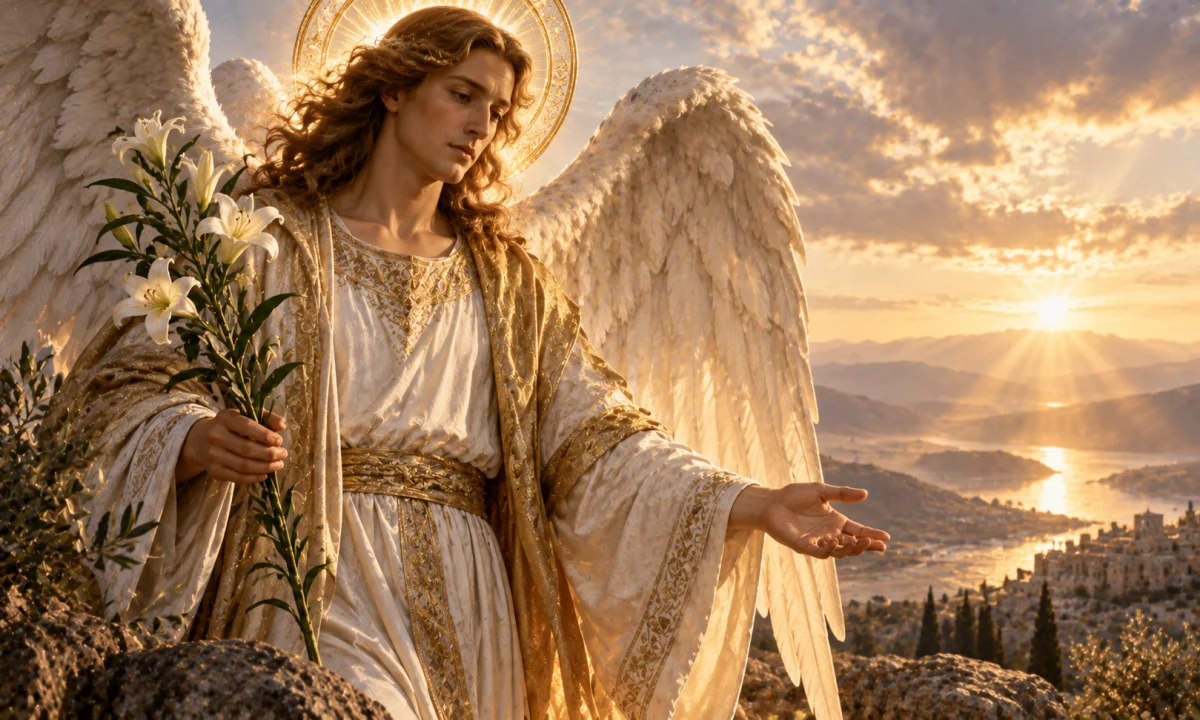
Barakiel is an angelic name found in later Jewish, Christian and esoteric traditions, although its spelling, status and assigned duties vary considerably. The figure is especially associated with Eastern Christian angelology, where Barachiel is sometimes counted among the seven archangels. In other traditions, similar forms of the name belong to different angels or to a Watcher condemned in the Book of Enoch. Barakiel is not named in the Bible, and no single ancient text provides a universally accepted biography, appearance or hierarchy for this angel.
Name and meaning
The name is usually connected with the Semitic elements barak, meaning “to bless” or “blessing,” and El, meaning “God.” It is therefore commonly interpreted as “Blessing of God,” “God has blessed,” or “Blessed by God.” Another related interpretation connects the name with a word for lightning or lightning-flash. The relationship between these meanings is not always clear because several names in Jewish and Christian angelology contain similar roots, and their spellings were transmitted through Hebrew, Aramaic, Greek, Latin, Arabic and later European languages.
Common forms include Barachiel, Barakiel, Baraquel and Barchiel. These forms are often treated as variants of one name, but they do not always have the same history. Some spellings belong to later lists of angels, magical manuals or devotional traditions rather than to an identifiable ancient source. Transliteration also accounts for part of the variation: a name written in one alphabet may acquire several forms when rendered in another language.
Religious and cultural setting
Barakiel belongs to the broad development of angelic traditions that took place outside the limited lists of angels found in the Hebrew Bible and Christian New Testament. Biblical texts name figures such as Michael, Gabriel and Raphael, while later Jewish and Christian writers developed much larger angelic hierarchies. These traditions attempted to describe the heavenly world, classify spiritual beings and explain how divine action might be mediated to human beings.
In Christian theology, angels are generally understood as created spiritual beings who serve God. Their roles may include worship, protection, revelation, judgment and assistance. A named angel who appears in a later prayer book, iconographic tradition or angelological list does not necessarily have the same doctrinal status as an angel explicitly named in scripture. This distinction is important in the case of Barakiel, whose reputation depends mainly on later tradition rather than on a universally recognized canonical text.
Eastern Christian tradition gives Barachiel a more established place than most Western Christian traditions do. In some Orthodox lists, he appears among the seven archangels, often in connection with the Synaxis of the Archangel Michael and the Other Bodiless Powers, celebrated on 8 November in the Byzantine calendar. The exact names included in lists of seven archangels can differ, however. Some lists include Uriel, while others use different names or emphasize only the archangels recognized in a particular local tradition.
Barachiel among the seven archangels
When Barachiel is included among the seven archangels, he is usually presented as a heavenly servant associated with divine blessing. The title “archangel” in this context means a high-ranking angel, but the details of rank are not consistent across all Christian communities. The Bible does not provide a complete roster of seven archangels, and the number seven reflects a recurring religious pattern rather than a single universally binding catalogue.
In Orthodox devotional and iconographic contexts, Barachiel may be represented as a winged angel holding flowers, especially white roses, or a vessel containing roses. These images symbolize blessing, purity, divine favour and the gifts of providence. Yet such imagery is not uniform across Orthodox art. A depiction identified as Barachiel in one setting may not be recognizable as him in another, and many angelic figures in religious art are identified by inscriptions rather than by distinctive physical features.
Some accounts call Barachiel a prince of blessing or an angel through whom blessings are granted to families and individuals. These descriptions are devotional interpretations rather than a consistently defined office in Christian scripture. They reflect a broader religious tendency to associate named angels with particular forms of divine care, including protection of households, guidance in daily life and help in receiving spiritual gifts.
Attributes and symbolism
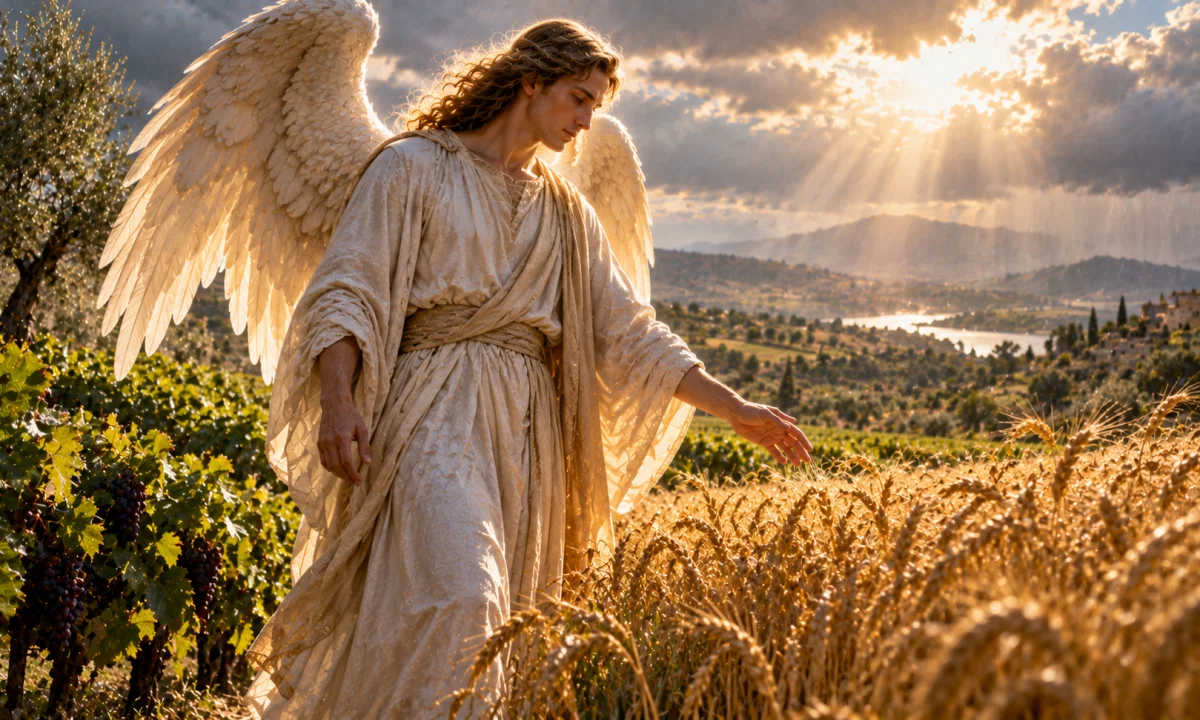
The principal attribute associated with Barakiel or Barachiel is blessing. In this sense, blessing does not necessarily mean material success. In biblical and liturgical language, a blessing may involve holiness, protection, fertility, peace, reconciliation, prosperity, or the recognition of divine favour. A tradition that calls Barachiel an angel of blessing may therefore be expressing a belief that God’s goodness reaches human beings through heavenly service.
Flowers, especially roses, are a later symbolic association. Roses can suggest beauty, spiritual joy, purity and the flourishing of life. When shown in an angel’s hands, they may also represent blessings distributed among people. The symbolism should not be mistaken for a fixed ancient attribute. There is no widely accepted biblical description of Barakiel carrying roses, and the image belongs chiefly to later devotional and artistic tradition.
The alternative association with lightning arises partly from related Semitic words and partly from confusion among similarly named figures. Lightning has a powerful place in biblical imagery: it can signify divine presence, judgment, revelation and overwhelming celestial power. Some later angelological systems consequently connect names containing elements related to lightning with storms or thunder. This does not mean that every tradition identifying Barachiel with blessing also identifies him with weather or lightning.
Modern lists may assign Barachiel a broad range of responsibilities, including family welfare, marriage, children, good fortune, protection from misfortune, or the distribution of blessings. These assignments should be treated as variable devotional or esoteric developments, not as a standardized body of ancient teaching.
Sources and uncertain traditions
Barakiel is not one of the angels named in the standard Jewish and Christian biblical canon. Nor does the well-known list of seven archangels in the First Book of Enoch include him. The archangels named in that work are Michael, Gabriel, Raphael, Uriel, Raguel, Saraqael and Remiel, although manuscript traditions and translations can vary in spelling. This difference matters because popular angel lists sometimes combine names from distinct texts as though they belonged to one original system.
Some later Jewish mystical and angelological writings contain names resembling Barakiel. The transmission of these names is complicated by variant manuscripts, transliteration and the practice of assigning similar names to different heavenly beings. A name that appears in one catalogue may not represent the same figure as a name with a similar spelling in another. For this reason, claims that Barakiel has a single, clearly documented origin in “ancient angelology” are too confident.
Later Christian lists also differ in their treatment of the name. In some Eastern traditions, Barachiel is a recognized member of a devotional group of archangels. In Roman Catholic practice, the officially named archangels are Michael, Gabriel and Raphael, the three angels identified in Catholic canonical scripture. Barachiel is not generally part of the standard Catholic liturgical roster. This does not make Eastern Orthodox veneration of Barachiel illegitimate; it reflects differences in canon, liturgical history and the authority given to later traditions.
Barakiel and the Watcher Baraqijal
One especially important distinction concerns Baraqijal, also spelled Baraqel or similar forms in translations of the First Book of Enoch. Baraqijal is named among the Watchers, the angels who descend from heaven and transgress their proper order. In that tradition, the Watchers teach forbidden knowledge to humanity, and Baraqijal is associated in some translations with astrology or the signs of the heavens.
Baraqijal should not automatically be identified with Barachiel, the later angel of blessing. The names resemble one another because both contain a root connected with lightning or radiance, but similar spelling is not sufficient evidence that they are the same being. The Watcher tradition presents Baraqijal within a story of angelic rebellion and illicit instruction, whereas Eastern Christian devotion presents Barachiel as a faithful servant of God. Merging the two produces a misleading picture of both.
Relationship to other archangels
Barachiel is sometimes placed alongside Michael, Gabriel, Raphael and Uriel in later lists, but the composition of these groups is not stable. Michael is widely associated with defence and heavenly warfare, Gabriel with announcement and revelation, Raphael with healing and guidance, and Uriel with illumination or divine wisdom in traditions that recognize him. Such assignments are themselves shaped by different texts and interpretations.
Barachiel’s proposed role is less narrative and more symbolic. He is not known for a major scriptural episode comparable to Gabriel’s annunciation to Mary or Raphael’s journey with Tobias in the Book of Tobit. Instead, his identity is built from liturgical lists, devotional imagery and the meaning attached to his name. His presence in a group of archangels represents the idea that divine blessing, like protection or revelation, may be understood through a distinct heavenly ministry.
Prayer and devotion
Devotional appeals to Barachiel are most at home in traditions that accept him as an archangel and regard the heavenly powers as intercessors or servants of God. A person invoking Barachiel may ask for blessing upon a household, peace within a family, strength during hardship or gratitude for divine gifts. Such practices should be distinguished from official doctrine: a prayer found in a local devotional tradition does not necessarily have the status of a universally authorized liturgical prayer.
In Orthodox Christianity, angels are not treated as independent gods or as sources of blessing separate from God. Their honour is subordinate to divine worship. Where Barachiel is venerated, the theological emphasis is generally that blessings come from God and that the angel serves as a messenger or minister of divine grace. This distinction separates Christian angel devotion from systems in which named spirits are approached as autonomous powers controlling particular areas of life.
Later esoteric and popular interpretations
From the Renaissance onward, European occult writers created elaborate tables of angels, planets, days, hours, colours and magical offices. Later occult and New Age publications have sometimes connected Barachiel with Jupiter, Thursday, prosperity, weather, luck or domestic happiness. These associations are not consistent with one another and should not be projected backward into ancient Jewish or Christian religion.
Some modern sources describe Barachiel as an angel of lightning; others call him the angel of blessings, family life or good fortune. Still others assign him a place among the planetary spirits or provide a distinctive seal, colour or invocation. Such details belong to particular modern systems, and they should be identified as esoteric or contemporary rather than presented as settled religious history.
Barakiel has not developed a major, stable presence in mainstream film, literature or popular fantasy comparable to figures such as Michael, Gabriel or Lucifer. When the name appears in modern fiction, games or online angel encyclopedias, the portrayal may draw on the general idea of a powerful celestial being rather than on Eastern Christian tradition. A fictional Barakiel may therefore possess abilities, loyalties or relationships with no basis in historical angelology.
Cultural significance
Barakiel’s importance lies less in a single ancient legend than in the way different communities have imagined the distribution of divine goodness. The name provides a way to speak about blessing as an active heavenly gift, while the figure’s place among the archangels reflects the human desire to give structure and personality to the invisible world.
At the same time, Barakiel demonstrates why angelic names must be studied within their sources. A name can move between languages, manuscripts, church traditions and occult systems, acquiring new meanings along the way. Barachiel the Christian archangel, Baraqijal the Watcher of Enochic tradition and later esoteric versions of Barakiel may share linguistic elements without sharing an identity. Treating those distinctions carefully preserves both the historical complexity and the religious meaning of the traditions in which the name appears.