WORLD

Banga
Banga is an obscure and uncertain name in modern discussions of African mythology. It is sometimes presented as a water-associated spirit or supernatural being, but the name does not identify one universally recognised figure across Africa. Reliable information about Banga is limited, and descriptions found in general mythology lists often disagree about its people, region, appearance and powers.
Africa contains thousands of distinct religious and cultural traditions. A name labelled simply “African mythology” may therefore conceal several different possibilities: an indigenous term recorded in one language, a name altered by transcription, a local spirit later detached from its original community, or a modern invention repeated through popular reference works. Banga needs to be treated with particular care because there is no securely established, continent-wide tradition surrounding the figure.
Origins and cultural setting
No single ancient African religion can be identified as the source of Banga. Religious traditions across the continent developed within particular societies, languages and landscapes. Beliefs about rivers, lakes, springs, forests and the sea vary greatly among West African, Central African, East African, Southern African and North African peoples.
Many African traditions recognise spirits connected with water or other natural places. Such beings may protect a community, punish violations of ritual rules, control access to resources, cause illness, grant wealth or appear in stories about dangerous encounters. Their names and characteristics are normally tied to a specific language and locality. It is therefore misleading to treat every water spirit as a version of one general African mermaid or deity.
The name Banga is not accompanied by a well-established body of widely preserved myths comparable to traditions concerning figures such as Anansi, Nyame, Mami Wata, Ọ̀ṣun, Unkulunkulu or the water spirits of particular Central and Southern African communities. The absence of a substantial, identifiable narrative tradition does not prove that no local belief has ever used the name. It does mean that broad claims about Banga should not be treated as established cultural facts.
The name and its identity
The meaning and linguistic origin of “Banga” remain uncertain in mythological reference material. A name may be written differently when it is transferred from an African language into English, French, Portuguese or another colonial language. Tones, vowel length, consonants and grammatical markers may also disappear in transcription. Two similar spellings can consequently refer to unrelated words, while the same being may appear under several spellings.
There is no reliable basis for assigning Banga to all Bantu-speaking peoples, to Africa as a whole, or to one specific ethnic tradition without additional evidence. “Bantu” itself refers to a large family of languages and to the peoples who speak them; it does not describe one uniform mythology. The same caution applies to labels such as “West African” or “Central African,” which cover many different cultures.
Some modern summaries classify Banga as a water spirit. That classification may reflect a local tradition, a secondary retelling or a catalogue entry whose original evidence is difficult to trace. It should not be expanded into a detailed biography without corroboration. In particular, claims that Banga has a fixed human-and-fish body, lives in a named river, seduces travellers or rules all aquatic beings are not securely established as general features of the tradition.
Reported character and attributes
Where Banga is described in modern mythological lists, the figure is commonly associated with water or with a dangerous supernatural encounter. Even this association should be regarded as tentative rather than definitive. There is no consistent description of Banga’s gender, physical form, social role or relationship with a supreme deity.
Descriptions of aquatic beings in African folklore often reflect the concerns of the communities telling the stories. A river spirit may represent the power and unpredictability of water, especially where people depend on rivers for drinking, fishing, travel or irrigation. A lake or ocean being may also embody wealth, sexuality, healing, danger or the boundary between the ordinary world and the spirit world.
If Banga belongs to such a local tradition, its meaning would have depended on the surrounding cultural setting rather than on a fixed list of fantasy-like powers. A spirit connected with water might be respected through offerings, approached under specific conditions or invoked in explanations of misfortune. It might also appear as a warning against swimming in dangerous places, breaking taboos or entering territory believed to belong to non-human beings.
There is not enough dependable evidence to state that Banga possesses a particular animal shape, commands storms, grants riches, abducts people or causes drowning. These motifs occur in many African and non-African traditions, but the presence of a motif elsewhere does not establish it as an attribute of Banga.
Stories and relationships
No widely attested cycle of stories about Banga is available in the form of a consistent creation myth, heroic episode or family genealogy. This is an important distinction. A name can appear in a catalogue without preserving the oral narratives, ritual context or local explanations that would show what the figure meant to the people who used it.
Traditional African stories are often transmitted orally, and many were recorded only after sustained contact with outside researchers, missionaries, administrators or collectors. Early collectors did not always preserve African names accurately. They could translate several different indigenous beings with the same English word, or interpret a local spirit through familiar European categories such as “devil,” “fairy,” “monster” or “mermaid.” Later writers sometimes repeated those interpretations without returning to the original language or community.
For Banga, this creates several possibilities. The name may refer to a local being whose stories have been poorly documented. It may be a variant spelling of another name. It may have been separated from a longer expression or title. It may also have entered modern lists through an error that was copied from one publication to another. Without a clearly identified community and a body of recorded tradition, these possibilities cannot be resolved confidently.
Banga and African water-spirit traditions
Water spirits are an important subject in many African religious and folkloric traditions, but they are not interchangeable. In some communities, a water being is an ancestor, guardian or local divinity. In others, it is a dangerous presence that must be avoided. Some traditions distinguish between benevolent and hostile spirits, while others describe relationships that are morally or ritually complex.
The broad modern image of a beautiful woman with a fish tail is especially liable to cause confusion. Aquatic beings in Africa have their own histories, and not all resemble European mermaids. The international popularity of Mami Wata, for example, has encouraged outsiders to use “mermaid” as a translation for a wide range of water-associated figures. Mami Wata is itself a varied and historically changing complex of beliefs rather than a name that can automatically replace every local water spirit.
Banga should not be identified with Mami Wata merely because both may be described as aquatic. Nor should it automatically be identified with river goddesses, lake spirits, serpent beings or ancestral powers from unrelated traditions. Similar functions do not prove a shared origin.
Evidence and interpretation
The most responsible interpretation of Banga is cautious. The figure can be discussed as an uncertain or poorly documented mythological name, with a possible association with water in some secondary accounts. It cannot safely be described as a major African god, a pan-African demon or a universally recognised creature.
Researchers investigating the name would need to establish where it was recorded, in which language, by whom and in what context. Useful evidence would include an account from a named community, a transcription in the original language, explanations from cultural specialists and information about ceremonies, stories or customary practices connected with the being. A bare entry in a list of mythical creatures is not enough to establish those details.
Interpretations should also distinguish between religious belief and folklore. A being regarded as spiritually real by a community is not merely a fictional monster, while a later cautionary tale may not represent formal worship. The English word “myth” can refer to sacred narrative, traditional story or a false claim, but these meanings should not be confused when discussing African religions.
There is also a danger in treating uncertainty as evidence of primitiveness or insignificance. Many oral traditions have been disrupted by enslavement, colonial rule, missionary activity, forced migration, language loss and the destruction of cultural institutions. Limited documentation often reflects historical conditions rather than the importance of a belief to the people who held it.
Distinguishing Banga from similar names
The short spelling “Banga” can easily be confused with words, personal names, place names and ethnonyms from different African languages. Similarity of spelling alone does not demonstrate that two terms describe the same being. The name may also be confused with “Benga,” which can refer to unrelated cultural or geographical subjects, or with local terms that acquire different spellings in English-language publications.
Banga should likewise be distinguished from named water beings belonging to specific traditions. A river spirit from a particular region should retain its own name and cultural setting rather than being folded into a generic category of Banga. This is especially important for beings associated with Mami Wata traditions, serpent spirits, mermaid figures or ancestral guardians.
It is also unhelpful to assume that every African supernatural being with a similar appearance belongs to one mythology. A serpent, fish, crocodile, woman, ancestor or shape-shifter may have very different significance from one society to another. Classification by appearance can obscure the religious ideas and social rules attached to the figure.
Modern representations
Banga appears to have a greater presence in modern mythology catalogues and online lists than in widely documented traditional narratives. Such sources often compress complex cultures into short descriptions and may present uncertain material with unwarranted confidence. A simple statement that Banga is a water monster can therefore make a tentative classification look like an ancient, uniform belief.
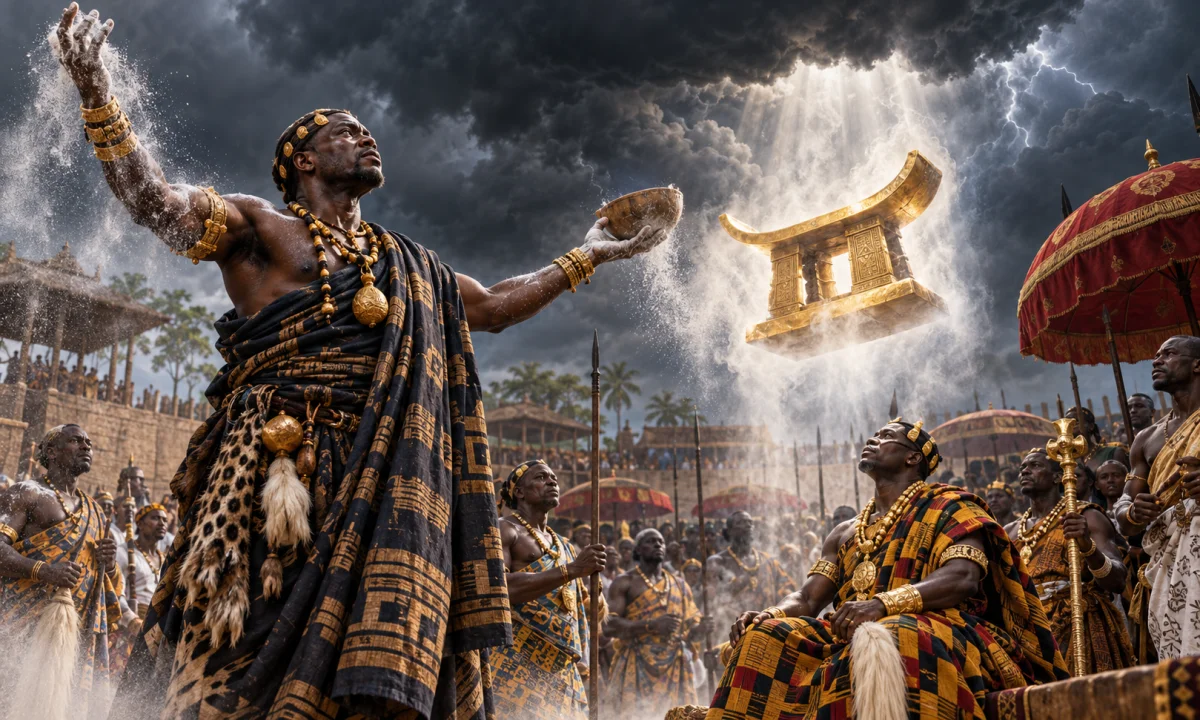
Fantasy fiction, role-playing games and social-media accounts may further develop the name by assigning Banga a detailed appearance, a set of magical abilities or a dramatic origin story. These creative uses can be legitimate inventions, but they belong to modern popular culture rather than to securely documented African tradition. They should not be presented as evidence for the historical beliefs of a particular African people.
For cultural and historical writing, the most accurate description remains limited: Banga is an obscure and variably reported name, sometimes linked in modern accounts with a water-associated African spirit, but lacking a securely established, widely documented identity. Any more specific account requires a named regional tradition and evidence that can distinguish inherited belief from later interpretation or repetition.