WORLD
WORLD
Alpheus
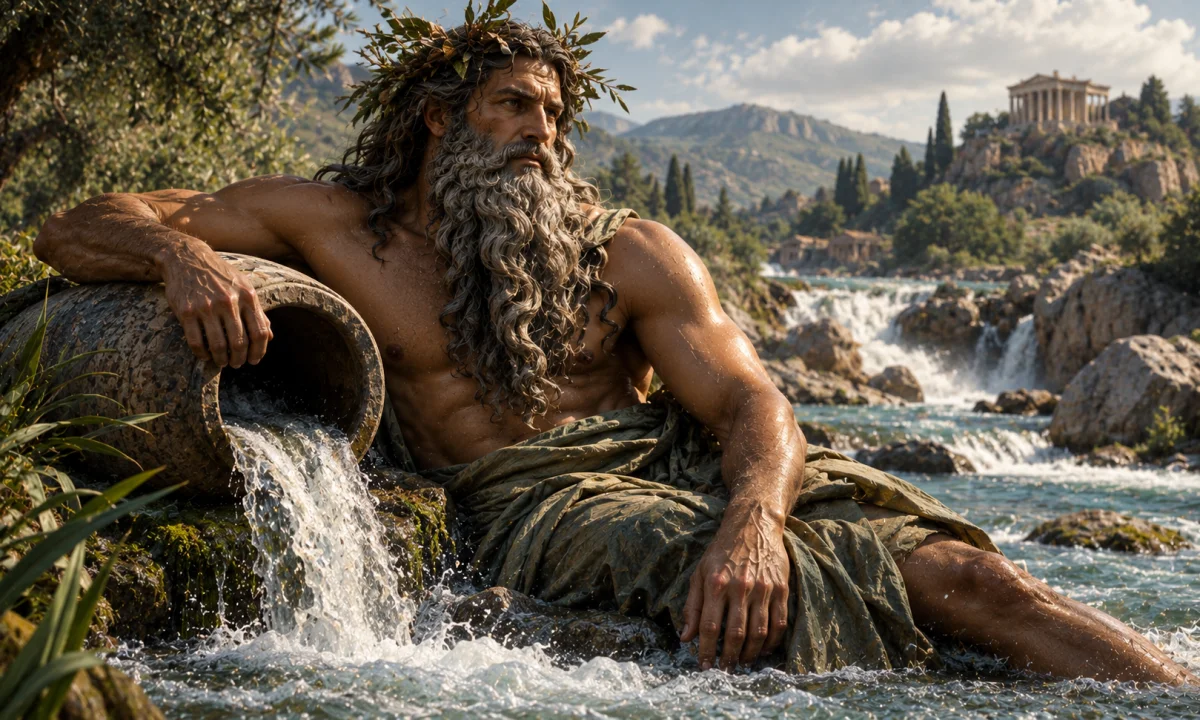
Alpheus is a river god of Greek mythology, identified with the Alpheus River in the western Peloponnese. In Greek, his name is written Alpheios (Ἀλφειός), while “Alpheus” is the usual Latin and English form. He belongs to the ancient Greek tradition of personifying rivers as divine beings: a river could be a physical feature of the landscape, a god with genealogical and religious significance, and a power capable of shaping the lives of humans and other gods.
Origins and cultural setting
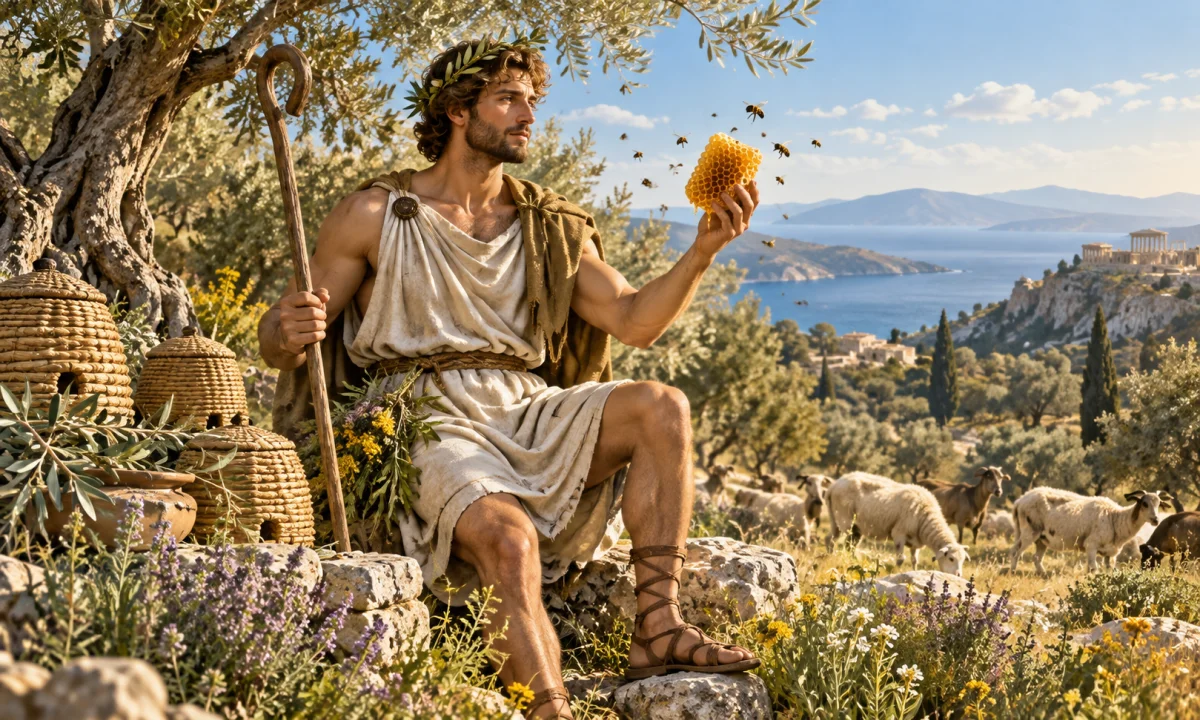
The Alpheus was one of the major rivers of the Peloponnese. It rises in the central region of Arcadia and flows westward through the territory of Elis before reaching the Ionian Sea. Its valley was closely associated with Olympia, the sanctuary where the ancient Olympic Games were held. This geographical importance helped make Alpheus more than a local watercourse. He became part of the sacred landscape of one of the most important religious centers in Greece.
Like many Greek rivers, Alpheus was understood in both natural and divine terms. Ancient Greek religion did not always separate a god from the place or force that the god represented. A river could be worshipped as a living power, imagined as a male deity, and included in myths about marriage, pursuit, fertility, cleansing, and the movement of water through the earth.
Alpheus appears in several kinds of ancient material, including epic poetry, religious tradition, geographical writing, and mythography. Hesiodic tradition places him among the river gods, or potamoi, the sons of the primordial water deities Oceanus and Tethys. This genealogy is not unique to Alpheus: many important rivers in Greek myth receive the same parentage. It expresses their place within the wider divine family of springs, streams, seas, and other waters.
The surviving evidence does not present a single, complete biography of Alpheus. Instead, different traditions emphasize different aspects of him. At Olympia he was a local sacred power connected with the river and its sanctuary. In the story of Arethusa, he became a passionate river god whose waters were imagined as travelling beneath the sea. In the legends of Heracles, the river was associated with a feat of engineering and extraordinary physical power.
Name and identity
The Greek name Alpheios is directly connected with the ancient name of the river. Its deeper etymology is uncertain. Ancient writers sometimes proposed explanations based on Greek words or stories, but these explanations do not establish a secure historical origin for the name. Modern discussions of the name have also remained cautious, and no single interpretation should be treated as proven.
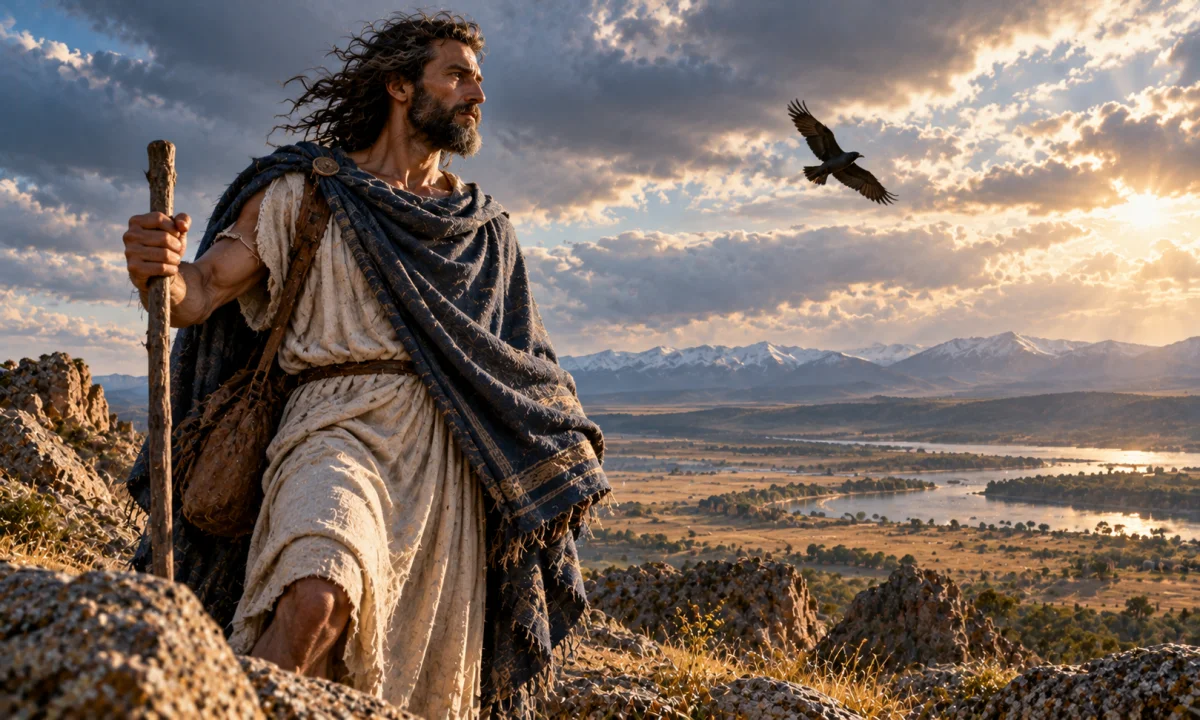
Alpheus is principally a river god, rather than a god with a broad independent sphere such as Zeus, Athena, or Apollo. His identity is tied to a particular river and its surrounding communities. Greek artists and poets could nevertheless give him human characteristics. River gods were often imagined as mature, powerful male figures, sometimes accompanied by horns or bull-like features. This imagery reflects the force, sound, and fertility of rivers, but there is no universally fixed appearance for Alpheus in all ancient sources.
He should also be understood as a personification rather than simply a fictional man who happened to live beside a river. In a religious setting, offering to Alpheus could mean acknowledging the sacred power of the river itself. Myths involving him often explain relationships between waterways, springs, islands, and sanctuaries rather than describing the adventures of a hero with a consistent human career.
Alpheus and Arethusa
The best-known story about Alpheus concerns Arethusa, a nymph associated especially with a famous spring on the island of Ortygia at Syracuse in Sicily. The story exists in differing forms, and the fullest surviving literary version is told by the Roman poet Ovid in the Metamorphoses. The underlying connection between Alpheus, Arethusa, and Syracuse was also known in Greek geographical and religious traditions.
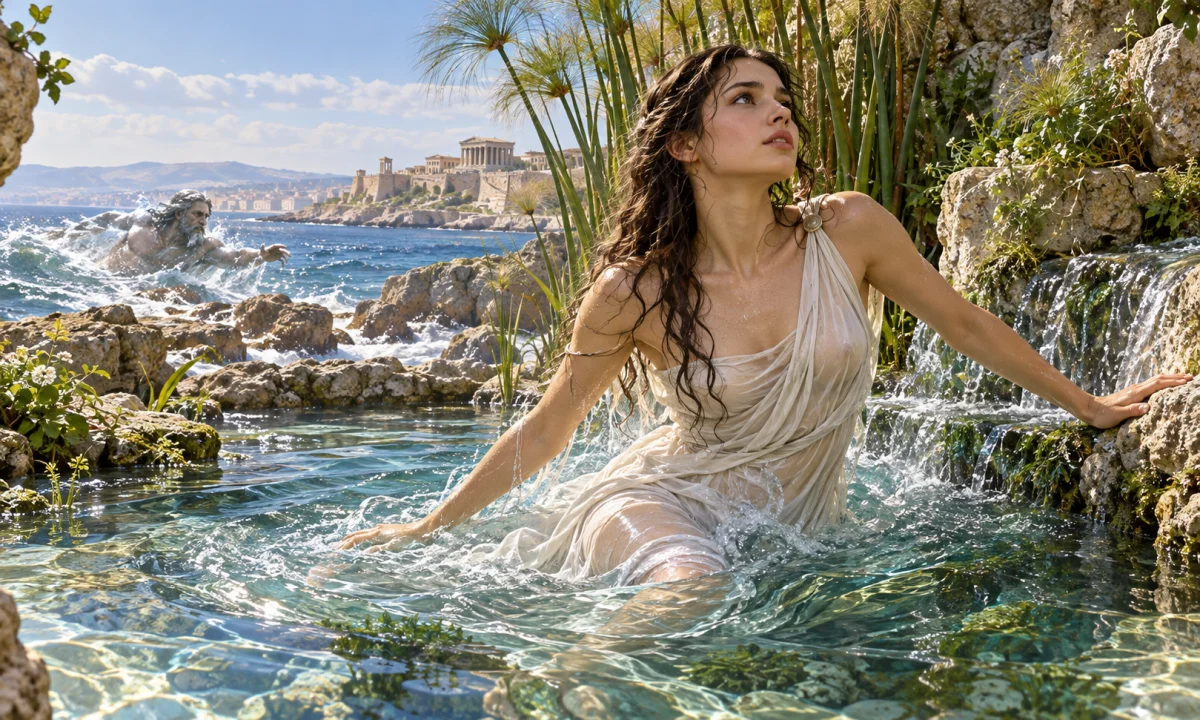
In the familiar version, Arethusa is a follower of Artemis and a devotee of chastity. While bathing after a hunt, she is pursued by Alpheus, who has fallen in love with her. She attempts to escape, but the river god follows her. Arethusa calls upon Artemis, who conceals her in a cloud and transforms her into a spring. According to the myth, the spring emerges on Ortygia, allowing Arethusa to escape Alpheus.
Alpheus does not abandon the pursuit. He changes from a pursuing male deity into flowing water and passes beneath the sea from the Peloponnese to Sicily. There he mingles his waters with those of Arethusa’s spring. The story thus provides a mythic explanation for the supposed connection between the Alpheus River and the spring at Syracuse.
Ancient writers and local traditions sometimes linked the two waterways through a physical test. Objects thrown into the Alpheus were said, in some accounts, to reappear at Arethusa. One tradition held that the blood or debris from sacrifices at Olympia could be detected in the Sicilian spring. Such claims belong to ancient geographical belief and local sacred storytelling, not to established hydrology. The important point for the myth is that the river was imagined as capable of crossing a great distance invisibly beneath the sea.
The Arethusa story carries several layers of meaning. It explains a striking geographical relationship between Greece and Sicily, reinforces the sacred identity of the Ortygian spring, and connects the spring with Artemis. It also reflects a recurring mythological pattern in which a threatened woman escapes through divine transformation. Modern readers may find the pursuit troubling because the story treats Alpheus’s desire as a force from which Arethusa must flee. Ancient versions, however, place the emphasis on the power of Artemis, the special status of the spring, and the supernatural continuity of water.
The relationship between Alpheus and Arethusa should not be mistaken for a simple love story with a stable romantic outcome. In the most influential version, Arethusa seeks escape rather than union. The joining of the waters takes place through transformation and geography, not through an ordinary marriage. Some artistic and poetic interpretations later softened or reshaped this dynamic, but the ancient narrative is fundamentally a story of pursuit, flight, and metamorphosis.
Olympia and religious significance
Alpheus had an important place in the sacred landscape of Olympia. The Alpheus flowed near the sanctuary, and the river’s presence helped define the region in which the Olympic festival developed. Ancient religious practice at Olympia involved many divine powers, including Zeus, Hera, Nike, the local heroes, and the river gods associated with the land.
Evidence from ancient descriptions of Olympia indicates that Alpheus had an altar or received worship in the sanctuary. His cult was not merely decorative. Rivers provided water, supported agriculture, marked boundaries, and could be dangerous when swollen. Honoring the river acknowledged its practical value and its independent power.
Alpheus was also connected with Artemis in local religious tradition. This connection may help explain why the Arethusa story joins the river god with a nymph protected by Artemis. It does not mean that every ancient version of Alpheus’s worship or mythology involved the goddess. Greek local cults often preserved relationships that were specific to one sanctuary or region, and the surviving evidence does not allow every detail to be reconstructed with certainty.
The poet Pindar treated the Alpheus and the landscape of Olympia as subjects worthy of elevated praise. In victory poetry connected with the Olympic Games, rivers and sanctuaries were not passive scenery. They helped establish the fame, antiquity, and divine legitimacy of athletic victory. The presence of Alpheus therefore contributed to Olympia’s identity as a place where human achievement took place under the attention of gods and sacred natural powers.
Alpheus and the labours of Heracles
Another tradition associates Alpheus with Heracles and the cleaning of the Augean stables. The stables of King Augeas contained an enormous accumulation of dung, and Heracles was required to clean them as one of his labours. In versions preserved by ancient mythographers, he accomplished the task by diverting rivers through the enclosure.
The rivers most commonly named in this story are the Alpheus and the Peneus. Heracles breaks through or alters their course so that the rushing water washes the stables clean. This episode presents him not only as a warrior but also as a figure capable of manipulating the landscape on a colossal scale.
Details vary among ancient accounts. Some versions emphasize the Alpheus, some mention both the Alpheus and the Peneus, and some focus more on Heracles’s arrangement with Augeas and the aftermath of the labour. The river god is not always portrayed as an independent character who speaks or makes a decision. Often, “Alpheus” refers to the river’s water and force within the story rather than to a fully dramatized divine person.
The connection with Heracles also reflects the practical importance of rivers in Greek imagination. Water could cleanse, nourish, destroy, or redraw boundaries. By controlling the river, Heracles turns a natural force into an instrument of heroic intelligence and strength. The myth does not imply that Alpheus was subordinate to Heracles in general religious belief; it is a narrative use of the river’s power within one heroic episode.
Attributes and symbolism
Alpheus’s principal attribute is flowing water. Unlike gods whose identity is expressed through weapons, animals, or crafted objects, a river god is represented by the movement and physical presence of his river. Springs, riverbanks, reeds, vessels of water, and aquatic imagery can therefore serve as symbolic references to Alpheus.
As a river deity, he may be connected with fertility and abundance. Rivers make agriculture possible, sustain settlements, and create fertile plains. They can also mark the borders between communities and regions. These meanings help explain why river gods appear frequently in Greek genealogies: communities could imagine their land as descended from the sacred waters that shaped it.
Alpheus also symbolizes hidden connection. In the Arethusa myth, the river disappears beneath the sea and emerges again in a distant place. The story turns an uncertain or invisible natural process into a divine journey. Greece and Sicily become linked through the movement of the god himself, creating a mythic relationship between two Greek-speaking regions separated by the Ionian Sea.
His association with Olympia adds another dimension. The Alpheus represents the local landscape that surrounds a pan-Hellenic sanctuary. Athletes and visitors came from many Greek communities, but the festival remained rooted in a particular river valley. Alpheus therefore embodies the meeting of regional geography and wider Greek religious culture.
Distinction from similar figures
Alpheus should not be confused with Arethusa. Arethusa is generally a nymph or spring deity, while Alpheus is the river god pursuing her in the best-known myth. Their waters are joined in the story, but they are separate divine figures.
He should also be distinguished from Peneus, another important Thessalian river god. Peneus appears in myths involving the river valley of Thessaly and the nymph Daphne, among other traditions. Because both Alpheus and Peneus are connected with the Heracles story, and because both belong to the class of Greek river gods, they can be confused in short retellings. They are not alternate names for the same deity.
Nor is Alpheus identical with Oceanus. Oceanus is the primordial world-encircling water deity in Greek cosmology and the father of the river gods in the usual genealogy. Alpheus is one of his divine descendants and represents a specific river. The two figures occupy different levels within the mythic organization of water.
Later reception
The story of Alpheus and Arethusa continued to attract poets, painters, and composers because it combines pursuit, metamorphosis, landscape, and the imagined movement of water beneath the sea. Roman literature, especially Ovid’s retelling, played a major role in transmitting the story to later European culture. Renaissance and later artists often represented Arethusa’s transformation or Alpheus’s attempt to reach her.
Later works sometimes present Alpheus and Arethusa as a tragic or romantic pair. That interpretation is a creative development rather than a complete description of their ancient religious relationship. In the older traditions, Alpheus is primarily the sacred river of the Peloponnese, a power worshipped near Olympia and woven into local explanations of distant waters. His importance lies less in a standardized personality than in the way Greek mythology turned a real river into a divine presence capable of shaping geography, ritual, and story.