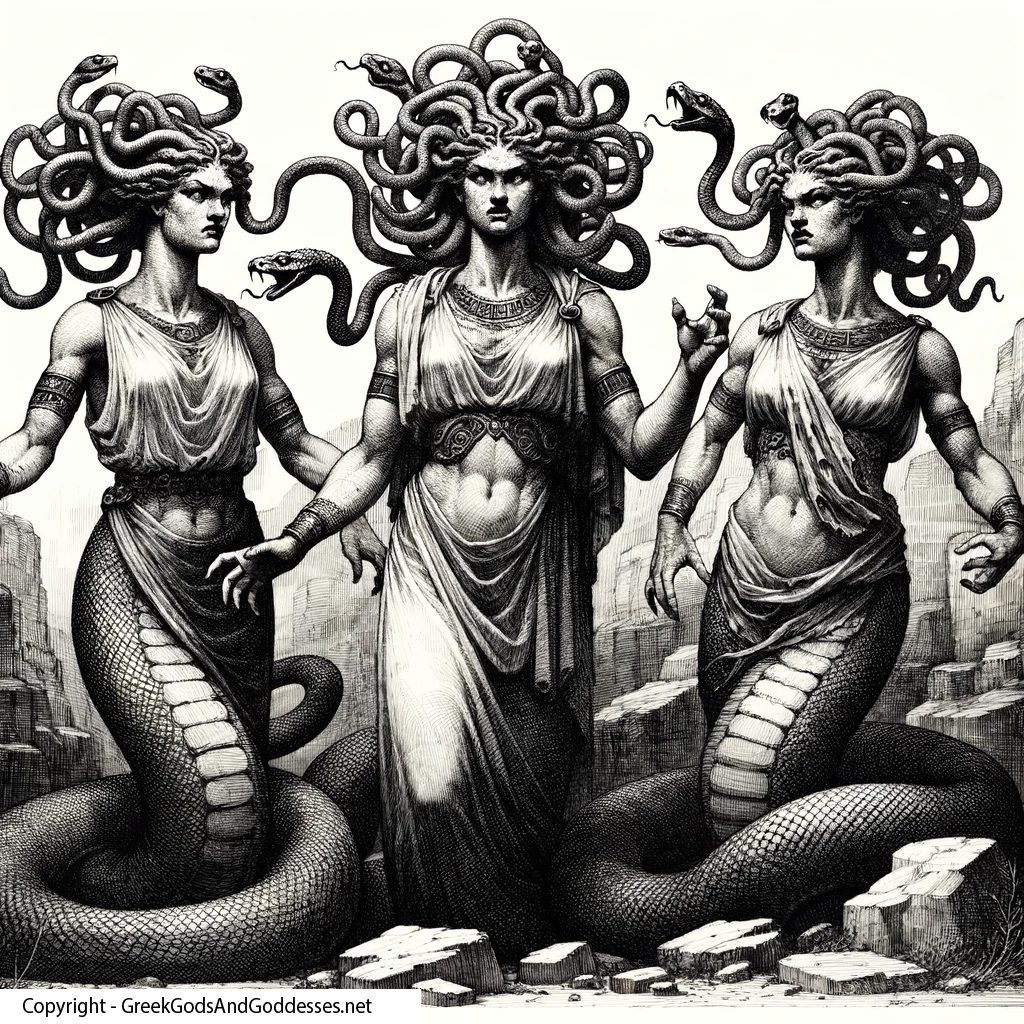
The Gorgons are fascinating creatures from Greek mythology that have captured the imagination of many throughout history. They are often depicted as monstrous women with snakes for hair, and their gaze is said to turn anyone who looks at them into stone. Among the most famous Gorgons are Medusa, Stheno, and Euryale. Each of these figures has unique attributes and stories that contribute to the rich tapestry of Greek myths. Understanding the Gorgons requires delving into their origins, characteristics, and their roles in various myths.
Origins of the Gorgons
The Gorgons are often considered to be daughters of Phorcys and Ceto, primordial sea deities in Greek mythology. They are part of a larger family of monsters that include other fearsome creatures. The Gorgons are said to inhabit the farthest reaches of the world, living in a dark and isolated place. Their origins can be traced back to ancient texts, where they were often described as fearsome and hideous beings. This lineage connects them to other mythological monsters, emphasizing the theme of chaos and danger that these creatures represent.
 Graeae
Medusa is the most well-known of the Gorgons, but she was not originally a monster. In some versions of the myth, she was a beautiful maiden who served in the temple of Athena. However, after being cursed by the goddess for being seduced by Poseidon, Medusa was transformed into a Gorgon. This transformation not only changed her appearance but also endowed her with the power to petrify anyone who gazed upon her. This myth serves as a cautionary tale about the consequences of actions and the power dynamics between gods and mortals.
Characteristics of the Gorgons
The Gorgons are typically portrayed with distinct features that make them easily recognizable. Most notably, they have hair made of living snakes, which wriggle and hiss. This terrifying aspect is symbolic of their danger and the fear they invoke in others. Their faces are often described as grotesque, with sharp fangs and a fierce expression. This fearsome appearance reflects their role in mythology as agents of chaos and destruction.
 Gyges
GygesWhile all Gorgons share similar traits, there are differences among them. Medusa is often depicted as the most tragic figure, burdened with her curse and the isolation that comes with it. In contrast, her sisters, Stheno and Euryale, are immortal and often portrayed as more aggressive. They do not suffer the same fate as Medusa and instead revel in their monstrous nature. This distinction adds depth to their characters and highlights the theme of transformation within Greek mythology.
The Role of the Gorgons in Greek Mythology
The Gorgons play significant roles in various myths, serving as obstacles or antagonists for heroes. One of the most famous stories involving a Gorgon is the tale of Perseus. Tasked with retrieving Medusa’s head, Perseus embarks on a dangerous quest. With the help of the gods, he acquires a reflective shield from Athena, which allows him to view Medusa without directly looking at her. This clever tactic enables him to behead her, ultimately leading to the birth of Pegasus, the winged horse, from her blood. This myth underscores the themes of bravery, cunning, and the interplay between mortals and gods.
Another notable mention of the Gorgons is in the story of Jason and the Argonauts. In their quest for the Golden Fleece, they encounter various challenges, including the threat posed by the Gorgons. The fear that these creatures invoke serves as a reminder of the dangers that lurk in the world of mythology. The Gorgons symbolize the chaotic forces that heroes must confront and overcome to achieve their goals.
 Hades
HadesThe Symbolism of the Gorgons
The Gorgons carry rich symbolism in Greek mythology. They represent the fear of the unknown and the chaos that can arise from unchecked power. Their ability to turn people to stone serves as a metaphor for the paralyzing effect of fear and the consequences of facing one’s fears. The transformation of Medusa from a beautiful maiden to a monstrous Gorgon also speaks to themes of loss and the impact of external forces on individual identity.
Furthermore, the Gorgons can be seen as embodiments of female rage and power. In a patriarchal society, their monstrous nature can be interpreted as a reaction to the oppression faced by women. Medusa’s transformation can be viewed as a reflection of the consequences of being victimized, while her eventual slaying by Perseus can symbolize the violent suppression of female power. This duality adds complexity to their character and invites deeper analysis of gender dynamics within Greek mythology.
The Legacy of the Gorgons
The legacy of the Gorgons extends beyond ancient texts; they have become enduring symbols in art, literature, and popular culture. Their image has been used in various artistic representations, from ancient pottery to modern films. The Gorgon’s head, often referred to as the Gorgoneion, has been used as a protective symbol, believed to ward off evil and bring good fortune. This reflects the dual nature of the Gorgons as both terrifying and protective figures.
In contemporary culture, the Gorgons continue to inspire stories and characters. Medusa, in particular, has been reimagined in various forms, often highlighting her tragic backstory and complex emotions. This shift in portrayal allows for a more nuanced understanding of her character, transforming her from a mere monster into a figure of empathy and strength. Such reinterpretations invite discussions about the nature of monstrosity and the societal implications behind it.
the Gorgons are complex figures in Greek mythology, representing themes of fear, transformation, and female power. Their origins, characteristics, and roles in various myths reveal the multifaceted nature of these creatures. From Medusa’s tragic tale to the symbolism they embody, the Gorgons continue to captivate and inspire audiences across generations. Their legacy in art and culture reflects the enduring fascination with these mythological beings, ensuring that their stories will be told for years to come.