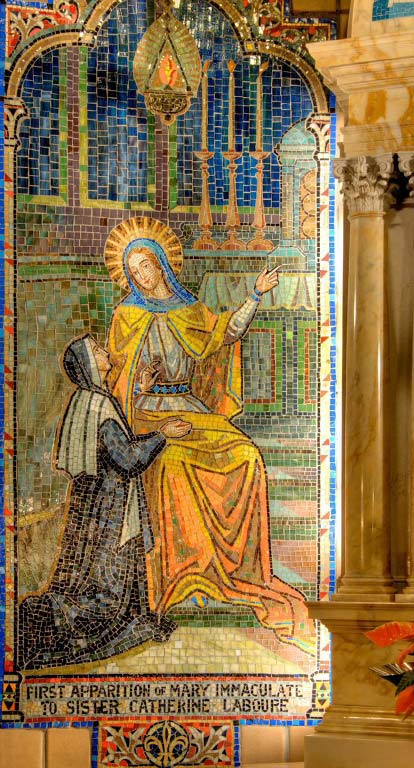
St. Catherine Laboure is a significant figure in Christian mythology, especially known for her deep devotion and her role in the vision of the Miraculous Medal. Born on May 2, 1806, in Fain-lès-Montbard, France, she was the ninth of eleven children in a farming family. From a young age, Catherine exhibited a profound faith and a strong desire to serve God. This deep spirituality led her to join the Daughters of Charity, a religious order founded by St. Vincent de Paul. Her life and experiences provide a fascinating insight into the nature of divine revelation and the importance of faith in everyday life.
Early Life and Spiritual Awakening
Catherine Laboure’s early life was marked by a loving family environment that fostered her spiritual growth. She was particularly close to her mother, who instilled in her the values of kindness, charity, and devotion to God. After her mother passed away when Catherine was just 9 years old, she took on the role of caregiver for her siblings, which further deepened her sense of responsibility and compassion. Her childhood experiences played a crucial role in shaping her future as a religious figure. At the age of 12, she had her first vision of St. Vincent de Paul, which she interpreted as a call to dedicate her life to God’s service.
 St. Catherine De Ricci
As she grew older, Catherine’s desire to enter religious life became more pronounced. At the age of 23, she finally joined the Daughters of Charity in Paris. This was a pivotal moment in her life, as it allowed her to fully immerse herself in the teachings of the Church and the mission of serving the poor and marginalized. The Daughters of Charity were known for their hands-on approach to charity, and Catherine thrived in this environment. Her deep spirituality and dedication to service set her apart, and she quickly became known for her unwavering faith and commitment.
The Vision of the Miraculous Medal
One of the most significant events in Catherine Laboure’s life occurred on the night of July 18, 1830, when she experienced a profound vision of the Virgin Mary. This vision was a defining moment that would change the course of her life and the lives of countless others. In her vision, Mary appeared to Catherine and asked her to create a medal that would spread grace and blessings to those who wore it. This medal, known as the Miraculous Medal, features an image of Mary standing on a globe, with rays of light emanating from her hands, symbolizing the graces she bestows upon the faithful.
Following this vision, Catherine was tasked with communicating the details of the medal’s design to her superiors. Although she faced skepticism, she remained steadfast in her conviction that the medal was a divine request. In 1832, the first medals were struck, and the response was overwhelming. Many people reported miraculous healings and blessings after wearing the medal, solidifying its status as a powerful symbol of faith. The Miraculous Medal quickly became popular among Catholics, and Catherine’s role in its inception was recognized as a significant part of her legacy.
 St. Catherine
The Life of a Mystic
St. Catherine Laboure’s life as a mystic was characterized by her deep prayer life and her ability to connect with the divine. After the vision of the Miraculous Medal, she continued to have mystical experiences, including visions of Jesus and angels. These experiences were not just personal revelations but were meant to inspire her to carry out her mission of spreading faith and charity. Catherine was known for her humility and simplicity, often attributing her experiences to the grace of God rather than her own merit.
Her mysticism was not limited to visions; it also manifested in her daily life. Catherine was deeply committed to her work with the poor and the sick, often sacrificing her own comfort to serve others. She embodied the teachings of Jesus, showing love and compassion to everyone she encountered. Her life was a testament to the idea that true spirituality is expressed through action and service. Catherine’s dedication to her faith and her mystical experiences played a crucial role in shaping her identity as a saint.
The Role of Women in the Church
St. Catherine Laboure’s life also highlights the important role of women in the Church. During her time, the Church was predominantly male-dominated, and women often had limited opportunities for leadership. However, Catherine’s experiences demonstrate that women could have a profound impact on the Church’s mission. Through her visions and the creation of the Miraculous Medal, she became a pivotal figure in promoting the faith among the laity. Her life serves as an example of how women can be powerful agents of change within the Church.
 St. Catherine Of Palma
Furthermore, Catherine’s work with the Daughters of Charity showcased the essential contributions of women in charitable work and education. The Daughters of Charity were at the forefront of many social issues, including poverty and education, and Catherine’s leadership within the order helped elevate the status of women in religious life. Her legacy continues to inspire women today, encouraging them to take active roles in their communities and the Church.
Legacy and Canonization
The legacy of St. Catherine Laboure is profound and enduring. After her death on December 31, 1876, her life and work continued to inspire countless individuals. She was beatified by Pope Pius XI in 1933 and canonized by Pope Pius XII in 1947. Her feast day is celebrated on November 28, the anniversary of the first vision of the Miraculous Medal. The canonization of Catherine Laboure is a testament to her holiness and the impact she had on the Catholic faith.
Today, the Miraculous Medal remains a popular sacramental among Catholics worldwide. Many people wear it as a sign of their faith and a reminder of the graces that flow from God through Mary. The medal serves as a powerful symbol of hope and healing, reflecting Catherine’s mission to spread love and compassion. Her life story continues to be shared in parishes, schools, and religious communities, ensuring that her legacy endures for future generations.
Influence on Devotion to Mary
St. Catherine Laboure’s visions of the Virgin Mary significantly influenced the devotion to Mary in the Catholic Church. Her portrayal of Mary as the “Immaculate Conception” and her request for the creation of the Miraculous Medal helped to shape Marian theology. The image of Mary on the medal, with her outstretched hands, symbolizes the grace and mercy that she offers to the faithful. This depiction resonated with many believers, reinforcing the idea of Mary as an intercessor and a source of comfort.
The devotion to Mary, particularly through the Miraculous Medal, has inspired numerous prayers, novenas, and acts of devotion. Many Catholics believe that wearing the medal brings them closer to Mary and that she intercedes for them in times of need. St. Catherine’s role in promoting this devotion has made her a key figure in the history of Marian spirituality, and her influence continues to be felt in the Church today.
Modern Relevance of St. Catherine Laboure
In today’s world, the life and teachings of St. Catherine Laboure remain relevant as they address contemporary issues of faith, service, and spirituality. Her unwavering commitment to helping the poor and marginalized serves as a reminder of the importance of charity in our daily lives. In a time when many people feel disconnected from their faith, Catherine’s story encourages individuals to deepen their relationship with God and to engage in acts of kindness and service.
Moreover, St. Catherine’s experiences highlight the significance of personal spirituality and the importance of listening to divine guidance. Her life illustrates that everyone can have a unique relationship with God, regardless of their circumstances. By sharing her story and the message of the Miraculous Medal, people are inspired to seek their own paths of faith and service. In this way, St. Catherine Laboure’s legacy continues to guide and inspire new generations of believers.
Conclusion: A Life of Faith and Service
St. Catherine Laboure’s life exemplifies a profound commitment to faith and service. Her experiences as a mystic, her role in the creation of the Miraculous Medal, and her dedication to the poor and marginalized have left an indelible mark on the Catholic Church. Her story serves as an inspiration to all who seek to live a life of faith, compassion, and charity. Through her intercession, many continue to find hope and strength in their spiritual journeys, making her a beloved figure in Christian mythology.