WORLD

Yaluk
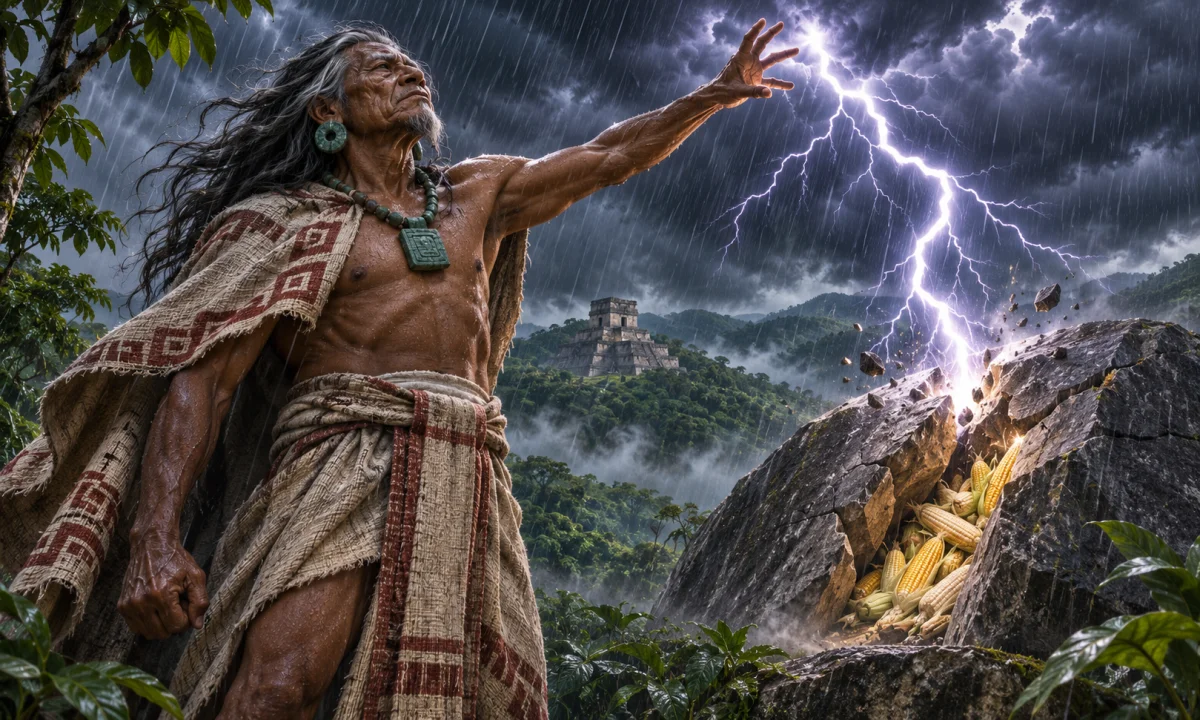
Yaluk is a name associated in some modern accounts with a Maya being connected to lightning, thunder, or rain. The identification is uncertain, however, and Yaluk is not a universally recognized deity across Maya cultures. Unlike better-attested figures such as Chaahk, the Maya rain and storm deity, Yaluk does not appear in a single, widely accepted body of ancient Maya mythology with a fixed biography, appearance, and set of powers.
Origins and cultural setting
“Maya mythology” does not describe one uniform religious system. Maya-speaking peoples have lived across southern Mexico, Guatemala, Belize, and parts of Honduras and El Salvador for many centuries. Their languages, rituals, sacred stories, and local traditions differ considerably. Ancient inscriptions, painted vessels, manuscripts, colonial descriptions, and modern ethnographic records reveal related religious ideas, but they do not form one complete canon comparable to a single sacred book.
This distinction is important when discussing Yaluk. The name is usually presented in general reference material as belonging to Maya mythology, particularly in connection with lightning or storms. Yet the surviving evidence does not establish Yaluk as a major pan-Maya god known throughout the ancient Maya world. The name may preserve a localized tradition, a transcription from a particular Maya language, or a modern classification that has expanded a less widely documented figure into a general “Maya deity.”
Maya religious traditions have long treated rain, lightning, thunder, wind, and agricultural fertility as closely related forces. These powers could be approached as deities, spirits, animate places, ancestors, or supernatural persons, depending on the community and context. A name connected with lightning therefore belongs to an important religious field even when its precise identity remains difficult to establish.
The name Yaluk and questions of identity
The spelling Yaluk is not enough by itself to identify a single figure with certainty. Maya languages use different sound systems and writing conventions, and older colonial and modern researchers have represented Maya words in several ways. A name recorded outside its original language may also lose grammatical or honorific elements that helped define its meaning.
Some reference works describe Yaluk as an old or powerful lightning deity. Other accounts associate the name more generally with thunder, rain, or the storm-producing forces that nourish crops. These descriptions should not automatically be treated as evidence for a single ancient god. They may reflect different local traditions, secondary summaries, or attempts to relate Yaluk to the better-known Chaahk tradition.
There is no secure basis for assigning Yaluk a universal family tree, a standard human or animal form, or a fixed place in a Maya pantheon. Claims that give the figure a precise spouse, a definite number of companions, or a fully developed set of mythic episodes require careful examination of their source and cultural setting. Much of the popular material about Yaluk repeats short descriptions without identifying the community or original language involved.
Lightning, rain, and sacred weather
If Yaluk is understood as a lightning or storm being, the figure belongs to one of the most important areas of Maya religious thought. Rain was essential to maize cultivation, while lightning announced the arrival of storms and could be understood as a manifestation of supernatural power. Thunderstorms were not simply natural events. They affected planting, harvests, health, travel, and the safety of settlements, giving weather a direct religious and social importance.
Lightning could be regarded as both dangerous and productive. It might strike trees, rocks, fields, or people, but it also signalled rain and the renewal of the earth. In many Mesoamerican traditions, places struck by lightning acquired special significance. Objects or stones found at such locations could be treated as powerful and used in ritual activity. This wider pattern helps explain why a lightning figure might be connected simultaneously with destruction, fertility, healing, agricultural success, and sacred knowledge.
A storm deity could also have an unpredictable temperament. Rain at the right time supported maize, beans, squash, and other crops; excessive rain could destroy them. Drought threatened entire communities, while violent storms could damage homes and forests. Religious relationships with weather powers therefore involved offerings, prayers, ritual specialists, and obligations rather than simple worship of a benevolent provider.
Relationship to Chaahk
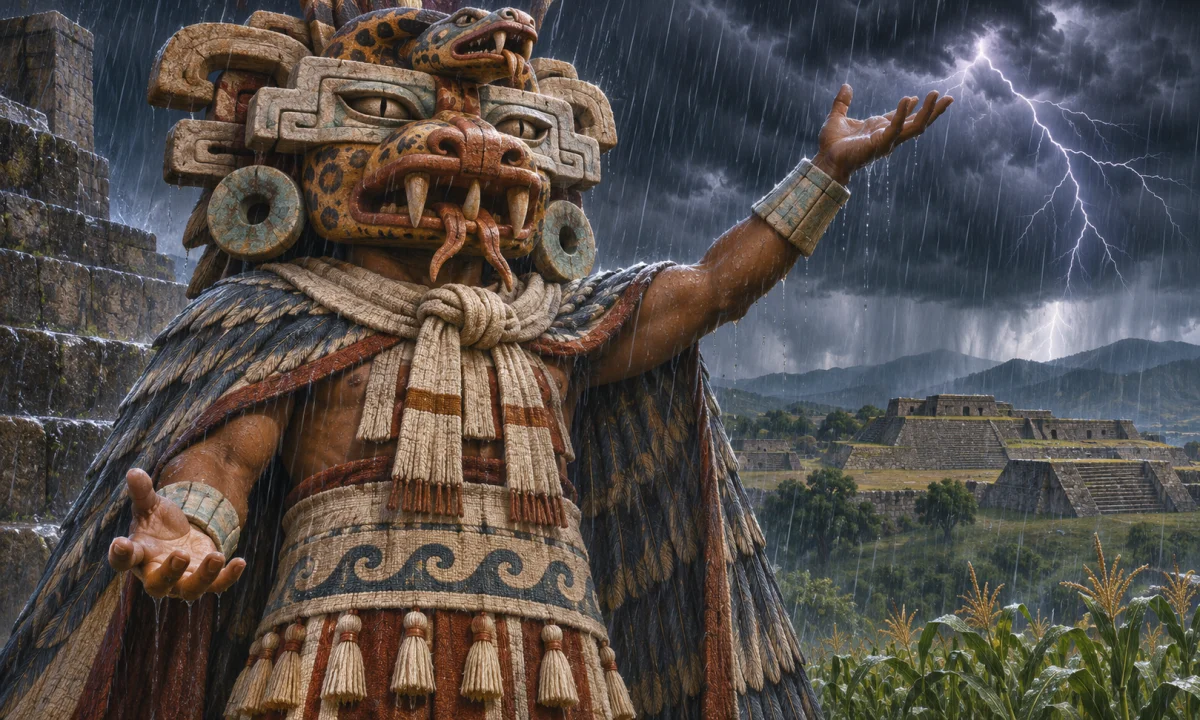
The most important point of comparison is Chaahk, often written Chaac in older Spanish and English sources. Chaahk is a major Maya rain and storm deity, especially prominent in ancient Maya art and inscriptions from the Classic period. He is commonly shown with a prominent, curved or projecting nose, large eyes, and other features associated with rain and lightning. Ancient representations may show more than one storm manifestation rather than a single standardized individual.
Because both Yaluk and Chaahk are linked in secondary accounts with lightning or rain, they are sometimes treated as identical. That identification is not securely established. Yaluk may be a local or differently named storm being, but the available evidence does not demonstrate that the name is simply another universal name for Chaahk. It is safer to distinguish the two: Chaahk is broadly documented in ancient Maya sources, whereas Yaluk is much less securely defined and may reflect a narrower tradition or later classification.
Chaahk should also not be treated as a single unchanging god across all Maya communities. The ancient Maya could recognize multiple Chaahk manifestations or storm powers, and modern Maya peoples have their own local understandings of rain and weather beings. Similarity in function does not necessarily mean identical identity.
Distinction from other lightning figures
Yaluk is also liable to confusion with storm beings from other Maya traditions. The Popol Vuh, a K’iche’ Maya narrative recorded in colonial times, describes the Heart of Sky and several manifestations of lightning. These include Huracán and the lightning beings commonly translated as Newborn Thunderbolt and Sudden Thunderbolt. Their names and roles belong to the K’iche’ narrative tradition and should not be casually merged with Yaluk.
The Popol Vuh does not provide a general catalogue of every Maya deity. It is a sacred and literary work rooted particularly in K’iche’ tradition, even though it contains themes that have wider Mesoamerican parallels. A lightning name from the Popol Vuh cannot be equated with Yaluk merely because both are associated with storms.
Other Maya communities have their own names for thunder, lightning, rain-bringing beings, and supernatural weather specialists. In some traditions, such beings may be described as elders, guardians of mountains, animal-like powers, or persons who control rain from caves and clouds. These figures can resemble one another in function while remaining culturally distinct. Translation into English may further blur differences between a god, a spirit, an ancestral power, and a ritual title.
Possible attributes and symbolism
Descriptions of Yaluk commonly emphasize the following broad associations:
- Lightning: the sudden flash and striking force of the storm.
- Thunder: the loud and sometimes frightening voice or activity accompanying lightning.
- Rain: the life-giving water necessary for agriculture and human survival.
- Fertility: the renewal of fields, forests, and other living parts of the landscape.
- Dangerous power: the destructive and unpredictable side of storms.
These associations are plausible within Maya religious contexts, but they should not be presented as a confirmed canonical profile. There is no securely established ancient Maya image that can be identified specifically as Yaluk on the basis of the name alone. Nor is there a reliable universal description of the figure’s clothing, body, weapons, animal companions, or ritual objects.
Some popular descriptions portray Yaluk as an aged male deity. That image may be influenced by the recurring importance of elder rain and mountain beings in Maya traditions, but it is not safe to assume that every use of the name refers to an old man or grandfather-like figure. A local word for an elder, a title, or a descriptive translation may have been turned into a personal name in later summaries.
Stories and relationships
No single cycle of widely accepted myths about Yaluk survives in the way that stories about Chaahk, the Hero Twins, or the gods of the Popol Vuh are known. Accounts that assign Yaluk a detailed role in the creation of the world, a fixed group of assistants, or a specific conflict with other gods should therefore be treated cautiously unless their community and source tradition are clearly identified.
This absence of a standardized story does not mean that local Maya communities lack traditions about lightning. It means that the name Yaluk cannot automatically be used as a label for every such tradition. Oral narratives are often tied to particular villages, ritual specialists, landscapes, and languages. They may not be intended as a universal mythology, and a story recorded in one area should not be generalized to all Maya peoples.
Storm beings may appear in narratives about the formation of mountains, the origin of rain, the protection of maize, or the punishment of people who violate ritual or social obligations. Such themes are consistent with the religious importance of weather, but they should remain separate from claims about Yaluk unless the name is explicitly present in the relevant tradition.
Cultural and religious significance
The significance of a figure associated with lightning lies not only in the ability to produce storms. Weather powers connect the sky with the earth, agriculture with ritual, and human communities with the wider landscape. Rain is a gift, but it is also part of a relationship that requires respect. Lightning marks the intensity of that relationship: it can bring water and fertility while demonstrating that supernatural forces cannot be controlled completely.
For Maya farmers, the agricultural year has traditionally involved close observation of clouds, wind, seasonal changes, and rainfall. Religious practices connected with rain and crop fertility have often included offerings at caves, springs, mountain sites, and other places understood as entrances to or residences of powerful beings. The details vary greatly by region, and modern practices cannot simply be projected backward as unchanged survivals from the Classic Maya period.
Yaluk is therefore best approached as a poorly standardized Maya storm or lightning figure, rather than as a fully documented universal god. The name may be meaningful within a specific tradition, but the wider evidence does not justify filling the gaps with invented genealogy or attributes. Recognizing uncertainty is especially important in Maya studies, where colonial labels and modern popular summaries have often combined distinct languages and communities.
Yaluk in modern reference material
Yaluk appears mainly in short modern lists and summaries of mythological beings. Such lists frequently place every named figure into a neat pantheon and assign each one a single domain, such as “god of lightning.” This format is convenient, but it can give a misleading impression of certainty. A brief internet or encyclopedic entry may omit the language, community, date, and original context behind the name.
There is no major, widely recognized modern popular-culture portrayal of Yaluk comparable to the use of Chaahk or other Mesoamerican figures in games, novels, and visual media. When Yaluk appears in fantasy fiction or game-related material, the depiction is generally an adaptation based on the short storm-deity description rather than a well-established traditional narrative. Such portrayals should be identified as creative inventions, not as evidence for ancient Maya belief.
The most responsible description of Yaluk is consequently a limited one: a name associated by some sources with Maya lightning, thunder, or rain, but one whose precise origin, community affiliation, and mythological identity remain uncertain. It should not be merged automatically with Chaahk, the lightning manifestations of the Popol Vuh, or unrelated storm beings from other Maya traditions.