WORLD
WORLD
Wonomi
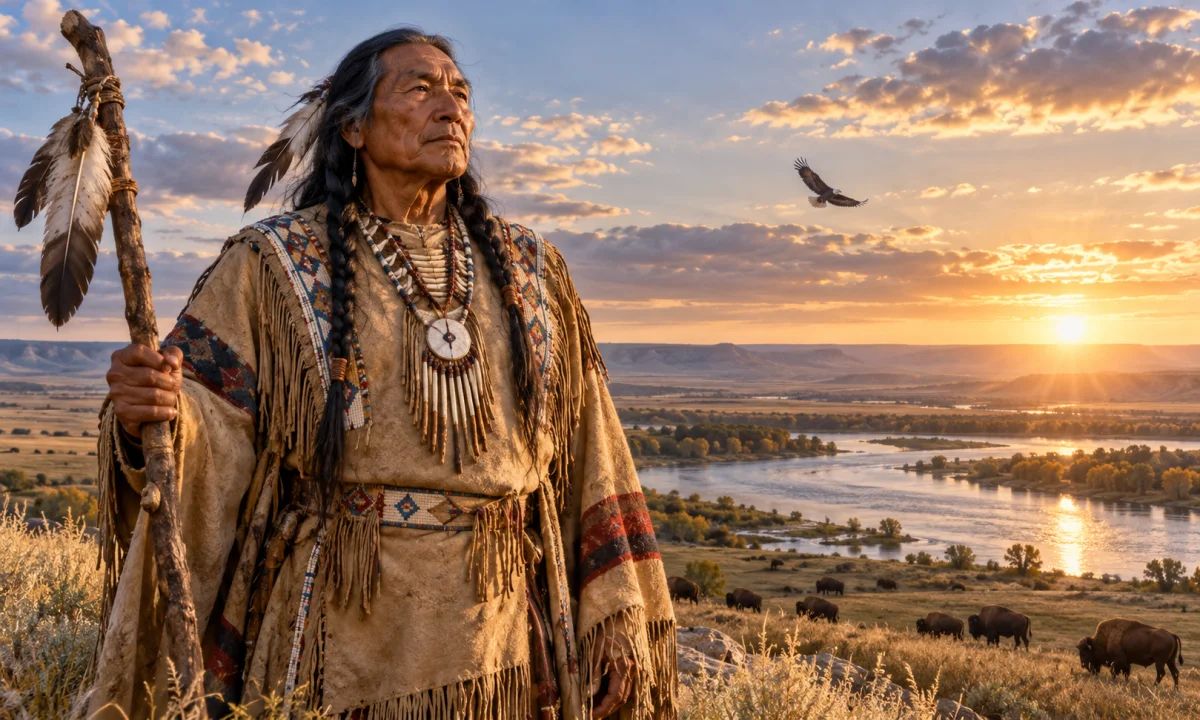
Wonomi is a little-documented figure associated in some sources with the Indigenous mythologies of California, especially traditions connected with the Miwok and neighbouring peoples. The name is often presented as belonging to a creator, first being, or culture hero who appears in narratives alongside Coyote. However, Wonomi is not a universally recognized deity across Native American traditions, and the surviving evidence does not support treating every story attached to the name as part of one fixed mythology.
Origins and cultural setting
Wonomi belongs to the diverse mythological traditions of Indigenous California rather than to a single, pan-Native American religion. California was, and remains, home to many distinct peoples whose languages, ceremonial systems and oral traditions differed considerably. Groups living in the region included the Miwok, Pomo, Wintu, Yokuts, Maidu, Ohlone and many others. Similar themes could occur across neighbouring communities, but shared motifs do not necessarily indicate a single common god.
The name Wonomi is most often encountered in summaries of California Indian mythology, particularly in connection with Miwok material. Even this attribution should be treated carefully. “Miwok” is a broad modern label covering several related but distinct communities, and the traditions of the Coast Miwok, Lake Miwok and Sierra Miwok were not identical. A story recorded in one community cannot automatically be assigned to all Miwok people.
Much of the information available about Wonomi comes from oral narratives written down by non-Indigenous researchers, collectors or interpreters. Such records are valuable, but they are not neutral transcripts of a standardized scripture. Storytellers might adapt a narrative to its audience, use local names, or emphasize different relationships between supernatural beings. Translators also had to represent Indigenous words and concepts in European languages. As a result, spellings and descriptions may differ substantially between accounts.
Name and identity
The spelling Wonomi is not necessarily the only form of the name. Older publications often used inconsistent systems for recording Indigenous languages, and a name could be altered by English spelling conventions or by the pronunciation of a particular storyteller. Forms with differences in vowels, stress or final sounds may therefore represent transcription variants rather than separate beings. At the same time, similar-looking names should not be assumed to refer to Wonomi without evidence from the relevant community or source.
Wonomi is commonly classified in general reference works as a creator figure, culture hero or primordial being. These categories are useful approximations, but they are not exact equivalents of Indigenous religious concepts. A culture hero may create certain customs, teach people how to live, organize the world or establish ceremonies without being an all-powerful god. Likewise, a creator figure in an oral narrative may act within an already existing world rather than bring the entire universe into existence from nothing.
The safest description is that Wonomi is a named supernatural or ancestral figure in a limited group of California traditions, with creative and ordering functions in some versions. The evidence is not sufficient to define a single, universally accepted biography, rank or set of powers.
Wonomi and Coyote
The most persistent association in summaries of Wonomi is with Coyote. Coyote is one of the most widespread figures in the mythologies of western North America, but Coyote does not have one uniform character. Depending on the community and story, he may be a creator, trickster, transformer, teacher, transgressor or dangerous fool. His importance in one tradition should not be used to impose the same interpretation on another.
In accounts that mention both Wonomi and Coyote, the two figures are often placed in a creative or primordial setting. Wonomi is generally treated as the more constructive or ordering presence, while Coyote introduces conflict, disruption or unpredictable change. This contrast resembles a broad pattern found in many North American mythologies, in which the world is shaped through the interaction of a deliberate maker and a troublesome transformer.
Details of their relationship vary, and brief reference entries sometimes compress separate episodes into a single story. Some summaries describe Coyote as opposing, rivaling or ultimately harming Wonomi. Other accounts provide too little detail to establish whether the two are brothers, companions, rivals, or simply figures who appear in related narratives. It is therefore preferable to describe their connection as a recurring association rather than to state a single definitive relationship.
Nor should Coyote’s presence be taken as proof that every story about Wonomi belongs to one unified cycle. Oral traditions frequently preserve individual episodes that can be performed independently. A storyteller may know a narrative about the creation of people, another about the origin of death, and a third about Coyote’s travels without presenting them as chapters in a fixed mythology.
Attributes and role
Wonomi is usually depicted in abstract terms rather than through a stable physical image. Unlike figures represented in sculpture, painted art or formal religious iconography, Wonomi is not widely associated with a standard costume, animal form, weapon or emblem. Descriptions of his appearance, when they occur, may reflect the requirements of a particular story rather than a permanent visual identity.
His principal attributes are connected with creation, ordering and the establishment of human life. In this context, creation may include making people, shaping the land, arranging natural beings or establishing the conditions under which society can exist. A figure who teaches customs or brings necessary knowledge may be described as a creator even when he does not make the physical world.
Wonomi can also be understood as a boundary figure between the primordial world and the human world. Culture heroes often belong partly to the time before ordinary history and partly to the age in which people acquire foodways, social rules, tools, ceremonies or knowledge of the environment. Their actions explain why the present world has its particular structure and why human beings must live under certain conditions.
It would be misleading, however, to turn these broad functions into a complete list of universally accepted powers. There is no secure basis for assigning Wonomi a fixed domain over weather, death, war, healing or a particular animal. Such attributes are sometimes added in generalized mythology databases, but they should not be accepted unless they are tied to a specific and reliable tradition.
Stories and variations
The surviving material connected with Wonomi is fragmentary compared with the extensive bodies of myth associated with better-documented figures such as Coyote. This does not mean that Wonomi was unimportant to the people who told stories about him. It reflects the uneven history of collection and publication. Researchers recorded some communities more extensively than others, and many narratives were never written down or were recorded only in partial form.
Stories involving Wonomi generally belong to the category of origin narratives. They may explain the beginning of people, the arrangement of the landscape, the distinction between human and animal life, or the emergence of the moral and social conditions of the present world. In such stories, events are not merely entertainment. They provide a framework for understanding why the world contains danger, death, inequality, cooperation and natural limits.
The interaction between Wonomi and Coyote is especially significant because it allows different principles to be expressed through character. Wonomi may represent intention, stability or the attempt to establish an orderly world. Coyote, by contrast, can represent appetite, improvisation, disobedience and the unintended consequences of action. These descriptions are interpretive rather than absolute: Coyote is not simply evil, and a creator figure is not necessarily flawless or benevolent in every episode.
Different tellings may explain the same feature of life in different ways. One narrative can emphasize the generosity of a creator, while another stresses the danger introduced by a trickster. Neither variation needs to be treated as a corruption of an original version. In oral tradition, variation is often part of the way stories remain meaningful within changing communities and circumstances.
Religious and cultural significance
For Indigenous California communities, traditional narratives are not easily separated into “myth,” “history” and “religion” in the modern Western sense. A story about a primordial being can preserve ethical instruction, geographical knowledge, ceremonial understanding and social memory at the same time. Its importance may depend not only on the supernatural figure but also on where it is told, who has the authority to tell it and how it relates to community responsibilities.
Wonomi should therefore not be approached merely as a character in a catalogue of gods. The limited references to him point toward a larger worldview in which humans, animals, landscape and supernatural persons participate in a connected order. Creation is not necessarily a single event in the distant past; it can also refer to the continuing arrangement of relationships that makes life possible.
The figure’s relative obscurity also illustrates a problem in the study of Native American religions. Names that appear in English-language encyclopedias may seem to represent major “deities,” even when the original tradition did not organize supernatural beings according to the categories of a classical pantheon. Conversely, a being mentioned only briefly in surviving records may have had considerable importance in local storytelling. The amount of printed information is not a reliable measure of traditional significance.
Distinguishing Wonomi from similar figures
Wonomi should not automatically be identified with every California creator or culture hero. The Wintu figure Olelbis, for example, belongs to a different tradition, even though Wintu narratives also include powerful beings and creation events. Similarly, the creator figures of Pomo, Yokuts, Maidu or Ohlone communities should be treated according to their own languages and ceremonial contexts rather than merged with Wonomi because their roles appear similar.
Wonomi should also not be confused with Coyote. Coyote is a widespread mythological figure with many independent traditions, whereas Wonomi is a more localized and uncertain name. A story involving both figures does not make them interchangeable. Nor does the presence of Coyote prove that a narrative comes from one specific tribe, since Coyote stories occur across a large part of western North America.
Modern lists sometimes treat names from unrelated communities as alternate spellings of one another. This can create a false impression that Native American mythology contains a single standardized system of gods. In reality, linguistic relationships, regional contact and shared motifs must be examined carefully before two names are connected.
Modern reception
Wonomi has little established presence in major popular-culture franchises, novels, films or widely distributed games. The name is more often repeated in online mythology lists and generalized reference material than represented in a sustained modern adaptation. Those lists may preserve a useful clue to older records, but they frequently remove the name from its local context and present uncertain information as fact.
A respectful modern treatment should identify the specific Indigenous community and source tradition behind any retelling, distinguish documented material from creative invention, and avoid presenting Wonomi as a generic “Native American god.” The most responsible understanding of the figure recognizes both his reported role in California origin traditions and the limits of the surviving documentation.