WORLD
WORLD
Wakan Tanka
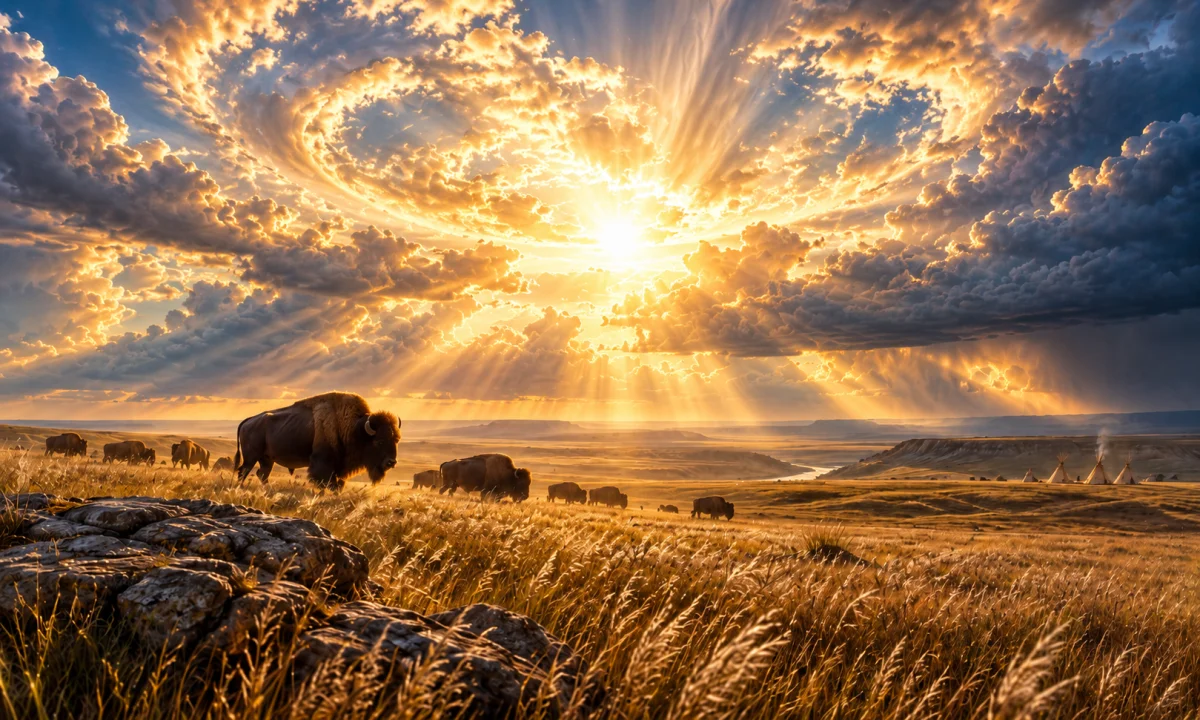
Wakan Tanka is a sacred concept in Lakota religious tradition, commonly translated into English as “Great Mystery,” “Great Sacred,” or, less precisely, “Great Spirit.” The name is associated with the holy and mysterious power present throughout existence, including the natural world, sacred beings, ancestors, rituals and human life. It does not always describe a single god with a fixed personality, biography or appearance. Its meaning varies according to Lakota speakers, religious teachers, historical records and the context in which the term is used.
Tradition and cultural setting
Wakan Tanka belongs primarily to the religious traditions of the Lakota people, one of the major divisions of the Oceti Sakowin, often called the Great Sioux Nation in English. The Oceti Sakowin also includes Dakota and Nakota-speaking peoples. Related terms and ideas occur across these communities, although they should not automatically be treated as identical. Each nation and community has its own history, language practices and religious authorities.
Lakota religion is not based on one universally fixed scripture or a single official theology. Sacred knowledge has been preserved through oral teachings, ritual practice, stories, songs, prayers, family traditions and relationships with ceremonial societies. Some teachings were recorded by non-Lakota observers during the nineteenth and twentieth centuries, but these records reflect the language, assumptions and sometimes the misunderstandings of the collectors as well as the traditions they attempted to describe.
Religious knowledge has also been affected by colonial disruption, Christian missionary activity, government suppression of ceremonies and the forced removal of children to boarding schools. In spite of these pressures, Lakota ceremonial life has continued and has been renewed in many communities. Wakan Tanka is therefore not merely a figure from a distant mythological past. For many Lakota people, the term belongs to a living religious world.
The meaning of the name
The spelling Wakan Tanka is widely used in English-language writing. A more detailed Lakota spelling is often given as Wakȟáŋ Tȟáŋka, though orthographic conventions differ. Pronunciation and spelling may vary because Lakota has been represented in several writing systems.
The first element, wakȟáŋ, is commonly associated with what is sacred, powerful, mysterious or set apart from ordinary human experience. The second, tȟáŋka, generally means great or large. The combined expression is consequently translated in several ways. “Great Spirit” became especially common in English, partly because Christian missionaries and later writers looked for an equivalent to the Christian concept of God. Many Lakota speakers and scholars consider “Great Mystery” or “Great Sacred” more useful because these translations do not suggest too quickly that Wakan Tanka is simply a single male creator deity in the Christian sense.
Translation remains interpretive. No single English phrase captures every use of the Lakota expression. In some contexts, Wakan Tanka can refer to the sacred totality or the mysterious power underlying existence. In others, it may be used in prayers or explanations that address the sacred in a more personal way. It is important not to force all Lakota teachings into one abstract definition.
Wakan beings and sacred power
Lakota religious thought recognizes many beings, forces and presences described as wakan. The word does not function exactly like the English word “god.” A being may be sacred because of its power, its role in creation, its connection with a natural phenomenon, or its importance in ceremony. Sacredness can also characterize places, objects, actions, dreams and relationships.
Some historical accounts describe a group of major sacred powers or beings, but these accounts do not agree completely in their names, organization or interpretation. Lists may include associations with the sky, earth, sun, wind, thunder, water and other aspects of the world. Such classifications should not be treated as a universally authoritative Lakota pantheon. They often represent particular teachings gathered from particular individuals at particular times.
In this setting, Wakan Tanka may be understood as encompassing or standing in relation to many sacred powers rather than replacing them. The term can point toward the unity and mystery of the sacred world while still allowing for distinct beings with their own stories and responsibilities. This is one reason that calling Wakan Tanka simply “the supreme god” can be misleading.
Relationship with the natural world
A central feature of Lakota religious understanding is the sacred relationship between human beings and the wider world. Animals, plants, waters, winds, celestial bodies, mountains and other features of the environment are not merely passive scenery. They may possess power, teach human beings, participate in sacred relationships or have their own place within a living order.
This does not mean that every Lakota teaching presents nature as a single conscious being, nor does it reduce the tradition to a modern idea of “nature worship.” Rather, human life is understood as existing within networks of obligation and reciprocity. Respect, restraint, gratitude and correct ceremonial conduct are important because people are related to powers beyond themselves.
The phrase mitákuye oyás’iŋ, often translated as “all my relations,” is frequently associated with this relational outlook. It is used in prayer and ceremonial contexts, but its exact meaning and use should not be treated as a universal slogan that explains all Lakota religion. It expresses a recognition of kinship and connection, yet the living significance of the phrase depends on language, ceremony and community.
Roles in prayer and ceremony
Wakan Tanka is invoked in prayer and in discussions of sacred obligations. Prayer may involve spoken words, offerings, the use of a sacred pipe, songs, bodily purification, fasting or other ceremonial actions. Different ceremonies have different purposes and protocols, and not all details are appropriate for public description.
The Inípi, or sweat lodge ceremony, is associated with purification, prayer and renewal. The Wi wáŋyaŋg wačhípi, commonly known in English as the Sun Dance, is a major communal ceremony involving prayer, sacrifice, endurance and renewal. The sacred pipe is used in certain ceremonies and prayers to establish or affirm relationships among human beings, the earth, the sky and sacred powers. These practices are not simply symbolic performances for the outside world; they are religious acts governed by knowledge, responsibility and community protocols.
Some accounts connect Wakan Tanka with the fulfillment of prayer, the ordering of the world and the transmission of sacred knowledge. However, Lakota religious practice does not necessarily treat prayer as a request made to a distant ruler who grants favors at will. Prayer can express humility, gratitude, commitment and the restoration of proper relationships. The person praying is expected to act responsibly rather than merely ask for supernatural assistance.
Stories and sacred teachers
One of the best-known Lakota sacred narratives is the story of White Buffalo Calf Woman, often called Ȟaŋblé Wiya Sápa or given other forms in English-language accounts. She is said to have brought the sacred pipe and important ceremonies to the Lakota. The details differ among tellers and published versions. In many tellings, she teaches the people how to pray and how to live in a respectful relationship with the sacred world before departing in a transformed form.
White Buffalo Calf Woman should not automatically be described as the wife, daughter or female form of Wakan Tanka. Such relationships are not consistently established across Lakota teachings. She is a powerful sacred figure in her own right, and her story is connected to ceremonial authority, moral instruction and the preservation of sacred knowledge.
Another major sacred tradition concerns the Heyókȟa, sometimes translated as a sacred clown or contrary. A Heyókȟa may behave in ways that reverse ordinary expectations, such as acting cold when others are hot or moving in an apparently backward manner. This role is not simply comic entertainment. It can challenge arrogance, expose hidden assumptions and reveal another dimension of sacred power. Accounts of the Heyókȟa are connected particularly with the thunder beings, although terminology and ceremonial interpretation vary.
Lakota sacred stories also include powerful animal figures, culture heroes, thunder beings, water beings and other presences. They should not all be folded into Wakan Tanka as though they were interchangeable names for one entity. Some have distinct identities, relationships and ritual associations.
Creation and the ordering of the world
There is no single creation account accepted in every Lakota community or preserved in one canonical text. Historical narratives describe the origins of the world, the emergence of human beings, the separation or ordering of different realms and the actions of sacred powers. These accounts may differ in detail and emphasis.
Some nineteenth- and twentieth-century observers attempted to organize Lakota sacred beings into systems resembling the pantheons of classical European mythology. That approach can be useful for comparison, but it may impose categories that do not fit Lakota thought. A sacred being does not need to occupy a fixed “rank” or belong to a neatly bounded family in order to be important. Relationships among powers may be expressed through story, ceremony and lived experience rather than through a standardized genealogy.
For this reason, statements that Wakan Tanka “created everything” should be qualified. Some modern explanations use that language, and certain interpretations present Wakan Tanka as the highest creative power. Other understandings emphasize the sacred mystery of existence and the interrelated work of many powers rather than a single creator acting alone. The historical record does not justify presenting one formulation as the universal Lakota doctrine.
Historical records and interpretation
Much of what English readers know about Wakan Tanka comes through records produced after sustained contact with Euro-American institutions. Ethnographers, missionaries, interpreters and government officials wrote about Lakota religion, sometimes with the help of Lakota consultants. These materials can preserve valuable information, but they must be read critically.
Early writers frequently compared Lakota sacred beings with figures from Christianity, ancient Greece or the Bible. They sometimes described Wakan Tanka as a “Great Spirit” or “supreme being” because those terms made the tradition intelligible to their intended readers. Such descriptions may reflect genuine statements by particular Lakota speakers, but they can also flatten distinctions among sacred power, personal agency, ritual authority and the living world.
Later interpretations, including those associated with Black Elk and other respected religious figures, have shaped popular understandings of Lakota spirituality. Published accounts of Black Elk’s teachings are important, but they are mediated through translation, editing and the circumstances in which they were recorded. No single book or individual should be treated as the complete representative of all Lakota religious thought.
Distinction from “the Great Spirit”
“The Great Spirit” is often presented in popular writing as a universal Native American name for God. This is inaccurate. Indigenous nations across North America have many different languages, histories, religious systems and sacred beings. Similar English translations may conceal major differences between traditions.
Wakan Tanka is specifically associated with Lakota language and religious context. It should not be used as a generic label for the creator or highest god of every Indigenous nation. Even within the Lakota, Dakota and Nakota world, related expressions may carry different meanings, and individual speakers may prefer different English translations.
Wakan Tanka should also be distinguished from Manitou, a term associated particularly with Algonquian-speaking peoples, and from Gitchi Manitou, which belongs to Anishinaabe religious and linguistic contexts. These terms are sometimes grouped together in popular culture because English writers translate them with phrases such as “Great Spirit,” but they do not name the same traditional concept.
Modern religious and cultural significance
For many Lakota people, Wakan Tanka remains connected to contemporary prayer, ceremony, identity and responsibility. The term may appear in discussions of traditional religion, cultural education and Indigenous resistance to the reduction of sacred life into folklore. Its meaning can also be personal: some people use it in ways shaped by family teachings, Christian influence, intertribal religious movements or their own understanding of Lakota language.
Modern Lakota religious life exists alongside Christianity and other forms of belief. Some individuals and communities combine Christian practices with Lakota ceremonies, while others maintain traditional ceremonial paths or distinguish them clearly from Christianity. These situations cannot be reduced to a single pattern.
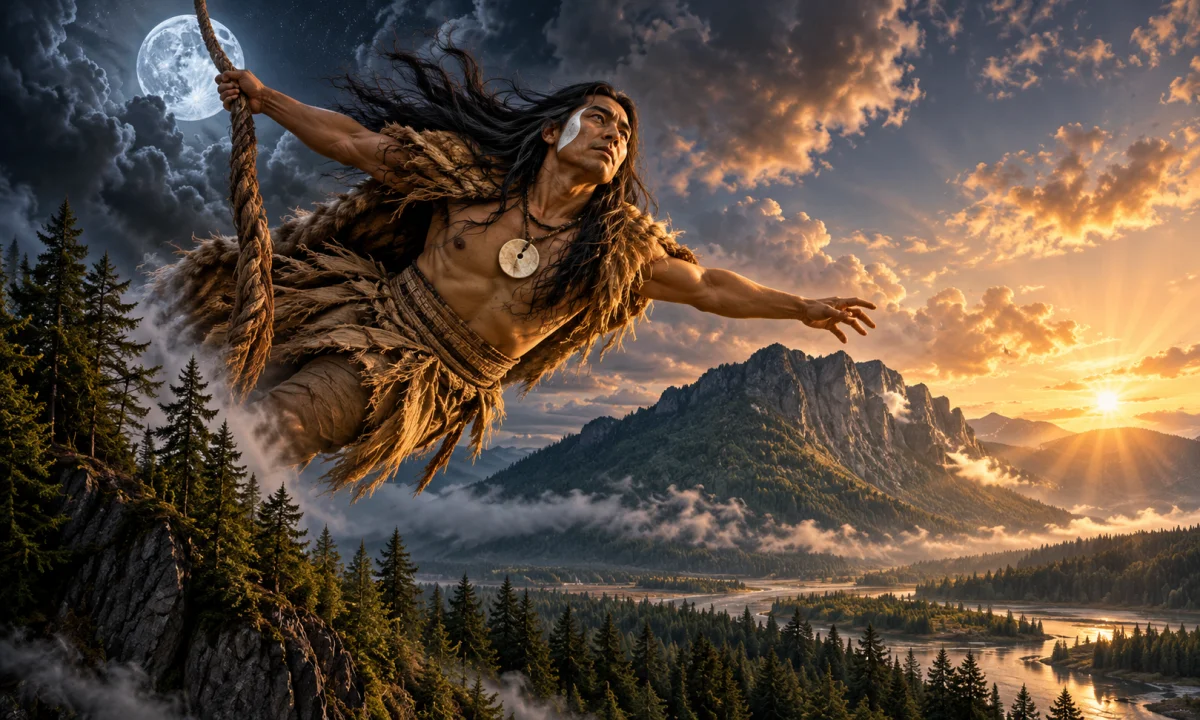
In popular books, films, games and general discussions of mythology, Wakan Tanka is sometimes portrayed as a humanoid sky god, an all-powerful creator or a single Native American equivalent of Zeus or God. Such portrayals are modern simplifications rather than reliable descriptions of Lakota tradition. A respectful presentation should preserve the uncertainty of translation, the diversity of Lakota teachings and the fact that Wakan Tanka refers to a living sacred concept rather than a character with one fixed visual design.