WORLD

Olelbis
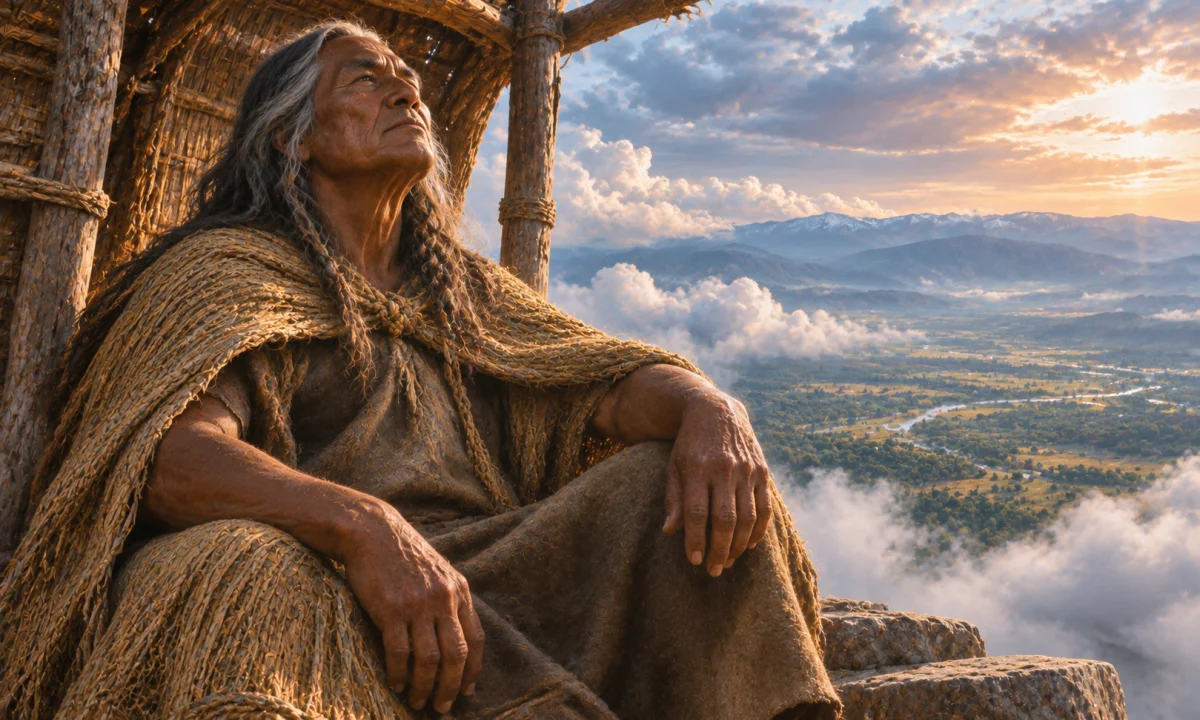
Olelbis is a principal creator figure in the traditional religious narratives of the Wintu people of northern California. He is commonly described in English as a creator, sky-being, or high deity, although none of these labels corresponds perfectly to the meanings carried by Wintu sacred traditions. Olelbis is associated with the upper world, the ordering of the cosmos, and the origins of human life and culture.
The Wintu are an Indigenous people whose traditional homeland lies in the upper Sacramento Valley and surrounding areas of present-day northern California. Wintu religious knowledge was transmitted primarily through oral teaching and ceremonial life. The stories later recorded in English represent only part of that tradition, and their wording, emphasis, and interpretation may differ according to the narrator, translator, period of collection, and purpose for which a story was told.
Name and identity
The name appears in several spellings, including Olelbis and forms that vary slightly in older ethnographic transcriptions. It is often explained in English as “the one who sits above” or “the one above.” Such translations should be treated as approximate rather than as exact dictionary definitions. Early collectors had to represent Wintu sounds and concepts through English spelling, and the same name could consequently appear in more than one form.
Olelbis is closely connected with Olelpanti, a name generally used for the upper or heavenly world. Olelbis is sometimes described as dwelling there, while other narratives focus on his actions in relation to the lower world inhabited by people, animals, and other beings. The relationship between the personal name Olelbis and the place-name Olelpanti can be confusing in short summaries, but they are not simply alternative names for the same figure.
English-language writers frequently call Olelbis a “god.” That word is useful as a broad comparison, especially when discussing a powerful sacred being associated with creation, but it can also impose categories drawn from European religious traditions. Wintu narratives do not necessarily present Olelbis as a human-like deity who belongs to a fixed pantheon in the classical sense. He is better understood as a supreme or elevated sacred being within a complex Wintu cosmology.
Wintu cultural and religious setting
Traditional Wintu life was rooted in the rivers, foothills, forests, and seasonal resources of northern California. Religion was not isolated from everyday life. Knowledge about animals, plants, weather, illness, death, ritual power, social obligations, and the origins of customs could all be expressed through narrative. Sacred stories were not merely entertainment or abstract mythology; they helped explain how the world came to have its present structure and how people were expected to live within it.
Wintu traditions include powerful beings, animal persons, culture heroes, spirits, and figures whose identities do not fit neatly into modern categories such as “god,” “monster,” or “fairy.” Animals can act as intelligent persons, and their actions may explain the acquisition of fire, food, ritual knowledge, or other necessities. In this setting, Olelbis belongs to a wider sacred world rather than standing alone as the only significant supernatural figure.
The surviving English accounts were collected after extensive disruption caused by colonization, epidemic disease, displacement, violence, missionization, and the loss of access to ancestral lands. As a result, no single published version should be assumed to preserve the complete Wintu tradition. Recorded stories remain valuable, but they should be read as documented performances or interpretations rather than as a definitive scripture or a complete catalogue of Wintu belief.
Olelbis as creator and cosmic ruler
Olelbis is chiefly associated with creation and the establishment of the world’s order. In narratives linked with him, the universe is not presented as a finished and unchanging structure. Its parts must be arranged, boundaries established, and the conditions of life made possible. The upper world, the earthly realm, and the beings who inhabit them are connected through the actions of powerful figures.
Descriptions of Olelbis often emphasize his elevated position. His association with the sky or upper world suggests authority, distance, and a perspective beyond ordinary human limits. He is not usually portrayed as a wandering trickster or a local spirit tied to one physical feature. Instead, his importance is cosmic: he is connected with the origins and continuing organization of the world as a whole.
At the same time, the creator role should not be simplified into the idea that Olelbis single-handedly performs every act of creation. Wintu stories can include other beings whose decisions and struggles are essential to the formation of the human world. In many Indigenous North American traditions, creation is a process involving cooperation, conflict, transformation, theft, sacrifice, or the work of animal persons. A high creator may establish the broad order of existence while other figures make particular elements of life available.
This is one reason that brief descriptions of Olelbis as simply “the Wintu creator god” can be misleading. They identify an important aspect of his role, but they may conceal the narrative relationships through which Wintu traditions explain fire, land, human society, mortality, and ceremonial knowledge.
Stories associated with Olelbis
Origins of the world and humanity
Stories associated with Olelbis concern the beginnings of the world and the emergence of human beings. Different recorded accounts do not always agree in detail, and the surviving material should not be forced into one perfectly consistent sequence. Some versions place Olelbis in the upper world and describe his relationship to the formation or ordering of the earth below. Others emphasize the actions of additional beings who help prepare the world for human occupation.
These narratives often explain more than the physical origin of people. They also address why humans have particular abilities and limitations, why the world contains danger as well as abundance, and how knowledge is distributed among humans, animals, and supernatural beings. Creation is therefore both a beginning and a moral history. The world people inherit is shaped by earlier actions, and the circumstances of life can be understood through events in the sacred past.
Fire and the acquisition of culture
Fire-theft narratives are important in many regions of North America, including California, and Wintu storytelling includes accounts in which fire or other essential knowledge is controlled, concealed, or obtained through the actions of powerful beings and animals. Olelbis may appear in accounts concerning the higher world and the origins of conditions that make human life possible, but fire stories should not automatically be reduced to a single standard version.
In such narratives, the acquisition of fire is often more than a practical event. Fire can represent cooking, warmth, protection, social gathering, technological knowledge, and the transition from a raw or dangerous world to a habitable one. When animals cooperate, deceive an owner of fire, or suffer consequences in order to obtain it, the story also establishes relationships between human beings and the animal world.
Figures such as Coyote can appear in this kind of cultural narrative. Coyote is widely known in California Indigenous traditions as an intelligent, disruptive, and sometimes creative figure, but he is not Olelbis. Their roles may intersect in a story, yet they represent different types of sacred character. Olelbis is associated with elevated cosmic authority, whereas Coyote is more often a mobile transformer and trickster whose actions bring both benefits and disorder.
Floods, destruction, and renewal
Wintu traditions, like those of many peoples around the world, include narratives of catastrophe, destruction, and the renewal of life. Flood stories can explain the removal of an earlier population, the survival of selected beings, or the re-establishment of a livable world. When Olelbis is connected with such material, his role is best understood in relation to the ordering of the cosmos rather than through a direct comparison with figures from biblical or classical flood narratives.
Flood accounts are not necessarily simple tales of punishment. They may explore imbalance, the consequences of improper conduct, the vulnerability of living beings, and the possibility of beginning again. The exact place of Olelbis in these stories varies across retellings, and a general summary should not claim details that belong only to one recorded version.
Attributes and powers
- Creator and organizer: Olelbis is associated with the origins and arrangement of the world, including the conditions that allow human life to exist.
- Resident of the upper world: His connection with Olelpanti places him above the ordinary human realm and gives him a cosmic rather than merely local significance.
- Source of authority: His elevated position is linked with knowledge, power, and the ability to establish or regulate the structure of existence.
- Participant in sacred history: He belongs to narratives about beginnings, transformations, catastrophe, and the formation of human culture.
- Non-human and difficult to visualize: Traditional accounts do not provide one universally fixed portrait comparable to the standardized images of gods in later popular art.
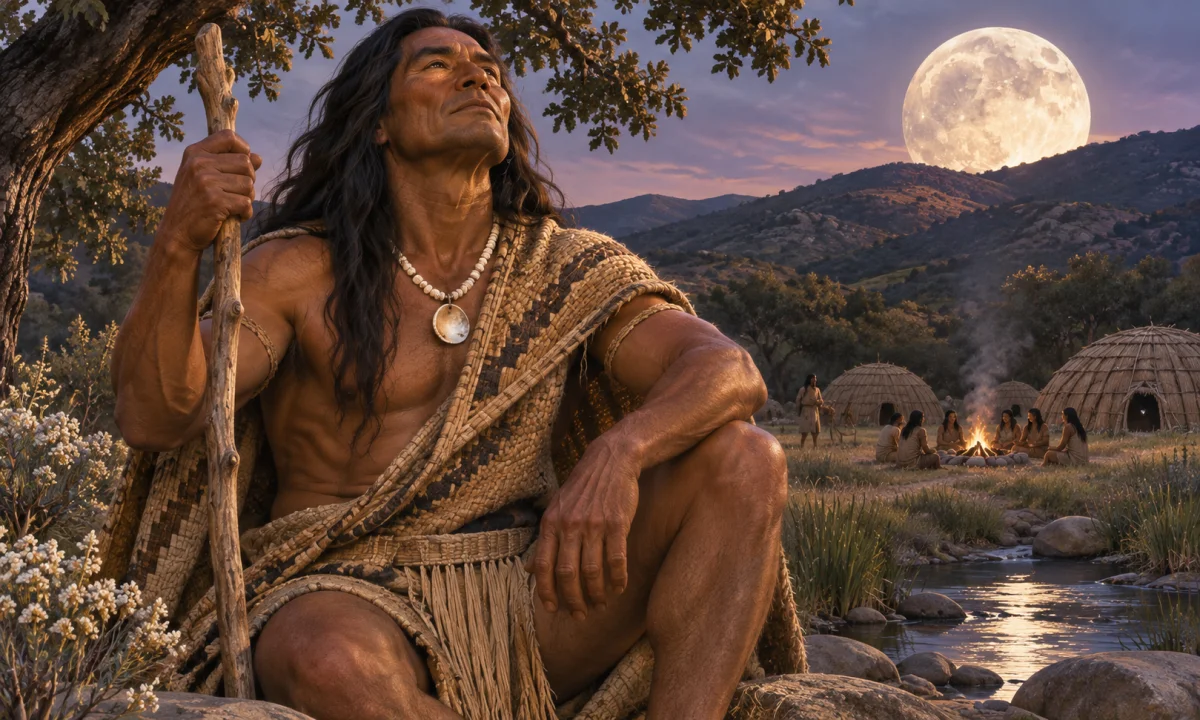
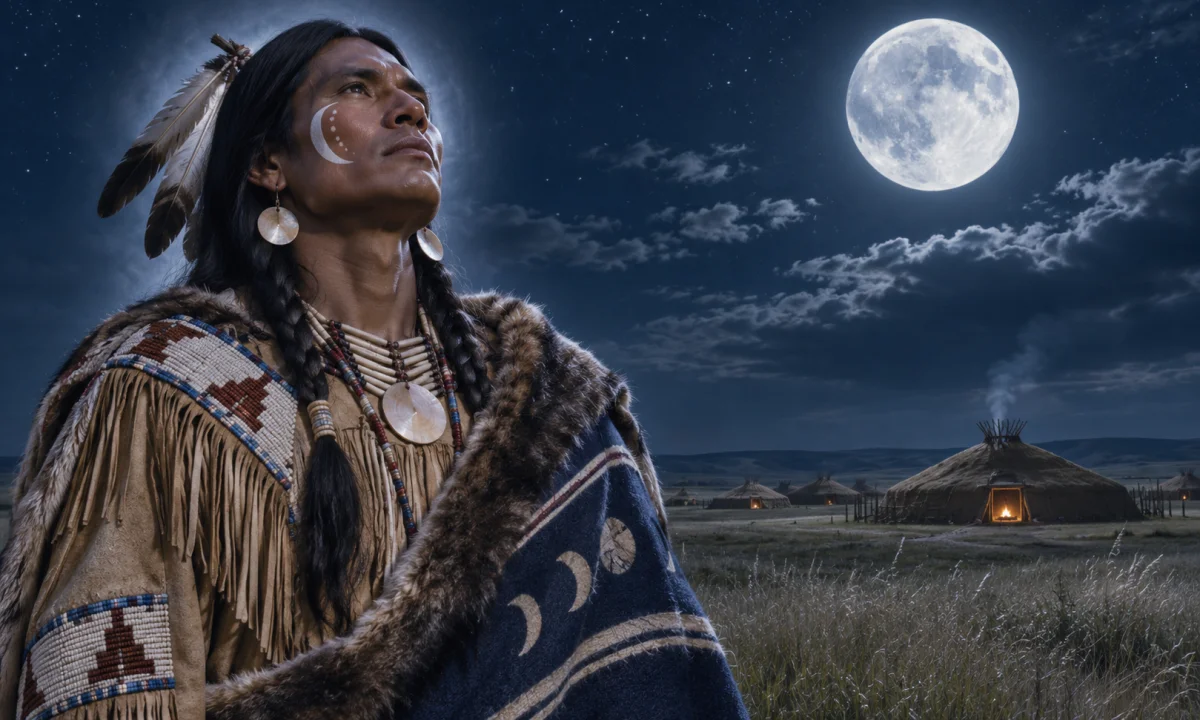
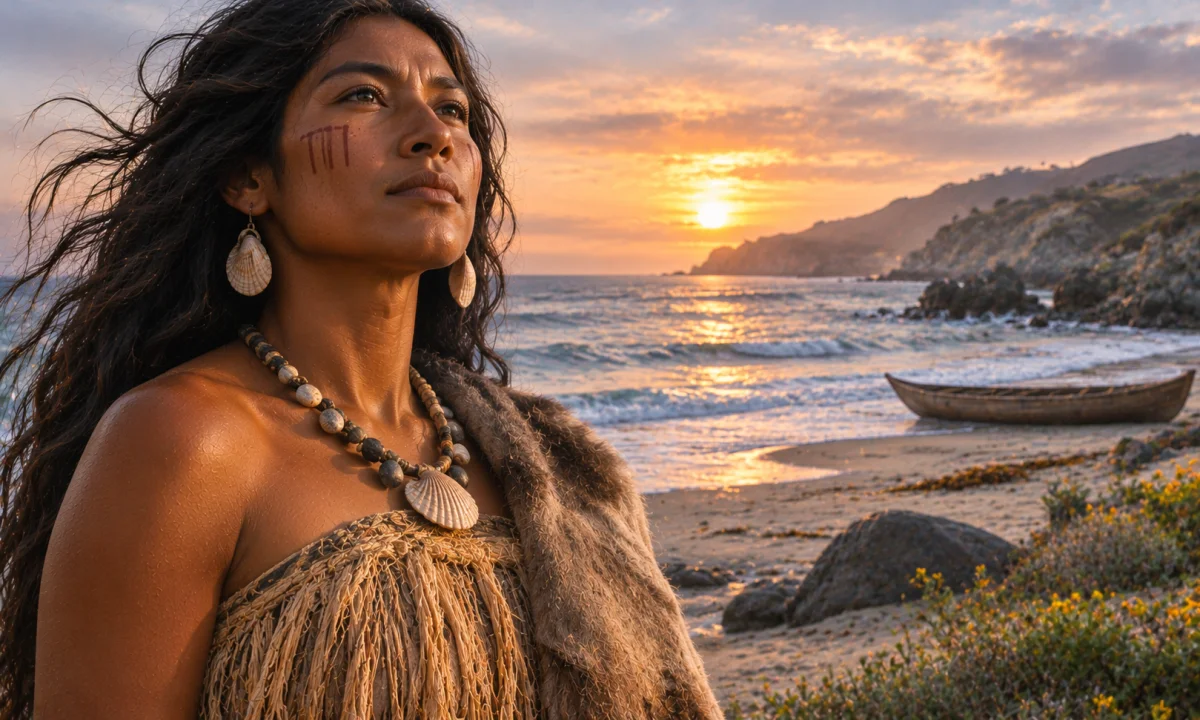
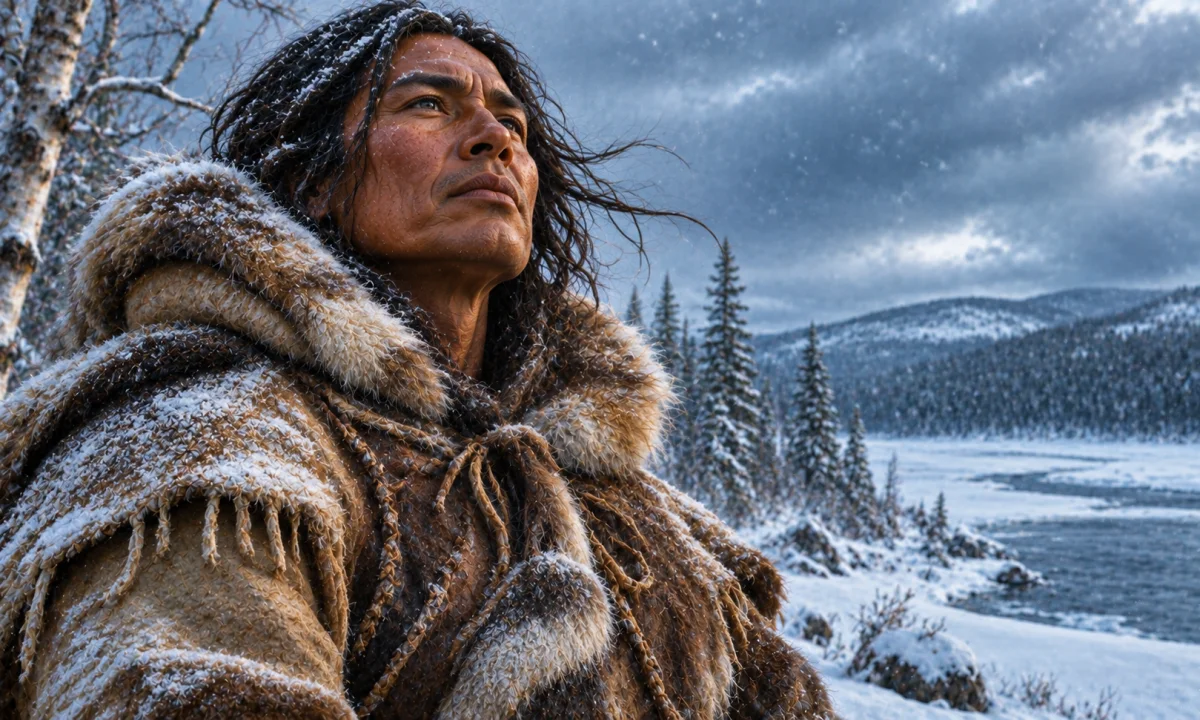
Descriptions of Olelbis should therefore avoid assigning him a costume, weapon, animal companion, or physical form simply because such features are common in modern representations of mythological beings. The traditional material is more concerned with his position and actions than with a consistent visual image. Artistic depictions that show him as an old man, a king in the sky, or a radiant supernatural figure are interpretations, not established features shared by every Wintu account.
Relationships with other beings
Olelbis exists within a network of relationships involving beings from different levels of the cosmos. Some accounts include relatives, attendants, helpers, opponents, or animal persons who connect the upper world with the earth. The importance of these figures is not merely secondary. Their actions can explain how a general act of creation becomes a specific feature of the world, such as fire, land, food, social rules, or human vulnerability.
Because the sources are fragmentary and vary in their transcription, it is unsafe to present one fixed family tree for Olelbis. Terms such as “father,” “grandfather,” “grandmother,” or “ancestor” may also carry interpretive problems when translated from a different kinship and narrative system. A relationship described in one English account should not automatically be treated as a universal doctrine shared across all Wintu communities.
Olelbis should also be distinguished from animal tricksters and culture heroes. Coyote, Hawk, and other animal figures may have major roles in Wintu stories, but their presence does not make them manifestations or alternate forms of Olelbis. Nor should Olelbis be merged with creator figures from neighboring peoples merely because those figures occupy comparable positions in their own traditions.
Sources and limits of interpretation
Most information available in English about Olelbis comes from narratives collected by ethnographers and linguists during the late nineteenth and early twentieth centuries, together with later discussions of Wintu culture. These records are important historical evidence, but they were produced under unequal conditions. Collectors selected particular stories, translated them into English, and sometimes organized them according to categories such as “myth,” “religion,” or “creation legend” that may not match Wintu classifications.
Oral traditions also change according to audience and occasion. A ceremonial account, a teaching story, and a short explanation given to an outsider may not contain the same details. Different narrators may emphasize different aspects of Olelbis, and variation does not necessarily indicate that one version is authentic while the others are false. It is more accurate to speak of a body of Wintu traditions concerning Olelbis than of one authorized narrative.
Interpretations that describe Olelbis as an all-powerful, morally perfect, or permanently distant being go beyond what can safely be inferred from every recorded account. Likewise, translating his name as “God” may be convenient but should not erase the distinct Wintu setting in which he appears. The most reliable descriptions retain both points: Olelbis is a powerful creator-associated being, and his meaning belongs specifically to Wintu religious thought.
Cultural significance
Olelbis represents the importance of the upper world and of sacred knowledge in Wintu understandings of existence. His stories place human life within a cosmos that is layered, relational, and shaped by prior events. People are not isolated from animals, landscapes, or supernatural powers; they occupy one part of a living order whose origins remain present in narrative and ceremony.
The stories also resist a sharp division between “nature” and “culture.” Fire, food, social practice, ritual knowledge, and the boundaries of the world may all emerge through interactions between human and non-human persons. Olelbis is significant not only because he is connected with creation, but because the stories surrounding him show that the human condition depends on relationships extending beyond humanity.
Contemporary references to Olelbis sometimes reduce him to a generic “Native American creator god.” That description removes the Wintu identity of the tradition and can suggest a uniform Indigenous mythology where none exists. A more accurate treatment names the Wintu cultural context, acknowledges variation among recorded narratives, and distinguishes traditional material from later summaries. Olelbis is best understood not as a generic North American deity, but as a major sacred figure within the particular oral and religious traditions of the Wintu people.