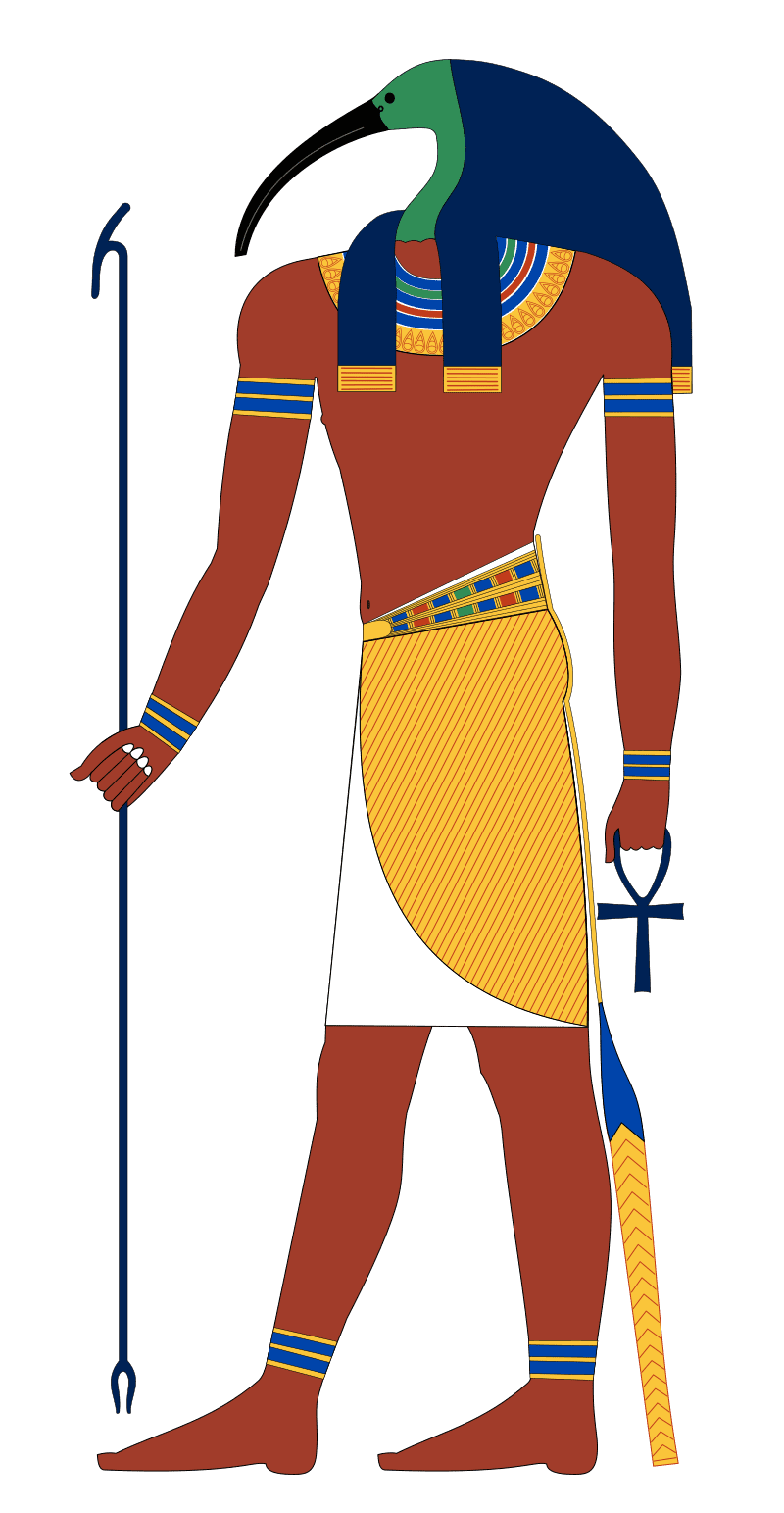
Thoth is one of the most significant deities in Egyptian mythology, revered as the god of wisdom, writing, and knowledge. His influence extends across various aspects of Egyptian culture, including religion, science, and magic. Thoth is often depicted as a man with the head of an ibis or sometimes as a baboon, animals that were sacred to him. His unique representation symbolizes his connection to both the divine and the earthly realms. In Egyptian belief, he played a crucial role in maintaining the universe’s balance and order.
The Origins of Thoth
The origins of Thoth can be traced back to ancient Egypt’s early dynastic period. He is believed to have emerged from the primordial waters of chaos, known as Nun. This mythological background places him at the center of creation, emphasizing his role as a mediator between the gods and humans. Thoth’s association with the moon is significant; he is often referred to as the god of the moon, which further cements his status as a deity of time and knowledge.
 Sphinx
Thoth’s birth is shrouded in various myths, with some stories suggesting he was born from the heart of Ra, the sun god, while others claim he was self-created. This duality of origin highlights his multifaceted nature and importance in the pantheon of Egyptian gods. As the god of writing, Thoth is credited with the invention of hieroglyphics, which were essential for communication and record-keeping in ancient Egypt.
Thoth’s Role in Egyptian Mythology
Thoth’s primary roles in Egyptian mythology include being the god of wisdom, writing, and magic. He was believed to be the author of the Book of the Dead, a crucial text for the deceased’s journey in the afterlife. This book contained spells and incantations to help guide souls through the challenges they faced after death. Thoth’s wisdom was considered unparalleled, and he was often called upon for guidance in both mortal and divine affairs.
In addition to his role as a scribe and mediator, Thoth was also associated with the concept of ma’at, which represents truth, balance, and cosmic order. He played a vital role in the judgment of the dead, where he recorded the results of the weighing of the heart ceremony. In this ceremony, the heart of the deceased was weighed against the feather of Ma’at to determine their fate in the afterlife. Thoth’s presence ensured that the process was fair and just, further solidifying his status as a god of integrity.
 Sopdet
Thoth and the Moon
Thoth’s association with the moon is profound and multifaceted. In ancient Egypt, the moon was often linked to timekeeping and the cycles of nature. Thoth was considered the keeper of time and was believed to regulate the lunar calendar. His connection to the moon also symbolizes the duality of light and darkness, wisdom and ignorance. The phases of the moon were seen as a reflection of Thoth’s own nature, where the waxing moon represented growth and knowledge, while the waning moon signified the passing of time and the inevitability of change.
The moon’s influence on the tides and agricultural cycles made Thoth a crucial deity for the ancient Egyptians, who relied heavily on the natural world for their survival. Festivals in honor of Thoth often coincided with lunar events, celebrating his contributions to the agricultural calendar and the rhythm of life. Through these celebrations, the Egyptians acknowledged the importance of Thoth in their daily lives, reinforcing their connection to the divine.
Thoth’s Symbols and Iconography
Thoth is often depicted with various symbols that represent his divine attributes. One of the most recognizable symbols associated with Thoth is the ibis, a bird known for its long beak and graceful appearance. The ibis symbolizes wisdom and communication, aligning perfectly with Thoth’s role as the god of writing and knowledge. In some depictions, Thoth is shown holding a writing palette and a reed pen, further emphasizing his association with scribes and literature.
 Shu
ShuAnother important symbol related to Thoth is the full moon, which signifies his connection to the lunar cycles and the passage of time. In many artworks, Thoth is depicted with a lunar disk above his head, showcasing his status as a moon god. Additionally, the baboon is another animal linked to Thoth, representing his connection to the divine and the mysteries of the universe. Baboons were often seen in Egyptian art, performing rituals and worshipping the moon, thus reinforcing Thoth’s significance in their spiritual practices.
Thoth in Egyptian Religion
Thoth was highly revered in ancient Egyptian religion and played a central role in various religious practices and rituals. Temples dedicated to Thoth, such as the one at Hermopolis, served as centers of learning and worship. These temples housed vast libraries where scribes and scholars gathered to study and record knowledge. Thoth was often invoked in prayers and rituals aimed at seeking wisdom, protection, and guidance.
In addition to his role in religious practices, Thoth was also integral to the practice of magic in ancient Egypt. He was considered the patron of magicians and was believed to possess great magical powers. Many spells and incantations were attributed to him, and practitioners often called upon Thoth’s name to enhance their magical abilities. His association with magic further highlights the importance of knowledge and wisdom in Egyptian society, where understanding the mysteries of the universe was essential for both survival and spiritual fulfillment.
Thoth’s Influence on Later Cultures
The influence of Thoth extended beyond ancient Egypt, impacting various cultures and belief systems throughout history. As Greek culture began to intertwine with Egyptian mythology, Thoth was equated with the Greek god Hermes, known for his roles as a messenger and a guide to the underworld. This syncretism illustrates how Thoth’s attributes of wisdom and communication resonated with other cultures, leading to a broader appreciation of his significance.
In later periods, Thoth continued to be a figure of interest in the realms of alchemy and mysticism. His association with knowledge and the written word made him a symbol of enlightenment for scholars and practitioners of the esoteric arts. The image of Thoth has appeared in various texts and artworks throughout the ages, often symbolizing the quest for understanding and the pursuit of truth.
Modern Interpretations of Thoth
In contemporary times, Thoth remains a figure of fascination for those interested in Egyptian mythology and spirituality. Many modern spiritual practices draw inspiration from Thoth’s attributes, celebrating his wisdom and knowledge as essential elements for personal growth and enlightenment. Thoth is often invoked in meditative practices, with followers seeking to connect with his energy and wisdom to enhance their understanding of themselves and the universe.
Additionally, Thoth’s symbolism is frequently utilized in literature, art, and popular culture. His depiction as a wise and knowledgeable deity resonates with modern audiences, inspiring stories, films, and creative works that explore themes of knowledge, magic, and the quest for truth. Thoth’s enduring legacy serves as a reminder of the importance of wisdom and understanding in navigating the complexities of life.
Thoth in Literature and Art
Thoth has been a prominent figure in various literary works, both ancient and modern. In ancient texts, he is often portrayed as a wise counselor to the gods and a mediator in conflicts. His character appears in numerous myths, where his intelligence and cunning play a pivotal role in resolving disputes among the deities. These stories highlight his importance in maintaining harmony within the divine realm.
In modern literature, Thoth’s character has been adapted and reinterpreted in various ways. Many authors draw on his attributes of wisdom and knowledge, crafting narratives that explore themes of enlightenment and the pursuit of truth. Thoth has also made appearances in fantasy and science fiction genres, often depicted as a powerful being with vast knowledge of the universe. His presence in literature serves to inspire readers to seek their own paths of understanding and exploration.
The Legacy of Thoth
The legacy of Thoth is deeply ingrained in the cultural and spiritual fabric of ancient Egypt and beyond. His teachings on wisdom, knowledge, and balance continue to resonate with people today. Thoth represents the idea that knowledge is a powerful tool that can lead to personal transformation and a deeper understanding of the world. His influence can be seen in various aspects of modern spirituality, education, and the arts.
Thoth’s enduring presence in mythology, religion, and culture underscores his importance as a deity of wisdom and knowledge. His multifaceted nature and roles in the ancient world have inspired countless generations to seek understanding and embrace the pursuit of truth. The reverence for Thoth in both ancient and modern contexts serves as a testament to the timeless value of knowledge and the quest for enlightenment.