
Tatenen is a significant figure in Egyptian mythology, often associated with the primordial earth and the creation of the world. He is depicted as a god of the underworld and is considered a manifestation of the fertile soil of the Nile. In many ancient texts, Tatenen is described as a deity who embodies the essence of life, growth, and regeneration. His role in the pantheon of Egyptian gods is crucial, as he represents the earth’s ability to nurture and sustain life. This article will delve into the various aspects of Tatenen, including his origins, symbolism, and the rituals associated with his worship.
Origins of Tatenen
The origins of Tatenen can be traced back to the early periods of ancient Egyptian civilization. He is often considered one of the oldest gods in the Egyptian pantheon, emerging from the chaos of the primordial waters known as Nun. Tatenen’s name translates to “the risen land,” signifying his connection to the earth that emerges from the waters. This duality of water and land reflects the ancient Egyptians’ understanding of creation and the cycle of life. Tatenen is sometimes referred to as the “Lord of the Earth,” highlighting his dominion over the physical realm and his importance in the creation myth.
 Thoth
ThothIn various creation stories, Tatenen plays a role in the emergence of other gods and the formation of the world. He is often depicted as the father of other deities, such as Osiris and Isis, who are central figures in the mythology of life, death, and resurrection. Tatenen’s influence extends beyond just creation; he is also associated with the fertility of the land and the annual flooding of the Nile, which brings rich silt to the fields, allowing agriculture to thrive. This connection to the Nile is a vital aspect of his worship, as the river was essential for the survival of ancient Egyptian society.
Symbolism of Tatenen
Tatenen is rich in symbolism, representing various elements of the natural world and the cycle of life. One of the primary symbols associated with him is the lotus flower, which signifies rebirth and renewal. The lotus is often depicted rising from the waters, much like the land that Tatenen embodies. This imagery is powerful in Egyptian mythology, as it connects the ideas of life, death, and resurrection. The lotus also represents the sun, further linking Tatenen to the themes of creation and the sustaining power of the earth.
Additionally, Tatenen is often depicted with a crown made of plants and flowers, symbolizing his role as a god of fertility and growth. This crown signifies the abundance of the land and the importance of agriculture in ancient Egyptian society. The fertility of the earth is a recurring theme in Tatenen’s mythology, and his image is frequently associated with the rich harvests that result from the annual flooding of the Nile. This connection underscores the relationship between the gods and the natural world, highlighting how Tatenen’s presence is felt in every aspect of life.
 Sphinx
Worship and Rituals
The worship of Tatenen was an essential aspect of ancient Egyptian religion, particularly in the regions surrounding the Nile. Temples dedicated to Tatenen were often located near fertile lands, where the influence of the Nile was most pronounced. Rituals and offerings were made to ensure the continued fertility of the land and the success of agricultural endeavors. Farmers would invoke Tatenen’s blessings before planting their crops, seeking his favor for a bountiful harvest.
- Offerings of grain and fruits were common, symbolizing the fertility of the earth.
- Rituals often included prayers and hymns sung in praise of Tatenen, acknowledging his role as a life-giver.
- Festivals celebrating the flooding of the Nile also honored Tatenen, recognizing his influence over the natural cycles.
During significant agricultural seasons, large festivals would take place in honor of Tatenen. These celebrations involved music, dance, and communal feasting, bringing the community together to express gratitude for the land’s fertility. Priests and priestesses played a vital role in these ceremonies, performing rituals to invoke Tatenen’s blessings. These rituals often included the creation of small models of crops and livestock, which were offered to Tatenen as a symbolic gesture of appreciation for the bounty he provided.
Artistic Representations of Tatenen
Tatenen’s image can be found in various forms of ancient Egyptian art, from temple reliefs to pottery. He is often depicted as a man emerging from the earth, sometimes with green vegetation growing around him. This portrayal emphasizes his connection to fertility and the life-giving properties of the land. In some representations, Tatenen is shown with a scepter, symbolizing his authority over the earth and its abundance.
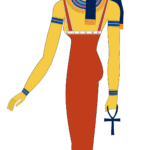 Sopdet
In addition to his human form, Tatenen is sometimes represented as a serpent or a lion, creatures that embody strength and protection. These animal forms highlight his power over the natural world and his role as a guardian of the earth’s resources. Artistic depictions of Tatenen often include symbols of agriculture, such as sheaves of wheat or agricultural tools, further reinforcing his association with fertility and the sustenance of life.
Tatenen in Mythology
Tatenen’s role in mythology extends beyond his association with fertility and the earth. He is often involved in various myths that explain the origins of other gods and the creation of the world. One such myth describes how Tatenen emerged from the primordial waters to bring forth the land and the first deities. This narrative highlights his position as a foundational figure in the Egyptian creation story, emphasizing his importance in the overall mythology.
Another significant myth involving Tatenen is the story of his relationship with the sun god Ra. According to this myth, Tatenen and Ra collaborated in the creation of the world, with Tatenen providing the fertile land for Ra’s light to shine upon. This partnership symbolizes the interconnectedness of the earth and the sky, illustrating how Tatenen’s role as a life-giver complements Ra’s role as a source of light and energy. Together, they represent the balance of natural forces that sustain life in ancient Egypt.
Tatenen holds a unique place in Egyptian mythology as a god of the earth, fertility, and creation. His origins, symbolism, and the rituals associated with his worship reflect the ancient Egyptians’ deep connection to the natural world. As a figure of regeneration and sustenance, Tatenen embodies the essence of life itself, making him a vital part of the rich tapestry of Egyptian mythology.