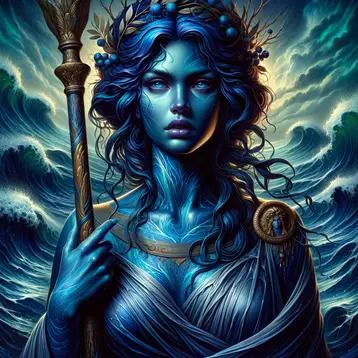
In Greek mythology, Styx is one of the most significant rivers, often associated with the underworld. The river Styx is not just a body of water; it holds great power and symbolism. It is the boundary between the world of the living and the realm of the dead. The ancient Greeks believed that when a person died, their soul would be ferried across the Styx by Charon, the boatman. This river is often depicted as dark and murky, reflecting the uncertainty and fear surrounding death. The name Styx itself means “hate” in ancient Greek, emphasizing its ominous nature.
The Origin of Styx
The origins of Styx are deeply rooted in Greek mythology. According to the myths, Styx was the daughter of the primordial gods Oceanus and Tethys. She is often personified as a goddess who represents the river itself. Styx was known for her unwavering loyalty to the gods, particularly during the Titanomachy, the great war between the Titans and the Olympians. Her allegiance played a crucial role in the victory of the Olympian gods, and as a reward, she was granted the honor of being the river that separates the living from the dead.
 Syrinx
Styx is also significant in the context of the gods. In ancient texts, she is described as having the ability to confer invulnerability to those who bathed in her waters. This characteristic is famously associated with the hero Achilles, whose mother dipped him into the Styx to make him invincible. However, she held him by his heel, leaving that part vulnerable. This story illustrates how the river Styx embodies both strength and vulnerability, making it a powerful symbol in Greek mythology.
Styx and the Afterlife
The river Styx is integral to the concept of the afterlife in Greek mythology. It serves as the main passage for souls traveling to the underworld, known as Hades. Upon death, souls were required to pay Charon, the ferryman, to cross the river. This payment was typically made with a coin called an obol, which was placed in the mouth of the deceased. Those who could not pay were said to wander the shores of the Styx for eternity, highlighting the importance of proper burial rites in ancient Greek culture.
The journey across the Styx is fraught with challenges. Souls must confront various trials before entering the realm of the dead. The river itself is often depicted as a dark and foreboding place, filled with dangers and uncertainty. It symbolizes the transition from life to death, a passage that everyone must take but few can understand. The Styx is not merely a river; it is a representation of the fear and inevitability of death.
 Tantalus
The Symbolism of Styx
Styx carries profound symbolism in Greek mythology, representing various themes such as loyalty, death, and the unknown. As a river, it symbolizes the flow of time and the transition between life and death. The dark waters of Styx reflect the fear of the unknown that comes with dying. It serves as a reminder of mortality and the fragility of life. Additionally, the river embodies the idea of oaths and promises, as it was believed that the gods would swear their most solemn oaths by the waters of Styx. Breaking such oaths would lead to severe consequences, further emphasizing the river’s significance.
Moreover, Styx is often associated with the idea of justice. The river serves as a boundary that separates the righteous from the wicked. Souls that led virtuous lives would be allowed to enter the Elysian Fields, a paradise for the heroes and just. In contrast, those who committed grave sins faced punishment in the depths of Hades. This dichotomy underscores the moral framework within which the ancient Greeks understood life and death.
 Tartarus
Styx in Art and Literature
The river Styx has inspired countless works of art and literature throughout history. In ancient Greek literature, references to Styx can be found in the works of Homer and Virgil. Homer mentions Styx in the “Iliad,” where it serves as a powerful symbol of the gods’ unbreakable oaths. Virgil also references Styx in the “Aeneid,” illustrating the river as a critical passage for souls entering the underworld.
In visual arts, Styx has been depicted in various forms, often showcasing Charon ferrying souls across the river. Artists have portrayed the river as dark and ominous, filled with shadowy figures and eerie landscapes. These artistic representations capture the essence of Styx as a place of transition, fear, and mystery. The river remains a powerful symbol in modern culture, often referenced in literature, movies, and art, reflecting humanity’s ongoing fascination with death and the afterlife.
Mythological Stories Involving Styx
Several mythological stories involve the river Styx, each contributing to its rich tapestry of meaning. One of the most famous tales is that of Achilles. His mother, Thetis, sought to protect him from death by dipping him into the waters of Styx. This act granted him invulnerability, but his heel, which she held, remained unprotected. This story serves as a poignant reminder of the complexities of strength and vulnerability, encapsulated by the river’s dark waters.
Another significant story involves the punishment of the Titans. After their defeat, the Titans were cast into Tartarus, a deep abyss in the underworld. The river Styx serves as a barrier to prevent their escape. This myth emphasizes the river’s role as a boundary, reinforcing the idea that once one crosses Styx, there is no return. The fate of the Titans illustrates the consequences of defying the gods and the ultimate power of the Styx as a symbol of eternal punishment.
Styx in Modern Culture
In contemporary culture, the river Styx continues to captivate the imagination. It appears in various forms of media, including literature, films, and music. The concept of Styx has been adapted to explore themes of death, the afterlife, and the human experience. For instance, the band Styx took its name from the river, symbolizing the journey through life and the inevitability of death.
Many authors and filmmakers draw inspiration from the myth of Styx to create stories that delve into the mysteries of the afterlife. Works of fantasy and horror often incorporate the river as a gateway to the underworld, using its symbolism to explore the fears and uncertainties surrounding death. The enduring legacy of Styx in modern culture reflects humanity’s ongoing struggle to understand the mysteries of life and what lies beyond.
Styx in Comparative Mythology
When examining Styx in the context of comparative mythology, it becomes clear that many cultures have similar concepts of rivers that separate the living from the dead. For example, in Egyptian mythology, the River Nile is often associated with the afterlife. The Egyptians believed that the Nile was a pathway to the underworld, where souls would journey after death. Similarly, in Hindu mythology, the Ganges River is considered sacred and is believed to purify the souls of the deceased.
These parallels highlight a universal theme in human cultures: the river as a symbol of transition and the passage between life and death. Each culture has its own interpretation of this concept, reflecting their beliefs about the afterlife and the moral implications of life. The river Styx stands as a testament to the rich tapestry of mythological narratives that explore the profound questions surrounding existence, death, and what may lie beyond.
The Role of Charon
Charon, the ferryman of the Styx, plays a crucial role in the mythology surrounding the river. He is depicted as a grim figure, responsible for transporting souls across the river to the underworld. According to myth, Charon would only accept payment in the form of an obol, emphasizing the importance of proper burial rites. This necessity reflects the ancient Greeks’ belief in the significance of honoring the dead.
Charon’s role extends beyond mere transportation; he embodies the inevitability of death and the journey every soul must undertake. His character serves as a reminder that death is a universal experience, one that transcends social status and wealth. Regardless of a person’s life, everyone must face Charon and the Styx, reinforcing the idea that death is the great equalizer.
Styx and the Underworld
The river Styx serves as a crucial boundary that separates the world of the living from the underworld, also known as Hades. In this realm, souls are judged based on their earthly lives. Those who lived virtuous lives are granted access to the Elysian Fields, a paradise where they can enjoy eternal bliss. Conversely, those who committed grave sins face punishment in Tartarus, a place of torment.
The underworld is often depicted as a dark and shadowy realm, echoing the qualities of the Styx itself. It is a place where the dead reside, and the river acts as a passage that connects the living to this mysterious world. The imagery of the Styx and Hades reflects the ancient Greeks’ understanding of morality, justice, and the consequences of one’s actions in life.
Rituals Associated with Styx
In ancient Greece, various rituals were associated with the river Styx and the process of dying. These rituals often included offerings to Charon and prayers for the deceased. Families would place coins in the mouths of their loved ones to ensure safe passage across the Styx. This practice underscores the belief in the necessity of proper burial rites to secure a favorable afterlife.
Additionally, the ancient Greeks performed rituals to honor the dead, such as libations and sacrifices. These acts were intended to appease the spirits and ensure that the deceased would find peace in the afterlife. The river Styx served as a focal point in these rituals, representing the boundary between life and death and the importance of honoring those who had passed.
The Impact of Styx on Greek Society
The river Styx had a profound impact on Greek society, influencing their beliefs about life, death, and morality. The myths surrounding Styx served as cautionary tales, reminding individuals of the consequences of their actions. The fear of being unable to pay Charon and being stranded on the shores of the Styx instilled a sense of urgency in adhering to societal norms and values.
Furthermore, the concept of Styx shaped the ancient Greeks’ understanding of justice and morality. The river acted as a moral compass, guiding individuals to live virtuous lives to avoid punishment in the afterlife. This belief system fostered a sense of community, as people were encouraged to support one another in their journeys through life and death.
Styx in Poetry and Philosophy
Styx has also been a source of inspiration for poets and philosophers throughout history. Many have used the river as a metaphor for the human experience, exploring themes of mortality, fate, and the passage of time. In poetry, Styx often represents the struggles and uncertainties of life, capturing the essence of human existence.
Philosophers have also drawn upon the symbolism of Styx to discuss the nature of life and death. The river serves as a reminder of the fragility of existence and the inevitability of mortality. This philosophical exploration encourages individuals to reflect on their lives and the choices they make, emphasizing the importance of living with purpose and integrity.
The Legacy of Styx
The legacy of Styx endures in modern culture, continuing to influence literature, art, and popular media. The river remains a powerful symbol of death and the afterlife, prompting discussions about the mysteries of existence. Its depiction in various forms of media reflects humanity’s ongoing fascination with the unknown and the complexities of life.
In addition, Styx serves as a reminder of the rich tapestry of mythology that has shaped human understanding of life and death. The stories and symbols associated with the river continue to resonate, inviting individuals to explore their own beliefs and experiences. The enduring legacy of Styx highlights the universal themes that connect us all, transcending time and culture.