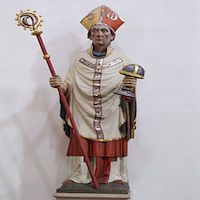
St. Godehard of Hildesheim is a significant figure in Christian mythology, particularly in the history of the Catholic Church in Germany. Born around the year 960, Godehard became a prominent bishop and was known for his deep piety and dedication to the Christian faith. His life and works had a profound impact on the development of Christianity in the region, and he is remembered for his contributions to the Church and his efforts in promoting Christian values among the people. Godehard’s legacy continues to be celebrated, particularly in the city of Hildesheim, where he served as bishop.
The Early Life of St. Godehard
St. Godehard was born in the small town of Hildesheim, located in Lower Saxony, Germany. His early life was marked by a strong influence of faith, as his family was deeply religious. From a young age, Godehard showed an inclination towards spiritual matters, often spending time in prayer and contemplation. He was educated at a local monastery, where he received a solid grounding in theology and the teachings of the Church. This education would later serve him well in his role as a bishop, as he was able to articulate and defend the tenets of Christianity effectively.
 St. Gleb
During his formative years, Godehard was influenced by the monastic lifestyle, which emphasized community living, prayer, and work. He felt a calling to the religious life and decided to join the monastic community at Corvey Abbey. This decision was pivotal in shaping his spiritual journey, as he learned the importance of discipline, humility, and service to others. Godehard’s time at the abbey equipped him with the tools he needed to lead a life dedicated to God and the Church.
The Path to Bishopric
Godehard’s rise within the Church was marked by his exceptional character and leadership qualities. After several years in the monastery, he was appointed as the abbot of the community, a role that allowed him to further develop his skills in governance and pastoral care. His reputation as a wise and compassionate leader spread, and soon he was recognized beyond the walls of his monastery. His dedication to his duties and his ability to inspire others made him a suitable candidate for higher office.
In 1022, Godehard was consecrated as the Bishop of Hildesheim. This position was significant, as Hildesheim was a vital center for Christianity in Germany. As bishop, Godehard faced many challenges, including the need to address the spiritual and social issues facing his diocese. He was committed to improving the lives of his parishioners and worked tirelessly to spread the teachings of Jesus Christ. His approach to leadership was characterized by a focus on pastoral care, education, and community engagement.
 St. John Gualbert
Contributions to the Church
As Bishop of Hildesheim, St. Godehard made numerous contributions that would have lasting effects on the Church and the local community. One of his primary focuses was on education. He established schools to educate the clergy and laypeople alike, emphasizing the importance of understanding the Scriptures and the teachings of the Church. Godehard believed that a well-informed congregation was essential for a vibrant faith community, and he worked diligently to ensure that education was accessible to all.
In addition to education, Godehard was known for his commitment to social justice. He advocated for the poor and marginalized, often using his position to speak out against injustices. He encouraged his parishioners to care for those in need, reinforcing the Christian principle of loving one’s neighbor. Godehard’s efforts to promote social welfare were ahead of his time and demonstrated his deep compassion and understanding of the Gospel message.
Spiritual Legacy
St. Godehard’s spiritual legacy is one of profound influence and inspiration. His commitment to a life of prayer and service resonated with many, and he became a role model for both clergy and laity. His teachings emphasized the importance of living a life in accordance with Christian values, which included honesty, integrity, and love for others. Godehard’s ability to connect with people on a personal level made him a beloved figure in his community.
 St. Pope Leo X
After his death in 1038, St. Godehard was canonized by the Church, further solidifying his status as a saint. His feast day is celebrated on May 4th, and many churches and communities honor his memory through special services and events. Godehard’s life serves as a reminder of the impact one individual can have on the world through faith and dedication to service.
The Impact on Hildesheim
The city of Hildesheim holds a special place in the history of St. Godehard. As the city where he served as bishop, it became a center of Christian activity and learning during his tenure. Godehard’s efforts to promote education and social welfare laid the groundwork for Hildesheim to flourish as a Christian community. His influence can still be felt today, as the city continues to celebrate its rich religious heritage.
In Hildesheim, there are numerous sites dedicated to St. Godehard, including the Cathedral of Hildesheim, which is a UNESCO World Heritage Site. This cathedral, originally built during Godehard’s time, stands as a testament to his legacy and the architectural beauty of the era. Visitors to Hildesheim can explore this historic site and learn about the life and works of St. Godehard, making it a significant pilgrimage destination for many.
St. Godehard in Christian Art and Literature
St. Godehard’s influence extends beyond his lifetime and can be seen in various forms of Christian art and literature. Artists and writers have drawn inspiration from his life, depicting him as a model of virtue and dedication to God. Many paintings and sculptures portray him in the act of prayer or performing acts of charity, highlighting his commitment to the Christian faith.
In literature, St. Godehard is often referenced as a symbol of hope and inspiration. His story is told in various texts that explore themes of faith, leadership, and community service. These narratives not only celebrate his life but also encourage readers to emulate his virtues in their own lives. The enduring popularity of St. Godehard in art and literature reflects the deep respect and admiration that many have for his contributions to Christianity.
Modern Celebrations and Remembrance
Today, St. Godehard is celebrated not only in Hildesheim but also in various Christian communities around the world. His feast day is an occasion for reflection and gratitude for his contributions to the Church. Many parishes hold special services, where prayers are offered in his honor, and sermons are delivered that focus on his teachings and values. These celebrations serve as a reminder of the importance of faith in everyday life.
In addition to religious observances, there are also cultural events that celebrate St. Godehard’s legacy. Festivals, concerts, and educational programs are organized to promote awareness of his life and works. These events not only honor his memory but also encourage people to engage with the teachings of Christianity in a meaningful way. The modern celebrations of St. Godehard demonstrate that his influence continues to resonate in contemporary society.
Theological Significance of St. Godehard
St. Godehard’s theological significance lies in his embodiment of Christian values and his commitment to living out the teachings of Jesus Christ. His life serves as a model for understanding key concepts in Christianity, such as compassion, service, and faithfulness. Godehard’s approach to leadership was rooted in a deep understanding of the Gospel, and he sought to apply these principles in his ministry.
Moreover, St. Godehard’s emphasis on education reflects the belief that knowledge is essential for spiritual growth. By promoting education within his diocese, he contributed to the intellectual development of the Church and encouraged individuals to engage with their faith on a deeper level. His theological insights continue to inspire discussions on the role of education in the spiritual life of believers.
St. Godehard and Interfaith Relations
In the context of interfaith relations, St. Godehard’s life offers valuable lessons on the importance of dialogue and understanding among different faith traditions. Although he lived in a time when Christianity was the dominant religion in Europe, his commitment to social justice and compassion extended beyond the boundaries of his own faith. Godehard’s work with the poor and marginalized exemplifies a spirit of inclusivity that can serve as a model for contemporary interfaith efforts.
Modern discussions on interfaith relations often draw upon the teachings and actions of historical figures like St. Godehard, highlighting the importance of mutual respect and cooperation among different religious communities. His legacy encourages individuals to seek common ground and work together for the betterment of society, regardless of their faith backgrounds. St. Godehard’s life serves as a reminder that the principles of love and compassion transcend religious differences.
Conclusion: The Enduring Legacy of St. Godehard
St. Godehard of Hildesheim remains a significant figure in Christian mythology, whose life and works continue to inspire countless individuals. His dedication to education, social justice, and spiritual leadership has left an indelible mark on the Church and the communities he served. Through the celebration of his feast day, the preservation of his legacy in art and literature, and the ongoing impact of his teachings, St. Godehard’s influence endures, encouraging future generations to embody the values of faith, compassion, and service to others.