
St. Edward the Confessor is one of the most significant figures in Christian mythology, particularly within the context of English history. He was born around 1003 and became King of England in 1042. His reign lasted until 1066, a time marked by both political challenges and spiritual devotion. Edward is often remembered for his piety, his dedication to the church, and his role in shaping the future of England. His canonization as a saint by Pope Alexander III in 1161 further solidified his legacy as a holy figure.
The Early Life of Edward the Confessor
Edward was born in a time of great uncertainty and change in England. His father, King Æthelred the Unready, faced numerous Viking invasions, which ultimately led to his exile. Edward spent much of his childhood in Normandy, where he developed strong ties with the Norman nobility. This period of his life was crucial, as it shaped his views on governance and religion. The time he spent in Normandy also helped him to form alliances that would later be important during his reign.
 St. Edmund
As a young man, Edward was deeply influenced by the Christian faith. He was known for his pious nature and commitment to the church. His mother, Emma of Normandy, played a significant role in his upbringing, instilling in him the values of compassion and humility. These qualities would later define his kingship. Edward’s return to England in 1041 marked the beginning of his path to the throne, as he was invited back to reclaim his rightful place after the death of King Harthacnut.
The Reign of Edward the Confessor
Edward’s reign is often characterized by a strong focus on religion and justice. Upon becoming king, he sought to strengthen the church and promote a sense of moral order throughout his kingdom. He built Westminster Abbey, which became a significant site for Christian worship and royal ceremonies. This act not only demonstrated his commitment to the church but also his desire to create a lasting legacy. The abbey would later become the burial place for many English monarchs.
During his reign, Edward faced various challenges, including political intrigue and conflicts among the nobility. Despite these challenges, he was known for his ability to maintain peace and stability in England. He often sought counsel from his advisors and was respected for his fair judgment. Edward’s dedication to justice was evident in his efforts to resolve disputes among his subjects, and he became known as a king who valued the welfare of his people.
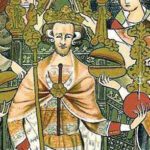 St. Edbert Of Lindisfarne
Edward’s Spiritual Life
Edward the Confessor’s spiritual life was deeply intertwined with his role as king. He was known for his devotion to prayer and his commitment to living a life of humility. It is said that he often fasted and spent long hours in prayer, seeking guidance from God in his decisions. This spiritual dedication was reflected in his governance, as he sought to rule with compassion and fairness. Many of his contemporaries viewed him as a model of Christian virtue.
His deep faith also influenced his relationships with the church and its leaders. Edward often sought the counsel of bishops and abbots, demonstrating his respect for their spiritual authority. He was particularly close to St. Aethelwold, the Bishop of Winchester, who played a significant role in his spiritual development. This connection further solidified Edward’s commitment to the church and its teachings, reinforcing his image as a saintly ruler.
The Canonization of Edward the Confessor
Edward’s legacy as a holy figure was solidified through his canonization in 1161. The process of canonization involved a thorough examination of his life, virtues, and miracles attributed to him. The church recognized Edward’s commitment to God and his exemplary moral character. This recognition not only elevated his status among the saints but also contributed to the growing veneration of his memory in England and beyond.
 St. Dymphna
After his canonization, many miracles were attributed to Edward, further enhancing his reputation as a saint. Pilgrims began to visit Westminster Abbey to seek his intercession and to honor his memory. The abbey became a center of pilgrimage, and his feast day, celebrated on October 13, became an important date in the Christian calendar. This growing devotion to Edward the Confessor reflected the enduring impact of his life and reign.
The Legacy of St. Edward the Confessor
St. Edward the Confessor’s legacy is profound and multifaceted. He is often seen as a symbol of Christian kingship and moral integrity. His reign is remembered as a time of relative peace and stability in England, and his commitment to the church helped to shape the future of Christianity in the region. The building of Westminster Abbey stands as a testament to his dedication to God and his desire to leave a lasting mark on the nation.
Furthermore, Edward’s life has inspired countless individuals throughout history. His story serves as a reminder of the importance of faith, compassion, and justice in leadership. Many monarchs and leaders have looked to Edward as a model for virtuous governance, striving to emulate his piety and dedication to the welfare of their subjects. His legacy continues to be celebrated in various forms, from literature to religious observances.
Edward in Literature and Art
The life of St. Edward the Confessor has inspired numerous works of literature and art throughout the centuries. His story has been depicted in various forms, including plays, poems, and paintings. These artistic representations often highlight his virtues, his dedication to the church, and his role as a just ruler. Such works contribute to the ongoing fascination with his life and legacy, ensuring that his memory endures.
One of the most notable literary works about Edward is the “Vita Sancti Edwardi”, a biography written shortly after his death. This text provides insight into his life, virtues, and the miracles attributed to him. It serves as an important historical document that helps to shape our understanding of Edward’s character and his impact on England. Various artists have also depicted him in religious iconography, portraying him as a saintly figure, often holding symbols of his kingship and faith.
Edward’s Influence on Modern Christianity
The influence of St. Edward the Confessor extends into modern Christianity. His life and teachings continue to resonate with many Christians today, serving as an example of how to live a life of faith and integrity. The values he embodied—compassion, justice, and devotion—are still relevant in contemporary discussions about leadership and morality. Many Christian communities honor his memory through various religious observances and celebrations.
In addition, his role as a patron saint of England underscores his importance in the national consciousness. His legacy is often invoked in discussions about national identity and the relationship between the church and state. As England navigates its modern challenges, the example set by Edward the Confessor remains a source of inspiration for those seeking to lead with integrity and faith.
St. Edward the Confessor stands as a significant figure in both Christian mythology and English history. His life, marked by devotion to God and a commitment to justice, serves as an enduring example for leaders and individuals alike. Through his canonization and the ongoing veneration of his memory, Edward’s legacy continues to inspire and guide those who seek to live a life of faith and integrity. His story is a testament to the power of faith in shaping history and the enduring impact of a life lived in service to God and others.